
“We moved to Ocoee for the schools, but stayed for the neighbors.”
That sentiment captures much of what defines life in Ocoee: a city where suburban comfort, family-oriented infrastructure, and proximity to Orlando create a particular kind of tradeoff. It’s a place that tends to reward people seeking affordability and residential calm within reach of a major metro—but it can feel limiting to those who crave walkable texture, cultural density, or transit independence.
Understanding whether Ocoee feels like home depends less on whether it’s “good” or “bad” and more on whether its emotional rhythm matches what you need day to day.
What It Feels Like to Live Here
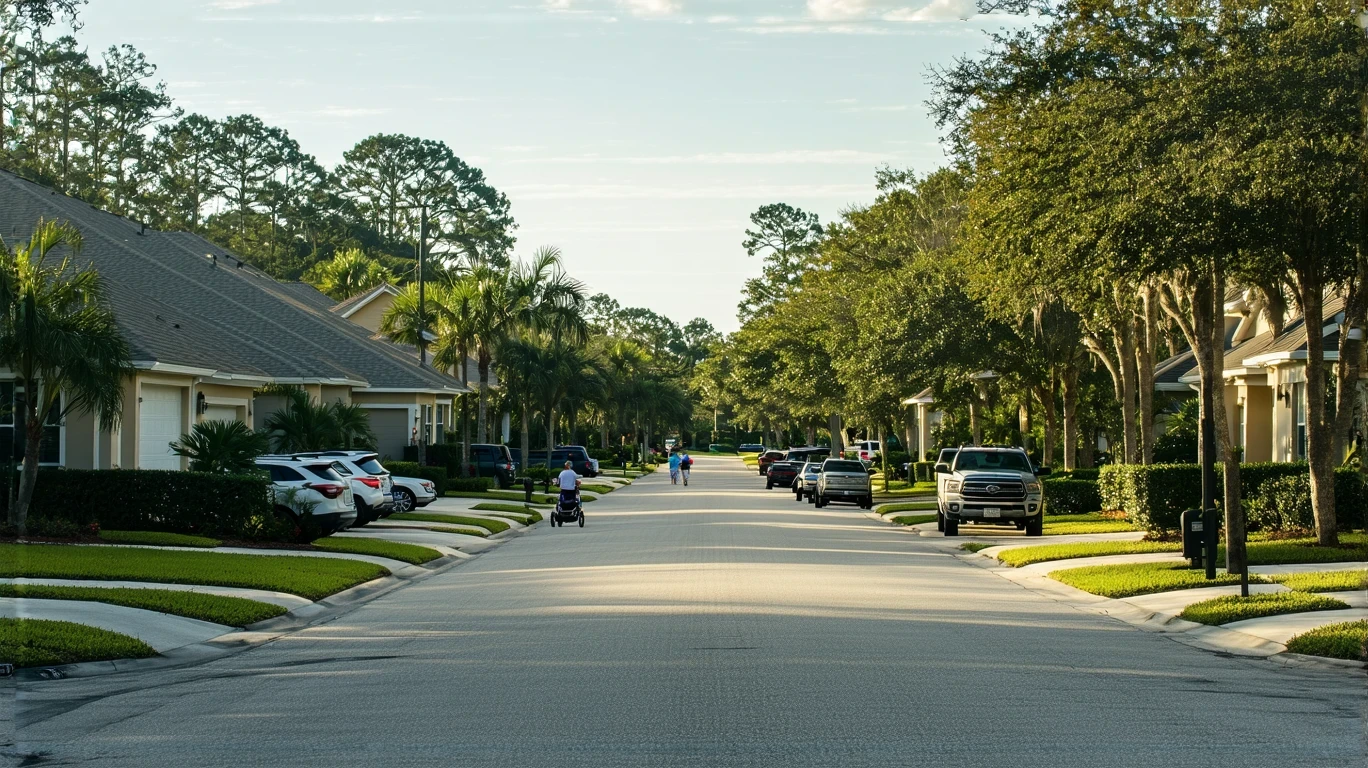
Ocoee sits in a sweet spot for families and commuters who want Orlando access without Orlando prices. The vibe is decidedly suburban: tree-lined streets, single-family homes, and a pace that feels slower than the metro core. There’s a hospital, schools are present throughout the area, and parks offer moderate green space—enough to support a grounded family routine without requiring constant drives to find basics.
But the city’s structure also reveals its limitations. Daily errands tend to cluster along commercial corridors rather than being woven into neighborhoods, which means most households rely heavily on cars. Pedestrian infrastructure exists in pockets, and while bus service is available, the built environment doesn’t make it easy to skip car ownership. For people who work remotely or prefer to walk to coffee shops and groceries, Ocoee can feel like it requires more planning and driving than they’d like.
The emotional center of Ocoee is this: it’s a place that feels stable and affordable relative to the Orlando metro, but it doesn’t pretend to be urban or particularly walkable. People who align with that tend to settle in happily. People who don’t often describe feeling restless.
What People Talk About Online
In local Facebook groups and broader Orlando-area discussions, Ocoee residents tend to focus on a few recurring themes: affordability, commute tradeoffs, and the tension between growth and preserving the city’s quieter character.
“It’s one of the few places left near Orlando where you can still afford a house with a yard.”
That pride in relative affordability shows up often, especially among families who feel priced out of Winter Park or downtown Orlando. But it’s paired with frustration about the commute—many residents work in Orlando proper, and the drive can stretch well beyond 30 minutes depending on traffic and destination.
“I love the neighborhood feel, but I wish there were more local spots to just walk to.”
This tension between residential calm and the desire for more walkable amenities is a common thread. Ocoee isn’t designed for strollable errands, and that works fine for some households but grates on others—especially remote workers or retirees who spend more time in the city during the day.
“It’s growing fast, and I’m not sure we’re keeping up with what that means for traffic and schools.”
Growth is a live topic. Longtime residents express concern about whether infrastructure, school capacity, and road networks can absorb the pace of new development. Newcomers tend to be more optimistic, viewing growth as a sign of momentum and investment.
How Local Coverage Frames the City
Local news and community coverage tend to frame Ocoee through the lens of transition: a city that’s no longer a sleepy outpost but not yet a dense suburb. Common topic buckets include:
- “New Retail and Dining Options Arrive as City Grows”
- “Residents Debate Development Pace and Infrastructure Needs”
- “Commuters Weigh Affordability Against Drive Times”
- “Schools and Family Amenities Draw Young Households”
- “Community Events Aim to Preserve Small-Town Feel”
The tone is rarely alarmist, but it’s not celebratory either—it’s observational, focused on how the city is changing and what that means for people already here. There’s a recurring question underneath much of the coverage: can Ocoee grow without losing the qualities that made it appealing in the first place?
What Reviews and Public Feedback Reveal
On platforms like Google Reviews, Nextdoor, and Yelp-style commentary, Ocoee earns praise from people who wanted suburban predictability and frustration from those who expected more variety or walkability.
Positive sentiment tends to come from families who appreciate the housing tradeoffs—larger homes, quieter streets, and access to schools without the price tags of closer-in Orlando neighborhoods. Parks and green space get mentioned as solid but not exceptional. The hospital and pharmacies provide reassurance for families with kids or aging parents.
Mild criticism centers on a few recurring themes: limited dining and entertainment options within the city itself, car dependency for nearly every errand, and the sense that “there’s not much to do here” unless you’re willing to drive into Orlando. Newer planned areas tend to feel more polished and family-friendly, while older pockets can feel a bit worn or disconnected from the amenities that newer residents expect.
Expectation matching is everything. People who moved to Ocoee specifically for affordability and residential calm tend to feel satisfied. People who assumed suburban living would still offer walkable coffee shops, bike lanes, and local nightlife often feel let down.
How Ocoee Compares to Nearby Cities
| Dimension | Ocoee | Winter Garden | Apopka |
|---|---|---|---|
| Overall Vibe | Affordable suburban calm, car-dependent | Walkable downtown, higher price point, more polished feel | More rural edges, similar affordability, less metro connectivity |
| Walkability | Limited, corridor-based errands | Strong in downtown core, mixed elsewhere | Minimal, very car-oriented |
| Family Appeal | Solid schools, moderate parks | High, with more local amenities | Comparable, more space but fewer services |
| Commute to Orlando | Moderate, 30+ minutes typical | Similar, slightly better highway access | Longer, more variable depending on route |
| Cost Pressure | Lower than Winter Garden, competitive with Apopka | Higher, especially for housing | Similar to Ocoee, slightly more variability |
Winter Garden offers a more walkable, polished downtown experience but comes with higher housing costs and more competition for homes. If you value being able to stroll to dinner or a farmers market, Winter Garden delivers that in ways Ocoee doesn’t. But if affordability and space matter more than walkable texture, Ocoee and Apopka both offer better value.
Apopka shares Ocoee’s car-dependent character and similar price points, but it feels more rural at the edges and slightly less connected to Orlando’s job centers. Ocoee sits in the middle: not as walkable as Winter Garden, not as sprawling as Apopka, and more affordable than both Winter Park and downtown Orlando.
What Locals Are Saying
“We love that our kids can bike around the neighborhood safely, but we still have to drive them everywhere else—school, sports, friends’ houses. It’s not walkable, but it’s peaceful.”
— Family with elementary-aged children
“I work from home, and honestly, Ocoee can feel a little isolating. There’s no coffee shop I can walk to, no local lunch spot within a reasonable distance. I end up driving to Winter Garden or Orlando for that kind of thing.”
— Remote worker, early 30s
“The commute is the tradeoff. I drive 40 minutes each way to downtown Orlando, but we got a house here for half what we’d pay closer in. For us, it’s worth it.”
— Commuter, mid-40s
“It’s a good place to retire if you want quiet and don’t mind driving. The hospital is here, there are parks, and it’s not as hectic as other parts of the metro. But if you’re looking for walkable charm, this isn’t it.”
— Retiree, late 60s
“We moved here five years ago, and the growth has been noticeable. More traffic, more construction, more people. I hope the city can keep up with the infrastructure needs.”
— Longtime resident
“Ocoee is fine if you have a car and a family. If you’re single, carless, or looking for nightlife, you’ll probably feel stuck.”
— Young professional, renting
“The neighbors are friendly, the streets are safe, and we’re close enough to Orlando that we don’t feel totally cut off. It’s not flashy, but it works for us.”
— Couple, late 50s
Does Ocoee Feel Like a Good Fit?
Ocoee tends to work well for families and commuters who prioritize affordability, residential calm, and proximity to Orlando over walkability or local cultural density. It’s a city where car ownership is essential, where errands happen along commercial corridors rather than within walking distance, and where the emotional rhythm is shaped by suburban predictability rather than urban texture.
It tends to frustrate people who want to walk to daily errands, who value cycling infrastructure, or who expect a vibrant local dining and entertainment scene. Remote workers and young professionals without kids often describe feeling isolated or restless, especially if they’re used to more walkable environments.
The city’s growth is real, and that brings both opportunity and tension—more retail and services are arriving, but so are concerns about traffic, school capacity, and whether infrastructure can keep pace. For people who see growth as momentum, that’s energizing. For people who moved here specifically for the quieter pace, it can feel unsettling.
If you’re trying to decide whether Ocoee fits, ask yourself: do you value space, affordability, and a slower suburban rhythm enough to accept car dependency and limited walkability? Are you comfortable with a 30+ minute commute in exchange for lower monthly expenses? Do you prioritize neighborhood safety and family infrastructure over local nightlife and cultural amenities?
If those tradeoffs align with what you need, Ocoee tends to feel like a solid, stable choice. If they don’t, the city’s limitations will likely feel more pronounced than its strengths.
For a clearer picture of how costs break down day to day, explore the monthly budget breakdown. To understand how income and lifestyle needs interact with the city’s structure, that guide offers additional context. And if you’re weighing Ocoee against other Orlando-area options, comparing housing and commute tradeoffs across nearby cities can help clarify what matters most.
How this article was built: In addition to public economic data, this article incorporates location-based experiential signals derived from anonymized geographic patterns—such as access density, walkability, and land-use mix—to reflect how day-to-day living actually feels in Ocoee, FL.
The perspectives shown reflect commonly expressed local sentiment and recurring themes in public discussion, rather than individual accounts.