
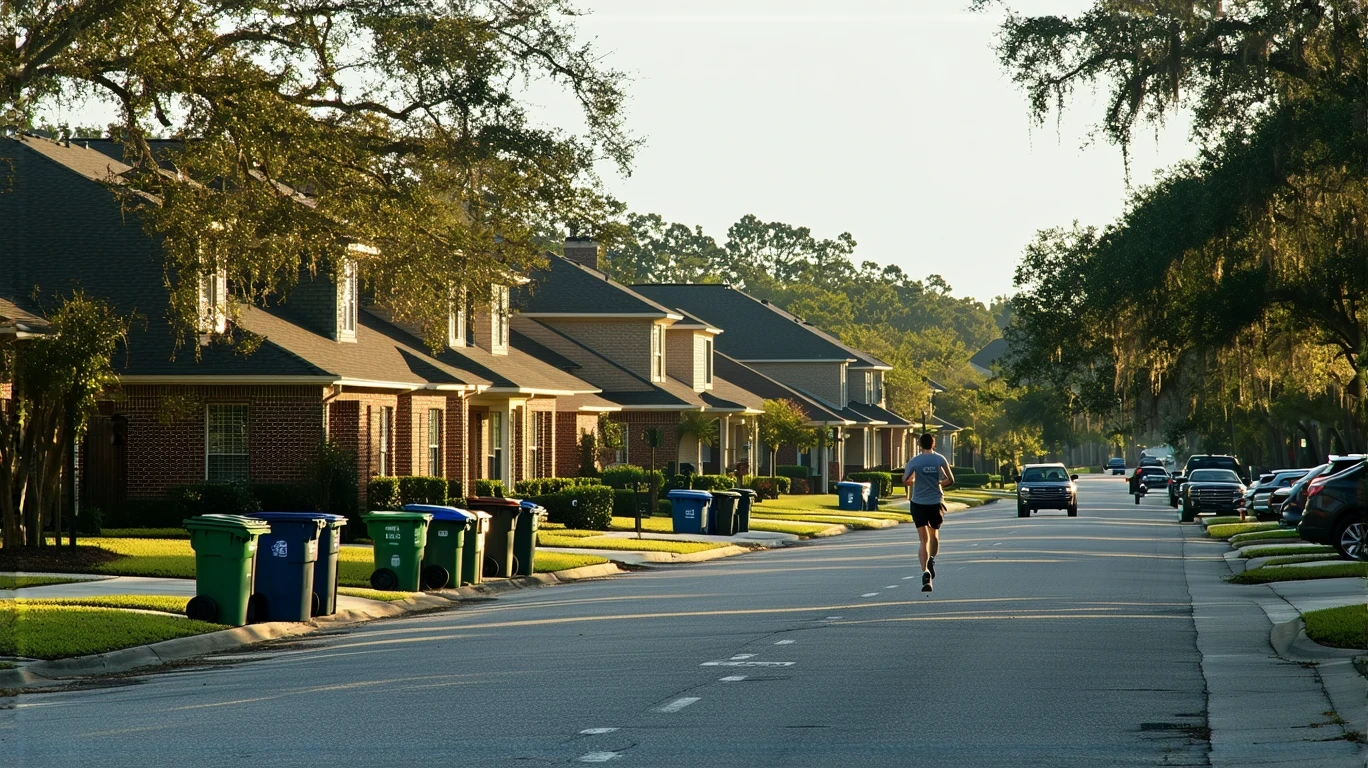
Ocoee and Kissimmee sit within the same Orlando metro area, yet the way cost pressure shows up in daily life differs sharply between them. Both cities attract families, commuters, and retirees looking for Florida living without the intensity of downtown Orlando, but the tradeoffs aren’t subtle. Ocoee draws households prioritizing newer housing stock and proximity to employment corridors west of the metro core, while Kissimmee appeals to those seeking lower entry costs and better transit connectivity near the region’s southern tourism and service economy. The decision between them in 2026 isn’t about which city costs less overall—it’s about which cost structure aligns with how your household earns, spends, and moves through the week.
Housing dominates the financial equation in both cities, but the nature of that pressure diverges. Ocoee’s market reflects demand from higher-income households working in tech, healthcare, and professional services, creating upward pressure on both rent and purchase prices. Kissimmee’s housing costs remain lower, shaped by proximity to hospitality employment and a larger share of older housing stock. Transportation costs layer differently as well: Ocoee households face higher gas prices and rely almost entirely on personal vehicles, while Kissimmee offers rail access and meaningfully lower fuel costs. Utilities behave similarly in both cities given Florida’s extended cooling season, but the age and size of housing stock introduce variability that affects monthly exposure.
The income gap between the two cities—Ocoee’s median household income of $88,828 per year versus Kissimmee’s $45,319 per year—signals fundamentally different household profiles, not just different price points. Ocoee’s cost structure assumes dual-income professional households with predictable schedules and car-dependent commutes. Kissimmee’s lower costs reflect a market serving service workers, retirees, and families managing tighter budgets with less schedule flexibility. Understanding where costs concentrate, how they behave over time, and which households feel pressure most acutely matters more than comparing totals.
Housing Costs
Housing costs in Ocoee and Kissimmee reflect different market dynamics, household compositions, and infrastructure age. Ocoee’s median home value of $325,100 positions it as a higher-entry market, drawing buyers who prioritize newer construction, larger lots, and access to highly rated school zones. Kissimmee’s median home value of $253,000 opens the door to homeownership for households with lower down payment capacity or those willing to trade newer finishes for lower monthly obligations. The difference isn’t just about purchase price—it’s about what kind of housing stock dominates each market and who that stock serves.
Renters face similar structural differences. Ocoee’s median gross rent of $1,756 per month reflects a market with fewer large apartment complexes and more single-family rentals, often managed by individual landlords or small property groups. Kissimmee’s median rent of $1,419 per month benefits from a larger supply of multifamily housing, including older garden-style complexes and units near the tourism corridor. For renters, the difference shows up not just in monthly obligations but in lease flexibility, maintenance responsiveness, and the likelihood of rent increases at renewal. Ocoee renters often face tighter inventory and less negotiating power; Kissimmee renters encounter more options but also more variability in building quality and management practices.
The housing decision between these cities hinges on household income stability and long-term plans. Ocoee’s higher costs assume households can absorb front-loaded expenses—larger down payments, higher property taxes, and steeper monthly rent—in exchange for predictable appreciation and access to newer infrastructure. Kissimmee’s lower entry costs suit households prioritizing cash flow flexibility, those entering homeownership for the first time, or retirees managing fixed incomes. Families with school-age children may weigh Ocoee’s higher costs against perceived school quality, while single adults or couples without children may find Kissimmee’s lower rent frees up income for other priorities.
| Housing Type | Ocoee | Kissimmee |
|---|---|---|
| Median Home Value | $325,100 | $253,000 |
| Median Gross Rent | $1,756 per month | $1,419 per month |
Housing takeaway: Ocoee imposes higher entry barriers and ongoing obligations, fitting households with stable dual incomes and long-term ownership plans. Kissimmee offers lower upfront costs and more rental flexibility, suiting first-time buyers, service workers, and retirees managing tighter budgets. The primary difference is front-loaded cost versus ongoing cash flow pressure, not total affordability.
Utilities and Energy Costs
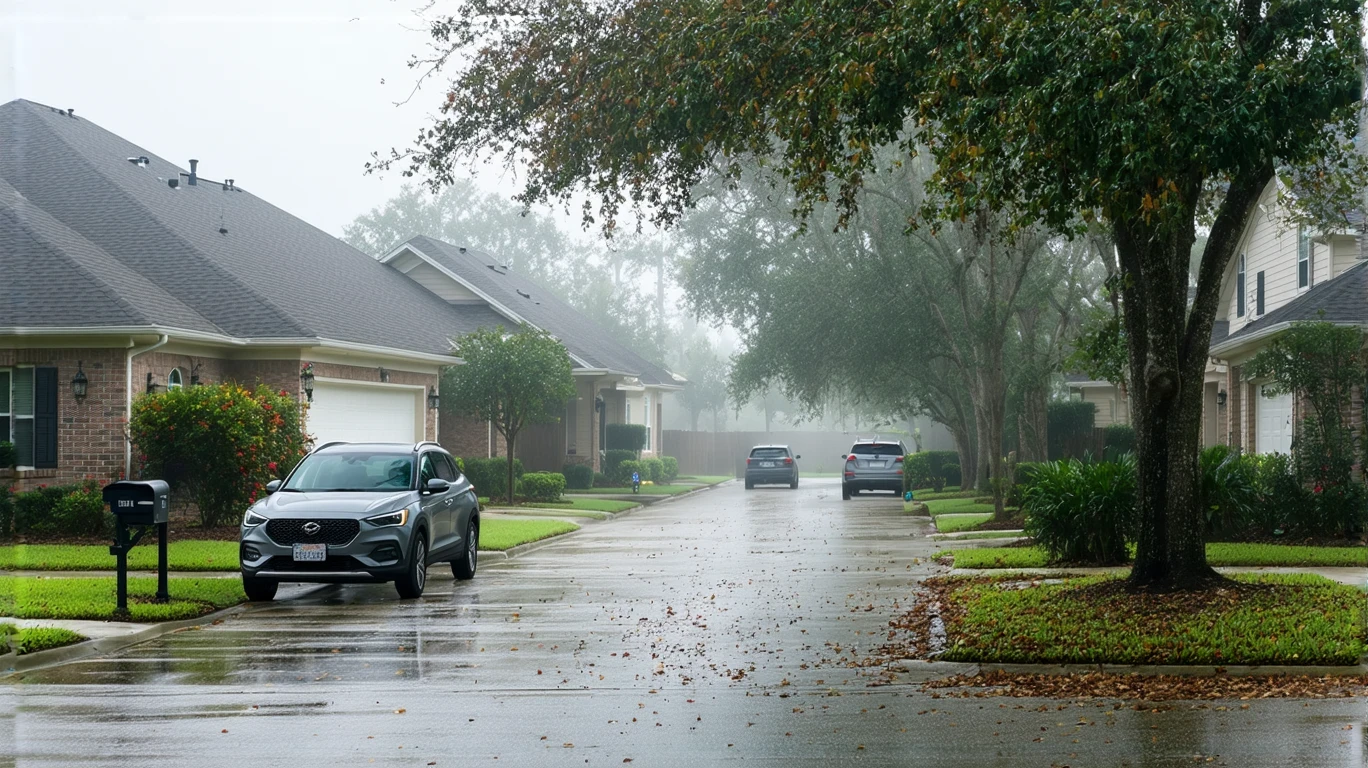
Utility costs in both Ocoee and Kissimmee are shaped by Florida’s extended cooling season, high humidity, and reliance on air conditioning from April through October. Electricity rates are identical—15.02¢/kWh—but the way households experience that rate depends on housing age, size, and construction quality. Ocoee’s newer housing stock tends to feature better insulation, modern HVAC systems, and energy-efficient windows, which reduce baseline cooling demand. Kissimmee’s older housing stock, particularly in neighborhoods built before updated energy codes, often drives higher consumption even at the same rate. A 1,200-square-foot apartment in Ocoee may run more predictably than a similar-sized unit in Kissimmee if the latter has single-pane windows and an aging AC unit.
Natural gas prices differ slightly—$23.62/MCF in Ocoee versus $25.39/MCF in Kissimmee—but natural gas plays a minimal role in Florida households outside of water heating and occasional cooking appliances. The real cost driver is electricity, and the real variable is housing form. Single-family homes in both cities face higher cooling costs than apartments due to larger square footage and greater exterior surface area. Families in Ocoee’s newer subdivisions benefit from modern construction standards that limit heat gain, while families in Kissimmee’s older single-family neighborhoods may face higher summer bills despite identical rates. Renters in older buildings have less control over efficiency upgrades, making utility volatility a more significant concern in Kissimmee’s aging apartment stock.
Household size and occupancy patterns also shape utility exposure. A dual-income couple in Ocoee working standard office hours may see lower usage than a family with school-age children home during peak heat hours. In Kissimmee, where work-from-home rates are higher (14.3% versus Ocoee’s 7.7%), more households run cooling systems throughout the day, increasing baseline consumption. Retirees, who make up a larger share of Kissimmee’s population, also tend to occupy homes during peak cooling hours, adding to summer exposure. The interaction between housing age, household schedule, and occupancy density determines whether utility costs feel predictable or volatile.
Utility takeaway: Ocoee households benefit from newer construction that limits cooling demand, making utility costs more predictable despite identical electricity rates. Kissimmee households, especially those in older housing stock or with daytime occupancy, face higher volatility and less control over consumption. The primary difference is housing-driven efficiency, not rate structure.
Groceries and Daily Expenses
Grocery and daily spending pressure in Ocoee and Kissimmee reflects both price sensitivity and access patterns. Derived estimates suggest similar baseline costs—bread around $1.86–$1.87/lb, ground beef near $6.81–$6.82/lb, eggs $2.52–$2.60/dozen—but the way households shop and the friction involved in accessing lower prices differs. Ocoee’s commercial corridors feature a mix of national chains, big-box stores, and newer retail centers, giving households more options to comparison-shop and buy in bulk. Kissimmee’s grocery landscape includes similar chains but also a higher concentration of smaller ethnic markets, discount grocers, and convenience stores serving tourism workers and lower-income families. The difference isn’t about prices on the shelf—it’s about how much effort it takes to find the best price and whether your schedule allows for it.
Dining out and convenience spending introduce another layer of cost variability. Ocoee’s restaurant scene skews toward family-friendly chains and fast-casual concepts clustered near shopping centers, making it easy to default to takeout when schedules tighten. Kissimmee’s proximity to the tourism corridor brings a wider range of dining options, including budget-friendly spots catering to service workers and international visitors. Households in Kissimmee may find it easier to eat out affordably, but they also face more temptation to spend on convenience when working irregular hours or managing long commutes. Single adults and couples in Ocoee may spend more per meal but visit restaurants less frequently; families in Kissimmee may spend less per visit but rely on takeout more often due to schedule unpredictability.
Household size and shopping habits determine where grocery pressure concentrates. Families managing larger volumes benefit from Ocoee’s access to warehouse clubs and big-box retailers, where bulk buying reduces per-unit costs. Single adults and couples in Kissimmee may find smaller grocery runs more practical, especially if they’re shopping after work shifts or relying on transit. The presence of discount grocers and ethnic markets in Kissimmee offers price flexibility for households willing to shop multiple stores, but that strategy requires time and transportation access. Households in Ocoee face fewer access barriers but also fewer low-cost alternatives if they’re trying to minimize spending.
Grocery takeaway: Ocoee offers more streamlined access to big-box and bulk shopping, fitting households with predictable schedules and storage capacity. Kissimmee provides more low-cost alternatives and dining flexibility, suiting households managing tighter budgets or irregular schedules. The primary difference is access friction versus price flexibility, not baseline grocery costs.
Taxes and Fees
Property taxes, sales taxes, and recurring fees shape long-term cost exposure in both Ocoee and Kissimmee, though the feed does not provide specific tax rates for either city. Florida’s statewide reliance on sales taxes and property taxes—combined with the absence of state income tax—means homeowners and renters alike feel tax pressure through housing costs and consumption. Homeowners in Ocoee, given higher median home values, face larger annual property tax bills even at identical millage rates. Renters in both cities indirectly absorb property taxes through rent, but the passthrough is less transparent and harder to predict.
HOA fees and special assessments introduce another cost layer, particularly in Ocoee’s newer subdivisions where homeowners associations manage amenities like pools, landscaping, and security. These fees can range from modest monthly dues to several hundred dollars, depending on the community. Kissimmee’s older neighborhoods often lack HOAs, reducing recurring fees but also shifting maintenance responsibility entirely to individual homeowners. For buyers, the tradeoff is predictability versus control: Ocoee’s HOA-managed communities offer consistent upkeep and shared amenities, while Kissimmee’s non-HOA properties allow more autonomy but require more hands-on management.
Sales taxes affect daily spending in both cities, and Florida’s relatively high state and local sales tax rates mean frequent purchases add up. Households that rely on dining out, retail shopping, or vehicle purchases feel this pressure more acutely. Renters and homeowners alike pay sales taxes, but the impact differs by spending habits. Families in Ocoee with higher incomes may absorb sales taxes more easily, while families in Kissimmee managing tighter budgets may feel each percentage point more sharply. The absence of income tax benefits all households, but it shifts the tax burden toward consumption and property ownership, making housing tenure and spending patterns the primary determinants of tax exposure.
Tax takeaway: Ocoee homeowners face higher property tax exposure due to elevated home values, and HOA fees add predictable but non-negotiable costs. Kissimmee homeowners benefit from lower property tax bases and fewer HOA obligations, but they assume more direct maintenance responsibility. The primary difference is front-loaded predictability versus ongoing variability, not total tax burden.
Transportation & Commute Reality
Transportation costs and commute patterns reveal one of the sharpest structural differences between Ocoee and Kissimmee. Ocoee’s average commute time of 32 minutes and long-commute percentage of 54.4% reflect a car-dependent suburb where most workers drive to jobs scattered across the Orlando metro. With only 7.7% of workers able to work from home, the majority of Ocoee households face daily driving obligations. Gas prices in Ocoee stand at $3.95/gal, adding meaningful cost pressure for households making multiple trips per day or managing two-car commutes. The experiential signals confirm this reality: Ocoee’s mobility texture is mixed, with moderate pedestrian infrastructure but no rail transit—only bus service. Daily errands, groceries, and work trips all assume car access.
Kissimmee’s commute patterns look similar on the surface—33 minutes average, 56.4% long commutes—but the underlying structure differs. A much higher share of workers (14.3%) work from home, reducing the number of households making daily commutes. More importantly, Kissimmee has rail transit access, offering an alternative to driving for workers commuting north into Orlando or east toward the airport. Gas prices in Kissimmee are notably lower at $2.93/gal, easing the cost burden for households that still rely on cars. The experiential signals show Kissimmee with walkable pockets and higher pedestrian-to-road ratios, meaning some errands and local trips can happen without a vehicle. Grocery density exceeds high thresholds, suggesting more neighborhood-level access.
The difference in transportation pressure shows up most clearly for single-car households and families managing multiple schedules. In Ocoee, running errands, getting to work, and managing school drop-offs almost always requires a car, and the higher gas prices compound the cost of each trip. In Kissimmee, rail access and denser grocery infrastructure offer more flexibility, especially for households willing to adjust routines around transit schedules or walk to nearby stores. Dual-income couples in Ocoee often need two cars to maintain work schedules; similar households in Kissimmee may manage with one car if they coordinate around rail and local errands. The time cost of commuting is similar, but the cash cost and logistical complexity differ.
Transportation takeaway: Ocoee imposes higher fuel costs and near-total car dependence, fitting households with stable incomes, multiple vehicles, and predictable work schedules. Kissimmee offers lower gas prices, rail transit access, and more walkable errand options, suiting households managing tighter budgets or seeking flexibility. The primary difference is car reliance versus transit viability, not commute duration.
Cost Structure Comparison
Housing dominates the cost experience in both Ocoee and Kissimmee, but the nature of that dominance differs. Ocoee’s higher home values and rents create a front-loaded cost structure: households pay more upfront and monthly, but they gain access to newer housing stock, better-rated schools, and more predictable appreciation. Kissimmee’s lower housing costs reduce entry barriers and ongoing obligations, but they come with older infrastructure, more maintenance uncertainty, and less predictable resale value. For renters, Ocoee’s tighter inventory limits flexibility, while Kissimmee’s larger multifamily stock offers more options but also more variability in quality and management.
Utilities introduce more volatility in Kissimmee due to older housing stock and higher daytime occupancy rates. Ocoee households benefit from newer construction that limits cooling demand, making summer bills more predictable. Kissimmee households, especially those in aging single-family homes or working from home, face higher consumption and less control over efficiency. The difference isn’t about electricity rates—it’s about how housing age and household schedules interact with Florida’s extended cooling season.
Transportation patterns matter more in Ocoee, where higher gas prices and near-total car dependence make fuel costs a recurring, non-negotiable expense. Kissimmee’s lower gas prices and rail access reduce transportation pressure, especially for households willing to adjust routines around transit or walkable errands. The difference shows up most clearly for single-car households and families managing multiple schedules: Ocoee assumes two-car logistics, while Kissimmee offers more flexibility.
Groceries and daily spending pressure concentrate differently depending on household size and shopping habits. Ocoee’s big-box access and streamlined retail corridors fit families buying in bulk and managing predictable schedules. Kissimmee’s discount grocers and denser food access suit households shopping more frequently, managing irregular hours, or prioritizing price flexibility over convenience. The difference isn’t about baseline prices—it’s about how much effort it takes to find the best price and whether your schedule allows for it.
The better choice depends on which costs dominate your household. Households sensitive to housing entry barriers may prefer Kissimmee’s lower upfront costs, while those prioritizing predictability and newer infrastructure may accept Ocoee’s higher monthly obligations. For transportation-dependent households, Kissimmee’s lower gas prices and rail access offer meaningful relief. For families prioritizing school access and housing quality, Ocoee’s higher costs may feel justified. The decision is less about total cost and more about which cost pressures align with your income stability, schedule flexibility, and long-term plans.
How the Same Income Feels in Ocoee vs Kissimmee
Single Adult
For a single adult, housing becomes the first non-negotiable cost, and the difference between Ocoee’s $1,756 median rent and Kissimmee’s $1,419 median rent shapes everything else. In Ocoee, rent consumes a larger share of income, leaving less flexibility for discretionary spending, savings, or unexpected expenses. Kissimmee’s lower rent creates more breathing room, but transportation costs can erode that advantage if the job requires daily driving at Ocoee’s higher gas prices. Flexibility exists in Kissimmee through rail access and walkable errands, reducing the need for a car in some scenarios. In Ocoee, car ownership is non-negotiable, and the higher fuel costs add friction to every trip. The time cost of commuting is similar in both cities, but the cash cost and logistical burden differ based on transit viability and housing proximity to work.
Dual-Income Couple
For a dual-income couple, the non-negotiable costs expand to include two commutes, higher utility usage from a larger living space, and the potential for two-car logistics. Ocoee’s higher housing costs assume stable dual incomes, and the newer housing stock limits utility volatility, making monthly expenses more predictable. Kissimmee’s lower housing costs free up cash flow, but older housing stock can introduce utility spikes during summer months. Flexibility in Kissimmee comes from rail access and lower gas prices, which ease the burden of managing two work schedules without requiring two cars. In Ocoee, two-car ownership is almost always necessary, and the higher gas prices compound the cost of maintaining separate commutes. The role of commute friction is similar in both cities, but Kissimmee offers more options to reduce car dependence if both partners can coordinate around transit or work-from-home schedules.
Family with Kids
For a family with kids, housing size, school access, and household logistics become the dominant cost drivers. Ocoee’s higher housing costs reflect demand for larger homes in neighborhoods with highly rated schools, and the newer construction reduces maintenance surprises and utility volatility. Kissimmee’s lower housing costs allow families to afford more space or save for other priorities, but older housing stock can introduce unpredictable repair costs and higher cooling bills. Flexibility disappears quickly in both cities once school schedules, extracurriculars, and childcare enter the equation. Ocoee’s car-dependent layout assumes two vehicles and constant driving for school drop-offs, errands, and activities. Kissimmee’s rail access and denser grocery infrastructure offer limited relief, but most family logistics still require a car. The time cost of managing household errands and commutes is high in both cities, but Ocoee’s higher gas prices and front-loaded housing costs create more cash flow pressure, while Kissimmee’s lower entry costs and fuel prices offer more flexibility for families managing tighter budgets or irregular incomes.
Decision Matrix: Which City Fits Which Household?
| Decision factor | If you’re sensitive to this… | Ocoee tends to fit when… | Kissimmee tends to fit when… |
|---|---|---|---|
| Housing entry + space needs | Down payment capacity, monthly rent burden, school access | You have stable dual income and prioritize newer construction and school quality | You need lower upfront costs and more rental flexibility |
| Transportation dependence + commute friction | Fuel costs, car ownership requirements, transit viability | You have two cars and predictable work schedules that justify higher gas prices | You can use rail transit or coordinate around one car with lower fuel costs |
| Utility variability + home size exposure | Cooling costs, housing age, daytime occupancy | You value predictable bills from newer, efficient housing stock | You can manage higher summer volatility in exchange for lower rent |
| Grocery strategy + convenience spending creep | Bulk shopping access, price flexibility, dining out frequency | You shop in bulk at big-box stores and have storage capacity | You shop frequently at discount grocers or need walkable food access |
| Fees + friction costs (HOA, services, upkeep) | Predictable monthly dues, maintenance responsibility, amenity access | You prefer managed communities with shared amenities and predictable fees | You want autonomy over maintenance and lower recurring fees |
| Time budget (schedule flexibility, errands, logistics) | Work-from-home viability, errand density, household coordination | You have fixed office schedules and can absorb car-dependent logistics | You work from home or need flexibility to manage errands without a car |
Lifestyle Fit
Ocoee and Kissimmee offer different lifestyle textures shaped by their infrastructure, transit access, and household composition. Ocoee functions as a car-dependent suburb with mixed pedestrian infrastructure and bus-only transit, meaning most daily activities—work, errands, recreation—require driving. The city’s newer housing stock and proximity to employment corridors west of Orlando attract dual-income professional households prioritizing predictability and access to highly rated schools. Recreational options center around neighborhood amenities, parks with moderate density, and water features that support outdoor activities. The pace of life assumes stable work schedules, two-car logistics, and minimal reliance on public transit. For households that value newer construction, lower maintenance uncertainty, and access to big-box retail, Ocoee’s structure aligns well with those priorities.
Kissimmee offers more transit flexibility and walkable pockets, with rail access and higher pedestrian-to-road ratios that make some errands and local trips possible without a car. The city’s proximity to the tourism corridor and service economy creates a more diverse household mix, including retirees, service workers, and families managing tighter budgets. Grocery density exceeds high thresholds, and the presence of discount grocers and ethnic markets offers price flexibility for households willing to shop multiple stores. Parks and water features provide moderate outdoor access, and the higher work-from-home percentage (14.3% versus Ocoee’s 7.7%) suggests more households managing flexible or irregular schedules. For households prioritizing transit viability, lower entry costs, and neighborhood-level errand access, Kissimmee’s infrastructure supports those needs more directly.
The lifestyle differences between Ocoee and Kissimmee indirectly affect costs in ways that aren’t captured by housing or transportation alone. Ocoee’s car-dependent layout increases the likelihood of two-car ownership, higher fuel consumption, and more frequent vehicle maintenance. Kissimmee’s rail access and denser food infrastructure reduce the need for constant driving, lowering fuel costs and offering more flexibility for single-car households. Ocoee’s newer housing stock reduces utility volatility and maintenance surprises, making monthly budgets more predictable. Kissimmee’s older housing stock introduces more variability in cooling costs and repair needs, but the lower entry costs and rent levels free up cash flow for households managing those uncertainties. The choice between the two cities depends on whether you prioritize predictability and newer infrastructure or flexibility and lower upfront costs.
Quick fact: Kissimmee offers rail transit access, giving households an alternative to driving for commutes into Orlando or toward the airport.
Quick fact: Ocoee’s median household income of $88,828 per year is nearly double Kissimmee’s $45,319 per year, reflecting fundamentally different household profiles and cost expectations.
Frequently Asked Questions
Is Ocoee or Kissimmee cheaper for renters in 2026?
Kissimmee’s median gross rent of $1,419 per month is lower than Ocoee’s $1,756 per month, reducing monthly obligations and freeing up cash flow. However, Kissimmee’s older housing stock can introduce higher utility costs during summer months, and the quality and management of rental properties vary more widely. Ocoee’s higher rent reflects newer construction and tighter inventory, offering more predictable utility costs but less flexibility for renters managing tighter budgets. The difference is less about total cost and more about whether you prioritize lower monthly rent or newer, more efficient housing.
How do transportation costs differ between Ocoee and Kissimmee?
Ocoee’s gas prices of $3.95/gal are higher than Kissimmee’s $2.93/gal, and Ocoee’s car-dependent layout means most households need at least one vehicle, often two. Kissimmee offers rail transit access and lower fuel costs, reducing transportation pressure for households willing to coordinate around transit schedules or manage with one car. Commute times are similar—32 minutes in Ocoee versus 33 minutes in Kissimmee—but the cash cost and logistical complexity differ based on car dependence and fuel prices.
Which city is better for families with kids in 2026?
Ocoee’s higher housing costs reflect demand for access to highly rated schools and newer construction, making it a better fit for families with stable dual incomes who prioritize predictability and school quality. Kissimmee’s lower housing costs and rent levels allow families to afford more space or save for other priorities, but older housing stock can introduce maintenance uncertainty and higher utility bills. Both cities require car ownership for managing school drop-offs, extracurriculars, and household logistics, but Ocoee’s higher gas prices add more cost pressure for families making multiple daily trips.
Do utilities cost more in Ocoee or Kissimmee?
Electricity rates are identical at 15.02¢/kWh, but the way households experience utility costs differs based on housing age and occupancy patterns. Ocoee’s newer housing stock limits cooling demand, making summer bills more predictable. Kissimmee’s older housing stock and higher work-from-home percentage (14.3% versus Ocoee’s 7.7%) increase daytime cooling usage, leading to higher consumption and more volatile bills. The difference is driven by housing efficiency and household schedules, not rate structure.
Which city offers better access to groceries and daily errands in 2026?
Ocoee offers streamlined access to big-box retailers and warehouse clubs, making it easier to buy in