
It’s Tuesday morning in Ocoee. You’re sitting at the kitchen counter with coffee, flipping through the stack: rent receipt, electric bill higher than last month, a gas station charge from yesterday’s commute, groceries from the weekend. None of it feels catastrophic on its own, but together it’s starting to add up faster than you expected. That’s the reality of managing a monthly budget in Ocoee — the pressure doesn’t come from one giant expense, it comes from the steady accumulation of moderate costs across housing, transportation, utilities, and daily errands, each one sensitive to how you live and where you need to go.
Budgeting Smarter in Ocoee
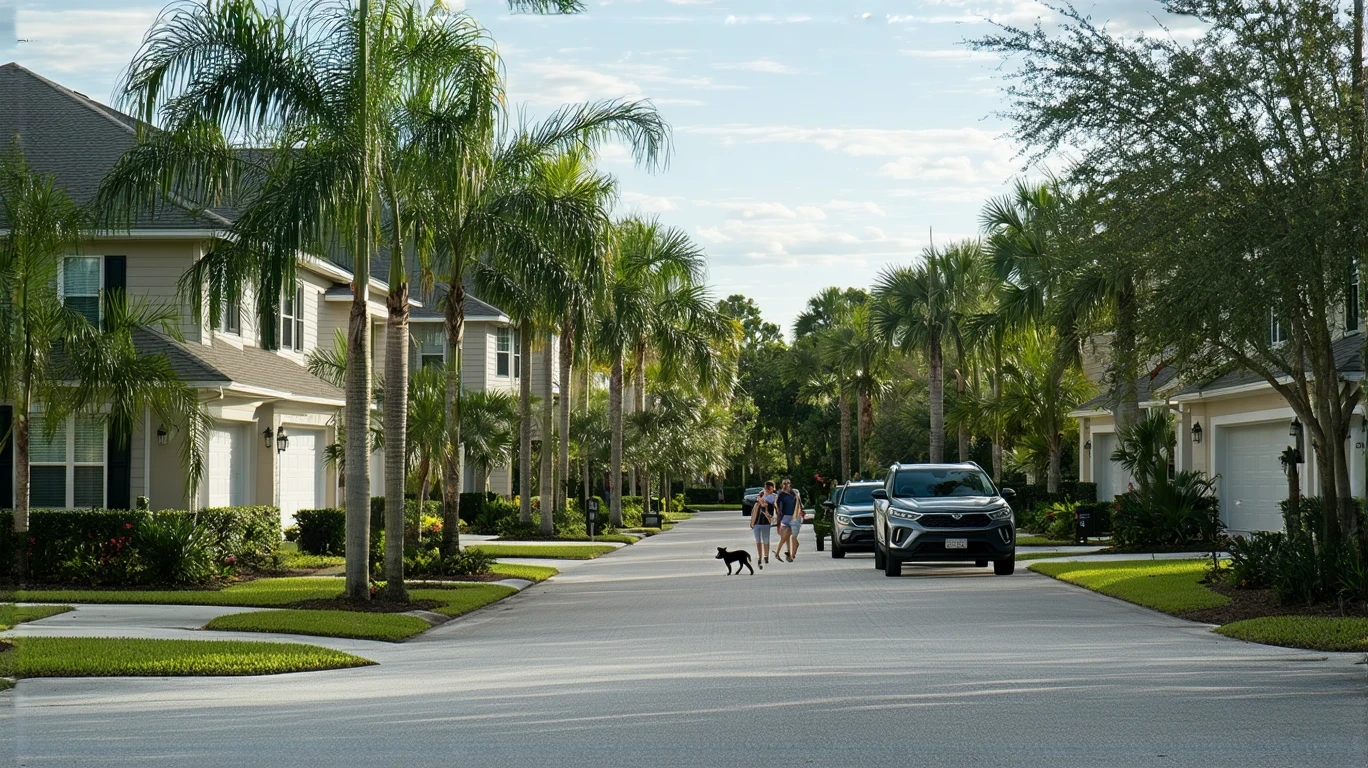
Ocoee sits just west of Orlando, blending suburban residential neighborhoods with commercial corridors and a commute-oriented layout. The median gross rent is $1,756 per month, and the median home value is $325,100. Median household income is $88,828 per year, which translates to roughly $7,402 gross monthly income before taxes. Electricity runs 15.02¢/kWh, natural gas is priced at $23.62/MCF, and gas at the pump costs $3.95/gal. The regional price parity index is 101, meaning Ocoee tracks very close to the national baseline — but that doesn’t mean budgets here are simple.
What newcomers often underestimate is how costs stack when the city’s structure requires coordination. Ocoee’s layout reflects corridor-clustered errands accessibility and a mixed mobility texture with moderate pedestrian infrastructure — meaning most households rely on a car for work, groceries, and errands. The average commute is 32 minutes, and 54.4% of workers face long commutes. Only 7.7% work from home. Bus service is present, but the transit system is bus-only with no rail, and the bike infrastructure exists only in pockets. This means transportation isn’t just a line item — it’s a structural cost driver that shapes when, where, and how you spend money on everything else.
The other underestimated factor is Florida’s extended cooling season. Ocoee’s climate demands air conditioning for much of the year, and electricity becomes the dominant utility expense. Heating needs are minimal — natural gas is available but rarely drives winter bills the way it does in colder states. The result is a budget that feels stable in some months and then spikes when temperatures climb and the AC runs continuously.
A Simple Budget Map: How Costs Behave by Household Type
The table below illustrates how cost behavior and exposure differ across three household types in Ocoee. It does not estimate what each household pays — instead, it describes whether a category is stable or volatile, fixed or flexible, and what drives variation.
| Category | Jasmine (single renter) | Sam & Elena (couple) | Ortiz family (2 kids, owners) |
|---|---|---|---|
| Housing (Rent or Mortgage) | Fixed monthly; $1,756 median rent | Fixed monthly; may share rent or carry mortgage | Fixed mortgage or rent; $325,100 median home value |
| Utilities | Seasonal; electricity-driven in summer | Seasonal; shared usage reduces per-person exposure | Size-sensitive; larger home amplifies cooling load |
| Food (Groceries + Eating Out) | Flexible; single-person portions reduce waste | Shared grocery trips; moderate dining frequency | Volume-sensitive; bulk buying and meal planning required |
| Transportation | Commute-dependent; solo fuel and maintenance | May share one vehicle or operate two; commute footprint varies | Multi-vehicle household; school, work, errands multiply trips |
| Fees / Friction Costs | Minimal if renting; trash/water often included | Moderate; may encounter HOA or service fees | Admin-heavy; HOA, trash, water/sewer, maintenance, insurance |
| Discretionary (life + surprises) | Flexible; compressed by fixed costs | Shared discretionary pool; more room for tradeoffs | Episodic; childcare, activities, and repairs create spikes |
| What Changes This Most | Commute distance and cooling efficiency | Vehicle count and housing choice (rent vs own) | Home size, vehicle count, and seasonal utility load |
Methodology: This guide uses only city-level figures provided in the IndexYard data feed for 2026. Where exact category totals aren’t provided, categories are described directionally to show budget behavior rather than a receipt-accurate total.
The Real Cost Drivers in Ocoee
Three forces dominate monthly budgets in Ocoee: housing structure, transportation dependence, and electricity-driven utility exposure. Renting vs buying in Ocoee sets the baseline — median rent of $1,756 per month is fixed and predictable, while ownership at a median home value of $325,100 introduces mortgage payments, property taxes, insurance, and maintenance. Neither path is inherently cheaper; the tradeoff is between flexibility and equity accumulation.
Transportation costs are shaped by Ocoee’s corridor-clustered errands layout and the fact that most residents commute by car. With an average commute of 32 minutes and more than half of workers facing long commutes, fuel consumption is a recurring, non-negotiable expense. For illustrative context, assuming a 25-mile round-trip commute and a vehicle achieving 25 MPG, a commuter would use about 1 gallon per day. At $3.95/gal, that’s roughly $79 per month in fuel for work trips alone — before errands, weekend travel, or multi-vehicle households. This figure is illustrative and excludes maintenance, insurance, registration, and parking.
Utilities in Ocoee are electricity-dominated due to Florida’s extended cooling season. At 15.02¢/kWh, a household using 1,000 kWh per month — a typical baseline for a home running air conditioning — would see an illustrative electric bill around $150 per month before fees or taxes. Actual usage varies with home size, insulation quality, thermostat settings, and occupancy patterns, but the key point is that cooling load drives the bill, and summer months intensify exposure. Natural gas, priced at $23.62/MCF, is available but plays a minor role in most Ocoee households, as heating demand is low.
Beyond these three pillars, friction costs accumulate quietly. These are the fees and services that don’t fit neatly into rent or utilities but show up every month or quarter, adding administrative weight and reducing discretionary flexibility.
- HOA or association dues: Common in many Ocoee neighborhoods, these fees typically cover landscaping, common area maintenance, and sometimes trash or water service. The structure and cost vary widely by community.
- Trash and recycling: May be included in rent, bundled into HOA dues, or billed separately by the city or a private hauler.
- Water and sewer: Often billed by the city or utility district; may include stormwater fees. Renters sometimes see this included in rent, while owners pay directly.
- Parking and permits: Generally not a major cost in Ocoee’s suburban layout, but some apartment complexes charge for assigned or covered spaces.
- Seasonal upkeep: In Florida, this includes HVAC servicing (critical for cooling efficiency), lawn care, pest control, and storm preparation (hurricane season runs June through November).
In Ocoee, the budget stress point is rarely one big bill — it’s the stack of small friction costs that show up after move-in.
How Households Keep the Budget Under Control (Without Living Like a Monk)
Budgeting in Ocoee isn’t about deprivation — it’s about understanding which levers actually reduce exposure and which ones just shift spending around. The most effective controls target the categories with the highest variability: transportation, utilities, and food.
Transportation costs respond to trip consolidation and commute timing. Households that cluster errands into fewer trips, carpool when possible, or shift non-work travel to off-peak hours reduce fuel consumption without changing their vehicle or lifestyle. Remote work, even one or two days per week, cuts commute fuel proportionally. For families operating multiple vehicles, coordinating schedules to share one car for certain trips can lower both fuel and maintenance frequency.
Utility costs are controlled primarily through cooling efficiency. In Ocoee’s climate, the thermostat is the single most powerful budget tool. Setting the AC a few degrees higher during the day, using ceiling fans to improve air circulation, and closing blinds during peak sun hours all reduce electricity demand without requiring equipment upgrades. Regular HVAC maintenance — cleaning filters, servicing the condenser — keeps the system running efficiently and prevents costly mid-summer breakdowns. For renters, these controls are limited by the unit’s existing equipment, but behavior still drives a meaningful portion of the bill.
Food costs in Ocoee vary with shopping patterns and household size. Buying staples in bulk, planning meals around what’s already in the pantry, and cooking at home more frequently than eating out all reduce monthly food spending. Ocoee’s corridor-clustered grocery accessibility means most households have options, but driving to multiple stores for deals can erase savings through fuel costs and time. The tradeoff is between convenience and price optimization.
Here are practical tactics Ocoee households use to manage monthly costs without sacrificing quality of life:
- Consolidate errands into fewer trips to reduce fuel consumption and vehicle wear.
- Set the thermostat higher during work hours and use programmable or smart controls to avoid cooling an empty home.
- Service the HVAC system before summer to maintain cooling efficiency and avoid emergency repair costs.
- Plan grocery trips around sales and use a list to avoid impulse purchases that inflate the food budget.
- Cook larger batches and freeze portions to reduce the frequency of takeout or last-minute dining.
- Review recurring subscriptions and service fees quarterly to identify what’s still being used and what can be canceled.
- Use ceiling fans and close blinds during peak sun to reduce AC runtime without changing the thermostat setting.
- Coordinate vehicle use in multi-car households to reduce duplicate trips and lower fuel and insurance exposure.
How this article was built: In addition to public economic data, this article incorporates location-based experiential signals derived from anonymized geographic patterns—such as access density, walkability, and land-use mix—to reflect how day-to-day living actually feels in Ocoee, FL.
FAQs About Monthly Budgets in Ocoee (2026)
What is a realistic monthly budget for a single person renting in Ocoee?
A single renter in Ocoee faces median rent of $1,756 per month, plus utilities (electricity-driven, seasonally variable), transportation (commute-dependent), and food. The budget is shaped by commute distance, cooling efficiency, and whether friction costs like trash or water are included in rent. There is no single “realistic” total because exposure varies with behavior and housing choice.
How much does the average commute cost in Ocoee?
With gas priced at $3.95/gal and an average commute of 32 minutes, fuel costs depend on distance and vehicle efficiency. For illustrative context, a 25-mile round-trip commute in a vehicle achieving 25 MPG uses about 1 gallon per workday, or roughly $79 per month in fuel for work trips alone. Actual costs vary with driving patterns, vehicle type, and whether the household operates multiple cars.
Are utilities in Ocoee expensive compared to other costs?
Utilities in Ocoee are electricity-dominated due to the extended cooling season. At 15.02¢/kWh, a household using 1,000 kWh per month would see an illustrative bill around $150 before fees. Natural gas, at $23.62/MCF, plays a minor role because heating demand is low. Utility costs are moderate in absolute terms but become material when combined with rent or mortgage, transportation, and friction fees.
Is $88,828 per year enough to live comfortably in Ocoee?
The median household income in Ocoee is $88,828 per year, or about $7,402 gross monthly before taxes. Comfort depends on household size, housing choice (rent vs own), commute footprint, and discretionary priorities. A single person or couple renting with a moderate commute will have more flexibility than a family of four owning a larger home and operating multiple vehicles. The income supports the median lifestyle, but budget pressure increases with home size, vehicle count, and seasonal utility load.
What are the biggest budget surprises for people moving to Ocoee?
Newcomers often underestimate three things: the length and fuel cost of car-dependent commutes, the intensity and duration of the cooling season (which drives electricity bills higher than expected for much of the year), and the accumulation of friction costs like HOA dues, water/sewer fees, pest control, and HVAC maintenance. None of these is extreme on its own, but together they compress discretionary spending more than the headline rent or mortgage figure suggests.
Planning Your Next Step
Managing a monthly budget in Ocoee means understanding how housing, transportation, and utilities interact with the city’s structure. Median rent of $1,756 per month or a median home value of $325,100 sets the baseline, but the real cost drivers are commute distance, cooling efficiency, and the stack of friction fees that show up after move-in. Ocoee commute reality shapes fuel costs and vehicle dependence, while electricity at 15.02¢/kWh drives seasonal utility exposure in Florida’s extended summer.
The households that manage budgets most effectively in Ocoee are the ones that recognize which categories are fixed and which are flexible, and then focus their energy on the levers that actually reduce exposure: trip consolidation, thermostat discipline, meal planning, and proactive maintenance. The goal isn’t to eliminate spending — it’s to control variability, reduce surprises, and preserve discretionary flexibility for the things that matter.
If you’re planning a move or trying to stabilize your current budget, start by mapping your own exposure: how long is your commute, how large is your home, how many vehicles do you operate, and what friction costs are already baked into your housing situation. Those answers will tell you more about your budget reality in Ocoee than any generic rule of thumb ever could.