
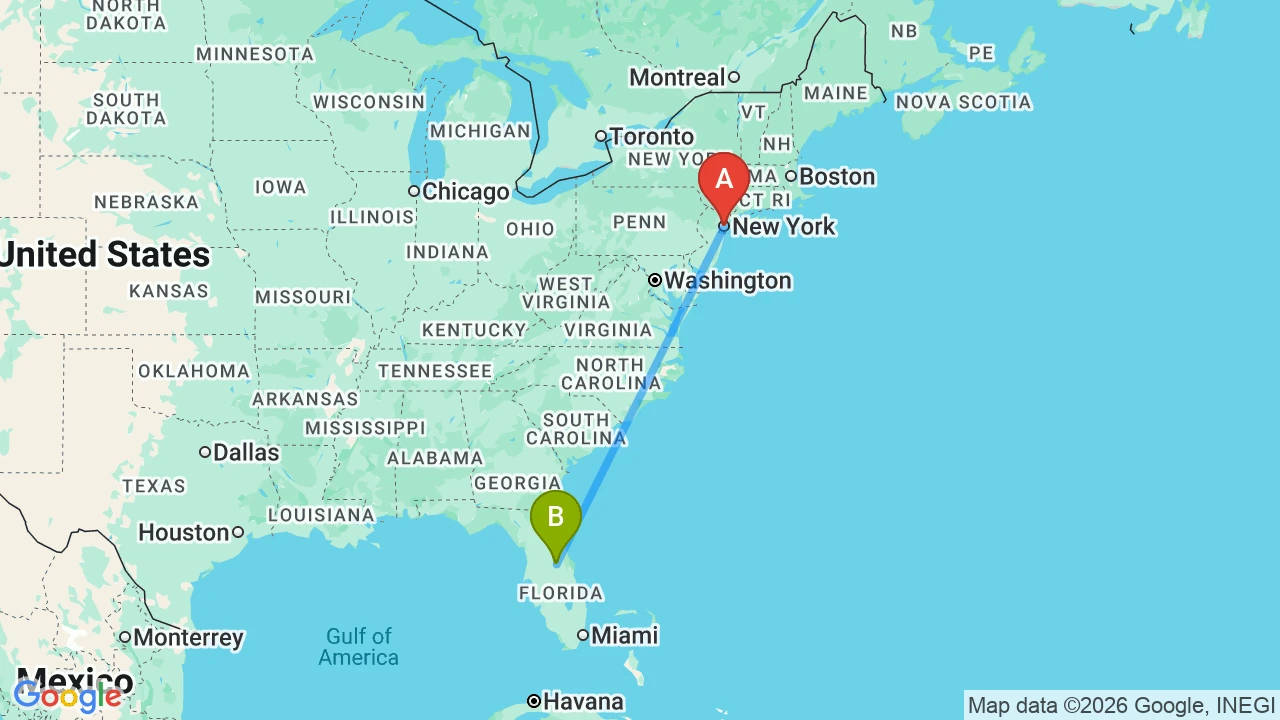
Moving from New York, NY to Orlando, FL represents one of the more dramatic relocations within the United States—not just in distance, but in how daily life is structured, where costs concentrate, and what households prioritize to stay comfortable. This isn’t a simple “cheaper vs. more expensive” calculation. It’s a fundamental shift in cost pressure, access patterns, climate exposure, and the rhythm of everyday routines.
People consider this move for many reasons: lower housing entry barriers, job opportunities in Orlando’s growing sectors, proximity to family, or a desire to escape the relentless pace and density of New York. But the financial and logistical tradeoffs are more nuanced than headline comparisons suggest. Some costs drop sharply. Others—particularly those tied to car dependence, climate control, and ongoing ownership obligations—can surprise newcomers who assume Florida living is universally less expensive.
This guide explains how cost behavior changes between these two cities, where pressure moves, and which household types tend to benefit or struggle after the transition. It does not attempt to declare a winner or compute total savings. Instead, it focuses on helping you understand what shifts, why it matters, and how to prepare for the differences that affect daily decision-making.
Understanding the Cost Pressure Shift
The most immediate difference between New York and Orlando is where costs show up and how they accumulate. In New York, housing dominates the budget—median gross rent runs $1,714 per month, and the median home value sits at $732,100. These figures reflect not just the city itself but the broader metro area, where even outer boroughs and nearby suburbs command premium prices. Renters face tight inventory and frequent lease renewals with minimal negotiating power. Owners contend with high property taxes, co-op and condo fees, and maintenance costs that scale with building age and density.
Orlando’s housing costs are lower in absolute terms—median rent is $1,509 per month, and the median home value is $332,700—but the nature of the expense changes. Renters still face pressure, particularly in neighborhoods near theme parks, universities, and job centers, but the rental market is less rigid than New York’s. Ownership becomes more accessible for households with moderate savings, but it brings new obligations: homeowners insurance (including wind and flood considerations), HOA fees in many communities, and year-round climate control costs that don’t pause in winter.
The shift is not simply “lower housing costs.” It’s a move from high upfront barriers and compressed living space to lower entry thresholds but broader ongoing exposure. In New York, many renters avoid car ownership entirely, relying on transit and walkable errands. In Orlando, most households need at least one vehicle, and many need two. That introduces or increases costs for car payments, insurance, fuel, maintenance, and parking—expenses that were optional or minimal in New York.
Utilities tell a similar story. New York’s electricity rate is 28.37¢/kWh, among the highest in the country, but many apartments are small, and heating is often included in rent or covered by building systems. Orlando’s rate is lower at 15.92¢/kWh, but homes are larger, cooling runs nearly year-round in the subtropical climate, and electricity bills can dominate summer months when air conditioning operates continuously. Natural gas, used primarily for heating in New York, is less common in Orlando, where electric heat pumps and resistance heating are standard.
Median household income also shifts: $76,607 per year in New York compared to $66,292 per year in Orlando. This income difference matters when evaluating how much financial breathing room the move creates. Lower housing costs may be partially offset by lower wages, depending on industry and role. The unemployment rate is 4.8% in New York and 3.3% in Orlando, suggesting tighter labor market conditions in Florida, but wage levels and benefits vary significantly by sector.
Housing and Neighborhood Patterns
Housing in New York is defined by scarcity, verticality, and long-term stability for those who secure rent-stabilized or owned units. Many residents live in the same apartment or building for years, even decades, because moving is expensive and inventory is limited. Neighborhoods are hyper-local, with distinct identities, transit access, and price tiers. Proximity to subway lines, parks, and schools drives premiums that can exceed tens of thousands of dollars in purchase price or hundreds per month in rent.
Orlando’s housing market is more dispersed and car-oriented. Neighborhoods are organized around arterial roads, highway access, and proximity to employment hubs like downtown Orlando, the theme park corridor, and the University of Central Florida area. Suburban subdivisions dominate, many built in the past two decades with planned amenities, HOA governance, and deed restrictions. Walkability exists in pockets—downtown Orlando, Winter Park, parts of College Park—but most daily errands require driving.
The experiential texture of Orlando reflects this structure. Grocery density is high, with options concentrated along commercial corridors, but reaching them on foot is uncommon. Schools are present at moderate density, supporting family infrastructure, but playgrounds and parks are less densely distributed than in New York’s neighborhood-based system. Rail transit exists via SunRail, offering commuter service on a limited schedule, but the system does not approach the frequency, coverage, or centrality of New York’s subway and bus network. Cycling infrastructure is notable in certain areas, particularly near trails and university zones, but it does not function as a primary transportation mode for most residents.
For renters, the shift means more space and often lower monthly payments, but less flexibility in location choice and higher dependency on personal vehicles. For buyers, it means more accessible entry prices but ongoing costs that don’t pause: insurance premiums that rise with storm exposure, HOA fees that cover community amenities and exterior maintenance, and property taxes that, while lower than New York’s in percentage terms, still apply to the full assessed value of detached homes.
Mixed-use development is present in Orlando, with both residential and commercial land use detected in core areas, and building height is mixed, neither uniformly low-rise nor high-rise. This creates pockets of urban-style living, but they remain the exception rather than the rule. Most households live in single-family homes or garden-style apartment complexes, where neighbors are nearby but not vertically stacked as in New York’s towers.
Lifestyle and Daily Rhythms
Daily life in New York revolves around density, transit schedules, and vertical access. Errands are often completed on foot or via short subway trips. Grocery shopping happens frequently in small quantities because carrying capacity is limited. Social life, work, and services are layered within the same geographic footprint, reducing travel time but increasing sensory intensity and crowding.
Orlando operates on a different logic. Errands are batched and car-based. Grocery trips happen weekly or biweekly, with larger hauls stored in pantries and garages. Commutes are measured in miles and highway exits rather than subway stops. The average commute in New York is 41 minutes, with 69.6% of workers experiencing long commutes, but much of that time is spent on trains or buses, allowing for reading, phone use, or rest. Orlando commutes are shorter in duration for many, but they require active driving, often in traffic, with limited alternatives.
The climate shift is profound. New York experiences four distinct seasons, with cold winters requiring layered clothing and heating, and moderate summers where air conditioning is helpful but not universal. Orlando’s subtropical climate brings long, hot, humid summers with frequent afternoon thunderstorms, mild winters with rare freezing nights, and year-round warmth that makes outdoor activity pleasant in the mornings and evenings but punishing midday from May through September. Cooling costs dominate household budgets during summer months, and outdoor routines shift to early morning or evening hours.
For households accustomed to New York’s walkable errands and transit-first lifestyle, the car dependency in Orlando can feel isolating at first. Running out for a single item means a ten-minute drive rather than a two-minute walk. Spontaneous social plans require coordination around driving and parking. Parents managing school drop-offs, extracurriculars, and errands face more logistical complexity because nothing is within walking distance for children.
Conversely, for those who found New York’s density and pace exhausting, Orlando offers space, quieter streets, and the ability to control your environment more fully. Homes have yards, garages, and dedicated parking. Noise from neighbors is less intrusive. The sensory load is lower, and the rhythm is slower, though this comes with the tradeoff of needing to plan and drive for nearly every activity.
Relocation Logistics and Practical Friction
The logistics of moving from New York to Orlando are more involved than a typical regional move. The distance is roughly 1,100 miles, requiring either a multi-day drive, a one-way flight with shipped belongings, or a full-service moving company. Costs vary widely depending on the volume of belongings, timing, and whether you’re moving from a walk-up apartment or a building with freight elevator access.
One of the most common surprises for New York transplants is the immediate need for a car. In New York, many households delay or avoid car ownership entirely. In Orlando, a vehicle is essential within days of arrival. This means budgeting for a down payment or lease, insurance (which is higher in Florida due to storm risk and uninsured driver rates), registration, and fuel. For households moving with children, this often means acquiring a second vehicle sooner than expected.
Another adjustment is the shift in housing search behavior. In New York, apartment hunting is hyper-competitive, with same-day decisions and broker fees common. In Orlando, the rental market moves more slowly, and buyers have more time to evaluate neighborhoods, but the geographic spread means more driving to view properties. Understanding school zones, HOA rules, and flood maps becomes part of the due diligence process in ways that don’t apply in New York.
Utility setup is straightforward in both cities, but the billing structure differs. In New York, heat and hot water are often included in rent, and electricity bills are modest for small apartments. In Orlando, renters and owners alike pay separately for electricity, water, trash, and sometimes pest control. Bills are higher in summer due to cooling loads, and budgeting requires accounting for seasonal swings.
Healthcare access is strong in both cities, with hospitals present in Orlando and a range of clinics and pharmacies available. However, insurance networks and provider availability may shift, requiring new patient appointments and referrals. For households with ongoing medical needs, confirming in-network providers before the move reduces friction.
Socially, the adjustment period varies. New York’s density creates constant ambient social contact, even for introverts, and communities form around neighborhoods, buildings, and transit routines. Orlando’s suburban layout requires more intentional effort to build social networks—through work, religious communities, kids’ activities, or recreational leagues. For some, this feels isolating initially. For others, it’s a relief.
Frequently Asked Questions
- Does Orlando feel more or less expensive than New York?
- Orlando’s lower housing entry costs and reduced rent pressure make it feel less expensive upfront, particularly for renters and first-time buyers. However, car dependency, year-round cooling costs, and insurance expenses shift where money goes. Households that relied on transit and walkability in New York often find that transportation and utility costs rise in Orlando, even as housing costs fall. The net effect depends on household size, income, and lifestyle priorities.
- How do the housing markets differ between New York and Orlando?
- New York’s housing market is characterized by high entry barriers, limited inventory, and long-term stability for those who secure affordable units. Orlando offers more accessible purchase prices and rental options, but the market is more car-dependent and spread across suburban subdivisions. Ownership in Orlando brings obligations like HOA fees, homeowners insurance with wind and flood considerations, and year-round climate control costs that don’t pause seasonally.
- What feels different about daily life after moving from New York to Orlando?
- The most immediate change is car dependency—nearly every errand, social plan, and commute requires driving. The pace is slower, the density is lower, and the sensory load is reduced, but spontaneity and walkability largely disappear. Climate also plays a major role: long, hot, humid summers dominate the calendar, and outdoor routines shift to early morning or evening hours to avoid midday heat.
- When does the move from New York to Orlando tend to feel easiest?
- The transition is often smoother for households moving in late fall or winter, when Orlando’s weather is mild and cooling costs are low, allowing time to adjust before the intense summer heat arrives. Families with school-age children may prefer moving in summer to align with the academic calendar. Timing the move to coincide with a job start date or lease expiration reduces overlapping housing costs and logistical pressure.
- What are the most common challenges when adjusting to Orlando after living in New York?
- Car dependency and the loss of walkable errands surprise many newcomers, as does the need to plan and drive for nearly every activity. The summer heat and humidity require adjustment, particularly for outdoor routines and utility budgeting. Social isolation can emerge for those accustomed to New York’s constant ambient interaction, as Orlando’s suburban layout requires more intentional effort to build community. Finally, the shift from vertical density to horizontal sprawl changes how time, space, and convenience are experienced daily.
- Who does this move tend to work best for, and who might struggle?
- The move works well for households seeking lower housing entry costs, more space, and a slower pace—particularly families, remote workers, and retirees who value quiet neighborhoods and year-round warmth. It also benefits those relocating for jobs in Orlando’s growing sectors like hospitality, healthcare, and tech. The move is more challenging for car-free households, those who rely heavily on public transit, and individuals who thrive on density, walkability, and spontaneous access to cultural amenities. Single professionals and young adults without strong social networks may find the suburban layout isolating compared to New York’s layered urban fabric.
Making the Decision
Moving from New York to Orlando is not a simple cost-cutting exercise. It’s a tradeoff between housing affordability and car dependency, between density and space, between transit access and climate exposure. The households that benefit most are those who value lower entry barriers to homeownership, quieter surroundings, and the ability to spread out—and who are prepared to drive everywhere, budget for year-round cooling, and invest time in building new social networks.
The households that struggle most are those who rely on walkability, public transit, and the spontaneous access that density provides—and who underestimate the cumulative cost of car ownership, insurance, and utilities in a subtropical climate. The income difference between the two cities also matters: while Orlando’s lower housing costs create breathing room, the gap in median household income means that wage levels and benefits should be carefully evaluated before committing to the move.
Ultimately, this relocation works best when it aligns with a broader shift in priorities—toward space, stability, and a slower rhythm—rather than being driven solely by the promise of lower costs. The financial picture is more balanced than it first appears, and the lifestyle adjustment is significant. Understanding where pressure moves, and why, is the key to making a decision that fits both your budget and your daily life.
How this article was built: In addition to public economic data, this article incorporates location-based experiential signals derived from anonymized geographic patterns—such as access density, walkability, and land-use mix—to reflect how day-to-day living actually feels in Orlando, FL.
For more detailed cost breakdowns and city-specific insights, explore the New York, NY and Orlando, FL city hubs on IndexYard.