
Needs vs. Wants: Monthly Expenses in Ocoee (Gross Monthly Income)
| Category | Need | Want |
|---|---|---|
| Housing | Rent or mortgage that fits within budget ceiling | Extra bedroom, garage, yard space, newer construction |
| Transportation | Reliable car, fuel, insurance, maintenance | Shorter commute, newer vehicle, minimal repair risk |
| Utilities | Electricity for cooling, water, trash | Stable bills year-round, energy-efficient home |
| Groceries | Weekly shopping within driving distance | Variety, organic options, minimal drive time |
| Healthcare | Insurance, routine care access | Specialist choice, low out-of-pocket costs |
| Childcare/Schools | Public school access, basic supervision | Extracurriculars, private options, enrichment programs |
| Savings | Emergency fund contributions | Retirement, vacation, home down payment |
Note: All income figures in this article refer to gross monthly income (pre-tax) unless otherwise stated.
What “Living Comfortably” Means in Ocoee
Comfort in Ocoee isn’t about luxury—it’s about having enough margin that your housing, commute, and utility bills don’t dictate every other decision. It means choosing a place to live based on what works for your household, not just what you can technically afford. It means absorbing a high summer electric bill without rearranging your spending. It means your commute is a known cost in time and money, not a daily negotiation between the two.
For many households, comfort also means space—enough square footage that a family doesn’t feel cramped, or a second bedroom that can serve as an office. In a place where the median home value sits at $325,100 and median rent reaches $1,756 per month, that space comes with a price. The question isn’t whether Ocoee is expensive in absolute terms—it’s whether your income gives you room to make choices, or whether you’re constantly managing tradeoffs.
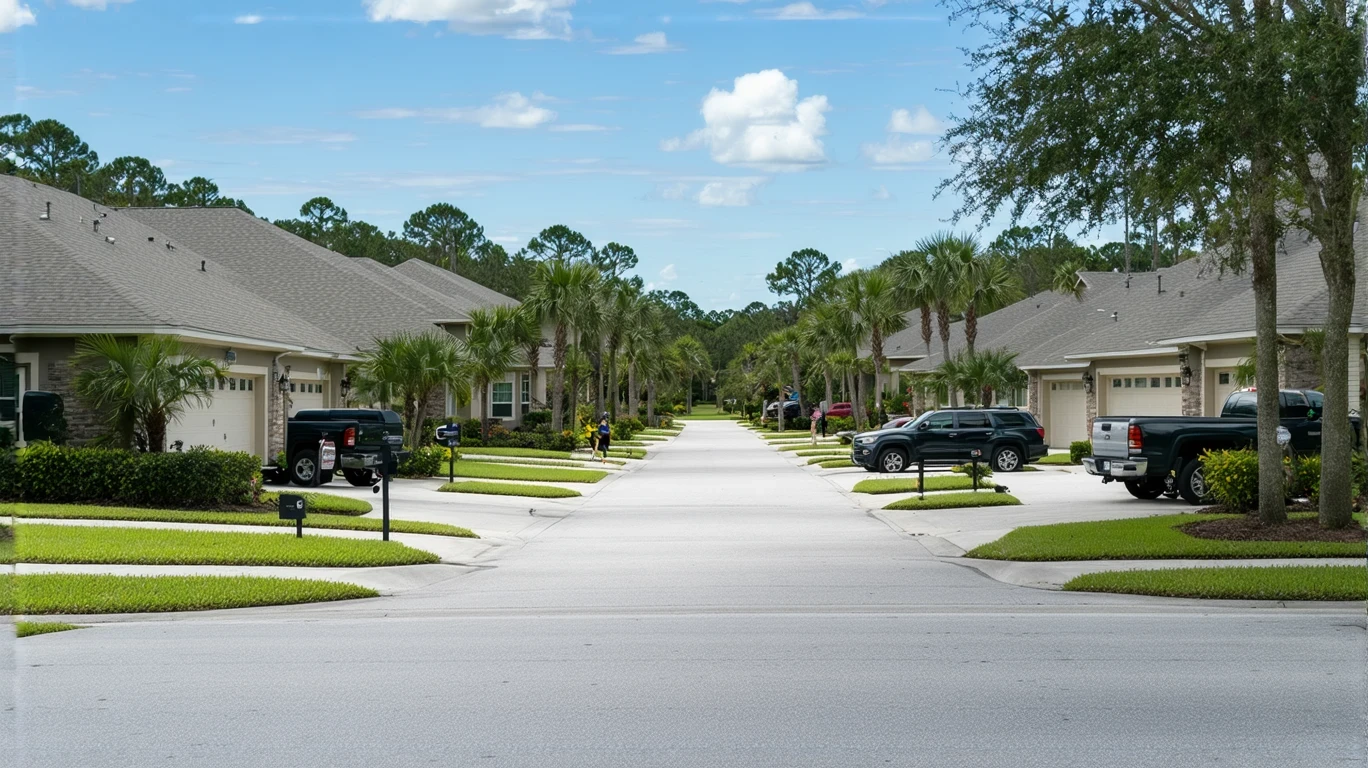
Expectations matter. Ocoee is a car-dependent suburb with bus service but no rail, where most errands require intentional driving and over half of workers face commutes longer than 30 minutes. Comfort here doesn’t mean walkable urban convenience. It means reliable transportation, a home that handles Florida heat without financial stress, and enough flexibility that an unexpected expense doesn’t cascade into other problems.
Where Income Pressure Shows Up First
Housing is the first and largest pressure point. Whether renting or buying, the cost of shelter in Ocoee sets the baseline for everything else. At $1,756 per month, median rent absorbs a significant share of income for many households. Ownership brings different tradeoffs: a $325,100 home requires a down payment, mortgage approval, and ongoing costs like property taxes, insurance, and maintenance—none of which are optional or deferrable.
The structure of Ocoee makes transportation the second unavoidable cost. This is not a place where you can reduce driving by walking more or taking transit for daily needs. Grocery stores and food options are clustered along corridors, not distributed evenly. The pedestrian-to-road ratio is moderate, meaning some sidewalks exist, but the city is fundamentally built around cars. With 54.4% of workers facing long commutes and only 7.7% working from home, most households are driving significant distances regularly. At $3.95 per gallon, fuel costs add up quickly, and that’s before accounting for insurance, maintenance, and the reality that a car isn’t optional—it’s infrastructure.
Utilities in Florida are not a minor line item. Electricity at 15.02¢ per kilowatt-hour powers air conditioning through long, hot summers. The cooling season dominates energy usage, and larger homes or older construction can push monthly bills well above what newcomers expect. Unlike rent, which is predictable, utility costs swing with the weather. A household that feels financially stable in April may feel stretched in August.
For families, the pressure compounds. Schools are present and accessible, but the car-dependent layout means parents are driving kids to activities, appointments, and playdates. Childcare costs, extracurriculars, and the need for more space all layer onto the baseline expenses of housing, transportation, and utilities. A couple might manage comfortably on a certain income; the same income supporting a family of four often does not.
How the Same Income Feels Different by Household
A single adult earning a solid income in Ocoee has options. Rent for a one-bedroom apartment or small unit is lower than the median, and utility costs in a smaller space are manageable even during peak summer months. The commute is still a factor—32 minutes on average—but one person’s schedule is easier to optimize than two or three. Discretionary spending exists. Savings are plausible. The primary tradeoff is time: long commutes eat into personal life, but the financial pressure is less acute.
Couples experience Ocoee differently. Two incomes ease the burden, but expectations often rise with them. A larger apartment or a starter home becomes the goal, and suddenly the median rent or a mortgage on a $325,100 property is in play. If both partners are commuting—likely, given the low work-from-home rate—transportation costs double. Fuel, insurance, and vehicle maintenance aren’t shared expenses; they’re duplicated. The household has more total income, but also more fixed costs. Comfort depends on whether both incomes are stable and whether the couple is willing to accept the time cost of two long commutes.
Families face the most pressure. The same income that felt comfortable for a couple now has to cover a larger home, higher utility bills, and the endless logistics of car-dependent family life. School access is strong—Ocoee has moderate school density—but getting kids where they need to be requires time and fuel. Groceries cost more. Clothes, activities, and healthcare scale with the number of people. The margin for error shrinks. A financial cushion that once felt adequate now feels thin. Families at similar income levels to childless couples often experience far more stress, not because they’re less responsible, but because the cost structure is fundamentally different.
The Comfort Threshold (Qualitative)
Comfort in Ocoee begins when housing choice isn’t dictated solely by what you can afford at the top of your budget. It’s when you can pick a place based on commute time, school access, or neighborhood preference—not just because it’s the only option that fits. It’s when a $200 spike in your summer electric bill is annoying, not destabilizing.
It’s when your commute is a known tradeoff you’ve accepted, not a daily source of financial anxiety. It’s when you can absorb an unexpected car repair without skipping other expenses. It’s when saving money is something you do regularly, not something you hope to do someday.
This threshold isn’t the same for everyone. A single adult might cross it at a lower income than a family of four. A couple with no debt and modest housing needs might feel comfortable where another couple, stretched by student loans and a larger home, does not. The threshold isn’t a number—it’s the point where your income consistently exceeds your non-negotiable costs by enough that you have choices.
Why Online Cost Calculators Get Ocoee Wrong
Most cost-of-living calculators treat Ocoee as a data point: median rent, median income, average commute. They spit out a total and call it done. But totals don’t explain how life actually works here.
A calculator might tell you that Ocoee is “affordable” because the median household income of $88,828 per year covers the median rent with room to spare. What it won’t tell you is that affordability assumes you’re fine with a long commute, that you have a reliable car and can handle the cost of maintaining it, that you’re prepared for summer utility bills that swing higher than winter ones, and that you don’t need walkable access to groceries or transit that reduces your car dependency.
Calculators don’t account for the structure of the place. They don’t tell you that Ocoee’s mixed mobility texture means some sidewalks exist, but you’ll still drive for nearly every errand. They don’t explain that bus service is present but doesn’t replace the need for a car. They don’t capture the reality that day-to-day costs are shaped as much by how the city is built as by the prices themselves.
People feel surprised after moving because the calculator gave them a number, but didn’t explain the tradeoffs embedded in that number. The rent was accurate, but the assumption that they could save money by driving less was not. The income threshold looked reasonable, but it didn’t account for the fact that two cars, long commutes, and a cooling-season-driven utility bill would consume more of their budget than expected.
How to Judge Whether Your Income Fits Ocoee
Instead of asking “Is my income high enough?”, ask these questions:
Can you absorb housing costs without limiting everything else?
If rent at $1,756 per month or a mortgage on a $325,100 home takes up so much of your income that utilities, transportation, and groceries feel like a constant negotiation, the fit is poor.
Are you prepared for car dependency?
Ocoee requires a car. If you were hoping to reduce transportation costs by walking, biking, or using transit for daily needs, that won’t happen here. Can your budget handle fuel at $3.95 per gallon, insurance, maintenance, and the reality that breakdowns aren’t optional expenses—they’re emergencies that must be solved immediately?
How do you handle volatility?
Utility bills in Ocoee swing with the season. Summer cooling costs are high, and they scale with the size and efficiency of your home. If a fluctuating bill creates stress, you’ll feel that stress here.
Is time or money your limiting factor?
The average commute is 32 minutes, and 54.4% of workers face long commutes. If your income is modest but your time is flexible, a longer commute might be tolerable. If both your time and money are constrained, Ocoee’s geography works against you.
What does your household structure look like?
A single adult or couple without children will experience Ocoee very differently than a family. If you have kids, are you prepared for the logistics of a car-dependent suburb—driving to school, activities, appointments, and playdates? Can your income cover the additional space, utilities, and costs that come with children?
How much flexibility do you expect month to month?
If your budget requires everything to go right—no surprise repairs, no medical bills, no jumps in utility costs—you’re operating without margin. Ocoee works best for households with enough income that occasional disruptions don’t cascade into larger problems.
FAQs About Living Comfortably in Ocoee
Is Ocoee affordable for families?
It depends on your income and expectations. Families benefit from accessible schools and a hospital, but the cost structure—housing, transportation, utilities—scales quickly with household size. A family living comfortably here typically has stable dual incomes and accepts the tradeoffs of car dependency and long commutes.
Can you live in Ocoee without a car?
No, not practically. Bus service exists, but the layout of the city, the clustering of grocery and food options along corridors, and the lack of rail transit mean that daily life requires driving. If you don’t have a reliable car, Ocoee will be frustrating and limiting.
How much do utilities really cost in the summer?
That depends on your home’s size, age, and efficiency, but electricity at 15.02¢ per kilowatt-hour adds up quickly when you’re cooling a house through a long Florida summer. Expect higher bills from June through September, and expect them to be one of your larger variable costs.
Does the median income in Ocoee mean most people are comfortable?
Not necessarily. The median household income of $88,828 per year reflects the middle of the distribution, but comfort depends on household size, debt, housing choice, and commute length. Some households at that income level feel stable; others feel stretched. Income alone doesn’t determine comfort—structure and tradeoffs do.
What’s the biggest mistake people make when moving to Ocoee?
Underestimating transportation costs and time. Many newcomers assume they can reduce driving or that the commute won’t be a big deal. In reality, Ocoee’s car-dependent layout and the prevalence of long commutes mean that transportation becomes a major factor in both budget and quality of life. If you don’t plan for that, you’ll feel it quickly.
How this article was built: In addition to public economic data, this article incorporates location-based experiential signals derived from anonymized geographic patterns—such as access density, walkability, and land-use mix—to reflect how day-to-day living actually feels in Ocoee, FL.
Ocoee can work well for some households—but only if expectations match reality. Comfort here isn’t about hitting a magic income number. It’s about understanding the tradeoffs, knowing where pressure shows up, and deciding whether your household can absorb those costs without constant stress. If the answer is yes, Ocoee offers stability, access to healthcare, and a suburban structure that many families prefer. If the answer is no, no amount of optimism will change the math.