
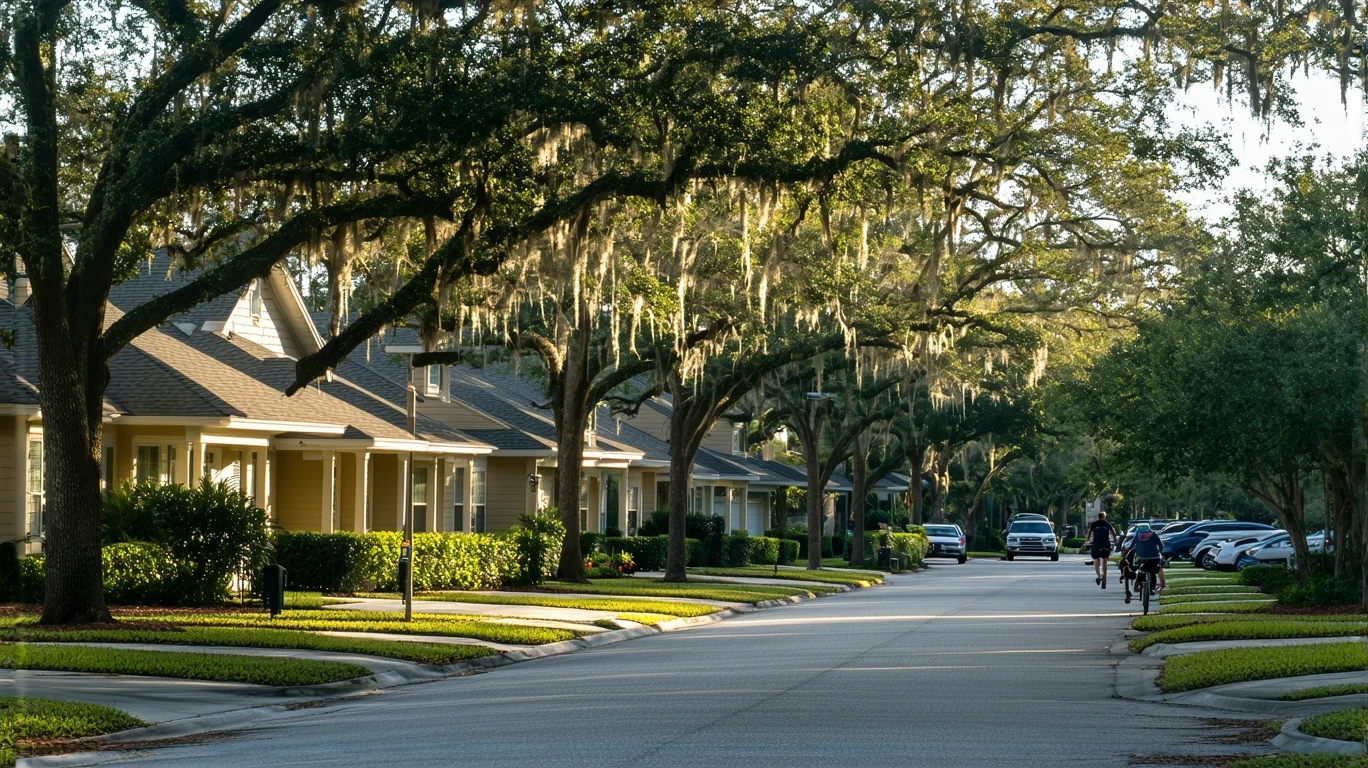
Oviedo and Orlando sit within the same metro area, share the same utility providers, and experience nearly identical weather patterns—yet the financial texture of daily life in each city feels distinctly different. For families debating between the two in 2026, the choice isn’t about which city is “cheaper overall.” It’s about understanding where cost pressure concentrates, which household expenses become non-negotiable first, and how different living patterns interact with the infrastructure each city offers.
Oviedo functions primarily as a commuter-oriented suburb with a median household income of $116,764 per year, reflecting its role as a bedroom community for professionals working throughout the Orlando metro. Orlando, with a median household income of $66,292 per year, serves as the region’s urban hub—home to universities, hospitals, entertainment districts, and a more diverse mix of renters, students, and service workers. The income gap signals different household compositions and cost tolerances, not necessarily different affordability outcomes.
This comparison explains how housing structure, transportation dependence, daily errands friction, and healthcare access create different cost experiences for different households. The better choice depends on which costs dominate your household’s budget, how much control you need over monthly volatility, and whether you’re optimizing for space, time, or predictability.
Housing Costs
Housing represents the starkest structural difference between Oviedo and Orlando. Oviedo’s median home value sits at $397,300, while Orlando’s median is $332,700—a gap that reflects differences in housing stock, lot sizes, and the prevalence of single-family subdivisions in Oviedo versus Orlando’s broader mix of condos, townhomes, and older single-family neighborhoods. For renters, the pattern holds: Oviedo’s median gross rent is $1,902 per month compared to Orlando’s $1,509 per month.
These differences aren’t just about price levels—they reflect what kind of housing dominates each market and what tradeoffs come with it. Oviedo’s higher home values correspond to newer construction, larger lots, and subdivision-style development that often includes HOA fees covering landscaping, amenities, and sometimes trash or water services. Orlando’s lower entry point reflects a wider range of housing ages, sizes, and types, from urban apartments near downtown to older single-family homes in established neighborhoods. Renters in Orlando gain access to more apartment complexes with included utilities or shared amenities, while Oviedo renters more often face single-family home rentals or newer townhome communities with separate utility billing.
For first-time buyers, the difference in median home values translates directly into down payment requirements, mortgage qualification thresholds, and ongoing property tax obligations. Families prioritizing space, newer construction, and access to Oviedo’s integrated park system may find the higher entry cost worthwhile. Households seeking flexibility, shorter commutes to urban job centers, or lower monthly obligations may prefer Orlando’s broader housing mix and lower baseline costs. The decision hinges on whether housing cost pressure shows up as a front-loaded barrier (down payment, closing costs) or an ongoing monthly obligation (rent, mortgage, HOA fees).
| Housing Type | Oviedo | Orlando |
|---|---|---|
| Median Home Value | $397,300 | $332,700 |
| Median Gross Rent | $1,902/month | $1,509/month |
| Typical Housing Form | Single-family subdivisions, newer townhomes | Mixed: apartments, condos, older single-family |
| HOA Prevalence | Common in newer developments | Varies widely by neighborhood age |
The housing takeaway: Oviedo imposes higher entry costs and ongoing obligations but delivers newer housing stock and family-oriented outdoor access. Orlando offers lower barriers to entry and more housing diversity, making it easier for renters, first-time buyers, or households prioritizing urban proximity over space. Families with stable dual incomes and long-term ownership plans may absorb Oviedo’s higher costs more easily. Single adults, recent graduates, or households with variable income may find Orlando’s lower baseline and rental flexibility more manageable.
Utilities and Energy Costs
Both Oviedo and Orlando share the same electricity rate—15.92¢/kWh—and natural gas price—$23.62/MCF—because they draw from the same regional utility infrastructure. This means differences in utility costs don’t come from pricing; they come from housing characteristics, household size, and how much cooling (or occasionally heating) a home requires during Florida’s extended warm season.
Oviedo’s newer housing stock often includes more energy-efficient construction, better insulation, and modern HVAC systems, which can reduce baseline cooling loads compared to older homes. However, Oviedo’s prevalence of larger single-family homes means higher total square footage to cool, more exterior wall exposure, and often higher baseline usage even with efficient systems. Orlando’s mix of older single-family homes, mid-rise apartments, and attached housing creates more variability: older homes may have less efficient cooling systems and poorer insulation, but smaller apartments or townhomes with shared walls reduce per-household cooling burdens.
For families in Oviedo, utility costs tend to be more predictable but higher in absolute terms due to home size. A 2,500-square-foot single-family home in a newer Oviedo subdivision will consistently draw more electricity for cooling than a 1,200-square-foot apartment in Orlando, even if the apartment’s per-square-foot efficiency is worse. Orlando households face more volatility depending on housing type: renters in newer complexes may see lower bills thanks to included water or efficient central systems, while renters in older duplexes or single-family homes may face higher exposure with less control over infrastructure upgrades.
Household size amplifies these differences. A family of four in Oviedo running multiple loads of laundry, cooling bedrooms throughout the day, and maintaining a larger home will see utility costs climb steadily during summer months. A single adult or couple in a smaller Orlando apartment can reduce usage more easily by adjusting thermostat settings, using less hot water, and benefiting from shared-wall insulation. The tradeoff isn’t about which city has “cheaper” utilities—it’s about whether your household prioritizes space (which increases exposure) or efficiency (which increases control).
Utility takeaway: Both cities face the same rates, so cost differences come from housing form and size, not pricing. Oviedo’s larger, newer homes create higher but more predictable cooling costs. Orlando’s housing mix creates more variability—lower exposure in apartments, higher exposure in older single-family homes. Families prioritizing space accept higher utility baselines; smaller households in Orlando can exercise more control.
Groceries and Daily Expenses
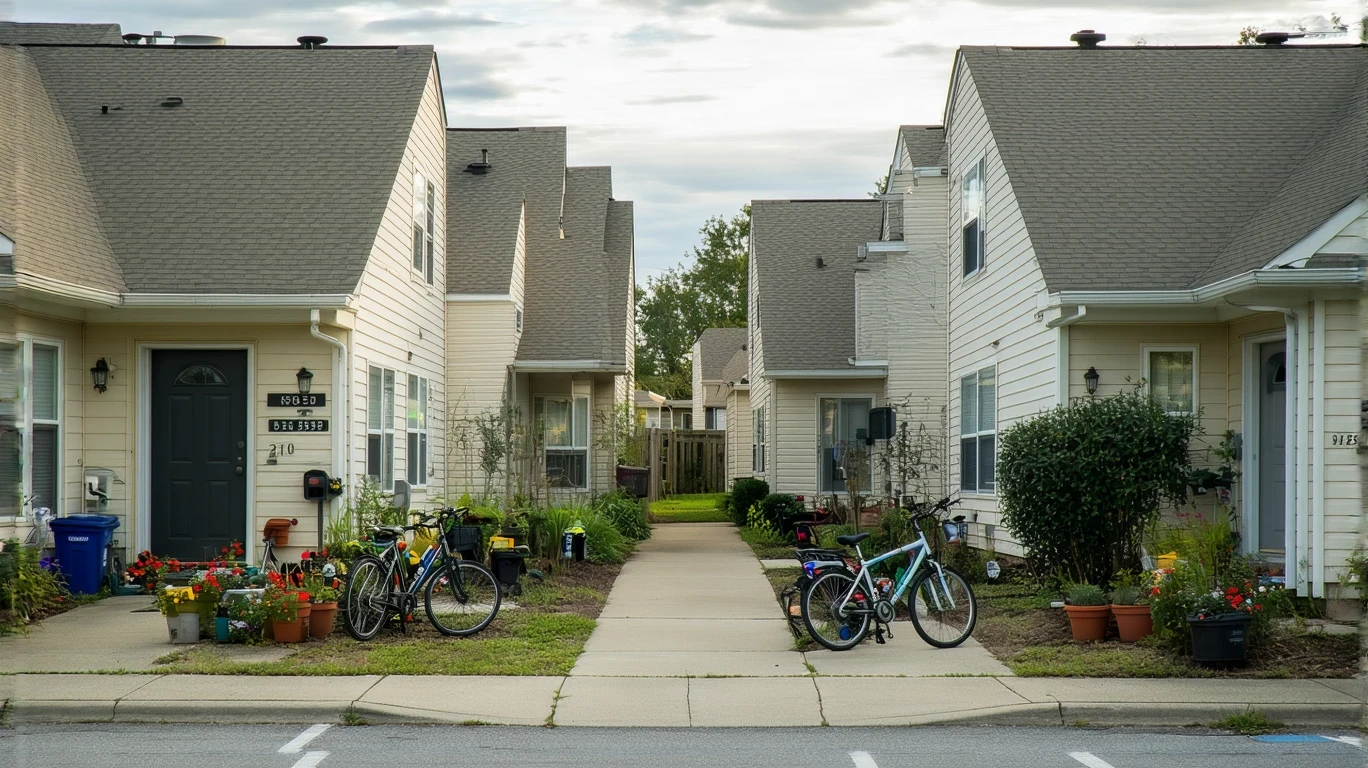
Both Oviedo and Orlando show corridor-clustered food and grocery accessibility, meaning options concentrate along major commercial corridors rather than being evenly distributed throughout residential neighborhoods. Grocery density in both cities exceeds high thresholds, indicating strong access to supermarkets, discount chains, and specialty stores. The difference lies not in availability but in how households navigate daily errands and where convenience spending creeps in.
Oviedo’s suburban layout means most grocery trips require a car, even when stores are plentiful. Families often consolidate weekly shopping into fewer trips to big-box retailers or regional chains, reducing per-item costs but increasing reliance on planning and bulk purchasing. Convenience spending—grabbing coffee, picking up takeout, or making quick pharmacy runs—requires intentional driving, which can reduce frequency but also create friction when schedules tighten. Households with predictable routines and storage space benefit from Oviedo’s access to large-format stores; those with variable schedules or limited time may find the car-dependent errands structure more burdensome.
Orlando’s walkable pockets and higher pedestrian-to-road ratio mean some neighborhoods support walking or biking to nearby grocery stores, coffee shops, or convenience retailers. This doesn’t eliminate car dependency entirely, but it does reduce the friction cost of small, frequent purchases. A single adult living near downtown Orlando can walk to a corner store for milk or eggs without planning a full grocery trip. A family in suburban Orlando still drives to a supermarket but may have shorter distances to cover than in Oviedo’s more spread-out subdivisions.
Daily spending pressure also differs by household composition. Families managing larger grocery volumes benefit from Oviedo’s access to warehouse clubs and big-box grocers, where per-unit prices drop with bulk buying. Single adults or couples may find Orlando’s neighborhood-scale options more practical, even if per-item prices run slightly higher, because they avoid waste and reduce the time cost of driving across town. Dining out and takeout frequency also shift: Orlando’s denser restaurant and cafe presence makes convenience dining more accessible, which can increase spending if not managed intentionally.
Grocery takeaway: Both cities offer strong grocery access, but Oviedo’s layout favors planned, car-based shopping trips with lower per-item costs for bulk buyers. Orlando’s walkable pockets reduce errands friction for smaller households, though convenience spending can creep higher. Families with storage space and predictable routines fit Oviedo’s structure; smaller households or those prioritizing time over per-unit savings may prefer Orlando’s accessibility.
Taxes and Fees
Property taxes in Florida are driven by assessed home values and local millage rates, meaning Oviedo’s higher median home value of $397,300 translates into higher annual property tax obligations compared to Orlando’s $332,700 median—even if millage rates are similar. For homeowners, this difference compounds over time, affecting not just the initial tax bill but also how much property tax exposure grows as home values appreciate. Renters don’t pay property taxes directly, but landlords pass those costs through in rent pricing, so Oviedo’s higher rent baseline reflects, in part, the higher tax burden on underlying properties.
HOA fees represent another structural difference. Oviedo’s prevalence of newer subdivisions means many homeowners and some renters face monthly HOA dues covering landscaping, amenity access, and sometimes trash or water services. These fees can range widely depending on the community, but they add a predictable, non-negotiable monthly cost that doesn’t exist in many older Orlando neighborhoods. Orlando’s housing stock includes more properties without HOA obligations, giving homeowners more control over maintenance spending but also more responsibility for upkeep, repairs, and service contracts.
Sales taxes apply uniformly across both cities, so differences in consumption tax exposure come from spending patterns, not rates. Households that drive more, dine out frequently, or make larger retail purchases will see similar sales tax impacts in either city. The distinction lies in how other fees—parking, tolls, or service charges—layer onto daily life. Orlando’s urban core includes more paid parking zones and toll road access points, while Oviedo’s suburban layout reduces parking costs but may increase toll exposure for commuters traveling into Orlando for work.
Tax and fee takeaway: Oviedo’s higher home values create higher property tax exposure for owners and indirectly for renters. HOA fees are more common in Oviedo, adding predictable monthly costs but reducing maintenance unpredictability. Orlando offers more housing without HOA obligations, giving owners more control but also more variability in upkeep costs. Long-term homeowners in Oviedo face higher cumulative tax obligations; renters and recent buyers in Orlando face lower baselines but more variability in fees.
Transportation & Commute Reality
Transportation costs in Oviedo and Orlando diverge sharply not because of fuel prices—gas sits at $4.06/gallon in Oviedo and $4.12/gallon in Orlando, a negligible difference—but because of how much driving each city requires and what alternatives exist. Oviedo’s car-oriented layout and lack of rail transit mean nearly every household relies on personal vehicles for commuting, errands, and daily logistics. Orlando’s rail transit presence and walkable pockets create options for some households to reduce car dependency, though most residents still drive regularly.
Oviedo’s role as a commuter suburb means many residents drive into Orlando or other metro job centers daily. Without rail service, commuters face the full cost of vehicle ownership: fuel, insurance, maintenance, and depreciation. Families with multiple working adults often need two cars, doubling registration fees, insurance premiums, and repair budgets. The time cost of driving also matters—longer commutes mean less flexibility for errands, childcare pickups, or spontaneous schedule changes, even if fuel costs remain manageable.
Orlando’s rail transit system doesn’t eliminate car dependency, but it does provide an alternative for households living near stations and working along transit corridors. A single adult commuting from a neighborhood near a rail stop to a downtown job can avoid daily driving costs, reduce parking expenses, and gain schedule flexibility. Families still typically need at least one car for school runs, grocery trips, and weekend activities, but the option to rely on transit for one commuter’s daily routine reduces overall vehicle wear and insurance exposure.
Both cities show notable cycling infrastructure, with bike-to-road ratios exceeding high thresholds. This signals that some neighborhoods support biking for errands or recreation, though Florida’s heat and afternoon storms limit year-round cycling practicality for most households. Walkable pockets in both cities mean some residents can walk to nearby coffee shops, parks, or convenience stores, but these pockets don’t eliminate the need for a car—they just reduce how often it’s required.
Transportation takeaway: Oviedo requires near-universal car ownership, with most households needing two vehicles for dual-income families. Orlando’s rail transit and walkable pockets reduce car dependency for some households, particularly single adults or couples living near transit corridors. Families in either city still rely heavily on driving, but Orlando offers more flexibility to reduce vehicle counts or delay second-car purchases. Commute friction in Oviedo is time-based; in Orlando, it’s more variable depending on proximity to transit and job location.
Cost Structure Comparison
Housing dominates the cost experience in both cities, but the nature of that pressure differs. Oviedo’s higher home values and rent levels create a steeper entry barrier and higher ongoing obligations, rewarding households with stable incomes and long-term ownership plans. Orlando’s lower baseline and broader housing mix reduce entry costs and offer more flexibility for renters, first-time buyers, or households with variable income. The tradeoff isn’t about total affordability—it’s about whether cost pressure shows up as a front-loaded barrier or an ongoing monthly obligation.
Utilities introduce similar exposure in both cities due to shared rates, but housing form determines actual costs. Oviedo’s larger homes create higher baseline cooling costs, even with newer, more efficient construction. Orlando’s mix of apartments, townhomes, and older single-family homes creates more variability: smaller units reduce exposure, older homes increase it. Families prioritizing space accept higher utility baselines in Oviedo; smaller households in Orlando can exercise more control by choosing efficient housing types.
Daily living costs—groceries, errands, and convenience spending—reflect differences in layout and accessibility. Oviedo’s car-dependent structure favors planned, bulk shopping with lower per-item costs but higher time investment. Orlando’s walkable pockets and corridor-clustered grocery access reduce errands friction for smaller households, though convenience spending can creep higher when dining out or quick purchases become easier. Families with storage space and predictable routines fit Oviedo’s structure; smaller households or those prioritizing time over per-unit savings may prefer Orlando’s accessibility.
Transportation patterns matter more in Oviedo, where nearly every household needs at least one car and dual-income families typically need two. Orlando’s rail transit and walkable pockets don’t eliminate car dependency, but they do create opportunities for some households to reduce vehicle counts, delay second-car purchases, or avoid daily driving costs. The difference isn’t about fuel prices—it’s about whether your household can function with one car or whether two become non-negotiable.
The better choice depends on which costs dominate your household. For families sensitive to housing entry barriers, Orlando’s lower baseline offers more flexibility. For those prioritizing space, newer construction, and integrated outdoor access, Oviedo’s higher costs come with tangible infrastructure benefits. For households managing transportation logistics with multiple working adults, Oviedo’s car dependence increases friction; for those with one primary commuter who can use transit, Orlando reduces vehicle exposure. The decision is less about price and more about predictability, control, and which cost pressures your household can absorb most easily.
How the Same Income Feels in Oviedo vs Orlando
Single Adult
In Oviedo, housing becomes the first non-negotiable cost, with rent consuming a larger share of income and leaving less room for discretionary spending or savings. Car ownership is mandatory, adding insurance, fuel, and maintenance as fixed monthly obligations. Flexibility exists in grocery spending and dining out, but errands require intentional planning due to car-dependent layout. In Orlando, lower rent and the option to live near transit or walkable neighborhoods reduce baseline obligations, creating more breathing room for savings or lifestyle spending. A single car still matters, but proximity to rail or walkable errands reduces how often it’s needed. The same income feels tighter in Oviedo due to higher housing and transportation baselines; in Orlando, it feels more flexible due to lower entry costs and transit optionality.
Dual-Income Couple
In Oviedo, housing costs rise but become more manageable with two incomes, allowing access to larger homes or newer construction. The need for two cars becomes non-negotiable if both partners commute, doubling vehicle-related expenses and reducing flexibility. Utility costs climb with larger home size, but predictability improves with newer construction. In Orlando, lower housing costs free up income for savings, travel, or lifestyle spending, and the option for one partner to use transit or work from home can reduce the need for a second car. Grocery and dining costs remain similar, but Orlando’s walkable pockets reduce time friction for errands. The same income feels more stable in Oviedo if both partners have long commutes and prioritize space; in Orlando, it feels more flexible if one partner can reduce car dependency or if the couple values urban proximity over square footage.
Family with Kids
In Oviedo, housing and transportation costs dominate, with larger homes and two cars becoming non-negotiable for most families. School access is limited based on density signals, though outdoor access is strong with integrated parks and water features. Grocery costs benefit from bulk buying at big-box stores, but time costs rise with car-dependent errands and longer commutes. In Orlando, lower housing entry costs allow families to access neighborhoods with better school density and hospital presence, though older housing stock may increase utility volatility. One-car households remain difficult, but transit optionality for one parent can reduce vehicle exposure. Errands friction decreases in walkable pockets, and healthcare access improves with hospital presence. The same income feels more stretched in Oviedo due to higher housing, transportation, and utility baselines; in Orlando, it feels more manageable if the family prioritizes healthcare access, school density, and lower entry costs over space and newer construction.
Decision Matrix: Which City Fits Which Household?
| Decision Factor | If You’re Sensitive to This… | Oviedo Tends to Fit When… | Orlando Tends to Fit When… |
|---|---|---|---|
| Housing entry + space needs | You need lower down payments or prioritize square footage and lot size | You have stable dual income and prioritize newer construction and larger homes | You need lower entry barriers, rental flexibility, or diverse housing types |
| Transportation dependence + commute friction | You want to reduce car counts or avoid daily driving costs | You accept two-car households and prioritize suburban commute patterns | You can use rail transit or live near walkable corridors to reduce vehicle dependency |
| Utility variability + home size exposure | You want predictable cooling costs or control over energy usage | You prioritize newer, efficient homes and accept higher baselines for larger square footage | You prefer smaller units or apartments with shared walls to reduce cooling exposure |
| Grocery strategy + convenience spending creep | You want lower per-item costs or reduced errands friction | You have storage space and prefer planned, bulk shopping trips with lower per-unit prices | You prioritize walkable errands access and accept slightly higher per-item costs for convenience |
| Fees + friction costs (HOA, services, upkeep) | You want control over maintenance spending or predictable monthly obligations | You accept HOA fees for predictable landscaping and amenity access in newer subdivisions | You prefer older neighborhoods without HOA fees and more control over upkeep decisions |
| Time budget (schedule flexibility, errands, logistics) | You need to reduce time spent on errands or commuting | You have predictable routines and can consolidate errands into planned car trips | You benefit from walkable pockets, transit access, or shorter distances for daily logistics |
Lifestyle Fit
Oviedo and Orlando offer distinct lifestyle textures shaped by infrastructure, outdoor access, and urban form. Oviedo’s integrated park density and water features create strong outdoor recreation opportunities, with trails, green spaces, and family-oriented amenities woven throughout residential areas. The city’s walkable pockets and notable cycling infrastructure mean some neighborhoods support walking or biking for recreation, though car dependency remains the norm for errands and commuting. Families prioritizing outdoor access, newer housing stock, and a quieter suburban rhythm find Oviedo’s layout appealing, even if it requires more intentional planning for daily logistics.
Orlando’s rail transit presence, hospital access, and higher school density create a more urban-oriented lifestyle with greater institutional infrastructure. The city’s walkable pockets and mixed land use mean some neighborhoods support walking to coffee shops, restaurants, or parks, though most residents still drive regularly. Orlando’s role as a college city adds cultural vibrancy, nightlife options, and a younger demographic mix, which can feel energizing for some households and less relevant for others. Families prioritizing healthcare access, school density, and urban proximity over space and quiet may find Orlando’s infrastructure advantages outweigh its higher density and older housing stock.
Both cities show moderate park density in Orlando and high park density in Oviedo, with water features present in both. This means outdoor recreation opportunities exist in either city, but Oviedo’s integrated green space access feels more seamlessly woven into daily life, while Orlando’s parks require more intentional visits. Oviedo’s unemployment rate sits at 3.1%, slightly lower than Orlando’s 3.3%, reflecting its role as a commuter suburb with higher median income and more stable employment patterns. Both cities currently experience pleasant temperatures in the high 60s, though Florida’s extended cooling season means summer heat dominates utility costs and outdoor activity patterns for much of the year.
Lifestyle factors indirectly affect costs in both cities. Oviedo’s car-dependent layout increases transportation expenses but reduces convenience spending on dining out or spontaneous purchases. Orlando’s walkable pockets and transit access reduce vehicle wear but can increase convenience spending if proximity to restaurants and shops leads to more frequent small purchases. Oviedo’s newer housing stock lowers maintenance unpredictability but increases baseline utility costs due to larger home sizes. Orlando’s older housing mix creates more variability in both maintenance needs and energy efficiency, requiring more active management of home-related expenses.
Frequently Asked Questions
Is Oviedo or Orlando more affordable for families in 2026?
Neither city is universally more affordable—the better choice depends on which costs dominate your household. Oviedo’s higher home values and rent levels create steeper entry barriers but offer newer construction, larger homes, and integrated outdoor access. Orlando’s lower housing baseline, hospital presence, and school density reduce entry costs and improve institutional access, though older housing stock may increase maintenance and utility variability. Families with stable dual incomes and long-term ownership plans may absorb Oviedo’s higher costs more easily; those prioritizing healthcare access, lower entry barriers, or rental flexibility may find Orlando more manageable.
How do transportation costs compare between Oviedo and Orlando in 2026?
Gas prices differ negligibly—$4.06/gallon in Oviedo versus $4.12/gallon in Orlando—so transportation cost differences come from car dependency, not fuel pricing. Oviedo requires near-universal car ownership, with most dual-income families needing two vehicles for commuting and errands. Orlando’s rail transit and walkable pockets create opportunities for some households to reduce vehicle counts or avoid daily driving costs, though most residents still drive regularly. Families in Oviedo face higher vehicle-related expenses due to mandatory two-car households; single adults or couples in Orlando near transit corridors can reduce car dependency and associated costs.
Do utilities cost more in Oviedo or Orlando in 2026?
Both cities share the same electricity rate (15.92¢/kWh) and natural gas price ($23.62/MCF), so utility cost differences come from housing characteristics, not pricing. Oviedo’s larger, newer homes create higher baseline cooling costs due to square footage, even with efficient construction. Orlando’s mix of apartments, townhomes, and older single-family homes creates more variability—smaller units reduce exposure, older homes increase it. Families prioritizing space in Oviedo accept higher utility baselines; smaller households in Orlando can exercise more control by choosing efficient housing types.
Which city is better for renters comparing Oviedo vs Orlando in 2026?
Orlando offers lower median rent ($1,509/month versus Oviedo’s $1,902/month) and a broader mix of housing types, including apartments with included utilities, older single-family homes, and townhomes. This diversity gives renters more flexibility to match housing costs to income and lifestyle needs. Oviedo’s rental market skews toward newer single-family homes and townhomes in subdivisions, often with HOA fees and separate utility billing, creating higher baseline costs but more predictable housing quality. Renters prioritizing lower entry costs, urban proximity, or transit access fit Orlando better; those seeking newer construction, larger spaces, and suburban quiet may prefer Oviedo despite higher costs.
How does grocery shopping differ between Oviedo and Orlando in 2026?
Both cities show corridor-clustered grocery access with high grocery density, meaning supermarkets and discount chains are plentiful but concentrated along major roads. Oviedo’s car-dependent layout favors planned, bulk shopping trips to big-box retailers, reducing per-item costs but requiring intentional planning and storage space. Orlando’s walkable pockets and shorter distances to grocery stores reduce errands friction for smaller households, though convenience spending can creep higher when dining out or quick purchases become easier. Families with predictable routines and storage space benefit from Oviedo’s structure; smaller households or those prioritizing time over per-unit savings may prefer Orlando’s accessibility.
How this article was built: In addition to public economic data, this article incorporates location-based experiential signals derived from anonymized geographic patterns—such as access density, walkability, and land-use mix—to reflect how day-to-day living actually feels in Oviedo and Orlando.