
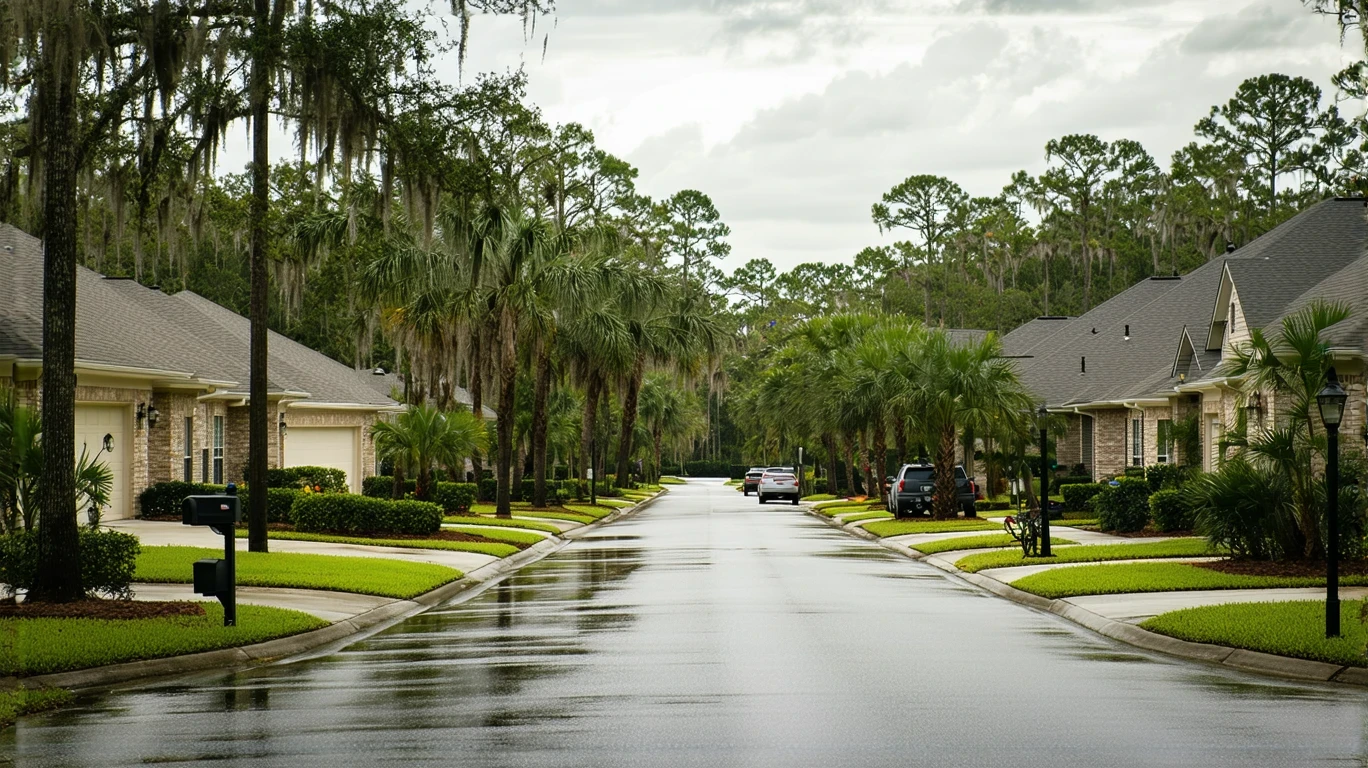
Here’s the myth: because Oviedo and Winter Garden sit in the same Orlando metro area, their cost structures must be nearly identical. In reality, these two cities distribute financial pressure very differently across housing, transportation, daily errands, and household logistics. Oviedo’s median gross rent stands at $1,902 per month, while Winter Garden’s comes in at $1,590 per month. Yet Winter Garden’s median home value reaches $408,700 compared to Oviedo’s $397,300. The decision between them in 2026 isn’t about which city costs less overall—it’s about which cost pressures dominate your household and which tradeoffs you’re equipped to manage.
Both cities serve Orlando-area households seeking suburban space, but they differ in how they handle transportation access, grocery infrastructure density, and the relationship between housing form and utility exposure. Oviedo shows a regional price parity index of 123, while Winter Garden’s sits at 101, signaling that the same basket of goods and services carries different price weight depending on where you shop and how you move through daily life. Families prioritizing school density may find Winter Garden’s infrastructure more aligned with their needs, while households valuing cycling access and integrated green space may prefer Oviedo’s layout. The right choice depends on whether your budget is more sensitive to front-loaded housing entry costs, ongoing transportation friction, or the cumulative effect of daily errands and convenience spending.
This comparison explains where cost pressure concentrates in each city, how different household types experience that pressure, and which structural differences matter most when your income stays the same but your ZIP code changes. We’ll examine housing behavior, utility seasonality, grocery access patterns, transportation dependence, and the hidden costs embedded in how each city is built—without declaring a universal winner or calculating total monthly expenses.
Housing Costs: Entry Barriers vs Ongoing Obligations
Oviedo’s median gross rent of $1,902 per month creates a higher baseline obligation for renters compared to Winter Garden’s $1,590 per month. That difference shows up immediately in lease signing and monthly cash flow, making Winter Garden more accessible for single adults and younger couples entering the rental market without significant savings. However, rent is only one dimension of housing pressure. Oviedo’s experiential signals indicate walkable pockets with a high pedestrian-to-road ratio and notable cycling infrastructure, meaning renters in certain neighborhoods may reduce transportation costs by relying less on daily car trips. Winter Garden also shows walkable pockets but adds bus service, offering renters a different kind of flexibility—one based on transit access rather than bike-friendly street design.
For homebuyers, the calculus reverses. Winter Garden’s median home value of $408,700 exceeds Oviedo’s $397,300, translating to a higher down payment requirement and larger monthly mortgage obligation before property taxes and insurance. Buyers in Winter Garden face a steeper entry barrier, though both cities reflect the broader Orlando metro’s competitive housing market. The difference matters most for first-time buyers operating near the edge of their qualification limits, where an additional $11,400 in home value can shift loan terms or require private mortgage insurance. Once inside the market, however, homeowners in both cities face similar exposure to property tax adjustments, insurance rate changes, and maintenance cycles tied to Florida’s climate—high humidity, seasonal storms, and the long cooling season that stresses roofs, HVAC systems, and exterior finishes.
Housing stock composition also affects ongoing costs. Oviedo’s urban form shows a mixed building height character with both residential and commercial land use present, suggesting a blend of single-family homes, townhomes, and smaller multifamily buildings. Winter Garden mirrors this pattern. Older single-family homes in either city tend to carry higher utility exposure due to less efficient insulation and HVAC systems, while newer construction—common in both suburbs—often includes energy-efficient windows, programmable thermostats, and better envelope sealing. Renters in managed communities may see some utilities bundled into rent or HOA fees, reducing monthly volatility but removing direct control over usage. Homeowners, by contrast, absorb the full variability of seasonal cooling costs, which we’ll address in the next section.
| Housing Metric | Oviedo | Winter Garden |
|---|---|---|
| Median Gross Rent | $1,902 per month | $1,590 per month |
| Median Home Value | $397,300 | $408,700 |
Housing takeaway: Renters face lower baseline obligations in Winter Garden, while homebuyers encounter a higher entry barrier there. Oviedo’s higher rent may be offset by reduced transportation dependence in walkable, bike-friendly pockets, but only for households whose daily routines align with that infrastructure. Families prioritizing space and long-term ownership should weigh the front-loaded cost difference against each city’s infrastructure fit—school access, park density, and commute patterns—which shape ongoing household logistics more than the mortgage payment alone.
Utilities and Energy Costs: Cooling Dominance and Predictability
Florida’s extended cooling season drives the majority of residential utility exposure in both Oviedo and Winter Garden. Oviedo’s electricity rate sits at 15.92¢/kWh, while Winter Garden’s comes in slightly lower at 15.02¢/kWh. Both cities share the same natural gas price of $23.62/MCF, though natural gas plays a minimal role in most Florida households—used primarily for water heating or cooking in homes equipped with gas lines, which remain less common than all-electric configurations. The electricity rate difference becomes meaningful only when multiplied across sustained high-usage months, typically May through September, when air conditioning runs nearly continuously in single-family homes and larger apartments.
Household size and housing type determine how much that rate difference matters. A single adult in a one-bedroom apartment may see minimal month-to-month variation, especially in newer buildings with efficient HVAC and better insulation. A family of four in an older two-story home, however, will experience pronounced seasonal swings, with cooling costs spiking during summer months and moderating only slightly in winter. Oviedo’s slightly higher electricity rate compounds that exposure for larger households in less efficient housing stock, though the absolute difference remains small enough that behavior—thermostat discipline, shade management, and appliance efficiency—often outweighs the rate gap.
Predictability varies more by housing form than by city. Renters in managed communities may benefit from newer construction standards and, in some cases, shared or subsidized cooling infrastructure, though they sacrifice direct control over usage and upgrades. Homeowners gain control but absorb the full cost of inefficiency, including older HVAC systems that cycle more frequently, ductwork leaks, and poor attic ventilation. Both cities’ mixed building height character suggests a blend of single-family homes and smaller multifamily units, meaning utility exposure depends heavily on which neighborhood and which decade of construction a household selects. Newer developments in either city tend to incorporate programmable thermostats, better window coatings, and higher-efficiency air handlers, reducing baseline usage even when rates remain constant.
Utility takeaway: Oviedo’s marginally higher electricity rate creates slightly more exposure for households in older, larger homes during peak cooling months. Winter Garden’s lower rate offers modest relief, but the real driver of utility volatility is housing age and square footage, not city boundaries. Families in single-family homes should prioritize construction vintage and HVAC condition over the small rate difference, while single adults and couples in newer apartments will see minimal variation between cities. Predictability favors renters in managed properties; control and long-term efficiency gains favor homeowners willing to invest in insulation, HVAC upgrades, and behavioral adjustments.
Groceries and Daily Expenses: Density, Access, and Convenience Creep
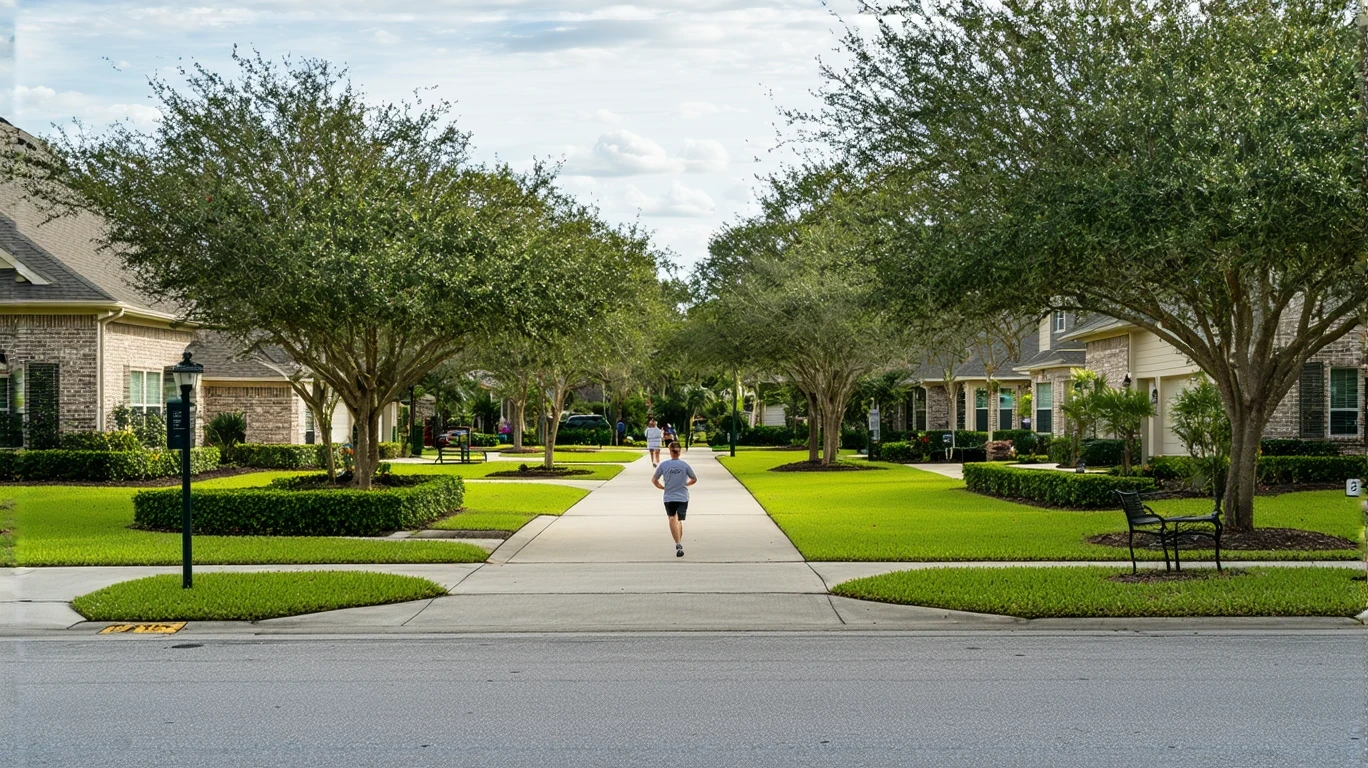
Oviedo’s experiential signals show corridor-clustered food and grocery access, with grocery density exceeding the high threshold and food establishment density in the medium band. Winter Garden mirrors the corridor-clustered pattern but with both food and grocery density in the medium band. That structural difference means Oviedo offers more grocery options per square mile, reducing the need to drive long distances for staples and creating more opportunities to compare prices across competing stores. Winter Garden’s medium-density grocery access still supports weekly shopping routines, but households may find fewer alternatives within a short radius, which can limit price flexibility when certain stores run promotions or when household preferences shift toward specialty items.
The regional price parity index adds another layer. Oviedo’s index of 123 indicates that the same basket of goods costs more than the national baseline, while Winter Garden’s index of 101 sits close to parity. This difference affects not just groceries but also household goods, personal care items, and prepared foods. For a family managing a large weekly grocery budget, that gap accumulates over time—not as a single shocking bill, but as a steady upward drift in what it costs to maintain the same standard of eating and household restocking. Single adults and couples with simpler grocery routines may not notice the difference as acutely, especially if they shop primarily at big-box stores or discount chains that maintain consistent pricing across metro areas.
Convenience spending—coffee runs, takeout meals, quick pharmacy trips—follows a similar pattern. Oviedo’s higher regional price parity and medium food establishment density suggest that grabbing lunch or picking up a prepared meal will cost more than in Winter Garden, where both the price index and the food density sit lower. Households that rely heavily on convenience options to manage busy schedules will feel that difference more than those who cook at home and plan meals in advance. Families with children face additional pressure from snack purchases, school lunch alternatives, and the cumulative cost of feeding multiple people who may not always align their schedules with home-cooked meals.
Grocery and daily expense takeaway: Oviedo’s higher grocery density offers more price comparison opportunities, but its elevated regional price parity index means those comparisons happen at a higher baseline. Winter Garden’s lower price index and medium grocery density create less friction for budget-conscious households willing to plan trips and consolidate errands. Single adults and couples can navigate either city comfortably with disciplined shopping habits, while families managing larger volumes and more frequent convenience purchases will feel Oviedo’s price pressure more acutely. The difference isn’t dramatic, but it’s persistent—showing up in every cart, every week, across every category.
Taxes and Fees: Predictability and Hidden Obligations
Both Oviedo and Winter Garden sit within Florida’s no-state-income-tax framework, meaning households avoid the payroll deductions common in many other states. However, that revenue gap gets filled through property taxes, sales taxes, and local fees—mechanisms that distribute cost pressure differently depending on whether you rent or own, and how much you consume. Property taxes in Florida are assessed at the county level and vary by jurisdiction, school district funding needs, and voter-approved millage rates. Homeowners in both cities should expect annual property tax bills that reflect their home’s assessed value, with periodic reassessments that can trigger increases even when market conditions stabilize.
Renters don’t pay property taxes directly, but landlords pass those costs through in the form of rent adjustments, typically at lease renewal. A renter in Winter Garden paying $1,590 per month may see that figure rise if the property owner faces a tax increase, though the adjustment is often delayed and spread across the tenant base in larger communities. Homeowners, by contrast, see the bill immediately and must budget for it as a lump-sum annual or semi-annual obligation. Long-term residents benefit from Florida’s Save Our Homes cap, which limits annual assessment increases on homesteaded properties, but recent movers and investors face full market-rate assessments without that protection.
Local fees add another layer of variability. Trash collection, water, sewer, and stormwater management fees vary by provider and service area, with some neighborhoods bundling these costs into HOA dues and others billing them separately. HOA fees themselves range widely depending on the community’s amenities—pools, landscaping, security, and shared infrastructure all drive monthly obligations that can rival or exceed utility bills in some developments. Oviedo and Winter Garden both feature a mix of HOA-governed communities and standalone properties, meaning fee exposure depends heavily on which neighborhood a household selects rather than which city limits they fall within.
Tax and fee takeaway: Homeowners in both cities face similar property tax structures, with exposure determined more by assessed value and length of ownership than by city boundaries. Renters experience tax pressure indirectly through rent adjustments, which are less predictable and harder to control. HOA fees introduce the most variability, with some households paying minimal fees and others absorbing several hundred dollars per month for amenities they may or may not use. Long-term residents gain stability through Florida’s homestead protections, while recent movers and renters remain more exposed to annual adjustments and fee increases.
Transportation and Commute Reality
Oviedo’s gas price sits at $4.06/gal, while Winter Garden’s comes in at $3.95/gal. That eleven-cent difference matters most for households commuting long distances or running multiple daily errands by car. A household driving 25 miles round-trip five days a week in a vehicle averaging 25 MPG will burn roughly 5 gallons per week, or about 260 gallons annually. The price gap translates to a modest annual difference, but the real transportation cost story lies in how each city’s infrastructure shapes car dependence, commute friction, and the time cost of daily logistics.
Winter Garden’s experiential signals include bus service, offering households a transit alternative that Oviedo lacks. That doesn’t mean Winter Garden is a transit-first city—Florida suburbs remain heavily car-oriented—but it does mean that some households, particularly single adults or couples with flexible schedules, can reduce car trips for certain errands or commutes if bus routes align with their destinations. Oviedo compensates with notable cycling infrastructure, reflected in a high bike-to-road ratio. Households whose daily routines involve short trips—grocery runs, school drop-offs, errands within a few miles—may find that cycling reduces fuel costs and vehicle wear, though Florida’s heat and afternoon thunderstorms limit year-round viability for many riders.
Both cities show walkable pockets with high pedestrian-to-road ratios, meaning certain neighborhoods support walking for nearby errands or recreation. However, walkability in suburban Florida typically means internal neighborhood connectivity—sidewalks, trails, and safe crossings within a development—rather than the ability to walk to major commercial corridors or employment centers. Households relying on cars for work commutes will find that Oviedo’s slightly higher gas price and Winter Garden’s bus service create different friction points: Oviedo households pay marginally more per gallon but may benefit from bike-friendly routes for non-commute trips, while Winter Garden households can occasionally substitute transit for driving if routes and schedules align.
Transportation takeaway: Oviedo’s higher gas price creates slightly more exposure for car-dependent households, but the difference is small enough that commute distance and vehicle efficiency matter more than the per-gallon rate. Winter Garden’s bus service adds a flexibility layer that Oviedo lacks, though most households in both cities will still rely on personal vehicles for the majority of trips. Families managing multiple daily logistics runs—school, activities, errands—will feel transportation costs more acutely in Oviedo unless they live in bike-friendly pockets and can reduce short-distance car trips. Single adults and couples with predictable commutes may find Winter Garden’s transit option useful for occasional trips, reducing overall vehicle dependence without eliminating it.
Cost Structure Comparison
Housing dominates the cost experience in both cities, but the pressure point differs. Oviedo’s higher median rent creates immediate monthly obligations for renters, while Winter Garden’s higher median home value front-loads costs for buyers. Renters seeking lower baseline expenses will find Winter Garden more accessible, while homebuyers with sufficient down payment reserves may prefer Oviedo’s lower entry price—though both cities require significant capital to enter the ownership market. The housing tradeoff isn’t about affordability in absolute terms; it’s about whether your household is more constrained by monthly cash flow or by upfront savings.
Utilities introduce modest volatility in both cities, driven primarily by Florida’s extended cooling season rather than by the small electricity rate difference. Oviedo’s 15.92¢/kWh rate creates slightly more exposure than Winter Garden’s 15.02¢/kWh, but housing age, square footage, and HVAC efficiency determine actual bills far more than the rate itself. Families in older single-family homes will experience pronounced seasonal swings in either city, while single adults in newer apartments will see minimal variation. Predictability favors renters in managed communities; control and long-term efficiency gains favor homeowners willing to invest in insulation and system upgrades.
Daily living costs—groceries, convenience spending, and household goods—tilt toward Winter Garden due to its lower regional price parity index. Oviedo’s index of 123 means the same basket of goods costs more, a difference that accumulates steadily for families managing large weekly grocery budgets and frequent convenience purchases. Oviedo’s higher grocery density offers more price comparison opportunities, but Winter Garden’s lower baseline prices often outweigh the benefit of additional store options. Single adults and couples with disciplined shopping habits can navigate either city comfortably, while families with children will feel Oviedo’s price pressure more persistently.
Transportation patterns matter more in Oviedo for households seeking to reduce car dependence through cycling, and more in Winter Garden for those who can occasionally substitute bus service for driving. Oviedo’s higher gas price compounds costs for long-distance commuters, while Winter Garden’s transit presence offers a flexibility layer that Oviedo lacks. Neither city eliminates the need for a personal vehicle, but the infrastructure differences create distinct tradeoffs: Oviedo rewards households whose daily routines align with bike-friendly routes, while Winter Garden rewards those whose schedules align with bus service coverage.
The better choice depends on which costs dominate your household. Renters sensitive to monthly obligations may prefer Winter Garden’s lower rent, while homebuyers with strong down payment reserves may prefer Oviedo’s lower home values. Households managing large grocery budgets and frequent convenience purchases will find Winter Garden’s lower price index easier to navigate, while those prioritizing cycling access and integrated green space may prefer Oviedo’s infrastructure. For families, the decision often hinges on school density and playground access—Winter Garden shows moderate playground infrastructure, while Oviedo’s school density falls below thresholds, signaling that families may need to plan for longer school commutes or private alternatives.
How the Same Income Feels in Oviedo vs Winter Garden
Single Adult
For a single adult, housing becomes the first non-negotiable cost, and Winter Garden’s lower median rent of $1,590 per month creates more breathing room than Oviedo’s $1,902 per month. Flexibility exists in grocery spending and convenience purchases, but Oviedo’s higher regional price parity index means that same flexibility costs more to exercise. Transportation dependence matters less if work-from-home arrangements reduce commute frequency, but Oviedo’s notable cycling infrastructure offers more opportunities to reduce short-distance car trips, while Winter Garden’s bus service provides occasional alternatives for errands or social trips. The primary difference is whether the household prioritizes lower baseline rent or access to bike-friendly routes that reduce vehicle dependence.
Dual-Income Couple
For a dual-income couple, the housing decision shifts from rent to ownership potential, and Winter Garden’s higher median home value of $408,700 creates a steeper entry barrier than Oviedo’s $397,300. Once inside the housing market, ongoing costs stabilize around utilities, groceries, and transportation—all of which favor Winter Garden’s lower price index and gas price. Flexibility disappears when both partners commute long distances by car, as fuel costs and vehicle maintenance become fixed obligations. Oviedo’s walkable pockets and cycling infrastructure offer more control over non-commute transportation, but only if daily routines align with that infrastructure. The tradeoff is front-loaded savings for homeownership versus ongoing cost predictability in daily spending.
Family with Kids
For families, non-negotiable costs expand to include school access, childcare logistics, and the cumulative effect of feeding and clothing multiple people. Winter Garden’s moderate playground density and bus service create more infrastructure support than Oviedo’s limited school density, though both cities require families to plan carefully around school zones and activity schedules. Grocery spending becomes less flexible as household size increases, and Oviedo’s higher regional price parity index compounds that pressure week after week. Transportation friction intensifies when managing multiple daily logistics runs—school drop-offs, activities, errands—and Oviedo’s higher gas price adds steady exposure for car-dependent families. Flexibility exists in housing form and neighborhood selection, but the primary driver is whether the family prioritizes lower daily living costs or access to cycling and park infrastructure that supports outdoor recreation without additional spending.
Decision Matrix: Which City Fits Which Household?
| Decision Factor | If You’re Sensitive to This… | Oviedo Tends to Fit When… | Winter Garden Tends to Fit When… |
|---|---|---|---|
| Housing entry + space needs | You need lower upfront costs or predictable monthly obligations | You’re buying and have down payment reserves to handle lower home values | You’re renting and need lower baseline monthly obligations |
| Transportation dependence + commute friction | You want to reduce car trips or manage fuel costs | Your daily routines align with cycling infrastructure for short-distance trips | Your schedule aligns with bus service routes and you can substitute transit occasionally |
| Utility variability + home size exposure | You want to minimize seasonal cooling cost swings | You’re in newer construction or smaller housing and can absorb slightly higher rates | You’re in older or larger housing and benefit from marginally lower electricity rates |
| Grocery strategy + convenience spending creep | You manage large weekly budgets or frequent convenience purchases | You prioritize grocery density and price comparison opportunities over baseline prices | You prioritize lower baseline prices and can plan trips to medium-density grocery options |
| Fees + friction costs (HOA, services, upkeep) | You want predictable ongoing obligations or minimal bundled fees | You’re selecting neighborhoods with lower HOA presence or standalone properties | You’re selecting neighborhoods with lower HOA presence or standalone properties |
| Time budget (schedule flexibility, errands, logistics) | You need to manage multiple daily trips efficiently | You can consolidate errands within bike-friendly pockets and reduce car dependence | You can use bus service for occasional trips and benefit from moderate playground density |
Lifestyle Fit: Infrastructure, Recreation, and Daily Rhythm
Both Oviedo and Winter Garden offer integrated green space access, with park density exceeding high thresholds and water features present in both cities. That translates to abundant opportunities for outdoor recreation—walking trails, lakefront access, and neighborhood parks—without requiring long drives or paid memberships. Families seeking low-cost weekend activities will find both cities well-equipped, though the specific park amenities and maintenance quality vary by neighborhood. Oviedo’s notable cycling infrastructure supports recreational rides and short-distance errands for households comfortable navigating suburban streets by bike, while Winter Garden’s bus service adds a layer of transit access that Oviedo lacks, though coverage remains limited compared to urban cores.
Daily rhythm differs subtly between the cities. Oviedo’s corridor-clustered food and grocery access, combined with high grocery density, means households can often find what they need within a few miles, reducing the need for long shopping trips. Winter Garden’s medium grocery density still supports weekly routines but may require slightly longer drives to access preferred stores or specialty items. Both cities show mixed building height character and mixed land use, indicating a blend of residential neighborhoods and commercial corridors rather than strict separation. That mix supports walkability within certain pockets but doesn’t eliminate car dependence for most households.
Healthcare access in both cities falls into the routine local category, with clinics and pharmacies present but no hospital facilities detected within city limits. Households managing chronic conditions or requiring frequent specialist visits should plan for drives to nearby medical centers, typically located in the broader Orlando metro. For routine care—annual checkups, urgent care visits, prescription refills—both cities provide adequate local options. Families with young children or aging parents may prioritize proximity to hospitals when selecting neighborhoods, even if it means living closer to city edges where commute times to medical facilities shorten.
Quick fact: Both Oviedo and Winter Garden feature integrated park access and water features, supporting outdoor recreation without additional spending.
Quick fact: Winter Garden includes bus service, offering occasional transit alternatives, while Oviedo’s cycling infrastructure supports bike-based errands for households whose routines align with that infrastructure.
Frequently Asked Questions
Is Winter Garden cheaper than Oviedo for renters in 2026?
Winter Garden’s median gross rent of $1,590 per month creates lower baseline obligations than Oviedo’s $1,902 per month, making it more accessible for renters prioritizing monthly cash flow. However, Oviedo’s notable cycling infrastructure and higher grocery density may reduce transportation and shopping costs for households whose routines align with bike-friendly routes and frequent price comparisons. The decision depends on whether lower rent or reduced car dependence matters more to your household.
Which city has lower grocery costs, Oviedo or Winter Garden?
Winter Garden’s regional price parity index of 101 indicates that groc