
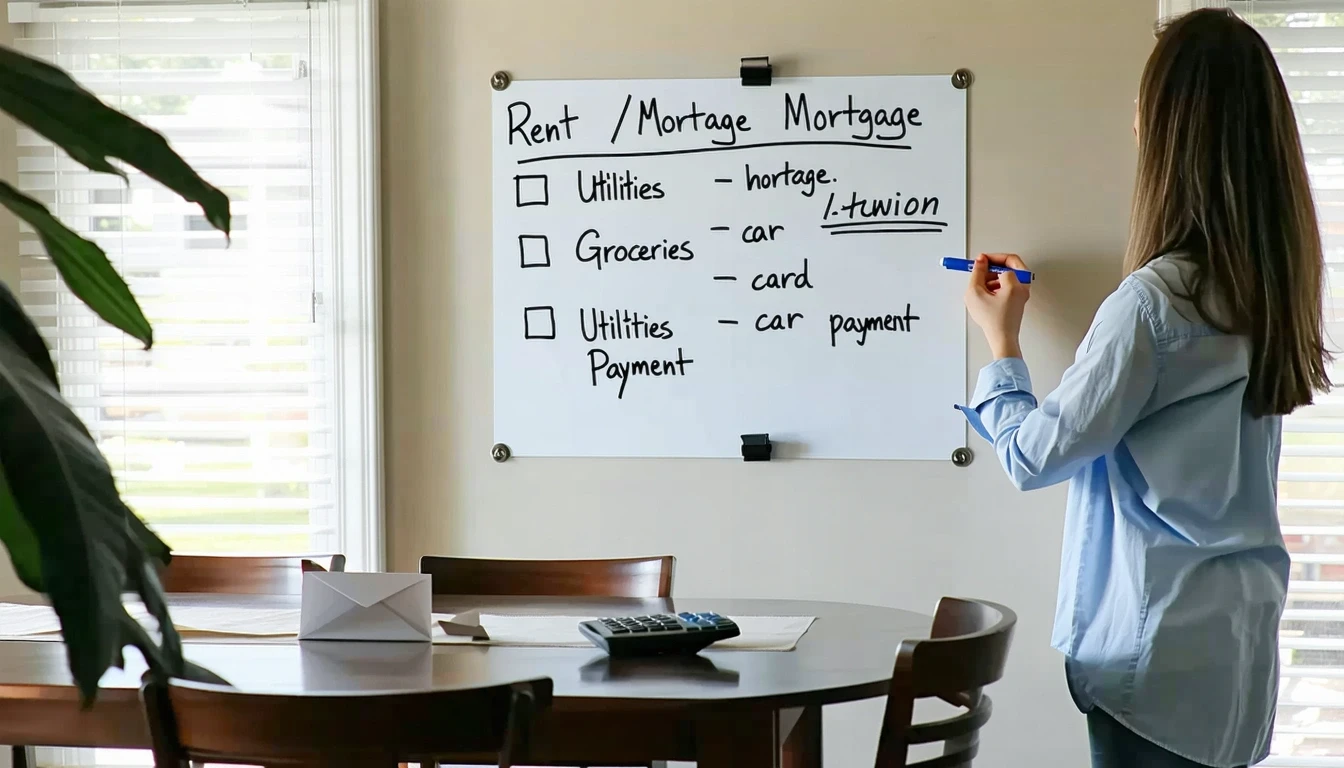
Budgeting Smarter in Leawood
Understanding the monthly budget in Leawood starts with recognizing that this Johnson County suburb operates on a different cost structure than most Kansas City–area communities. With a median household income of $174,779 per year and median rent at $1,872 per month, Leawood attracts households with substantial earning power—but that income level doesn’t insulate residents from budget complexity. What newcomers consistently underestimate is how costs layer: housing anchors the budget, but it’s the combination of car dependency, seasonal utility swings, and administrative friction costs (HOA dues, separate utility billing, lawn care expectations) that shape monthly cash flow in ways that feel different from denser urban cores or more modest suburbs.
Leawood’s infrastructure tells a story of dual realities. The city scores high on errands accessibility—grocery and food establishment density both exceed regional thresholds—and pedestrian infrastructure is strong in pockets, meaning some neighborhoods support walkable daily routines. Yet only 2.7% of workers telecommute, and 23.5% face long commutes, signaling that most households still depend heavily on personal vehicles for work travel. That creates a budget structure where transportation isn’t just gas and insurance—it’s time, maintenance cycles, and the recurring need to optimize routes and errands to avoid burning fuel on redundant trips. The result is a monthly budget that rewards planning and punishes inefficiency, even for high earners.
A Simple Budget Map: How Costs Behave by Household Type
The table below illustrates how major spending categories behave across three representative household types in Leawood. Rather than simulate exact totals, each cell describes cost exposure—whether a category is stable or volatile, fixed or flexible, and what drives variability. This approach reflects the reality that households experience costs differently based on housing tenure, commute footprint, and household size, even when living in the same city.
| Category | Jasmine (single renter) | Sam & Elena (couple) | Ortiz family (2 kids, owners) |
|---|---|---|---|
| Housing (Rent or Mortgage) | Fixed monthly; median rent $1,872 sets baseline | Fixed if renting; mortgage introduces tax/insurance volatility if owning | Mortgage-driven; median home value $592,700 creates large fixed obligation plus tax/insurance exposure |
| Utilities | Seasonal but apartment-buffered; electricity 14.29¢/kWh, natural gas $12.56/MCF | Moderate seasonal swings; shared usage lowers per-person exposure | Size-sensitive and seasonal; larger square footage amplifies heating/cooling cycles |
| Food (Groceries + Eating Out) | Flexible; solo shopping reduces waste but loses bulk savings | Shared grocery runs improve efficiency; dining discretionary | Volume-driven; meal planning and bulk buying essential to control costs |
| Transportation | Commute-dependent; gas $3.27/gal, 21-minute average commute | Dual-commute exposure if both work; carpooling rare given 2.7% WFH rate | Multi-trip complexity; school runs, activities, and work commutes stack |
| Fees / Friction Costs | Minimal if renting; trash/water often included | Moderate; some rentals unbundle utilities | Admin-heavy; HOA, lawn service expectations, separate utility billing common |
| Discretionary (life + surprises) | Flexible but compressed by fixed housing share | Shared discretionary budget allows more flexibility | Episodic and child-driven; activities, gear, and seasonal needs create lumpy spending |
| What Changes This Most | Commute distance and housing location | Whether both partners commute and housing tenure choice | Home size, school proximity, and number of vehicle-dependent trips per week |
Methodology: This guide uses only city-level figures provided in the IndexYard data feed for 2026. Where exact category totals aren’t provided, categories are described directionally to show budget behavior rather than a receipt-accurate total.
The Real Cost Drivers in Leawood
Housing anchors every household budget in Leawood, but the way it interacts with transportation and utilities creates the real pressure points. Because Leawood’s layout includes walkable pockets with high errands accessibility—grocery stores, pharmacies, and food establishments are broadly distributed—households living near these clusters can reduce some car dependency for daily needs. But with only 2.7% of the workforce telecommuting and nearly a quarter facing long commutes, most residents still drive to work daily. At $3.27 per gallon and an average commute of 21 minutes, transportation becomes a recurring, non-negotiable line item. For illustrative context, a household commuting 25 miles round trip five days a week in a vehicle averaging 25 MPG would use roughly 20 gallons per month, translating to about $65 in fuel costs before accounting for maintenance, insurance, or parking.
Utilities in Leawood follow a seasonal pattern shaped by the region’s continental climate. Electricity at 14.29¢ per kWh and natural gas at $12.56 per MCF means that summer cooling and winter heating both register as noticeable budget events, especially for homeowners in larger single-family properties. Renters in apartments benefit from shared walls and smaller square footage, which buffers seasonal swings. Owners, particularly the Ortiz family archetype managing a median-value home of $592,700, face size-sensitive exposure: larger homes mean longer HVAC run times, higher thermostat sensitivity, and less tolerance for deferred maintenance on furnaces or air conditioning units.
What catches many newcomers off guard isn’t the headline costs—it’s the housing pressure combined with the stack of smaller “friction” costs that appear after move-in. These include:
- HOA or association dues: Common in Leawood’s planned neighborhoods; often cover landscaping, common area maintenance, and sometimes trash collection, but add a fixed monthly obligation that doesn’t flex with usage.
- Trash and recycling: Billing structures vary; some neighborhoods bundle service into HOA fees, others bill separately, creating another line item to track.
- Water and sewer: Typically billed separately from rent or mortgage; usage-based but with fixed service charges that create a baseline cost even in low-use months.
- Parking and permits: Generally not a major expense in Leawood’s suburban layout, but relevant for households in denser mixed-use pockets or near commercial corridors.
- Seasonal upkeep: Lawn care, HVAC servicing, and storm preparation (especially for spring severe weather) create episodic but predictable costs that homeowners must budget for annually.
In Leawood, the budget stress point is rarely one big bill—it’s the stack of small “friction” costs that show up after move-in. These don’t appear on a lease summary or mortgage estimate, but they shape monthly cash flow in ways that feel more binding than discretionary spending cuts can solve.
How Households Keep the Budget Under Control (Without Living Like a Monk)
Households that manage Leawood’s cost structure successfully tend to focus on exposure reduction rather than deprivation. Because the city’s infrastructure supports both car-dependent commuting and walkable errands in certain pockets, the key behavioral lever is trip consolidation: combining grocery runs, pharmacy stops, and dining into fewer vehicle trips per week. This doesn’t require lifestyle sacrifice—it’s about recognizing that Leawood’s broadly accessible food and grocery density makes it possible to shop closer to home more often, reducing fuel burn and wear on vehicles without adding time to weekly routines.
Utility management in Leawood rewards households that treat seasonal swings as predictable rather than surprising. Because electricity and natural gas costs both respond to temperature extremes, the most effective controls are behavioral: setting thermostats to stable, moderate levels rather than chasing comfort in real time, using ceiling fans to extend shoulder seasons, and scheduling HVAC maintenance before peak summer and winter demand rather than after a system fails. These actions don’t eliminate seasonal bills, but they flatten volatility and prevent the kind of bill shock that forces cuts to discretionary spending mid-month.
For families managing the Ortiz-style budget—homeownership, kids, multiple vehicles—the friction cost layer becomes the primary control surface. Households that succeed here tend to:
- Audit HOA and service contracts annually to confirm they’re still receiving value for fixed fees.
- Batch errands and kid activities geographically to minimize redundant trips across town.
- Use Leawood’s strong park density (which exceeds regional thresholds) and water features for low-cost or free recreational options rather than defaulting to paid entertainment.
- Time major purchases (HVAC service, vehicle maintenance, lawn equipment) to off-peak months when household cash flow isn’t already strained by seasonal utility peaks.
- Leverage the city’s strong family infrastructure—schools and playgrounds both meet density thresholds—to reduce reliance on paid childcare or structured programs for after-school hours.
- Monitor water and trash billing separately from mortgage payments to catch usage creep or billing errors early.
- Plan grocery shopping around bulk buying for stable pantry items, using Leawood’s high grocery density to fill in fresh items as needed rather than making multiple full-cart trips per week.
- Coordinate with neighbors in HOA-managed communities to negotiate group rates for lawn care or snow removal, reducing per-household costs without sacrificing curb appeal expectations.
None of these tactics require income windfalls or extreme frugality. They reflect a clearer understanding of where Leawood’s cost structure creates leverage: not in cutting housing or eliminating commutes, but in reducing the frequency and unpredictability of secondary costs that compound when ignored.
How this article was built: In addition to public economic data, this article incorporates location-based experiential signals derived from anonymized geographic patterns—such as access density, walkability, and land-use mix—to reflect how day-to-day living actually feels in Leawood, KS.
FAQs About Monthly Budgets in Leawood (2026)
What’s the biggest budget surprise for people moving to Leawood?
The layering of friction costs—HOA dues, separate utility billing, lawn care expectations, and the need to drive for work despite walkable errands infrastructure. These don’t show up in rent or mortgage calculators but shape monthly cash flow in ways that feel more binding than discretionary cuts can solve.
Is Leawood affordable for single renters in 2026?
With median rent at $1,872 per month, single renters need to evaluate how much of their income that represents and whether their commute and lifestyle fit the city’s car-dependent work patterns. Leawood works best for single renters with stable income, short commutes, and a preference for suburban errands accessibility over urban density.
How much does commuting really cost in Leawood?
At $3.27 per gallon and an average commute of 21 minutes, fuel is just one piece. For illustrative context, a 25-mile round-trip commute five days a week in a 25-MPG vehicle uses about 20 gallons monthly, or roughly $65 in gas before maintenance, insurance, or parking. The real cost is the time and trip complexity, especially for families managing multiple daily routes.
Do utilities in Leawood swing a lot by season?
Yes. Electricity at 14.29¢/kWh and natural gas at $12.56/MCF mean that summer cooling and winter heating both create noticeable budget events, especially for homeowners in larger properties. Renters in apartments see smaller swings due to shared walls and reduced square footage.
What income level makes Leawood’s budget structure manageable?
Leawood’s median household income of $174,779 per year reflects the earning power typical of residents here, but “manageable” depends on housing tenure, commute footprint, and household size. Families managing homeownership, multiple vehicles, and kid-related costs need to account for friction layers that don’t scale linearly with income. Singles and couples renting near grocery-accessible corridors face simpler budgets with fewer fixed obligations.
Planning Your Next Step
Leawood’s monthly budget structure rewards households that understand three core drivers: housing sets the baseline, transportation depends on commute footprint and trip efficiency, and friction costs—HOA dues, utilities billing, seasonal upkeep—create the layer that most newcomers underestimate. The city’s strong errands accessibility and walkable pockets offer real leverage for households willing to consolidate trips and shop locally, but the low work-from-home rate and high long-commute percentage mean most residents still depend on personal vehicles for work travel.
For a clearer picture of how housing costs interact with availability and competition, explore the housing pressure guide. To understand how seasonal utility behavior shapes monthly cash flow, the utilities breakdown offers granular context. And for households evaluating whether Leawood’s car-dependent work patterns fit their lifestyle, the transportation guide explains what’s realistic without a car and where the city’s infrastructure creates flexibility.
The goal isn’t to eliminate costs—it’s to see where they come from, how they behave, and which levers you actually control. Leawood’s budget structure is complex, but it’s also predictable once you map the right variables. Start with housing tenure, add your commute footprint, account for the friction layer, and you’ll have a clearer view of what monthly life actually costs here.