
What does it actually feel like to live in Leawood? Is it the kind of place where people wake up content, or do they find themselves restless? According to composite local sentiment, 74 out of 100 residents say they’re happy in Leawood—a reflection of the city’s appeal to families, professionals, and those who value space, safety, and access to well-maintained amenities. But happiness here isn’t universal. The city’s emotional tone is shaped by a clear tradeoff: Leawood offers suburban comfort, strong schools, and integrated parks, but it lacks the density, nightlife, and urban texture that some crave.
The Emotional Landscape of Leawood
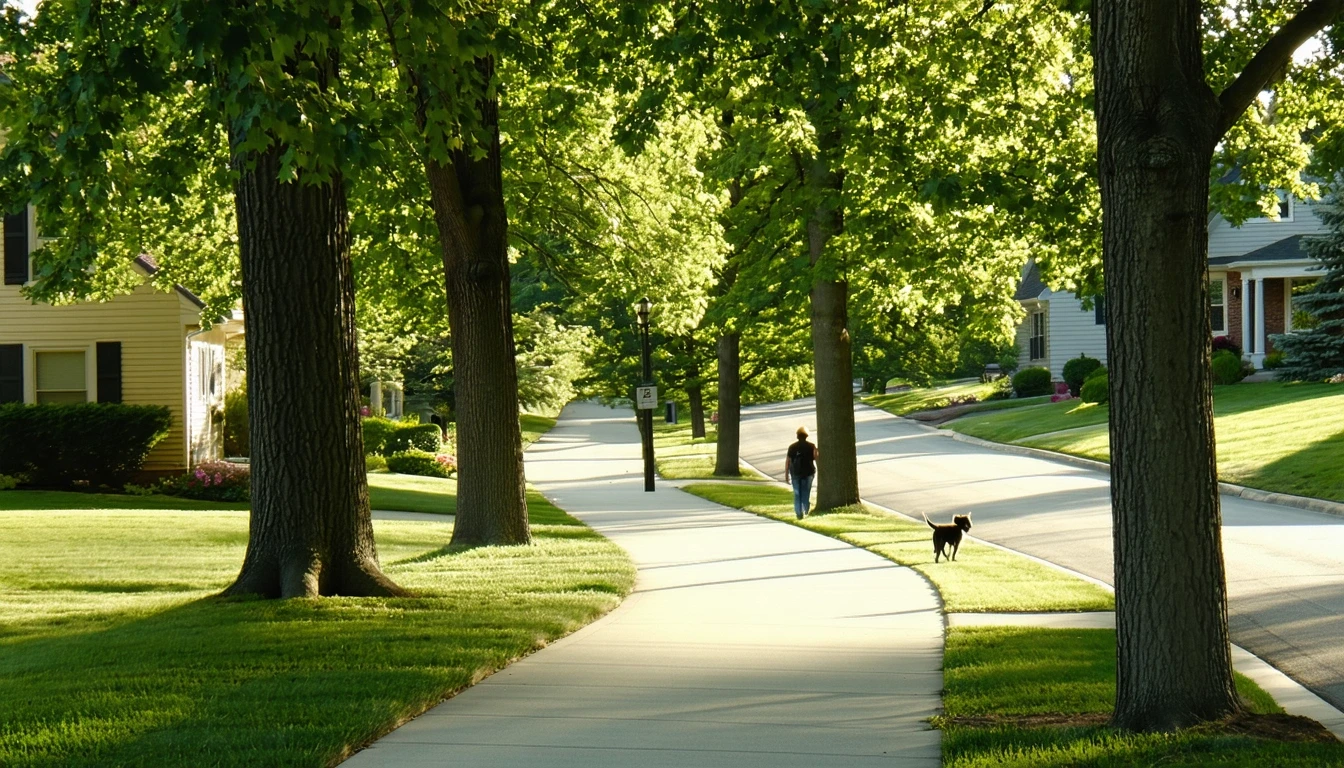
Leawood’s vibe is rooted in affluence and exclusivity. This is a city where well-kept homes, tree-lined streets, and manicured parks set the visual tone. For families seeking top-tier schools, low crime, and a sense of order, Leawood tends to feel like a reward—a place where hard work translates into a stable, predictable environment. The city’s strong family infrastructure, with schools and playgrounds meeting density thresholds, reinforces this alignment. Parks are deeply integrated into daily life, offering green space that feels accessible rather than distant.
But that same order can feel limiting. Leawood is not a place where spontaneity thrives. The city’s mixed-height urban form and car-oriented layout mean that even though walkable pockets exist—particularly near commercial corridors where grocery and food density is high—most daily life still revolves around driving. For those who wanted a walkable downtown, diverse dining, or late-night energy, Leawood can feel emotionally flat. The tradeoff is clear: you gain space, safety, and family-friendly infrastructure, but you give up texture, variety, and the kind of social friction that comes with density.
What People Are Talking About Online
Public discussion in Leawood tends to circle around a few recurring themes: pride in the city’s reputation, frustration with housing costs, and debates over what growth should look like. On platforms like Facebook and local forums, residents often express protectiveness over the city’s character.
“We moved here for the schools and the parks, and it’s delivered on both. But the cost of entry is no joke—you’re paying for the zip code as much as the house.”
“Leawood feels safe and clean, but it’s not exactly exciting. If you want nightlife or walkable restaurants, you’re driving to the Plaza or Brookside.”
“The grocery options are solid, and I can walk to the store from my neighborhood, which I didn’t expect in a suburb. But transit? Forget it. You need a car here.”
The tone is rarely angry, but it’s often evaluative. People weigh what they gained against what they gave up. For families, the calculus usually works. For younger professionals or renters, the emotional return can feel thinner.
How Local Coverage Frames the City
Local media coverage of Leawood tends to focus on growth, amenity expansion, and community identity. Headlines often reflect the tension between preserving suburban character and accommodating new development:
- “Community Debates What Growth Should Look Like”
- “New Retail and Dining Options Arrive as Leawood Evolves”
- “Residents Weigh Convenience Against Quiet”
- “Parks and Green Space Remain Central to City Identity”
- “Schools Continue to Draw Families from Across the Metro”
The framing is rarely alarmist. Instead, it reflects a city in slow, managed transition—one where change happens, but not without input. For those who value stability, this tone feels reassuring. For those who want faster evolution or more risk-taking, it can feel stagnant.
Review-Based Impressions
On review platforms and neighborhood apps, Leawood earns consistent praise for cleanliness, safety, and family amenities. But the critiques are just as telling. People who expected suburban comfort tend to be delighted. People who wanted urban texture or affordability tend to be disappointed.
Positive themes include:
- Excellent schools and well-maintained parks
- High grocery and food density near commercial corridors, making errands manageable even on foot in some areas
- Low crime and a strong sense of order
- Access to healthcare clinics and pharmacies for routine needs
Common complaints include:
- High housing pressure, both for buyers and renters
- Limited nightlife, arts, and cultural variety
- Car dependency for most trips, despite walkable pockets
- Lack of a hospital within city limits
- Perception of homogeneity in demographics and lifestyle
Neighborhood variation exists, but it’s subtle. Newer planned areas tend to feel more uniform, while older pockets near commercial zones offer slightly more walkability and mixed land use. Still, the overall experience is consistent: Leawood is a place where expectations are met if those expectations align with suburban affluence.
Comparing Leawood to Nearby Cities
| Dimension | Leawood, KS | Overland Park, KS | Prairie Village, KS |
|---|---|---|---|
| Overall Vibe | Affluent, family-focused, orderly | Diverse, sprawling, pragmatic | Charming, walkable, community-oriented |
| Housing Tone | High-end, exclusive | Wide range, more accessible | Mid-to-high, character homes |
| Walkability | Pockets near corridors | Limited, car-dominant | Strong in core areas |
| Dining & Nightlife | Limited, upscale options | Moderate variety, chain-heavy | Local spots, neighborhood feel |
| Family Appeal | Very strong | Strong, more varied | Strong, tight-knit |
Leawood sits at the high end of the Johnson County suburban spectrum. If you want more housing variety and don’t need the prestige, Overland Park offers similar schools and parks with less financial pressure. If you want more walkability and neighborhood character without sacrificing family infrastructure, Prairie Village might feel more textured. But if you want the strongest signal of affluence and exclusivity, Leawood delivers that more clearly than its neighbors.
Voices from Leawood Residents
“We came from a smaller town, and Leawood felt like an upgrade in every way. The parks are beautiful, the schools are excellent, and we feel safe letting our kids bike around the neighborhood.” — Family with young children
“I work remotely, and Leawood is fine for that. But socially, it’s pretty quiet. I drive to Westport or the Crossroads when I want to meet people or try new restaurants.” — Remote worker in their 30s
“The cost is steep, but we knew that coming in. What surprised me is how accessible groceries and errands are—I can actually walk to the store from my street, which I didn’t expect in a suburb.” — Newcomer renter
“Leawood has everything we need for this stage of life. The playgrounds are top-notch, and there’s always a park within a few minutes. But I do miss having a hospital nearby—we drive to Overland Park for anything serious.” — Parent of school-aged kids
“It’s a great place to raise a family, but it’s not a great place to be young and single. The vibe is very settled, very family-oriented. If you’re looking for energy or spontaneity, you won’t find it here.” — Young professional
“We’ve been here for 20 years, and it’s changed, but not dramatically. It’s still quiet, still clean, still expensive. If you like that, you’ll stay. If you don’t, you’ll leave.” — Long-time resident
“The bus service exists, but it’s not practical for most people. You really do need a car here, even though some areas are surprisingly walkable.” — Retiree
Does Leawood Feel Like a Good Fit?
Leawood’s emotional profile is consistent: it works best for established families, high-income professionals, and those who value order, safety, and access to well-maintained amenities. The city’s strong family infrastructure, integrated parks, and high grocery density near commercial corridors mean that daily life can feel manageable and pleasant—if you can afford the entry cost and don’t mind car dependency for most trips.
But Leawood tends to frustrate those seeking urban texture, nightlife, or affordability. The city’s lack of a hospital, limited transit, and suburban homogeneity mean that certain lifestyles simply don’t align. If you wanted a walkable downtown, diverse dining, or spontaneous social energy, Leawood will feel like a compromise.
The tradeoff is clear: you gain space, stability, and family-friendly infrastructure. You give up variety, density, and the kind of social friction that comes with urban living. For those who value the former, Leawood feels like a reward. For those who need the latter, it feels like a limitation.
To explore how these tradeoffs play out financially, see A Month of Expenses in Leawood: What It Feels Like. For a deeper look at Income Pressure in Leawood: Who Feels Stable (and Who Doesn’t), or to understand the housing market’s role in shaping who can live here, visit Leawood Housing Pressure: Availability, Competition, Compromises.
How this article was built: In addition to public economic data, this article incorporates location-based experiential signals derived from anonymized geographic patterns—such as access density, walkability, and land-use mix—to reflect how day-to-day living actually feels in Leawood, KS.
The perspectives shown reflect commonly expressed local sentiment and recurring themes in public discussion, rather than individual accounts.