
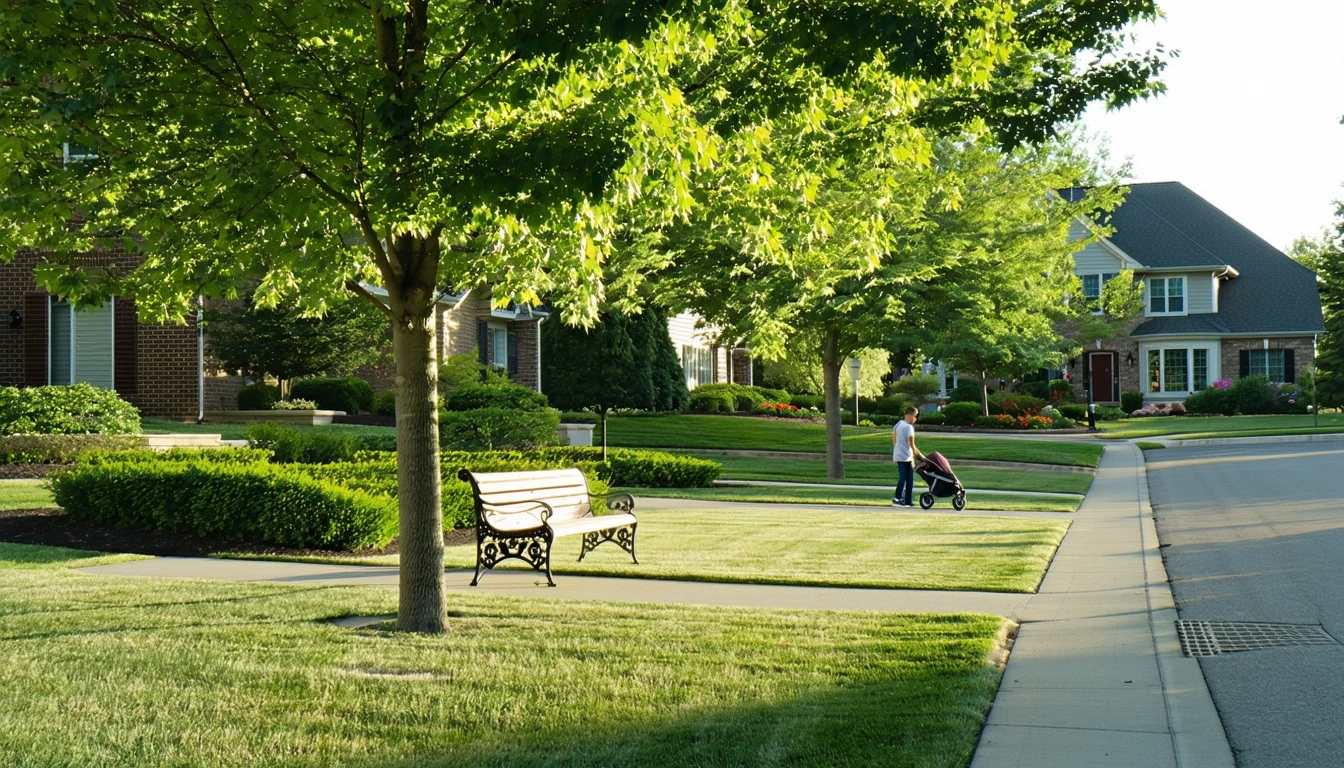
Leawood median home value: $592,700. Overland Park median home value: $361,800. Leawood median rent: $1,872/month. Overland Park median rent: $1,378/month. Both cities: walkable pockets, broadly accessible groceries, strong family infrastructure, integrated parks. Key difference: housing entry barrier and healthcare access structure.
Leawood and Overland Park sit side-by-side in Johnson County, Kansas, sharing the same metro economy, utility providers, and regional infrastructure. Both cities attract families seeking strong schools, accessible parks, and suburban space within commuting distance of Kansas City. Yet the financial experience of living in each city diverges sharply—not because one is universally cheaper, but because cost pressure concentrates differently depending on which expenses dominate your household in 2026.
The decision between Leawood and Overland Park hinges on whether you’re more exposed to housing entry costs, ongoing utility volatility from larger homes, or healthcare access needs. For households prioritizing premium housing stock and willing to absorb higher entry barriers, Leawood offers a distinct residential character. For those seeking hospital access, lower housing thresholds, and more income flexibility, Overland Park distributes cost pressure differently. This comparison explains where those differences show up and which households feel them most acutely.
Housing Costs: Entry Barriers and Ongoing Obligations
Housing represents the starkest structural difference between Leawood and Overland Park. Leawood’s median home value of $592,700 creates a significantly higher entry barrier for buyers compared to Overland Park’s $361,800. For renters, Leawood’s median gross rent of $1,872 per month exceeds Overland Park’s $1,378 per month. These aren’t minor variations—they reflect fundamentally different housing markets serving different income tiers within the same county.
The gap matters most for first-time buyers and households stretching to enter homeownership. In Leawood, the down payment threshold, mortgage qualification requirements, and ongoing property tax obligations (which scale with assessed value) all skew toward higher-earning households. Overland Park’s lower median home value doesn’t eliminate housing pressure, but it opens ownership to a broader income range. For renters, the monthly differential compounds over time: the same household paying Overland Park rent has more monthly flexibility for other expenses, while Leawood renters face tighter budgets unless income substantially exceeds the county median.
Home size and age also interact with ongoing costs. Leawood’s housing stock tilts toward larger, newer single-family homes, which carry lower maintenance unpredictability but higher baseline utility exposure due to square footage. Overland Park offers more variety in housing types—older single-family homes, townhomes, and apartment complexes—which introduces maintenance variability but can reduce utility loads for households choosing smaller footprints. Both cities feature mixed residential and commercial land use, meaning walkable errands are possible in pockets, but car ownership remains standard for most households.
| Housing Type | Leawood | Overland Park |
|---|---|---|
| Median Home Value | $592,700 | $361,800 |
| Median Gross Rent | $1,872/month | $1,378/month |
| Typical Housing Stock | Larger single-family, newer construction | Mixed: single-family, townhomes, apartments |
| Entry Barrier | High (income threshold, down payment) | Moderate (broader access) |
For renters: Overland Park offers lower monthly obligations, freeing up budget for transportation, groceries, or savings. Leawood renters must prioritize housing over other categories or earn significantly more to maintain flexibility.
For first-time buyers: Overland Park’s lower median home value reduces the down payment hurdle and mortgage qualification stress. Leawood requires higher income stability and larger cash reserves upfront.
For families prioritizing space: Leawood’s housing stock delivers larger homes with newer systems, reducing maintenance surprises but increasing utility exposure. Overland Park families can find space at lower entry costs but may face more maintenance variability in older homes.
Housing takeaway: Leawood’s housing market is structured for higher-income households willing to absorb premium entry costs in exchange for newer, larger homes. Overland Park distributes housing options across a wider income spectrum, offering lower entry barriers and more housing type variety. The “better” choice depends entirely on whether your household is more constrained by upfront costs or ongoing obligations, and whether you prioritize housing stock quality over budget flexibility.
Utilities and Energy Costs: Size, Season, and Predictability
Both Leawood and Overland Park share identical utility rate structures: electricity costs 14.29¢ per kWh, and natural gas runs $12.56 per MCF. The rates don’t differ—but exposure does, driven primarily by home size, age, and seasonal demand in the Kansas City region. Summers bring extended cooling seasons with heat that pushes air conditioning systems hard; winters require consistent heating through cold snaps. Neither city escapes this seasonal volatility, but the size and efficiency of your home determines how much that volatility costs.
Leawood’s larger median home size translates directly into higher baseline utility usage. Cooling a 3,000-square-foot home in July costs more than cooling a 1,500-square-foot townhome, even at identical rates. Newer construction in Leawood often includes better insulation and more efficient HVAC systems, which dampens some of that exposure, but square footage still dominates. Families moving into Leawood’s typical housing stock should expect utility bills that reflect both the home’s size and the region’s seasonal extremes.
Overland Park’s more varied housing stock—apartments, older single-family homes, and townhomes—creates a wider range of utility experiences. Smaller units and shared-wall construction in apartments reduce heating and cooling loads, offering more predictable monthly costs. Older single-family homes may lack modern insulation, increasing exposure during temperature extremes. Households in Overland Park have more control over utility costs by choosing housing type strategically, whereas Leawood’s market offers less variety in that dimension.
For single adults or couples: Overland Park’s smaller housing options (apartments, townhomes) reduce utility exposure significantly. Leawood’s housing stock skews toward larger homes, making it harder to avoid higher baseline usage even if you don’t need the space.
For families in larger homes: Both cities expose you to seasonal volatility, but Leawood’s newer construction may offer slightly more predictability through efficiency. Overland Park families in older homes face more maintenance-driven surprises (aging HVAC, poor insulation) that amplify costs unpredictably.
For budget-conscious households: Overland Park offers more pathways to lower utility costs by choosing smaller, more efficient housing types. Leawood’s market assumes you’re willing to absorb higher utility baselines in exchange for space and newer systems.
Utility takeaway: Utility rates are identical, but cost exposure diverges based on housing choices. Leawood households experience higher baseline usage due to larger homes, offset partially by newer construction efficiency. Overland Park offers more flexibility to control utility costs through housing type selection, but older stock introduces maintenance-driven volatility. Households sensitive to monthly utility swings should prioritize housing size and age over city choice alone.
Groceries and Daily Expenses: Access, Habits, and Spending Creep

Both Leawood and Overland Park register high food and grocery establishment density, meaning access to supermarkets, specialty stores, and dining options is broadly available throughout each city. The structural difference isn’t about whether you can find groceries—it’s about how income levels, convenience expectations, and spending habits interact with the local retail landscape in 2026.
Leawood’s higher median household income of $174,779 per year shapes the grocery and dining environment. The city attracts retailers and restaurants that cater to higher spending thresholds, with more emphasis on specialty grocers, organic options, and upscale dining. This doesn’t mean budget grocery options disappear, but the retail mix reflects the income profile. Households accustomed to convenience—prepared foods, frequent dining out, premium grocery staples—will find those options readily available, but the baseline cost per trip skews higher when convenience dominates.
Overland Park, with a median household income of $100,876 per year, supports a broader mix of grocery and dining options. Big-box stores, discount grocers, and mid-tier restaurant chains coexist with specialty options, giving households more flexibility to trade down when budgets tighten. The same family buying groceries in Overland Park can choose between premium and budget-friendly stores within a short drive, whereas Leawood’s retail landscape assumes less price sensitivity.
Spending creep—the gradual increase in daily expenses driven by convenience and proximity—affects both cities but manifests differently. In Leawood, the prevalence of high-end coffee shops, prepared meal services, and premium grocery displays makes it easier to spend more without noticing. In Overland Park, convenience options exist, but the retail mix includes more budget alternatives that create natural friction against overspending. Families managing larger grocery volumes (multiple kids, frequent meals at home) feel this difference more acutely than single adults or couples dining out frequently.
For single adults: Both cities offer accessible dining and grocery options. Leawood’s environment skews toward higher per-meal costs if you default to convenience. Overland Park provides more budget-friendly alternatives without sacrificing access.
For couples: Grocery costs remain manageable in both cities if you’re intentional about store choice. Leawood’s retail mix assumes higher spending tolerance; Overland Park offers more price flexibility without driving farther.
For families with kids: Larger grocery volumes amplify cost differences. Leawood’s retail landscape makes it easier to overspend on convenience and premium staples. Overland Park’s mix of discount and mid-tier options gives families more control over weekly grocery bills without sacrificing variety.
Groceries takeaway: Access to food and groceries is broadly available in both cities, but the retail mix reflects income profiles. Leawood’s environment assumes higher spending tolerance and prioritizes convenience and premium options. Overland Park offers more price flexibility and budget-friendly alternatives within the same access radius. Households sensitive to grocery spending or managing larger volumes will find more cost control levers in Overland Park, while Leawood fits households less constrained by daily spending decisions.
Taxes and Fees: Predictability and Structural Differences
Property taxes, local fees, and consumption taxes shape the ongoing cost experience in both Leawood and Overland Park, though specific rates aren’t detailed in available data. What matters more than the rates themselves is how these costs interact with housing values, household composition, and length of residency. Both cities sit in Johnson County, Kansas, meaning they share the same county-level tax structure, but city-specific fees and assessments can introduce variability.
Property taxes scale with assessed home values, meaning Leawood homeowners face higher absolute tax bills due to the city’s elevated median home value of $592,700 compared to Overland Park’s $361,800. Even if the millage rate is identical, the higher assessed value translates into a larger annual obligation. For long-term residents, this difference compounds over time, especially if home values appreciate. Renters don’t pay property taxes directly, but landlords pass those costs through in rent, which partially explains Leawood’s higher median gross rent.
Local fees—trash collection, water, sewer, stormwater management—vary by city and sometimes by neighborhood, particularly in areas governed by homeowners associations (HOAs). Leawood’s newer developments often include HOA fees that bundle landscaping, common area maintenance, and sometimes trash or snow removal. These fees add predictability (you know the cost upfront) but reduce flexibility (you can’t opt out). Overland Park’s more varied housing stock means some neighborhoods have HOAs and others don’t, giving households more choice in whether they want bundled services or prefer to manage costs individually.
Sales taxes apply uniformly across both cities for most purchases, meaning consumption-based tax exposure doesn’t differ by location. However, households spending more on taxable goods—furniture, electronics, vehicles—will feel that burden more acutely in Leawood if their higher housing costs leave less room for discretionary purchases. Overland Park households with more budget flexibility after housing may absorb sales taxes more easily, though the rate itself remains constant.
For homeowners: Leawood’s higher home values mean higher property tax bills in absolute terms, even if rates are identical. Overland Park offers lower entry costs and correspondingly lower ongoing tax obligations, which matters for households planning to stay long-term.
For renters: Property taxes are embedded in rent, contributing to Leawood’s higher median rent. Overland Park renters benefit indirectly from lower property tax pass-through, though the difference is bundled into overall rent levels.
For households in HOA-governed neighborhoods: Leawood’s prevalence of HOA fees adds predictability but reduces flexibility. Overland Park offers more choice—some neighborhoods have HOAs, others don’t—allowing households to decide whether they value bundled services or prefer lower fixed costs.
Taxes and fees takeaway: Property tax exposure scales with home values, making Leawood more expensive in absolute terms for homeowners. Overland Park’s lower median home value reduces that burden. HOA fees are more common in Leawood’s newer developments, adding predictability at the cost of flexibility. Overland Park’s varied housing stock gives households more control over whether they absorb bundled fees or manage services individually. The primary difference is magnitude and structure, not rate—households sensitive to ongoing obligations should weigh how property taxes and fees interact with their housing choice.
Getting Around: Commute Patterns and Transportation Dependence
Both Leawood and Overland Park function as car-oriented suburbs within the Kansas City metro, though both cities also feature walkable pockets where pedestrian infrastructure supports local errands. Gas prices sit at $3.27 per gallon in both locations, meaning fuel costs don’t differ by city—but commute patterns, car dependence, and time costs do.
Leawood reports an average commute time of 21 minutes, with 23.5% of workers experiencing long commutes and only 2.7% working from home. This suggests most Leawood residents commute to jobs elsewhere in the metro, likely Kansas City proper or other Johnson County employment centers. The relatively short average commute indicates proximity to job hubs, but the low work-from-home percentage means most households rely on daily car trips. Commute data for Overland Park isn’t available, but the city’s larger size and more varied employment base suggest some residents work locally, potentially reducing average commute distances for certain households.
Both cities offer bus service, but no rail transit. This limits public transportation to a supplementary role rather than a primary commute option for most households. Walkable pockets exist in both cities—areas where sidewalks, crosswalks, and mixed-use development allow residents to run errands on foot—but these pockets don’t eliminate car dependence for work commutes or longer trips. Cycling infrastructure is present in limited areas in both cities, offering recreational options but not robust commuter alternatives.
Transportation costs in both cities are driven more by commute frequency and distance than by fuel prices alone. Households commuting daily absorb not just gas costs but also vehicle maintenance, insurance, and depreciation. Leawood’s shorter average commute time reduces time costs (less time in the car) but doesn’t eliminate the need for reliable vehicle access. Overland Park’s hospital presence may reduce medical-related travel for some households, whereas Leawood residents needing hospital care must travel to nearby cities.
For single adults commuting to Kansas City: Leawood’s 21-minute average commute offers time savings over longer suburban commutes, though car ownership remains essential. Overland Park likely offers similar proximity depending on neighborhood, with the added benefit of local hospital access reducing some medical travel.
For dual-income couples: Both cities require two vehicles for most households unless one partner works from home. Leawood’s low work-from-home percentage suggests fewer households have that flexibility. Overland Park’s larger employment base may offer more local job options, reducing commute distances for some.
For families managing school, activities, and errands: Both cities require car-based logistics for most households. Walkable pockets help with grocery runs or coffee shops, but school drop-offs, sports practices, and medical appointments demand vehicle access. Overland Park’s hospital presence reduces travel friction for pediatric or urgent care needs.
Transportation takeaway: Both cities are car-dependent suburbs with walkable pockets that support some local errands but don’t replace vehicle ownership. Leawood’s shorter average commute time offers time savings, but low work-from-home rates mean most households commute daily. Overland Park’s hospital presence reduces medical travel needs, which matters for families or households with ongoing healthcare requirements. Transportation costs are driven more by commute frequency and household logistics than by fuel prices, which remain identical in both cities.
Where Cost Pressure Concentrates Differently
Housing dominates the cost experience in both Leawood and Overland Park, but the nature of that pressure differs. Leawood front-loads cost through higher home values and rents, creating a steep entry barrier that filters for higher-income households. Overland Park distributes housing costs more broadly, offering lower entry thresholds and more housing type variety, which opens ownership and rental options to a wider income range. Households sensitive to upfront costs—down payments, moving expenses, initial rent deposits—will feel Leawood’s barrier more acutely, while those prioritizing long-term housing quality and newer construction may absorb that cost willingly.
Utilities introduce more volatility in Leawood due to larger median home sizes, even though rates are identical. Families moving into Leawood’s typical housing stock should expect higher baseline usage during Kansas summers and winters, offset partially by newer construction efficiency. Overland Park offers more control over utility exposure through housing type selection—apartments and townhomes reduce heating and cooling loads, while older single-family homes may introduce maintenance-driven surprises. Households managing tight monthly budgets will find more levers to control utility costs in Overland Park.
Groceries and daily spending reflect income profiles more than access. Both cities offer broadly accessible food and grocery options, but Leawood’s retail mix skews toward premium and convenience-oriented spending, making it easier to overspend without noticing. Overland Park’s broader retail mix includes discount and mid-tier options that create natural friction against spending creep. Families managing larger grocery volumes or households sensitive to daily spending will find more cost control in Overland Park, while Leawood fits households less constrained by per-trip grocery costs.
Transportation patterns matter more in Leawood for households prioritizing time over distance. The city’s 21-minute average commute offers time savings, but car dependence remains universal. Overland Park’s hospital presence reduces medical travel friction, which compounds over time for families with kids or households managing chronic conditions. Both cities require vehicle ownership for most households, but the time cost and healthcare access differences shift which city feels more convenient depending on your household’s specific logistics.
The decision isn’t about which city is cheaper—it’s about which cost structure aligns with your household’s income, priorities, and constraints. Leawood fits households earning well above the county median, prioritizing housing quality and willing to absorb higher entry costs and ongoing obligations. Overland Park fits households seeking lower entry barriers, more housing type flexibility, and better control over discretionary spending. Both cities offer strong family infrastructure, integrated parks, and accessible errands, but the financial experience diverges sharply based on where cost pressure concentrates for your specific situation.
How the Same Income Feels in Leawood vs Overland Park
Single Adult
In Leawood, housing claims a larger share of gross monthly income upfront, leaving less flexibility for transportation, dining, or savings. The retail environment assumes higher spending tolerance, making it easier to overspend on convenience without noticing. Overland Park offers lower rent thresholds and more budget-friendly grocery and dining alternatives, creating more breathing room for discretionary spending or building savings. Commute times are similar, but Overland Park’s hospital access reduces medical travel friction. The same gross income feels tighter in Leawood unless you’re earning well above the median and prioritize housing quality over budget flexibility.
Dual-Income Couple
In Leawood, combined income must cover higher housing costs first, which reduces flexibility for travel, home upgrades, or retirement contributions unless both earners are well-compensated. The city’s retail and dining landscape rewards convenience spending, which compounds if both partners work long hours and default to takeout or prepared foods. Overland Park’s lower housing entry costs free up more monthly budget for discretionary spending, savings, or paying down debt. Both cities require two vehicles for most couples, but Overland Park’s hospital presence and slightly more varied employment base reduce some logistical friction. The same combined income stretches farther in Overland Park unless both partners prioritize Leawood’s housing stock and can absorb the premium without sacrificing other goals.
Family with Kids
In Leawood, housing and utilities dominate the budget due to larger homes and higher entry costs, leaving less room for childcare, activities, or college savings unless household income substantially exceeds the median. The city’s strong family infrastructure—schools, playgrounds, parks—delivers value, but the cost structure assumes high earnings. Overland Park offers similar family amenities at lower housing entry costs, freeing up budget for extracurriculars, medical expenses, or saving for future education. Hospital access in Overland Park reduces travel time and stress for pediatric or urgent care needs, which compounds over years of child-rearing. The same gross income feels more constrained in Leawood for families managing multiple cost pressures simultaneously, while Overland Park offers more flexibility to absorb unexpected expenses or invest in long-term goals.
Decision Matrix: Which City Fits Which Household?
| Decision Factor | If You’re Sensitive to This… | Leawood Tends to Fit When… | Overland Park Tends to Fit When… |
|---|---|---|---|
| Housing entry + space needs | Down payment size, mortgage qualification, upfront cash reserves | You earn well above median and prioritize newer, larger homes over budget flexibility | You need lower entry barriers, more housing type variety, or want to preserve cash for other goals |
| Transportation dependence + commute friction | Daily commute time, vehicle reliability, medical travel frequency | You value shorter average commute times and can absorb car dependence without hospital proximity | You need hospital access nearby or want to reduce medical travel friction for family healthcare |
| Utility variability + home size exposure | Seasonal bill swings, baseline usage, HVAC efficiency | You accept higher baseline utility costs in exchange for larger, newer homes with efficient systems | You want more control over utility exposure through smaller housing or can manage older home maintenance |
| Grocery strategy + convenience spending creep | Weekly grocery bills, dining out frequency, impulse convenience purchases | You’re less constrained by per-trip grocery costs and value premium or specialty options nearby | You manage larger grocery volumes or want more budget-friendly alternatives without sacrificing access |
| Fees + friction costs (HOA, services, upkeep) | Predictability vs flexibility, bundled services, ongoing obligations | You prefer bundled HOA services and predictable fees even if they reduce flexibility | You want more choice over which services to pay for and prefer lower fixed obligations |
| Time budget (schedule flexibility, errands, logistics) | Errands, school drop-offs, activity shuttling, medical appointments | You prioritize housing quality and can absorb logistical friction from clinic-only healthcare access | You need hospital proximity to reduce travel time for medical needs or value slightly more local employment options |
Lifestyle Fit and What It Means for Your Budget
Both Leawood and Overland Park deliver strong family-oriented lifestyles with integrated parks, accessible playgrounds, and schools that meet density thresholds. Park access exceeds high thresholds in both cities, with water features present, offering families and outdoor enthusiasts ample green space without traveling far. Walkable pockets exist throughout both cities, meaning grocery runs, coffee shops, and some errands can happen on foot in certain neighborhoods, though car ownership remains essential for work commutes, school logistics, and most household errands.
Leawood’s lifestyle reflects its higher income profile: the city attracts residents prioritizing newer housing stock, premium retail options, and a residential character that emphasizes space and privacy. The 21-minute average commute keeps Kansas City employment accessible without excessive time costs, though only 2.7% of workers operate from home, meaning most households manage daily commutes. The city’s clinic-based healthcare access meets routine needs, but families with ongoing medical requirements or those prioritizing hospital proximity must travel to nearby cities. Leawood’s strong family infrastructure—schools, playgrounds, and parks—supports child-rearing, but the cost structure assumes households can absorb premium housing and utility costs without sacrificing other priorities.
Overland Park offers a similar family-friendly environment but with more variety in housing types and income levels. The city’s hospital presence reduces medical travel friction, which compounds in value for families managing pediatric care, chronic conditions, or simply wanting urgent care nearby. Overland Park’s broader retail mix—discount grocers alongside specialty stores, mid-tier restaurants alongside upscale dining—gives households more flexibility to adjust spending based on monthly budget constraints. The city’s larger size and more varied employment base mean some residents work locally, potentially reducing commute distances and vehicle wear for certain households.
Quick facts: Both cities feature bus service but no rail transit, limiting public transportation to a supplementary role. Cycling infrastructure exists in pockets in both cities, offering recreational options but not robust commuter alternatives. Overland Park’s hospital access reduces travel time for medical needs, while Leawood residents rely on clinics for routine care and travel elsewhere for hospital services.