
“It’s the kind of place where you can bike to the grocery store with your kids, hit a park on the way back, and still feel like you’re in a real neighborhood—not just a suburb that makes you drive everywhere. But if you’re expecting Portland energy or don’t want to deal with growth, it’s probably not your vibe.”
That sentiment captures a lot of what people feel about living in Sherwood. It’s a city that offers more texture than many suburban peers—walkable pockets, accessible errands, integrated green space—but it’s also growing, evolving, and grappling with the tension between small-town charm and metro-area pressure. Understanding whether Sherwood feels like a good fit comes down to knowing what you value, what you’re willing to trade off, and how you actually want to move through daily life.
The Emotional Landscape of Sherwood
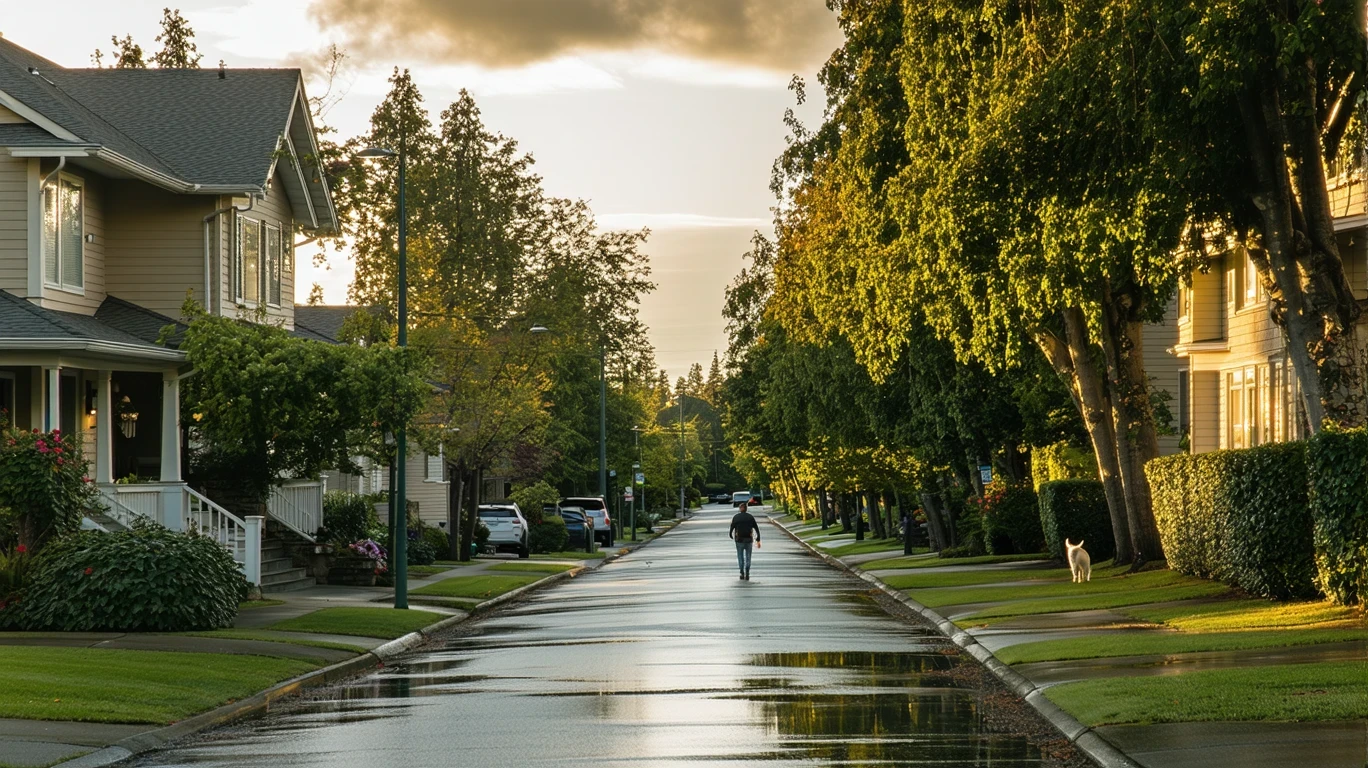
Sherwood tends to feel rewarding for people who want suburban safety and space without sacrificing walkability or access to daily needs. The city’s infrastructure supports a lifestyle where you can run errands on foot or by bike, let kids play in well-maintained parks, and still enjoy the quiet rhythms of a smaller community. Families, in particular, often describe feeling “at home” here—playgrounds are woven into neighborhoods, grocery stores are broadly accessible, and the pedestrian-to-road ratio is high enough that walking feels natural rather than like an afterthought.
But Sherwood also tends to frustrate people who crave urban density, nightlife, or car-free living. There’s no rail transit—just bus service—and while cycling infrastructure is notably strong, the city still leans suburban in form and pace. For those who wanted a sleepy, unchanging small town, the steady growth and arrival of new developments can feel like a loss of identity. And for renters or buyers facing Portland metro housing pressure, the emotional calculus often includes weighing Sherwood’s appeal against affordability constraints that aren’t unique to this city but are felt here nonetheless.
The people who feel most aligned with Sherwood tend to be those who value practical convenience, outdoor access, and family-oriented infrastructure over cultural intensity or transit independence. The people who feel friction are often those who need more—more density, more transit options, more nightlife—or those who wanted less growth and more isolation.
What People Talk About Online
In local Facebook groups and regional subreddit discussions, Sherwood’s name tends to come up in conversations about suburban tradeoffs, school quality, and the evolving character of the Portland metro’s outer ring. The tone is often protective—people who live here tend to defend its walkability and park access when compared to more car-dependent suburbs—but there’s also a thread of ambivalence about growth.
Common themes include:
- Pride in walkability and green space: “We can walk to the store, the park, the library—it’s not like other suburbs where you’re stuck in the car for everything.”
- Frustration with traffic and growth pace: “It’s getting busier, and the infrastructure isn’t keeping up. It’s not the quiet town it was ten years ago.”
- Appreciation for family-friendly amenities: “Great for kids—plenty of playgrounds, safe streets, and you don’t feel isolated.”
The emotional tone is rarely extreme. People aren’t declaring Sherwood paradise or disaster—they’re weighing what works against what’s changing, and the dominant sentiment is cautious satisfaction mixed with concern about trajectory.
How Local Coverage Frames the City
Local news and community coverage tend to frame Sherwood through the lens of growth management, infrastructure adaptation, and identity preservation. Headlines and story themes often circle around:
- “Community Debates What Growth Should Look Like”
- “New Amenities Arrive as Town Identity Evolves”
- “Residents Weigh Convenience Against Quiet”
- “Parks and Trails Expand Amid Housing Development”
- “Transit Access Remains a Suburban Challenge”
The framing is rarely celebratory or alarmist—it’s more observational, reflecting a community in transition. Coverage tends to acknowledge both the benefits of new services and the discomfort of change, without declaring a winner. For readers trying to gauge the city’s emotional temperature, the takeaway is that Sherwood is actively negotiating its future, and opinions are mixed.
Review-Based Public Perception
On platforms like Google Reviews, Yelp, and Nextdoor-style community boards, Sherwood’s public perception tends to hinge on expectation matching. People who wanted suburban comfort with walkable errands tend to leave positive feedback. People who wanted urban texture, nightlife, or rail transit tend to express disappointment—not because Sherwood is broken, but because it wasn’t built for that.
Praise often centers on:
- Accessible grocery stores and daily errands
- Well-maintained parks and green space
- Safe, bike-friendly streets in parts of town
- Family-oriented vibe without feeling isolated
Criticism often focuses on:
- Limited dining and entertainment variety
- Bus-only transit that doesn’t serve car-free lifestyles
- Growth pressure and traffic congestion
- Housing costs that feel high relative to amenities
Neighborhood variation exists—newer planned areas tend to feel more polished and amenity-rich, while older pockets offer more established trees and quieter streets—but the overall character is consistent: suburban, family-oriented, and moderately walkable, with strengths in parks and errands but gaps in transit and nightlife.
How Day-to-Day Living Actually Feels
Because Sherwood’s pedestrian infrastructure is notably denser than its road network, and because grocery and food establishments exceed density thresholds, daily life here often involves less driving than in many comparable suburbs. Families can bike to the store, walk kids to playgrounds, and access parks without needing to load everyone into the car. The cycling infrastructure—measured by bike-to-road ratio—supports confident riding in many areas, which changes the texture of errands and recreation.
But the absence of rail transit and the reliance on bus service means that commuting to Portland or other metro hubs still leans car-dependent for most households. The mixed land use—residential and commercial woven together—creates pockets where daily needs feel close, but the city’s overall form is still suburban, and longer trips or evening outings often require driving.
For remote workers or families with flexible schedules, this setup tends to feel liberating—you get suburban space and safety without total car dependence. For commuters or people who need frequent metro access, it can feel limiting. The city’s infrastructure supports a lifestyle of local errands and outdoor recreation, but it doesn’t eliminate the need for a car.
Comparing Sherwood to Nearby Cities
| Dimension | Sherwood | Tigard | Tualatin |
|---|---|---|---|
| Walkability | Pockets of strong pedestrian infrastructure | More car-oriented overall, walkable near transit | Moderate, improving in newer areas |
| Transit Access | Bus service only | Bus and MAX light rail access | Bus service, no rail |
| Family Vibe | Strong parks, playgrounds, safe streets | Family-friendly, more urban amenities | Quiet, family-oriented, less dense |
| Dining & Nightlife | Limited, improving | More variety, closer to Portland energy | Quiet, limited options |
| Growth Pressure | Steady, visible, debated | Established, denser, ongoing development | Moderate, slower pace |
Sherwood occupies a middle ground: more walkable and bike-friendly than Tualatin, but without Tigard’s rail access or urban amenities. If you value pedestrian infrastructure and park access over transit independence, Sherwood may feel like the better fit. If you need rail connectivity or more dining variety, Tigard’s tradeoffs might align better. If you want maximum quiet and slower growth, Tualatin may appeal more—but you’ll sacrifice some of Sherwood’s walkable texture.
What Locals Are Saying
Young family, newer neighborhood:
“We love that we can walk to the park and the grocery store. It’s safe, the schools are decent, and we’re not stuck in the car all day. But we do wish there were more restaurants and things to do at night.”
Remote worker, mid-30s:
“Sherwood works great for me because I don’t commute. I bike everywhere I need to go during the week, and it’s quiet enough to focus. If I had to drive to Portland every day, I’d probably feel differently.”
Long-time resident, older pocket:
“It’s not the small town it used to be. The growth is real, and the traffic is worse. But I still like the trees, the parks, and the fact that it’s not just sprawl.”
Renter, late 20s:
“It’s fine, but it’s expensive for what you get. I’d rather be closer to Portland with better transit, but I can’t afford it. Sherwood feels like a compromise.”
Retiree, downsizing:
“We moved here for the parks and the slower pace. It’s walkable enough that we don’t feel trapped, but it’s not overwhelming. The lack of a hospital nearby is a concern, though.”
Parent of school-age kids:
“The playgrounds are great, and the streets feel safe for biking. School options are okay but not amazing. It’s a good place to raise kids if you’re okay with suburban life.”
Newcomer from California:
“I expected more of a small-town vibe, but it’s growing fast. The walkability surprised me in a good way—it’s better than a lot of suburbs I’ve seen. But the dining scene is pretty limited.”
Does Sherwood Feel Like a Good Fit?
Sherwood tends to work well for families and remote workers who value suburban safety, walkable errands, strong park access, and cycling infrastructure—without needing urban density or rail transit. It’s a place where you can bike to the grocery store, walk to playgrounds, and enjoy green space, but you’ll still need a car for longer trips and metro commuting.
It tends to frustrate people who need car-free living, frequent rail access, or vibrant nightlife. It also challenges those who wanted a static small town, because growth is visible and ongoing. And for renters or buyers facing Portland metro housing pressure, the emotional fit depends on whether Sherwood’s specific strengths—walkability, parks, family amenities—justify the cost and commute tradeoffs.
The city’s emotional profile is one of cautious satisfaction: people appreciate what’s here, but they’re watching what’s changing. If you value practical convenience, outdoor access, and family-oriented infrastructure over cultural intensity or transit independence, Sherwood’s vibe is likely to feel aligned. If you need more urban energy or less growth, the friction will be real.
To explore how these tradeoffs play out in what a budget has to handle in Sherwood, or to understand what ‘enough’ actually means in terms of quality of life, or to weigh the renting vs buying tradeoffs, those resources can help you move from vibe to decision.
How this article was built: In addition to public economic data, this article incorporates location-based experiential signals derived from anonymized geographic patterns—such as access density, walkability, and land-use mix—to reflect how day-to-day living actually feels in Sherwood, OR.
The perspectives shown reflect commonly expressed local sentiment and recurring themes in public discussion, rather than individual accounts.