
Housing costs in Sherwood don’t announce themselves with a single number. The median home value sits at $520,500, and median rent reaches $1,980 per month—but those figures only begin to describe what it costs to live here. Sherwood operates as a Portland metro suburb where housing demand stays strong, walkable pockets reduce some car dependency, and the gap between renting and owning plays out differently than in car-dependent sprawl or dense urban cores. What you pay depends not just on the housing type you choose, but on how you use the infrastructure around it and what volatility you’re willing to accept over time.
This article breaks down housing cost structure and long-term exposure in Sherwood, explaining how rent, ownership, utilities, and maintenance interact with the city’s layout and climate. It’s designed to help you decide whether renting or buying fits your household, which costs stay predictable, and where Sherwood’s particular conditions change the financial experience of living here.
The Housing Market in Sherwood Today
Sherwood’s housing market reflects its role as an accessible suburb within the Portland metro area. The $520,500 median home value positions the city well above national baselines, driven by proximity to employment centers, strong school infrastructure, and a built environment that blends residential neighborhoods with commercial corridors. The regional price parity index of 125 confirms that overall costs here run about 25% above the national average, and housing absorbs much of that premium.
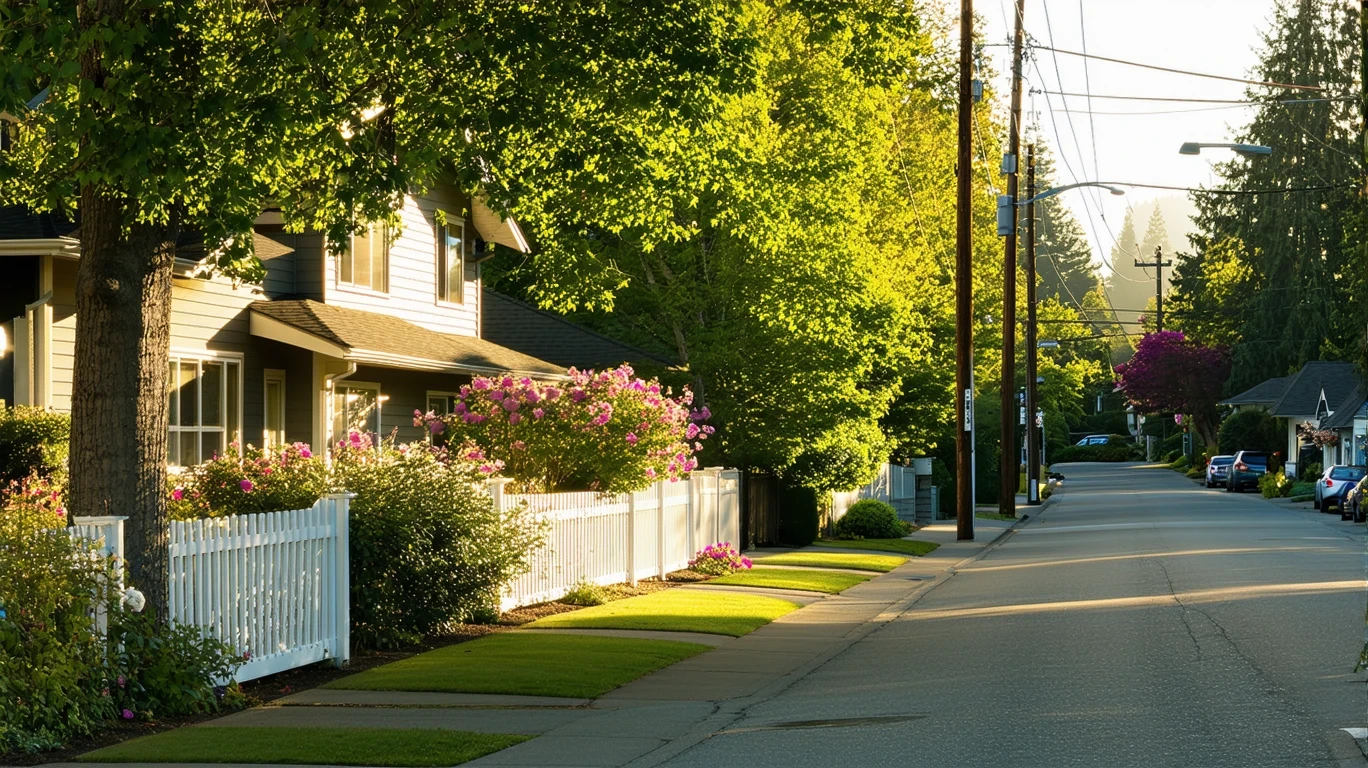
What newcomers often misunderstand is how Sherwood’s infrastructure affects housing value. This isn’t a place where every errand requires a car. Food and grocery density exceeds high thresholds, pedestrian-to-road ratios support walking in many areas, and bike infrastructure is notably present. That accessibility creates premiums in certain neighborhoods and changes the tradeoff between housing cost and transportation savings. A home near a walkable corridor costs more upfront but reduces the household’s need for multiple vehicles, frequent fuel purchases, and long drives for routine needs.
The rental market, with a median gross rent of $1,980 per month, stays tight. Demand comes from households priced out of ownership, workers commuting to Portland, and families seeking Sherwood’s schools and parks without the down payment barrier. Rental availability fluctuates with development cycles, and landlords hold pricing power in a market where vacancy stays low. For renters, Sherwood offers stability and access, but at a cost that challenges single-income households and forces tradeoffs between space, location, and budget flexibility.
Renting in Sherwood
At $1,980 per month, median rent in Sherwood reflects strong demand and limited supply. That figure typically covers a two-bedroom apartment or small house, though location, age, and amenities shift the number in both directions. Renters near Old Town or walkable commercial areas pay premiums for reduced car dependency, while those farther from transit and grocery clusters may find slightly lower rents but higher transportation costs.
Rental pressure here doesn’t come from rent control absence or speculative landlord behavior—it comes from structural imbalance between demand and housing stock growth. Sherwood’s appeal to families, commuters, and Portland-area workers keeps occupancy high, and turnover creates opportunities for rent resets that reflect current market conditions rather than legacy pricing. Renters should expect annual increases that track regional demand, not just inflation, and plan for limited negotiating power in a tight market.
The rental experience in Sherwood also depends on how households use the city’s infrastructure. Renters who live near bus stops, bike lanes, and high-density grocery areas can reduce transportation costs enough to partially offset rent premiums. Those who drive everywhere face the combined weight of high rent and high fuel costs ($5.01 per gallon), which compounds financial pressure. Renting here works best for households who can adapt their mobility patterns to the city’s walkable pockets and accept that rent will claim a large share of income in exchange for access and stability.
Owning a Home in Sherwood
Ownership in Sherwood begins with the $520,500 median home value, which translates to a substantial down payment and financing commitment. The upfront cost is the primary barrier—households need significant savings or equity from a prior sale to enter the market. Once past that threshold, ownership shifts cost exposure from rent volatility to property taxes, insurance, maintenance, and the long-term behavior of home values in a strong suburban market.
Property taxes in Oregon operate under a complex system that limits annual increases for existing owners but resets assessed value at sale. New buyers face higher tax bills than long-term residents, and those bills grow over time, though at a slower rate than in states without assessment caps. Insurance costs reflect Sherwood’s temperate climate—no hurricane or wildfire exposure dominates, but coverage still includes liability, structure, and contents. Maintenance follows the age and condition of the housing stock, with older homes in established neighborhoods requiring more ongoing investment than newer construction on the city’s edges.
Ownership in Sherwood also means navigating governance structures that vary by neighborhood. Some areas have homeowners associations that bundle services, enforce standards, and collect fees; others operate without formal oversight. HOA presence affects both cost predictability and autonomy—fees cover landscaping, common area maintenance, and sometimes utilities, but they also rise over time and limit what owners can change. Buyers should verify governance structures before purchase, as they fundamentally alter the ownership experience.
The ownership advantage in Sherwood comes from stability and control. Fixed-rate financing locks in the largest cost component, property tax growth stays moderate under state law, and maintenance happens on the owner’s timeline. For households planning to stay five years or more, ownership converts rent volatility into predictable, slowly rising expenses and builds equity in a market where demand consistently exceeds supply.
Apartment vs House in Sherwood — Cost Behavior Comparison
The table below compares monthly cost behavior for a typical two-bedroom apartment and a median-value single-family home in Sherwood. Figures are illustrative and exclude financing terms, which vary by buyer. The goal is to show where cost structures diverge, not to simulate a specific household budget.
| Expense Category | Apartment | House |
|---|---|---|
| Base Housing Cost | $1,980 (median rent) | Varies by financing; illustrative mortgage on $520,500 depends on down payment and rate |
| Electricity | ~$80–$120 (smaller space, shared walls reduce heating/cooling need) | ~$145 (illustrative, 1,000 kWh at 14.64¢/kWh; larger space and standalone structure increase usage) |
| Natural Gas | Often included or minimal (shared systems, limited heating exposure) | ~$15–$30 in moderate months (illustrative, ~1 MCF at $15.37/MCF; temperate climate moderates heating intensity) |
| Water/Sewer/Trash | Often included in rent | Billed separately; varies by usage and provider |
| Maintenance | Covered by landlord | Owner responsibility; varies by home age, condition, and deferred needs |
| Property Tax | Embedded in rent | Billed directly; resets at purchase and grows under state assessment limits |
| Insurance | Renters insurance (contents only, low cost) | Homeowners insurance (structure, liability, contents; higher cost) |
| HOA/Governance | Rare in apartments | Present in some neighborhoods; fees vary and rise over time |
Methodology note: Rows included above reflect cost categories that behave differently in Sherwood due to climate (temperate, moderate heating/cooling), housing stock (mix of older and newer homes), infrastructure (utilities billed separately for owners), and governance (HOA presence varies by neighborhood). Categories omitted—such as internet, parking, or appliance replacement—either don’t vary meaningfully between housing types or depend on individual household choices rather than structural differences. Utility figures are illustrative, based on typical usage and rates from the feed, and exclude taxes and fees.
Utilities & Upkeep Differences
Utility exposure in Sherwood stays moderate compared to cities with extreme heat or cold, but the difference between apartments and houses is still noticeable. At 14.64¢ per kWh, electricity costs add up faster in standalone homes, where heating, cooling, and water heating serve larger spaces without the thermal buffering that shared walls provide. An illustrative 1,000 kWh monthly usage in a house runs about $145 before fees, while an apartment might use 30–40% less due to smaller square footage and reduced exposure to outdoor temperatures.
Natural gas, priced at $15.37 per MCF, plays a smaller role in Sherwood’s temperate climate. Heating demand stays modest through most of the year, and homes with efficient furnaces or heat pumps keep usage low even in winter. For context, a house using 1 MCF in a moderate month faces about $15–$20 in gas costs before fees—manageable, but still a line item that apartment renters rarely see. Older homes with less insulation or aging HVAC systems push usage higher, making efficiency upgrades a meaningful lever for owners.
Maintenance and upkeep differences stem from structure and responsibility, not just climate. Apartment dwellers avoid roof repairs, exterior painting, and landscaping costs, which landlords handle. Homeowners in Sherwood face those expenses on their own timeline, with costs varying by home age and deferred maintenance. A 20-year-old house may need a new water heater, roof replacement, or HVAC service within the first few years of ownership, while newer construction defers those needs. The temperate climate reduces some wear—no hurricane damage, limited freeze-thaw cycles—but roofs, gutters, and siding still age, and owners bear the full cost of keeping them functional.
Rent vs Buy: Long-Term Exposure in Sherwood
The rent-versus-buy decision in Sherwood hinges on volatility, control, and time horizon, not monthly payment comparisons. Renters face annual rent increases that track market demand, with limited ability to negotiate or lock in rates. In a tight market like Sherwood’s, those increases compound over time, and renters who stay five or ten years may see cumulative rent growth that significantly exceeds the predictable cost escalation that owners experience under Oregon’s property tax assessment limits.
Owners, by contrast, convert the largest cost component—principal and interest—into a fixed obligation (assuming fixed-rate financing), and shift exposure to property taxes, insurance, and maintenance. Property taxes reset at purchase but grow slowly under state law, insurance rises with replacement costs and claims history, and maintenance happens episodically rather than monthly. The result is a cost structure that starts higher but grows more predictably, rewarding households who stay long enough to spread upfront costs and benefit from equity accumulation.
The tradeoff also depends on how households use Sherwood’s infrastructure. Owners in walkable pockets near grocery clusters, parks, and bus lines can reduce transportation costs and increase home value simultaneously, as those locations command premiums. Renters in the same areas pay for that access through higher rent but avoid the financing and down payment barriers. Over time, ownership builds equity that renters don’t capture, but renters preserve flexibility and avoid the risk of home value stagnation or unexpected repair costs.
For households planning to stay in Sherwood five years or more, ownership typically reduces long-term cost exposure and builds wealth, especially in a market where demand stays strong and supply stays constrained. For those with shorter timelines, uncertain income, or limited savings, renting avoids the risks and rigidity of ownership while maintaining access to Sherwood’s schools, parks, and Portland metro employment.
FAQs About Housing Costs in Sherwood
Is $1,980 per month typical for rent in Sherwood, or does it vary widely?
$1,980 represents the median gross rent, meaning half of renters pay more and half pay less. Variation depends on size, location, age, and amenities. Apartments near Old Town or walkable commercial areas run higher, while older units farther from transit and grocery clusters may rent for less. Expect the median to reflect a two-bedroom apartment or small house in average condition.
How do property taxes in Sherwood compare to other Oregon cities?
Oregon’s property tax system limits annual growth for existing owners but resets assessed value when a home sells. New buyers in Sherwood face higher initial tax bills than long-term residents, and those bills grow over time under state assessment caps. Comparing cities requires knowing local tax rates and assessment practices, which aren’t provided in the feed. The key difference is that Sherwood’s home values are high, so even moderate tax rates produce significant bills.
Does Sherwood’s walkability reduce the need for a second car?
In some neighborhoods, yes. Sherwood’s pedestrian-to-road ratio and bike infrastructure exceed high thresholds, and food and grocery density is broadly accessible. Households living near those walkable pockets can handle daily errands on foot or by bike, reducing reliance on a second vehicle. Those farther from commercial corridors or bus stops still face car dependency for most trips, especially commutes to Portland.
What drives utility costs higher in Sherwood—electricity or natural gas?
Electricity dominates, especially in standalone homes. At 14.64¢ per kWh, a house using 1,000 kWh monthly faces about $145 before fees, driven by heating, cooling, water heating, and appliances. Natural gas, at $15.37 per MCF, plays a smaller role due to Sherwood’s temperate climate. A house using 1 MCF in a moderate month pays roughly $15–$20 before fees. Apartment dwellers see lower usage in both categories due to smaller spaces and shared walls.
How much should I budget for home maintenance in Sherwood?
Maintenance depends on home age, condition, and deferred needs, not a fixed percentage. Newer homes may need little beyond routine upkeep for the first several years, while older homes can require roof replacement, HVAC service, or water heater upgrades within the first few years of ownership. Sherwood’s temperate climate reduces some wear, but roofs, gutters, and siding still age. Owners should plan for episodic, sometimes large expenses rather than steady monthly costs.
Making Housing Choices in Sherwood
Housing costs in Sherwood reflect the city’s position as a desirable Portland metro suburb with strong demand, limited supply, and infrastructure that rewards households who adapt their mobility and errands patterns. The $520,500 median home value and $1,980 median rent create real financial pressure, but they also buy access to walkable pockets, integrated parks, broadly accessible groceries, and a stable suburban environment with moderate climate exposure.
Renters face high monthly costs and limited control over future increases, but avoid the down payment barrier and the long-term exposure to property taxes, insurance, and maintenance. Owners pay more upfront and take on greater complexity, but convert rent volatility into predictable, slowly rising expenses and build equity in a market where demand consistently exceeds supply. The decision depends on time horizon, savings, income stability, and willingness to adapt household logistics to Sherwood’s built environment.
For a broader view of where money goes in Sherwood, including transportation, groceries, and utilities, see the cost overview. To understand how these housing costs fit into a complete monthly budget, explore what a budget has to handle here. And if you’re planning a move to Sherwood and weighing logistics, the guide to pods vs trucks can help you choose the option that fits your timeline and household needs.
How this article was built: In addition to public economic data, this article incorporates location-based experiential signals derived from anonymized geographic patterns—such as access density, walkability, and land-use mix—to reflect how day-to-day living actually feels in Sherwood, OR.