
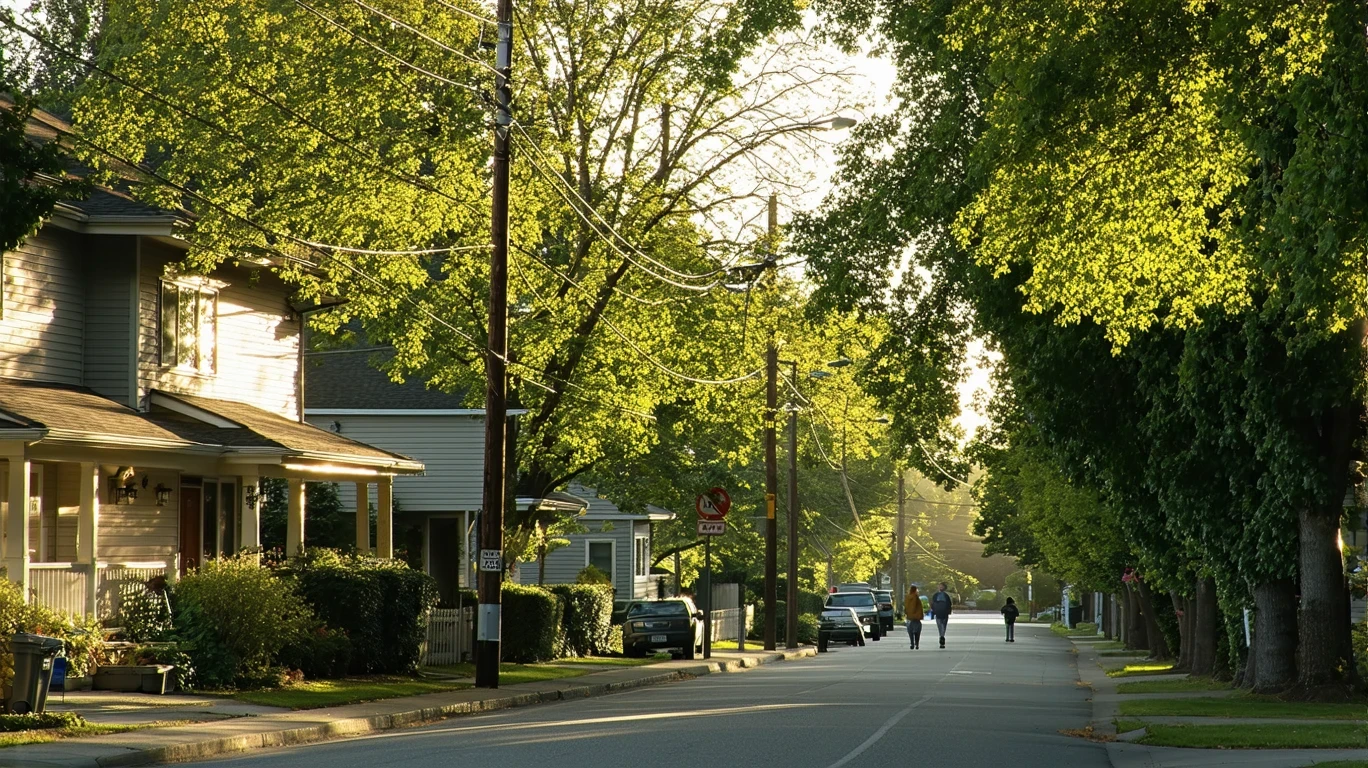
Sherwood and Tualatin sit just miles apart in the Portland metro area, connected by Highway 99W and sharing the same regional economy, climate, and cost pressures. Yet the decision between them isn’t about which suburb is “cheaper”—it’s about where different types of cost pressure show up and which household logistics matter most to your daily life. Both cities offer access to parks, grocery options, and walkable pockets, but they differ in how renters and buyers experience housing markets, how commuters navigate transportation, and whether transit dependence feels like a constraint or a convenience in 2026.
For families weighing space against access, or professionals deciding whether rail service justifies a higher purchase price, the comparison hinges on understanding how the same income feels different depending on where costs concentrate. Sherwood’s lower home values appeal to first-time buyers, while Tualatin’s lower rents ease monthly pressure for renters. Transportation patterns diverge based on whether your commute aligns with rail corridors or requires more driving flexibility. This article breaks down how housing, utilities, groceries, transportation, and daily logistics behave differently in each city—not to declare a winner, but to clarify which tradeoffs align with your household’s priorities.
Both cities reflect the broader cost environment of the Portland metro, where housing dominates household budgets and transportation decisions ripple through time and money. The goal here is to explain where cost pressure concentrates, how predictability and volatility differ, and which households feel those differences most acutely as they plan for 2026.
Housing Costs
Housing costs in Sherwood and Tualatin reveal a clear structural divergence: Sherwood’s median home value sits at $520,500, while Tualatin’s reaches $548,900—a difference that matters most at the point of purchase. For buyers, Sherwood presents a lower entry barrier, reducing the down payment requirement and easing the path to ownership for first-time buyers or households stretching to enter the market. Tualatin’s higher home values demand more upfront capital, which can delay ownership timelines or push buyers toward larger mortgages with higher monthly obligations.
Renters face the opposite dynamic. Sherwood’s median gross rent stands at $1,980 per month, while Tualatin’s drops to $1,665 per month—a gap that compounds over time and shifts how much flexibility remains after housing costs are paid. For single adults or couples renting while saving for a down payment, Tualatin’s lower rent creates more breathing room in monthly cash flow, even as the higher home values loom in the background. Sherwood’s higher rent tightens monthly budgets but pairs with a more accessible ownership market, making it a better fit for renters ready to transition quickly into buying.
The housing stock in both cities leans toward single-family homes with moderate building heights, and both show mixed residential and commercial land use that supports walkable errands in certain neighborhoods. This means housing form doesn’t vary dramatically—what changes is the rent-versus-own calculus. Families prioritizing space and long-term stability may find Sherwood’s lower purchase prices align better with their goals, while households prioritizing lower monthly obligations or uncertain timelines may prefer Tualatin’s rental market. The decision isn’t about which city is “cheaper” overall; it’s about whether your household is more exposed to upfront costs or ongoing monthly pressure.
| Housing Type | Sherwood | Tualatin |
|---|---|---|
| Median Home Value | $520,500 | $548,900 |
| Median Gross Rent | $1,980/month | $1,665/month |
Housing takeaway: Sherwood fits buyers seeking lower entry costs and faster ownership timelines, especially first-time buyers or families prioritizing home equity over monthly flexibility. Tualatin fits renters who need lower monthly obligations and aren’t ready to commit to higher purchase prices, as well as households valuing predictable rent over the long-term leverage of ownership. The primary pressure in Sherwood is ongoing rent exposure for those not yet buying; in Tualatin, it’s the higher capital requirement to enter the ownership market.
Utilities and Energy Costs
Utility costs in Sherwood and Tualatin behave nearly identically in terms of rate structure. Sherwood’s electricity rate sits at 14.64¢/kWh, while Tualatin’s is 14.66¢/kWh—a difference too small to meaningfully affect household budgets. Natural gas pricing is identical at $15.37/MCF in both cities, reflecting their shared regional utility infrastructure and climate exposure. This means the primary driver of utility cost differences isn’t pricing—it’s housing form, home age, and how much space a household heats and cools.
Both cities experience the Pacific Northwest’s mild, wet winters and warm, dry summers, which create moderate heating and cooling demands compared to more extreme climates. Heating costs dominate winter months, especially in older single-family homes with less insulation or older HVAC systems. Cooling costs rise in summer but remain more predictable than in regions with extended heat waves. Apartments and newer construction in both cities tend to show lower baseline utility usage due to shared walls, better insulation, and more efficient systems, which reduces exposure to seasonal swings.
Households in larger single-family homes face higher utility volatility regardless of which city they choose, particularly if the home was built before modern efficiency standards took hold. Families with multiple occupants running appliances, heating larger square footage, and managing higher water usage will feel utility costs more acutely than single adults or couples in smaller spaces. The structural similarity in rates means utility pressure doesn’t favor one city over the other—it follows housing type and household size instead.
Utility takeaway: Utility costs in Sherwood and Tualatin are functionally equivalent in terms of rates and seasonal behavior. Households in older, larger homes experience more volatility and higher baseline usage, while those in apartments or newer construction benefit from greater predictability and lower exposure. The decision between cities doesn’t hinge on utility differences—it hinges on housing form and how much space you’re heating, cooling, and powering year-round.
Groceries and Daily Expenses
Grocery costs and daily spending patterns in Sherwood and Tualatin reflect their shared position in the Portland metro’s regional price environment. Both cities show high food and grocery establishment density, meaning access to supermarkets, discount grocers, and specialty stores is broadly available rather than concentrated along a single corridor. This reduces the friction cost of comparison shopping and gives households more control over where they spend and how much they pay per trip.
The practical difference lies in how households navigate daily errands and whether convenience spending creeps into budgets. Both cities support walkable access to some grocery options in certain neighborhoods, but car-based shopping trips remain the norm for larger weekly hauls or bulk purchases. Families managing higher grocery volumes—feeding multiple people, stocking pantries, and planning meals around school and work schedules—benefit from the presence of big-box retailers and discount chains in both cities, which help control per-unit costs even as total spending rises with household size.
Single adults and couples face different tradeoffs. Smaller households can more easily shift between neighborhood stores, farmers’ markets, and prepared food options without the logistical burden of feeding multiple people daily. This flexibility allows for more discretionary spending on dining out or convenience items, but it also introduces the risk of higher per-meal costs if convenience becomes the default. In both cities, the availability of coffee shops, takeout, and casual dining creates opportunities for spending creep, particularly for households with unpredictable schedules or limited time for meal prep.
Grocery takeaway: Grocery and daily expense pressure in Sherwood and Tualatin is driven more by household size and shopping habits than by structural cost differences between the cities. Families feel pressure from volume and frequency, while smaller households face exposure to convenience spending and per-meal costs. Both cities offer enough access and variety to support cost-conscious strategies, but the burden of execution—meal planning, bulk shopping, and resisting convenience—falls on the household regardless of location.
Taxes and Fees

Oregon’s statewide tax structure applies equally to Sherwood and Tualatin, meaning both cities operate under the same income tax brackets and lack a general sales tax. This eliminates one common source of cost variation between cities and shifts the tax burden toward income and property rather than consumption. For renters, this means taxes remain largely invisible in monthly budgets, absorbed into rent rather than paid directly. For homeowners, property taxes become a recurring obligation tied to assessed home values, which differ between the two cities.
Tualatin’s higher median home value of $548,900 translates to higher annual property tax bills compared to Sherwood’s $520,500 median, assuming similar millage rates. This difference compounds over time, adding to the ongoing cost of ownership and reducing the flexibility homeowners have for other expenses. Households planning to stay long-term in Tualatin face higher cumulative property tax exposure, which matters more for retirees on fixed incomes or families managing tight budgets after mortgage payments.
Both cities may also impose local fees for services like water, sewer, stormwater management, and trash collection, though these tend to be structured similarly across the metro area. Homeowners in neighborhoods with HOAs face additional monthly or annual fees, which can bundle services like landscaping, snow removal, or shared amenity maintenance. These fees vary widely by neighborhood and housing type, but they introduce another layer of predictable, non-negotiable cost that renters typically avoid.
Taxes and fees takeaway: Tax and fee structures in Sherwood and Tualatin are more similar than different, but Tualatin’s higher home values create greater property tax exposure for owners. Renters experience minimal direct tax pressure in both cities, while homeowners face ongoing obligations that grow with property values and length of ownership. The primary difference is magnitude for owners, not structure—Tualatin’s higher assessed values mean higher annual tax bills, which matter most for households planning to stay several years.
Transportation & Commute Reality
Transportation costs and commute patterns in Sherwood and Tualatin diverge most clearly around transit access. Tualatin benefits from rail service, which provides a structured, predictable commute option for workers traveling to downtown Portland or other rail-connected employment centers. This reduces reliance on personal vehicles for daily commuting, lowers gas spending, and shifts time costs toward fixed schedules rather than traffic variability. Sherwood, by contrast, relies on bus service, which offers less frequency and coverage, making personal vehicles the dominant mode for most commuters.
Gas prices reflect this difference only marginally—Sherwood’s $5.01/gal and Tualatin’s $4.99/gal are functionally identical and won’t meaningfully change household budgets. What matters more is how often you’re filling the tank and whether your commute aligns with available transit. Households in Tualatin with commutes that match rail corridors can reduce driving frequency, which lowers not just fuel costs but also vehicle wear, insurance risk, and parking expenses. Sherwood’s bus-only service works for some routes but leaves more households dependent on cars for reliability and flexibility.
Both cities show notable cycling infrastructure, with bike-to-road ratios exceeding high thresholds, and substantial pedestrian infrastructure in certain pockets. This supports short trips to nearby errands or recreation but doesn’t replace cars for longer commutes or trips outside walkable zones. Families managing multiple schedules—school drop-offs, extracurricular activities, grocery runs—face higher car dependence regardless of city, but Tualatin’s rail access offers more flexibility for at least one household member to commute without driving.
Transportation takeaway: Tualatin’s rail service reduces car dependence for commuters whose routes align with transit, lowering ongoing fuel and vehicle costs while introducing schedule constraints. Sherwood’s bus-only service leaves most households relying on personal vehicles, which increases flexibility but raises transportation spending and time exposure to traffic. The decision hinges on whether your commute benefits from rail access or requires the autonomy of driving.
Cost Structure Comparison
Housing pressure dominates the cost experience in both Sherwood and Tualatin, but the nature of that pressure differs depending on whether you’re renting or buying. Sherwood’s lower home values reduce the barrier to ownership, making it easier for first-time buyers to enter the market with smaller down payments and lower mortgage balances. Tualatin’s higher home values demand more upfront capital, which delays ownership timelines but pairs with lower monthly rent for those not yet ready to buy. Renters in Sherwood face higher ongoing obligations at $1,980/month compared to Tualatin’s $1,665/month, a gap that compounds over time and tightens monthly flexibility.
Utilities introduce minimal differentiation between the cities. Electricity and natural gas rates are nearly identical, and both cities experience the same seasonal patterns—moderate heating in winter, modest cooling in summer. Utility volatility follows housing form rather than location: older single-family homes show higher exposure to seasonal swings, while apartments and newer construction offer more predictable bills. Families in larger homes feel utility pressure more acutely, but that pressure exists equally in both cities.
Groceries and daily expenses follow household size and shopping habits rather than city-specific pricing. Both Sherwood and Tualatin offer high grocery density and broad access to discount and specialty stores, which gives households control over where they shop and how much they spend. Families managing larger volumes face pressure from frequency and scale, while smaller households encounter exposure to convenience spending and per-meal costs. The structural access is equivalent; the execution burden falls on the household.
Transportation patterns matter more in Tualatin for households whose commutes align with rail service, which reduces car dependence and shifts time costs toward fixed schedules. Sherwood’s bus-only service leaves most households relying on personal vehicles, which increases flexibility but raises fuel and maintenance exposure. Gas prices are functionally identical, so the difference lies in how often you’re driving and whether transit can replace some of those trips.
The decision between Sherwood and Tualatin isn’t about which city is cheaper overall—it’s about which cost pressures dominate your household. Buyers sensitive to upfront capital requirements may prefer Sherwood’s lower home values, while renters prioritizing monthly flexibility may find Tualatin’s lower rent more manageable. Commuters who benefit from rail access gain predictability and lower transportation costs in Tualatin, while those needing driving flexibility or routes not served by rail face similar car dependence in both cities. For households where housing entry costs matter most, Sherwood offers a clearer path. For those where ongoing monthly obligations or transit access drive decisions, Tualatin provides more breathing room.
How the Same Income Feels in Sherwood vs Tualatin
Single Adult
For a single adult, housing becomes the first non-negotiable cost, and the difference between Sherwood’s $1,980/month rent and Tualatin’s $1,665/month rent determines how much flexibility remains for everything else. In Sherwood, higher rent tightens the budget earlier, leaving less room for discretionary spending, savings, or unexpected expenses. Tualatin’s lower rent creates more breathing room, which can absorb convenience spending or support faster savings toward a down payment. Transportation pressure depends on whether the commute aligns with Tualatin’s rail service or requires driving in either city. If rail works, Tualatin reduces car dependence and lowers ongoing vehicle costs; if not, both cities demand similar driving frequency and fuel exposure. Grocery spending remains flexible for a single adult, but convenience creep—takeout, coffee, prepared meals—can erode the savings from lower rent if spending habits aren’t managed.
Dual-Income Couple
A dual-income couple faces the rent-versus-own decision more acutely, and the structural difference between Sherwood and Tualatin shifts depending on their timeline. In Sherwood, lower home values make ownership more accessible, allowing couples to transition from renting to buying with less upfront capital and smaller mortgage balances. Tualatin’s higher home values delay that transition, but lower rent eases the saving process and reduces monthly pressure while renting. If both partners commute, Tualatin’s rail service can reduce car dependence for one or both, lowering transportation costs and freeing up time otherwise spent in traffic. Sherwood’s bus-only service leaves most couples relying on two vehicles, which increases fuel, insurance, and maintenance exposure. Grocery and daily expenses scale with household size but remain manageable for two people, especially with access to discount stores and bulk shopping in both cities.
Family with Kids
For families, housing form and space needs dominate the cost experience, and the difference between Sherwood’s lower purchase price and Tualatin’s higher home values becomes critical. Sherwood’s $520,500 median home value reduces the barrier to ownership, making it easier for families to secure space for multiple bedrooms, yards, and storage without stretching mortgage balances to unsustainable levels. Tualatin’s $548,900 median demands more upfront capital, which can delay ownership or push families into higher monthly mortgage obligations. Transportation logistics become more complex with kids—school drop-offs, extracurricular activities, grocery runs—and both cities require car dependence for most family schedules. Tualatin’s rail service helps if one parent commutes to a rail-connected job, but it doesn’t replace the need for at least one household vehicle. Grocery spending scales with family size, and both cities offer enough access to discount stores and bulk options to control per-unit costs, but the volume and frequency of shopping trips increase the time and logistical burden regardless of location.
Decision Matrix: Which City Fits Which Household?
| Decision factor | If you’re sensitive to this… | Sherwood tends to fit when… | Tualatin tends to fit when… |
|---|---|---|---|
| Housing entry + space needs | You’re prioritizing lower upfront costs and faster ownership timelines | Lower home values reduce the barrier to buying and ease the path to ownership for first-time buyers | Lower rent eases monthly pressure for renters, but higher home values demand more upfront capital for ownership |
| Transportation dependence + commute friction | You want to reduce car dependence and benefit from predictable transit schedules | Bus-only service leaves most households relying on personal vehicles for flexibility and reliability | Rail service reduces car dependence for commuters whose routes align with transit, lowering fuel and vehicle costs |
| Utility variability + home size exposure | You’re managing a larger home or older construction with higher seasonal swings | Utility rates and seasonal patterns are nearly identical; exposure follows housing form rather than location | Utility rates and seasonal patterns are nearly identical; exposure follows housing form rather than location |
| Grocery strategy + convenience spending creep | You need broad access to discount stores and want to control per-unit costs | High grocery density supports cost-conscious strategies, but execution depends on household habits and time availability | High grocery density supports cost-conscious strategies, but execution depends on household habits and time availability |
| Fees + friction costs (HOA, services, upkeep) | You’re planning to stay long-term and want to minimize ongoing property tax exposure | Lower home values reduce annual property tax obligations for owners, easing long-term cost accumulation | Higher home values increase annual property tax obligations, which compounds over time for long-term owners |
| Time budget (schedule flexibility, errands, logistics) | You value predictable commute schedules and reduced driving frequency over maximum flexibility | Car dependence offers maximum flexibility but increases time exposure to traffic and logistical complexity | Rail service introduces schedule constraints but reduces driving frequency and lowers time spent navigating traffic |
Lifestyle Fit
Sherwood and Tualatin both offer access to parks, green space, and water features, with park density exceeding high thresholds in both cities. This creates integrated outdoor access that supports recreation, walking, and neighborhood connectivity without requiring long drives to trailheads or regional parks. Both cities show walkable pockets with substantial pedestrian infrastructure, meaning certain neighborhoods support errands and short trips on foot, though car dependence remains the norm for longer distances or less connected areas. Cycling infrastructure is notable in both cities, with bike-to-road ratios exceeding high thresholds, which supports recreational riding and short commutes for households comfortable with biking as a primary mode.
The lifestyle difference centers on transit access and how that shapes daily routines. Tualatin’s rail service connects residents to downtown Portland and other employment centers along the line, which matters most for commuters whose jobs align with those corridors. This reduces the need for a second household vehicle in some cases and shifts time costs toward fixed schedules rather than traffic variability. Sherwood’s bus-only service offers less frequency and coverage, leaving most households relying on personal vehicles for commuting and errands. For families managing multiple schedules—school, work, activities—both cities require similar car dependence, but Tualatin’s rail option provides more flexibility for at least one household member.
Both cities show mixed building heights and land-use patterns, with residential and commercial zones integrated enough to support walkable errands in certain areas. Healthcare access is similar, with clinics and pharmacies present but no hospital facilities in either city, meaning emergency care or specialized services require travel to nearby regional centers. Family infrastructure—schools and playgrounds—meets moderate density thresholds in both cities, though neither stands out as exceptionally family-oriented compared to the other. The practical difference lies in how transit access and housing costs interact with your household’s daily logistics, not in lifestyle amenities or recreational access.
Quick fact: Both Sherwood and Tualatin benefit from integrated park access and water features, supporting outdoor recreation without long drives.
Quick fact: Tualatin’s rail service provides structured commute options for workers traveling to downtown Portland, while Sherwood’s bus-only service leaves most households relying on personal vehicles.
Frequently Asked Questions
Is Sherwood or Tualatin cheaper for renters in 2026?
Tualatin offers lower median rent at $1,665 per month compared to Sherwood’s $1,980 per month, which creates more monthly flexibility for renters and reduces ongoing housing pressure. Sherwood’s higher rent tightens budgets earlier but pairs with lower home values for renters planning to transition into ownership. The decision depends on whether you prioritize lower monthly obligations or a faster path to buying.
Which city has lower home prices, Sherwood or Tualatin?
Sherwood’s median home value sits at $520,500, while Tualatin’s reaches $548,900, making Sherwood more accessible for first-time buyers or households seeking lower upfront capital requirements. Tualatin’s higher home values demand larger down payments and higher mortgage balances, which delays ownership timelines but pairs with lower rent for those not yet ready to buy.
Does Tualatin or Sherwood have better public transit in 2026?
Tualatin benefits from rail service, which provides predictable commute options for workers traveling to downtown Portland or other rail-connected employment centers, reducing car dependence for households whose routes align with transit. Sherwood relies on bus-only service, which offers less frequency and coverage, leaving most households dependent on personal vehicles for commuting and errands.
Are utility costs higher in Sherwood or Tualatin?
Utility costs are nearly identical between Sherwood and Tualatin, with electricity rates at 14.64¢/kWh in Sherwood and 14.66¢/kWh in Tualatin, and natural gas priced at $15.37/MCF in both cities. Utility pressure follows housing form and household size rather than location—older single-family homes experience higher seasonal volatility, while apartments and newer construction offer more predictable bills.
Which city is better for families, Sherwood or Tualatin, based on cost structure in 2026?
Sherwood’s lower home values reduce the barrier to ownership for families prioritizing space and long-term stability, making it easier to secure single-family homes with yards and multiple bedrooms. Tualatin’s higher home values demand more upfront capital but offer lower rent for families not yet ready to buy, and rail service provides more commute flexibility for working parents. Both cities show similar family infrastructure, so the decision hinges on whether housing entry costs or monthly flexibility matters more.
Conclusion
The decision between Sherwood and Tualatin in 2026 hinges on where cost pressure concentrates for your household and which tradeoffs align with your priorities. Sherwood fits buyers seeking lower upfront costs and faster ownership timelines, especially first-time buyers or families prioritizing home equity over monthly flexibility. Tualatin fits renters who need lower monthly obligations and aren’t ready to commit to higher purchase prices, as well as commuters whose routes align with rail service and benefit from reduced car dependence. Utility costs, grocery access, and outdoor amenities remain functionally equivalent, so the structural differences in housing and transportation drive the decision.
Neither city is universally cheaper—both reflect the broader cost environment of the Portland metro, where housing dominates budgets and transportation decisions ripple through time and money. The goal isn’t to declare a winner but to clarify which household types feel which pressures most acutely. Sherwood’s lower home values ease the path to ownership but pair with higher rent for those not yet buying. Tualatin’s lower rent creates monthly breathing room but demands more upfront capital for ownership and offers rail access that matters most for specific commute patterns. The right choice depends on whether your household is more exposed to upfront costs, ongoing monthly obligations, or the logistics of daily commuting and errands.
How this article was built: In addition to public economic data, this article incorporates location-based experiential signals derived from anonymized geographic patterns—such as access density, walkability, and land-use mix—to reflect how day-to-day living actually feels in Sherwood and Tualatin.