
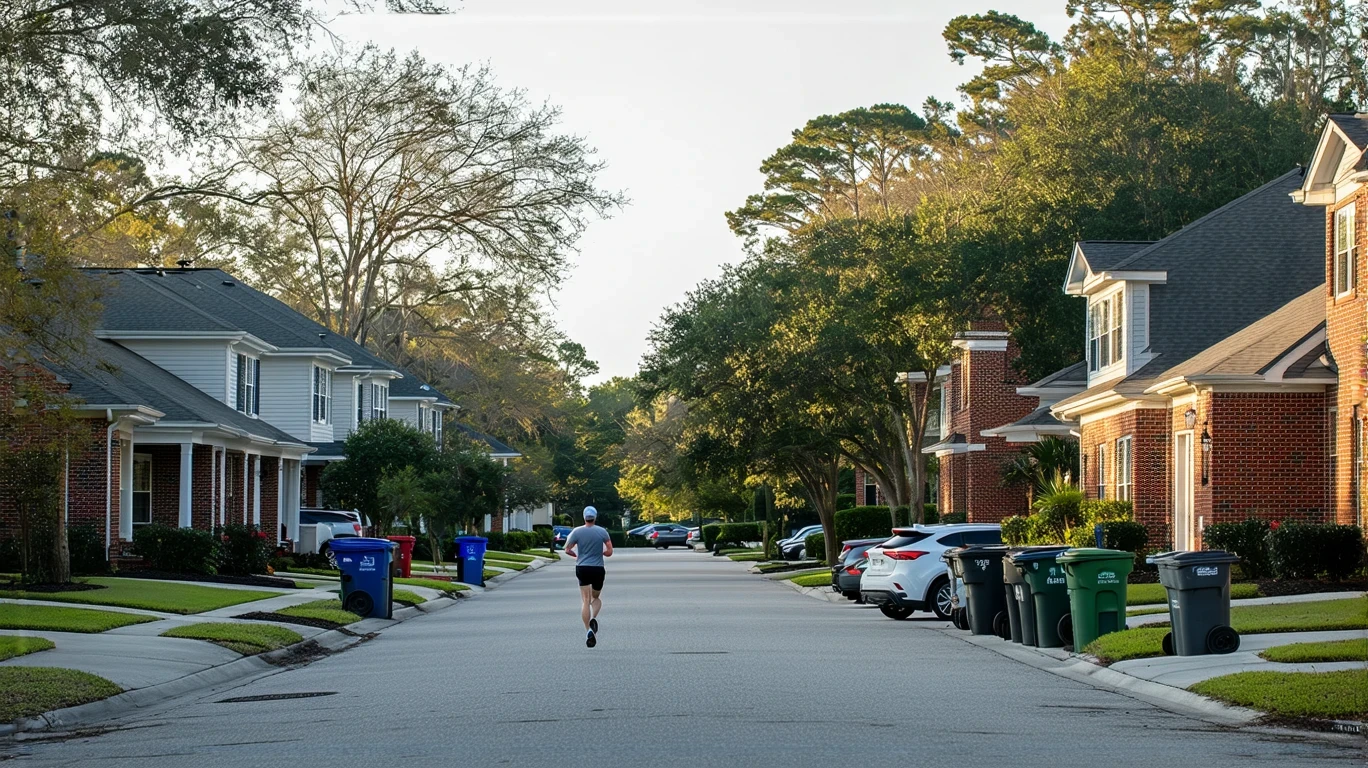
Sanford and Winter Garden sit within the same Orlando metro area, share similar Florida climate exposure, and attract households looking for suburban space without downtown Orlando price pressure. Yet the cost experience in each city diverges sharply—not because one is universally cheaper, but because different expenses dominate depending on household structure, income stability, and daily logistics. In 2026, families weighing these two options are comparing housing entry barriers against commute flexibility, predictable utility exposure against grocery access patterns, and the role of transit infrastructure in reducing car dependence.
Both cities offer walkable pockets, parks woven into neighborhoods, and a mix of single-family homes and low-rise multifamily housing. But Sanford’s rail transit access and lower median home values create a different cost structure than Winter Garden’s bus-only system and substantially higher housing entry point. The decision isn’t about finding the “cheaper” city—it’s about understanding where financial pressure concentrates for your household, and whether that pressure is front-loaded (housing), ongoing (commuting, groceries), or seasonal (utilities).
This comparison explains how the same gross monthly income can feel stable in one city and stretched in the other, not through total cost math, but by showing where households lose flexibility first, where volatility enters the budget, and which tradeoffs matter most when choosing between Sanford and Winter Garden in 2026.
Housing Costs: Entry Barrier vs Ongoing Obligation
Sanford’s median home value of $241,400 and median gross rent of $1,402 per month establish a lower entry threshold than Winter Garden’s $408,700 median home value and $1,590 per month median rent. These aren’t small differences—they represent fundamentally different housing cost structures. In Sanford, a household can access ownership or stable rental housing with less upfront capital and lower monthly obligations. In Winter Garden, the same household faces a higher barrier to entry, whether saving for a down payment or qualifying for rent in a tighter, higher-priced market.
The gap widens further when considering housing stock and neighborhood composition. Winter Garden’s higher home values often reflect newer construction, larger lot sizes, and more recent development patterns. Sanford’s older housing stock introduces different tradeoffs: lower purchase prices but potentially higher maintenance exposure, older HVAC systems that may drive utility costs higher, and more variability in home condition. For renters, Sanford offers more options in older apartment complexes and smaller multifamily buildings, while Winter Garden’s rental market skews toward newer complexes with amenities that push base rents higher but may bundle services like water, trash, or pest control.
First-time buyers in Sanford can enter the market with less savings and lower monthly mortgage obligations, but they inherit the cost and time burden of maintaining older homes. In Winter Garden, buyers face steeper upfront costs and higher monthly payments, but often gain newer systems, lower immediate maintenance risk, and neighborhoods with stricter HOA standards that enforce uniformity. Renters in Sanford experience lower baseline rent but may face more variability in unit quality and landlord responsiveness. Renters in Winter Garden pay more each month but often gain access to pools, fitness centers, and professional management—services that feel like luxuries until a household values predictability and reduced friction over cash savings.
Housing takeaway: Sanford favors households prioritizing lower entry costs and tolerance for maintenance variability. Winter Garden favors households with higher income stability who value newer housing stock and are willing to absorb higher monthly obligations in exchange for reduced upkeep friction. The primary difference is not total cost, but whether financial pressure concentrates at entry (down payment, first month’s rent, moving costs) or spreads across ongoing monthly obligations and long-term maintenance exposure.
Utilities and Energy Costs: Predictability vs Seasonal Volatility

Electricity rates in Sanford stand at 15.80¢/kWh, slightly higher than Winter Garden’s 15.02¢/kWh. Both cities share the same natural gas price of $23.62/MCF, reflecting regional energy infrastructure. The rate difference alone doesn’t determine utility cost experience—what matters more is how housing stock, home age, and cooling season intensity interact with these rates. In Florida’s extended cooling season, air conditioning dominates utility bills from late spring through early fall, and older homes with less efficient HVAC systems or poorer insulation amplify exposure regardless of the per-kilowatt-hour rate.
Sanford’s older housing stock means many homes were built before modern energy codes took effect. Single-pane windows, minimal attic insulation, and aging central air systems can push monthly electricity usage higher even when rates are only marginally elevated. Winter Garden’s newer construction often includes double-pane windows, higher insulation standards, and more efficient HVAC systems, which can offset the baseline rate and reduce peak-season volatility. A household in a 1980s Sanford ranch may see summer bills swing dramatically as the AC runs continuously through triple-digit heat, while a household in a 2010s Winter Garden home experiences more predictable usage thanks to better building envelope performance.
Household size and home square footage further shape utility exposure. Larger families in single-family homes face higher baseline usage regardless of city, but the age and efficiency of the home determine whether that usage translates into manageable monthly costs or volatile seasonal spikes. Apartments and townhomes in both cities benefit from shared walls and smaller conditioned spaces, reducing cooling loads and creating more predictable utility patterns. Renters in units where water or trash is bundled into rent experience fewer line items and less month-to-month variability, while homeowners absorb the full cost structure and must budget for seasonal peaks.
Utility takeaway: Sanford households in older homes face higher seasonal volatility driven by cooling exposure and less efficient building stock, even with only a modest rate difference. Winter Garden households benefit from newer construction that smooths utility costs across the year, reducing peak-season spikes. The primary difference is predictability: Sanford’s utility costs are more variable and harder to forecast, while Winter Garden’s newer housing stock creates more stable monthly obligations.
Groceries and Daily Expenses: Price Sensitivity vs Access Friction
Grocery and daily spending pressure in Sanford and Winter Garden reflects both price environment and access patterns. Sanford’s regional price parity index of 123 indicates costs run higher than the national baseline, while Winter Garden’s index of 101 suggests prices closer to national norms. This difference shows up in staple items, prepared foods, and convenience spending—not as dramatic per-item gaps, but as cumulative pressure that builds across weekly shopping trips and daily errands.
Both cities show corridor-clustered food and grocery access, meaning options concentrate along main roads rather than spreading evenly across neighborhoods. This pattern creates friction: households without a car or those living outside the main corridors face longer trips to reach full-service grocery stores, discount chains, or specialty markets. In Sanford, the higher price index means that even when access is good, the cart total runs higher for the same items. In Winter Garden, lower baseline prices reduce per-trip costs, but the corridor-clustered pattern still requires planning and transportation to reach the best options.
Single adults and couples can adapt more easily to access friction by consolidating trips, shopping at discount chains, and avoiding convenience purchases. Families managing larger grocery volumes and more frequent trips feel the difference more acutely. A household in Sanford buying staples weekly absorbs the higher price index repeatedly, while a household in Winter Garden benefits from lower baseline costs but must still navigate the same access patterns. Dining out, coffee runs, and prepared food purchases introduce additional variability—Sanford’s higher price environment extends to restaurants and cafes, while Winter Garden’s lower index creates more room for discretionary spending without the same cumulative pressure.
Grocery takeaway: Sanford households face higher baseline grocery costs driven by the regional price index, which compounds over time for families and frequent shoppers. Winter Garden households benefit from lower baseline prices, reducing cumulative pressure even when access patterns require similar planning. The primary difference is price sensitivity: Sanford demands more discipline to avoid cost creep, while Winter Garden offers more flexibility for households balancing convenience and budget.
Taxes and Fees: Structural Differences in Ongoing Obligations
Property taxes, local fees, and HOA assessments shape the ongoing cost structure in both cities, though the feed does not provide specific tax rates or fee schedules. In Florida, property taxes fund local services including schools, infrastructure, and public safety, and rates vary by county and municipality. Sanford and Winter Garden both fall within the Orlando metro’s broader tax environment, but differences in home values create different absolute tax obligations even when rates are similar. A home valued at $408,700 in Winter Garden generates higher annual property tax bills than a $241,400 home in Sanford, concentrating more ongoing cost pressure on homeowners in Winter Garden regardless of rate structure.
HOA fees introduce another layer of variability. Winter Garden’s newer developments often include mandatory HOA memberships that bundle landscaping, common area maintenance, and sometimes trash or water services. These fees add predictability—households know the monthly cost upfront—but they also add a non-negotiable line item that persists regardless of usage. Sanford’s older neighborhoods may have lower HOA fees or none at all, reducing baseline obligations but shifting responsibility for yard maintenance, exterior repairs, and neighborhood upkeep directly to the homeowner. This tradeoff plays out differently depending on household time budget and willingness to manage maintenance tasks independently.
Renters in both cities avoid property taxes directly but absorb them indirectly through rent pricing. Landlords in Winter Garden’s higher-value market pass through higher tax obligations, contributing to the elevated median rent. Renters in Sanford benefit from lower property values translating into lower baseline rent, though older buildings may introduce other costs (higher utilities, more frequent maintenance requests). Local fees for trash, water, and stormwater vary by provider and housing type, with some landlords bundling these into rent and others passing them through as separate charges. Homeowners manage these fees directly, and the structure—flat monthly rates vs usage-based billing—affects predictability and control.
Taxes and fees takeaway: Winter Garden homeowners face higher absolute property tax obligations driven by higher home values, plus more prevalent HOA fees that add predictability but reduce flexibility. Sanford homeowners benefit from lower property tax exposure and less frequent HOA obligations, gaining flexibility but inheriting more direct maintenance responsibility. The primary difference is structure: Winter Garden front-loads more fixed obligations, while Sanford distributes costs across variable and discretionary categories.
Transportation & Commute Reality
Sanford’s documented average commute of 24 minutes, with 33.2% of workers facing long commutes and only 7.0% working from home, establishes a car-dependent baseline with measurable time and fuel exposure. Winter Garden lacks comparable commute data in the feed, but both cities show similar experiential signals: walkable pockets, bike infrastructure in limited areas, and mixed building forms that support some pedestrian activity. The critical difference lies in transit infrastructure. Sanford offers rail service, providing a non-car option for households commuting to Orlando’s core or other rail-connected employment centers. Winter Garden’s bus-only system limits transit viability for most commutes, reinforcing car dependence.
Gasoline prices in Sanford ($3.98/gal) and Winter Garden ($3.95/gal) are nearly identical, so fuel cost differences emerge from commute distance and frequency rather than price variation. A household in Sanford with access to rail transit can reduce fuel exposure by substituting train trips for car commutes, lowering both fuel costs and vehicle wear. A household in Winter Garden without practical transit alternatives absorbs full fuel and maintenance costs for every commute, every errand, and every trip to clustered grocery corridors. The time cost of commuting also differs: Sanford’s rail option can reduce stress and allow productive use of commute time, while Winter Garden’s car-only reality locks households into driving time that can’t be repurposed.
Households with two working adults face compounded transportation exposure. In Sanford, one partner might use rail while the other drives, splitting fuel and parking costs. In Winter Garden, both partners likely drive, doubling fuel consumption and vehicle maintenance obligations. Families managing school drop-offs, after-school activities, and weekend errands feel the difference more acutely in Winter Garden, where every trip requires a car and every destination requires navigating traffic and parking. Sanford’s rail access doesn’t eliminate car dependence—most households still need a vehicle—but it introduces optionality that reduces cumulative fuel and time costs for households who can integrate transit into daily routines.
Cost Structure Comparison
Housing pressure dominates the cost experience differently in each city. Sanford’s lower entry barrier—both for renters and buyers—reduces upfront capital requirements and monthly obligations, but the older housing stock introduces maintenance variability and higher utility exposure during Florida’s extended cooling season. Winter Garden’s higher home values and rents concentrate financial pressure at entry and in ongoing monthly payments, but newer construction smooths utility costs and reduces immediate maintenance friction. Households prioritizing lower upfront costs and tolerance for variability fit Sanford’s structure better. Households with stable income who value predictability and reduced maintenance burden fit Winter Garden’s higher-obligation, lower-friction model.
Utilities introduce more volatility in Sanford due to older housing stock and slightly higher electricity rates, creating seasonal spikes that are harder to forecast and budget around. Winter Garden’s newer homes and marginally lower rates produce more predictable monthly costs, reducing the need for seasonal cash reserves. This difference matters most for households with tight monthly budgets or those managing variable income—Sanford’s utility volatility can disrupt cash flow, while Winter Garden’s smoother pattern allows more consistent planning.
Grocery and daily expenses favor Winter Garden due to the lower regional price index, reducing cumulative pressure for families and frequent shoppers. Sanford’s higher baseline costs compound over time, demanding more discipline to avoid convenience spending and price creep. Both cities show similar access patterns—corridor-clustered food options requiring planning and transportation—but Winter Garden’s lower prices create more room for flexibility within the same access constraints.
Transportation patterns matter more in Sanford, where documented commute friction and rail transit access create both exposure and optionality. Winter Garden’s lack of commute data in the feed limits direct comparison, but the bus-only transit system and similar walkable-pockets signal suggest car dependence remains high. Sanford’s rail service offers a meaningful alternative for households commuting to rail-connected employment, reducing fuel and time costs. Winter Garden households absorb full car dependence, doubling exposure for dual-income couples and families managing multiple daily trips.
The better choice depends on which costs dominate your household’s financial structure. For households sensitive to housing entry barriers and willing to manage maintenance variability, Sanford’s lower upfront costs and rail transit access reduce immediate pressure. For households with higher stable income who prioritize predictable monthly obligations and reduced friction, Winter Garden’s newer housing stock and lower grocery baseline create a smoother cost experience despite higher entry requirements. Neither city is universally cheaper—each concentrates financial pressure in different categories, and the right fit depends on where your household has flexibility and where it doesn’t.
How the Same Income Feels in Sanford vs Winter Garden
Single Adult
In Sanford, a single adult’s non-negotiable costs start with lower rent or mortgage payments, freeing up cash for transportation, groceries, and discretionary spending. Flexibility exists in housing type—older apartments and smaller units offer entry points that don’t consume the entire budget upfront. The rail transit option reduces car dependence for work commutes, lowering fuel and maintenance exposure, though most errands still require a vehicle due to corridor-clustered grocery access. Sanford’s higher grocery prices and utility volatility introduce ongoing pressure that builds across the month, requiring discipline to avoid convenience spending that compounds quickly.
Dual-Income Couple
In Winter Garden, a dual-income couple faces higher housing costs first—whether renting or buying, the entry barrier consumes more of combined gross income and limits housing options to higher-priced units or neighborhoods. Flexibility disappears in transportation, as both partners likely need cars to reach work, errands, and social activities, doubling fuel and insurance obligations. The role of commute friction becomes critical: without rail transit, every trip is a driving trip, and every commute adds time that can’t be repurposed. Winter Garden’s lower grocery baseline and newer housing stock reduce some ongoing pressure, but the front-loaded housing and transportation costs dominate the monthly structure, leaving less room for savings or discretionary spending.
Family with Kids
In Sanford, a family’s non-negotiable costs include housing, transportation for multiple daily trips (school, activities, errands), and groceries for larger household volume. Flexibility exists in housing—lower entry costs allow access to single-family homes with yards, but older housing stock introduces maintenance unpredictability and higher cooling-season utility spikes. The rail transit option helps one working parent reduce commute costs, but the family still needs at least one car for school runs and weekend logistics. Sanford’s higher grocery prices compound weekly, and the corridor-clustered access pattern requires planning to avoid multiple trips that burn time and fuel. In Winter Garden, the same family faces higher housing costs that limit flexibility elsewhere—more income goes to mortgage or rent, leaving less cushion for unexpected expenses. Transportation dependence intensifies with kids: every school drop-off, every activity, every grocery run requires a car, and the bus-only transit system offers no practical alternative. Winter Garden’s lower grocery baseline helps offset some pressure, and newer homes reduce utility volatility, but the front-loaded housing and doubled transportation exposure dominate the family’s cost structure, making the same gross income feel tighter despite predictable monthly obligations.
Decision Matrix: Which City Fits Which Household?
| Decision factor | If you’re sensitive to this… | Sanford tends to fit when… | Winter Garden tends to fit when… |
|---|---|---|---|
| Housing entry + space needs | Down payment size, monthly obligation, maintenance tolerance | You prioritize lower entry costs and accept maintenance variability in older housing stock | You have stable income to absorb higher monthly payments and value newer construction with lower immediate upkeep |
| Transportation dependence + commute friction | Fuel costs, commute time, transit optionality | You can use rail transit for work commutes or value the option to reduce car dependence | You accept full car dependence and have flexibility to absorb doubled fuel and time costs for dual-income households |
| Utility variability + home size exposure | Seasonal spikes, cooling costs, predictability | You can manage seasonal volatility and budget for higher summer utility peaks in older homes | You value predictable monthly utility costs enabled by newer, more efficient housing stock |
| Grocery strategy + convenience spending creep | Weekly cart totals, price discipline, access friction | You can absorb higher baseline grocery costs and maintain discipline to avoid convenience spending | You benefit from lower baseline prices that reduce cumulative pressure for families and frequent shoppers |
| Fees + friction costs (HOA, services, upkeep) | Predictable vs variable obligations, time budget for maintenance | You prefer lower fixed obligations and accept direct responsibility for yard and exterior maintenance | You value bundled HOA services that add predictability and reduce time spent managing upkeep tasks |
| Time budget (schedule flexibility, errands, logistics) | Commute time, errand consolidation, trip frequency | You can integrate rail transit into routines and consolidate errands to reduce total driving time | You have schedule flexibility to manage car-dependent logistics and can absorb time costs of driving for all trips |
Lifestyle Fit: How Daily Life Feels Different
Both Sanford and Winter Garden offer walkable pockets where pedestrian infrastructure supports some daily activity without a car, but the overall texture of daily life differs in meaningful ways. Sanford’s rail transit access connects households to Orlando’s core and other rail-served employment centers, reducing isolation for residents who work downtown or prefer transit for commuting. Winter Garden’s bus-only system limits practical transit use for most households, reinforcing car dependence for work, errands, and social activities. Both cities show integrated green space access—parks woven into neighborhoods with water features that support outdoor recreation—but the ease of reaching those parks without a car varies depending on where you live relative to the walkable pockets.
Family infrastructure in both cities includes schools and playgrounds, though density levels suggest moderate rather than abundant access. Sanford and Winter Garden both show routine local healthcare—clinics and pharmacies present, but no hospital within city limits—meaning serious medical needs require travel to nearby facilities. This pattern is common in suburban Orlando metro communities, where regional hospitals serve multiple cities. For families with young children or households managing chronic health conditions, proximity to a hospital may influence neighborhood choice within each city, favoring areas closer to major medical centers even if it means higher housing costs or longer commutes.
The mixed building height and land-use patterns in both cities create neighborhoods that blend residential and commercial uses, supporting some errands on foot or bike in the walkable pockets. Sanford’s average commute of 24 minutes reflects a suburban pattern where most jobs lie outside city limits, and 33.2% of workers face long commutes, indicating that many households travel well beyond the immediate area for work. Only 7.0% work from home, suggesting limited remote work adoption and reinforcing the importance of transportation infrastructure. Winter Garden lacks comparable commute data in the feed, but the bus-only transit and similar urban form suggest a parallel car-dependent pattern, with most households driving for work and errands.
Recreation and outdoor access feel similar in both cities—integrated parks, water features, and green space create opportunities for walking, jogging, and casual outdoor activity. The corridor-clustered food and grocery access means that daily errands require planning and transportation, but both cities offer enough density along main roads to support weekly shopping without excessive driving. Cultural amenities and dining options concentrate in commercial corridors, and households seeking frequent restaurant meals, entertainment, or specialty shopping will find options in both cities, though Sanford’s higher price index extends to dining out and convenience purchases.
How this article was built: In addition to public economic data, this article incorporates location-based experiential signals derived from anonymized geographic patterns—such as access density, walkability, and land-use mix—to reflect how day-to-day living actually feels in Sanford and Winter Garden.
Frequently Asked Questions
Is Sanford or Winter Garden cheaper for renters in 2026?
Sanford offers lower median rent at $1,402 per month compared to Winter Garden’s $1,590 per month, reducing baseline housing costs for renters. The difference isn’t just the monthly payment—Sanford’s lower entry barrier allows renters to access housing with less upfront capital, while Winter Garden’s higher rent often comes with newer units and bundled amenities. Renters sensitive to upfront costs and monthly obligations fit Sanford’s structure better, while renters valuing newer construction and predictable utility costs may prefer Winter Garden despite higher rent.
How do commute costs compare between Sanford and Winter Garden in 2026?
Sanford’s rail transit access provides a non-car option for households commuting to Orlando’s core or other rail-connected employment, reducing fuel and vehicle wear for those who can integrate transit into daily routines. Winter Garden’s bus-only system limits practical transit alternatives, reinforcing car dependence for most commutes. Gasoline prices are nearly identical ($3.98/gal in Sanford, $3.95/gal in Winter Garden), so commute cost differences emerge from transit optionality and commute distance rather than fuel price variation. Households in Sanford with access to rail can lower cumulative transportation costs, while Winter Garden households absorb full car dependence.
Which city has lower grocery costs, Sanford or Winter Garden, in 2026?
Winter Garden benefits from a lower regional price index (101 vs Sanford’s 123), meaning grocery staples, prepared foods, and daily purchases run closer to national baseline prices. Sanford’s higher price index compounds over time for families and frequent shoppers, requiring more discipline to avoid convenience spending and price creep. Both cities show corridor-clustered food access, so the ease of reaching grocery stores depends on neighborhood location, but Winter Garden’s lower baseline prices reduce cumulative pressure even when access patterns require similar planning.
Do Sanford and Winter Garden have different utility costs in 2026?
Electricity rates differ slightly—Sanford at 15.80¢/kWh and Winter Garden at 15.02¢/kWh—but the bigger difference comes from housing stock age and efficiency. Sanford’s older homes often have less insulation and aging HVAC systems, amplifying cooling-season exposure and creating more volatile utility bills. Winter Garden’s newer construction includes better insulation and more efficient systems, smoothing utility costs across the year. Households in Sanford should budget for higher seasonal spikes, while Winter Garden households benefit from more predictable monthly utility obligations.
Which city is better for families comparing Sanford vs Winter Garden in 2026?
Families face different tradeoffs in each city. Sanford’s lower housing entry costs allow access to single-family homes with yards, and rail transit helps one working parent reduce commute costs, but older housing stock introduces maintenance variability and higher utility exposure. Winter Garden’s higher housing costs limit flexibility, and full car dependence doubles transportation exposure for dual-income families, but newer homes reduce utility volatility and lower grocery prices ease weekly shopping pressure. The better fit depends on whether your family prioritizes lower upfront housing costs and transit optionality (Sanford) or predictable monthly obligations and reduced maintenance friction (Winter Garden).
Conclusion: Choosing Between Sanford and Winter Garden in 2026
Sanford and Winter Garden don’t divide neatly into “cheaper” and “more expensive”—they concentrate financial pressure in different categories, and the right choice depends on where your household has flexibility and where it doesn’t. Sanford fits households prioritizing lower housing entry costs, rail transit access, and tolerance for maintenance variability and seasonal utility spikes. Winter Garden fits households with stable income who value predictable monthly obligations, newer housing stock, and are willing to absorb higher upfront costs and full car dependence in exchange for reduced friction and lower grocery baseline.
The decision comes down to cost structure, not total cost. If your household’s primary constraint is upfront capital—down payment, first month’s rent, moving costs—Sanford’s lower entry barrier creates immediate access that Winter Garden’s higher-priced market doesn’t offer. If your household’s primary constraint is ongoing predictability—stable utility bills, lower maintenance risk, smooth grocery costs—Winter Garden’s newer housing and lower price index reduce month-to-month volatility that Sanford’s older stock and higher prices introduce. Neither city eliminates financial pressure; they distribute it differently, and the fit depends on which pressures your household can manage and which it can’t.