
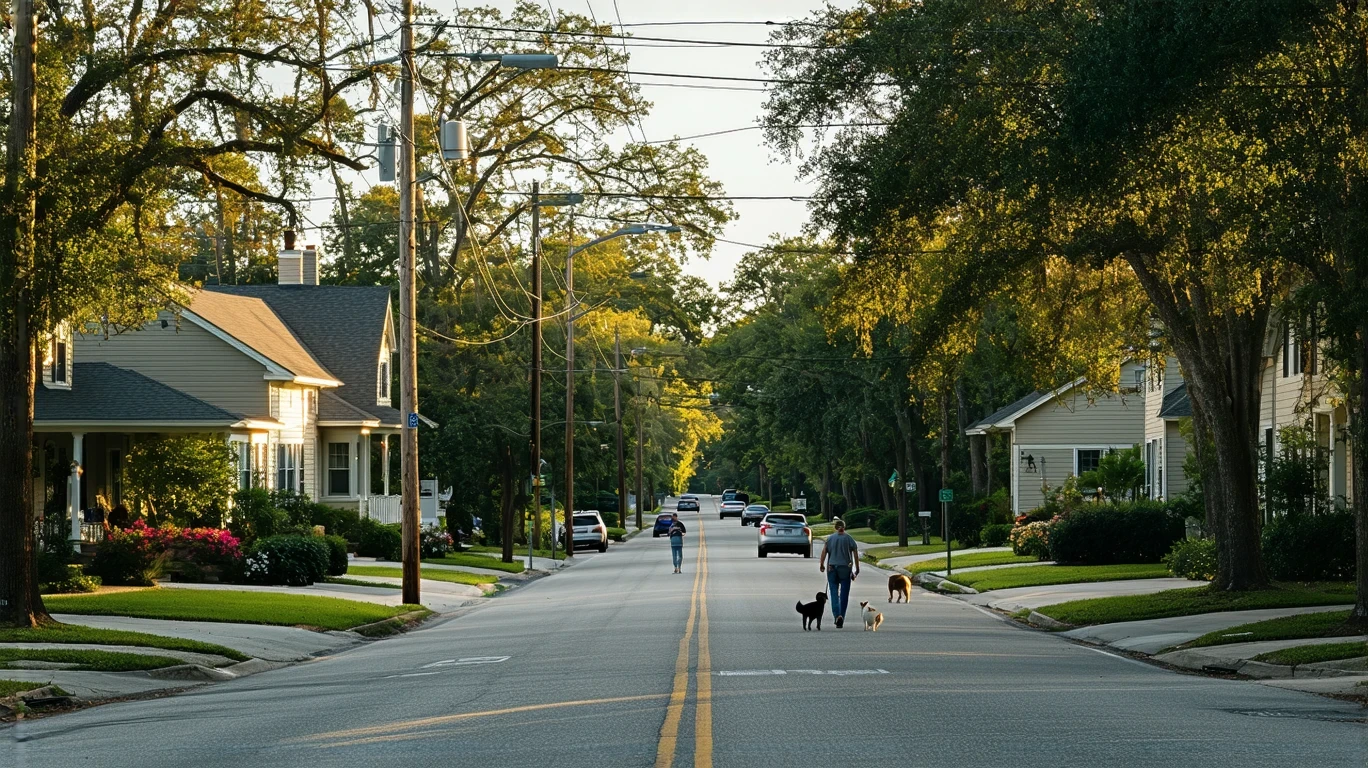
Sanford and Orlando sit just 23 miles apart in the same metro, share the same humid subtropical climate, and both offer rail transit access—yet the cost experience between them diverges sharply depending on what dominates your household budget. Sanford draws families and commuters seeking lower housing entry costs and integrated park access, while Orlando attracts those prioritizing hospital presence, cycling infrastructure, and proximity to a denser urban core. In 2026, the decision isn’t about which city costs less overall; it’s about which cost pressures your household can absorb and which tradeoffs align with how you actually live day-to-day.
Both cities feature walkable pockets and rail service, but the texture of daily life differs in meaningful ways. Sanford’s pedestrian-to-road ratio exceeds high thresholds in parts of the city, and park density is notably high, creating a rhythm where outdoor access and green space feel woven into the residential fabric. Orlando counters with a bike-to-road ratio that exceeds high thresholds, a hospital facility within city limits, and grocery density that hits the high threshold—signaling shorter distances for routine errands and medical care. These structural differences shape not just convenience, but the hidden time costs and logistical friction that determine whether a household feels stable or stretched.
The comparison below breaks down where cost pressure concentrates in each city, how housing and transportation exposure differ, and which households experience volatility versus predictability. This is a decision about fit, not affordability math—and understanding where your non-negotiable costs land is what turns raw data into a livable choice.
Housing Costs
Sanford’s median home value sits at $241,400, while Orlando’s reaches $332,700—a structural difference that changes the entry barrier for ownership and the ongoing obligations that follow. Median gross rent in Sanford is $1,402 per month; in Orlando, it’s $1,509 per month. These figures reflect not just price, but the type of housing stock available, the competition for units, and the tradeoffs between space and location that define each market.
In Sanford, the lower home value opens ownership to households who might otherwise remain renters in Orlando, but it also reflects a market where single-family homes dominate and apartment density remains moderate. Renters in Sanford face corridor-clustered grocery access and a commute pattern where 33.2% of workers endure long commutes, meaning housing savings can be offset by time costs and transportation exposure. Orlando’s higher home values and rents buy proximity to hospital care, higher grocery density, and a bike infrastructure that reduces car dependency for some households—but the entry cost is front-loaded, and the rental market is competitive.
For first-time buyers, Sanford’s housing market reduces the down payment hurdle and monthly mortgage obligation, making ownership accessible earlier in a household’s financial timeline. For renters prioritizing walkability and errand convenience, Orlando’s denser corridor-clustered food access and hospital presence may justify the rent premium, especially for households where medical needs or car-free living are non-negotiable. Families seeking yard space and integrated parks will find Sanford’s housing stock better aligned with those priorities, while young professionals or dual-income couples may value Orlando’s urban form and cycling infrastructure enough to absorb the higher housing cost.
Housing takeaway: Sanford’s housing cost advantage is most meaningful for households where ownership timing and outdoor space access outweigh proximity to hospitals and denser errands infrastructure. Orlando’s higher housing costs reflect a market where walkability, cycling, and healthcare access are embedded in the residential experience—tradeoffs that matter more to some households than the entry price difference.
Utilities and Energy Costs
Electricity rates in Sanford are 15.80¢/kWh; in Orlando, they’re 15.92¢/kWh. Natural gas pricing is identical at $23.62/MCF. The cost difference is negligible, but the exposure patterns diverge based on housing type, home age, and cooling season intensity. Both cities experience extended cooling seasons driven by Florida’s heat and humidity, but the way utility costs accumulate depends more on square footage, insulation quality, and household size than on the rate structure itself.
In Sanford, the prevalence of single-family homes with larger footprints means cooling costs can climb quickly during summer months, especially in older construction where insulation and window efficiency lag. Families in detached homes face higher baseline usage and more volatility tied to seasonal extremes. Orlando’s mixed building height profile includes more apartment stock, where shared walls and smaller square footage reduce cooling exposure for renters—but single-family homeowners in Orlando face similar seasonal pressure as Sanford, with slightly higher electricity rates adding marginal cost over time.
Households in newer construction in either city benefit from tighter building envelopes and more efficient HVAC systems, reducing the seasonal swing in utility bills. Older homes in both markets face unpredictable spikes during prolonged heat, and the lack of heating season exposure means natural gas costs remain minimal year-round. Renters in Orlando’s apartment-dense corridors experience more predictable utility costs due to smaller unit sizes, while Sanford renters in single-family homes or duplexes face exposure closer to homeowners.
Utility takeaway: Utility cost exposure in both cities is driven more by housing type and home age than by rate differences. Sanford’s single-family housing stock increases cooling season volatility for families, while Orlando’s apartment density offers renters more predictable baseline costs. Households sensitive to seasonal spikes should prioritize newer construction and smaller square footage regardless of city.
Groceries and Daily Expenses
Both Sanford and Orlando show corridor-clustered food and grocery access, meaning options concentrate along commercial corridors rather than distributing evenly across neighborhoods. Orlando’s grocery density exceeds the high threshold, while Sanford’s sits in the medium band—a difference that translates to shorter average distances for routine shopping in Orlando and slightly more planning required in Sanford. Food establishment density in both cities falls in the medium band, suggesting similar access to dining and prepared food options, though the concentration and variety may differ by corridor.
In Sanford, households relying on big-box stores or discount grocers may find options clustered near major roadways, requiring car trips and adding time friction to weekly errands. Orlando’s higher grocery density means more neighborhood-level access in some areas, reducing the need to drive across town for staples. For families managing larger grocery volumes, Sanford’s layout may require more intentional trip planning, while Orlando’s denser grocery infrastructure supports more frequent, smaller shopping runs.
Dining and convenience spending pressure differs more by household habits than by city infrastructure. Both cities offer corridor-clustered food access, but Orlando’s denser urban form and cycling infrastructure make walk-up coffee shops, takeout, and casual dining more accessible without a car in certain neighborhoods. Sanford’s car-oriented layout means convenience spending often bundles with other errands, reducing impulse purchases but increasing the time cost of daily routines.
Grocery takeaway: Orlando’s higher grocery density reduces errand friction for households prioritizing walkability and frequent shopping trips, while Sanford’s corridor-clustered access works best for households comfortable with car-based, less frequent grocery runs. Families managing bulk purchases may find Sanford’s big-box access sufficient, while single adults and couples in Orlando benefit from denser neighborhood-level options.
Taxes and Fees

Both Sanford and Orlando operate under Florida’s state tax structure, which includes no state income tax but relies heavily on property taxes and sales taxes to fund local services. The property tax burden in both cities depends on assessed home value, millage rates set by local jurisdictions, and exemptions such as homestead. Sanford’s lower median home value reduces the baseline property tax obligation for homeowners, while Orlando’s higher home values increase the annual tax exposure even if millage rates are similar.
Renters in both cities are indirectly exposed to property taxes through rent pricing, but the visibility and predictability differ. In Sanford, single-family rental homes may pass through property tax increases more directly, while Orlando’s apartment-heavy rental stock spreads tax exposure across more units, potentially softening the impact on individual renters. HOA fees are common in both markets, particularly in newer subdivisions and townhome communities, and can range widely depending on amenities and maintenance obligations.
Sales taxes apply uniformly across both cities, but the frequency and volume of taxable purchases—groceries are exempt, but dining, goods, and services are not—mean households with higher convenience spending or frequent dining out face more cumulative sales tax exposure. Trash collection, water, and sewer fees are typically billed separately in both cities, with costs varying by provider and usage. Homeowners in both markets should expect these recurring fees to add predictable but non-trivial monthly obligations.
Taxes and fees takeaway: Sanford’s lower home values reduce property tax exposure for homeowners, while Orlando’s higher values increase the annual obligation. Renters in both cities face indirect tax exposure, but Orlando’s denser apartment stock may buffer individual rent increases tied to property tax changes. Households planning to stay long-term should factor property tax trajectories and HOA fee structures into ownership decisions.
Transportation & Commute Reality
Sanford’s average commute is 24 minutes, with 33.2% of workers facing long commutes and just 7.0% working from home. Gas prices in Sanford are $3.98/gal. Orlando’s commute data isn’t available, but gas prices are $4.12/gal. Both cities offer rail transit service, and both show pedestrian-to-road ratios exceeding high thresholds in parts of the city, but the bike infrastructure diverges sharply: Sanford’s bike-to-road ratio sits in the medium band, while Orlando’s exceeds the high threshold.
In Sanford, the commute pattern suggests a workforce that largely drives to jobs outside the city, with rail transit serving as a secondary option for those commuting into Orlando or other metro hubs. The 33.2% long commute share signals that many Sanford residents trade housing cost savings for time spent on the road, and the low work-from-home percentage means most households are exposed to daily transportation costs. Orlando’s higher bike-to-road ratio and denser urban form support car-free or car-light living for some households, particularly those working and living within the same corridors.
For households where one or both adults commute daily, Sanford’s lower gas prices offer marginal relief, but the time cost of longer commutes and the prevalence of car dependency mean transportation exposure remains high. Orlando’s cycling infrastructure and rail presence reduce car reliance for households living and working in well-connected areas, but gas prices are higher for those who do drive. Families with school-age children in either city will likely rely on cars for drop-offs, activities, and errands, regardless of transit availability.
Transportation takeaway: Sanford’s commute patterns favor households willing to trade time for lower housing costs, with car dependency remaining the dominant mode. Orlando’s bike infrastructure and denser urban form reduce transportation exposure for households able to live car-light, but gas prices are higher for those who drive. Households sensitive to commute time should weigh Sanford’s housing savings against the time cost of longer drives.
Cost Structure Comparison
Housing dominates the cost experience in both cities, but the entry barrier and ongoing obligations differ meaningfully. Sanford’s lower home values and rents reduce the upfront cost of securing housing, making ownership accessible earlier and freeing up cash flow for households prioritizing savings or debt reduction. Orlando’s higher housing costs reflect a market where proximity to hospitals, denser grocery access, and cycling infrastructure are embedded in the residential experience—tradeoffs that matter more to households where healthcare needs, walkability, or car-free living are non-negotiable.
Utilities introduce similar seasonal volatility in both cities, but Sanford’s single-family housing stock increases cooling exposure for families, while Orlando’s apartment density offers renters more predictable baseline costs. Households in older homes in either city face higher seasonal swings, and the extended cooling season means summer months drive the majority of utility cost pressure. Transportation patterns matter more in Sanford, where 33.2% of workers face long commutes and car dependency is the norm, while Orlando’s bike infrastructure and rail presence reduce car reliance for some households.
Groceries and daily expenses follow similar corridor-clustered patterns in both cities, but Orlando’s higher grocery density reduces errand friction for households prioritizing walkability and frequent shopping trips. Sanford’s layout works best for households comfortable with car-based, less frequent grocery runs. Taxes and fees are driven primarily by home values, meaning Sanford’s lower property tax baseline benefits homeowners, while Orlando’s higher values increase the annual obligation.
The better choice depends on which costs dominate your household. For families sensitive to housing entry costs and outdoor space access, Sanford’s lower home values and integrated parks may outweigh the time cost of longer commutes. For households where healthcare access, cycling infrastructure, and denser errands matter more than entry price, Orlando’s higher housing costs reflect a market where those amenities are woven into daily life. The difference is less about total cost and more about where pressure concentrates and which tradeoffs align with how you actually live.
How the Same Income Feels in Sanford vs Orlando
Single Adult
For a single adult, housing becomes the first non-negotiable cost, and the entry barrier differs sharply between cities. In Sanford, lower rent or mortgage payments free up cash flow for transportation, which becomes the second-largest cost driver due to car dependency and the prevalence of long commutes. Flexibility exists in dining and convenience spending, but the corridor-clustered grocery layout requires car trips, adding time friction to daily routines. In Orlando, higher rent or mortgage payments consume more of the budget upfront, but denser grocery access and cycling infrastructure reduce transportation exposure for those living and working in well-connected areas. The tradeoff is between lower housing costs with higher transportation exposure in Sanford, versus higher housing costs with more car-light flexibility in Orlando.
Dual-Income Couple
For a dual-income couple, the cost structure shifts based on commute patterns and housing priorities. In Sanford, lower housing costs allow for larger living space or faster savings accumulation, but if both adults commute, transportation exposure compounds quickly due to car dependency and longer average commute times. Flexibility exists in utilities and groceries, but the time cost of errands and commuting reduces schedule flexibility. In Orlando, higher housing costs are offset by the potential for one or both adults to reduce car reliance through cycling or transit, and denser grocery access shortens errand time. The tradeoff is between more predictable housing and transportation costs in Sanford, versus higher housing costs with more time flexibility and lower transportation exposure in Orlando.
Family with Kids
For families, housing and transportation become the dominant cost drivers, and the non-negotiable costs differ by city. In Sanford, lower home values make ownership accessible earlier, and integrated park access reduces the need for paid recreation, but car dependency is unavoidable for school drop-offs, activities, and errands. The time cost of longer commutes and corridor-clustered grocery access reduces schedule flexibility, and cooling costs in single-family homes add seasonal volatility. In Orlando, higher home values increase the entry barrier, but hospital presence, denser grocery access, and cycling infrastructure reduce logistical friction for some households. Flexibility disappears in housing and healthcare, but the denser urban form shortens errand times and supports more walkable routines in certain neighborhoods. The tradeoff is between lower housing entry and outdoor space in Sanford, versus higher housing costs with better healthcare access and denser errands infrastructure in Orlando.
Decision Matrix: Which City Fits Which Household?
| Decision factor | If you’re sensitive to this… | Sanford tends to fit when… | Orlando tends to fit when… |
|---|---|---|---|
| Housing entry + space needs | You prioritize lower upfront costs and outdoor space over proximity to urban amenities | Lower home values and integrated parks outweigh the time cost of car dependency | You value proximity to hospitals and denser errands infrastructure enough to absorb higher entry costs |
| Transportation dependence + commute friction | You want to minimize time spent commuting or reduce car reliance | You’re willing to trade longer commute times for lower housing costs and accept car dependency | You can live and work in well-connected corridors and benefit from cycling infrastructure and rail access |
| Utility variability + home size exposure | You want predictable utility costs and lower seasonal volatility | You prioritize newer construction or smaller square footage to reduce cooling exposure | You rent in apartment-dense areas where shared walls and smaller units stabilize baseline costs |
| Grocery strategy + convenience spending creep | You prefer frequent, walkable shopping trips over car-based bulk runs | You’re comfortable with corridor-clustered access and car-based grocery trips | You value denser neighborhood-level grocery access and shorter errand distances |
| Fees + friction costs (HOA, services, upkeep) | You want to minimize ongoing obligations and predictable recurring fees | Lower home values reduce property tax exposure and baseline ownership costs | You’re willing to absorb higher property taxes in exchange for denser urban amenities and services |
| Time budget (schedule flexibility, errands, logistics) | You want to minimize time spent on errands and household logistics | You can absorb longer commute times and corridor-clustered errands in exchange for housing savings | You prioritize shorter errand distances and cycling infrastructure to reduce daily time friction |
Lifestyle Fit
Sanford and Orlando both offer rail transit and walkable pockets, but the rhythm of daily life diverges based on infrastructure density and access patterns. Sanford’s integrated park access—where park density exceeds high thresholds—creates a residential experience where outdoor space feels woven into the fabric of the city, reducing the need for paid recreation and supporting active lifestyles without long drives. Orlando counters with a bike-to-road ratio that exceeds high thresholds, making cycling a viable mode for errands and commuting in well-connected corridors, and hospital presence within city limits reduces the friction of accessing specialized care.
For families, Sanford’s school density and playground presence support routine child-focused activities, though healthcare access is limited to clinics and pharmacies rather than hospital facilities. Orlando’s hospital presence and denser grocery infrastructure reduce logistical friction for households managing medical needs or frequent shopping trips, but park density sits in the moderate range rather than the integrated level seen in Sanford. Both cities feature mixed building height profiles and land use that blends residential and commercial zones, but the texture differs: Sanford’s layout favors single-family homes with yard space, while Orlando’s denser urban form supports more apartment living and walk-up retail.
Commute times in Sanford average 24 minutes, but the 33.2% long commute share signals that many residents trade housing savings for time on the road. Orlando’s commute data isn’t available, but the denser urban form and cycling infrastructure suggest shorter average distances for those living and working within the same corridors. Both cities experience extended cooling seasons and minimal heating needs, meaning outdoor recreation and park access remain viable year-round, and the presence of water features in both cities adds recreational variety. Sanford’s rail transit connects to Orlando and other metro hubs, supporting car-free commuting for some households. Orlando’s cycling infrastructure and hospital presence reduce car dependency and healthcare friction for households prioritizing those amenities.
Frequently Asked Questions
Is Sanford or Orlando more affordable for renters in 2026?
Sanford’s median gross rent is $1,402 per month, while Orlando’s is $1,509 per month. The difference reflects not just price, but the type of housing stock and access to amenities. Sanford’s lower rent buys more space and integrated park access, but requires car dependency and longer commutes for many workers. Orlando’s higher rent reflects denser grocery access, hospital presence, and cycling infrastructure that reduce car reliance for some households. The better choice depends on whether you prioritize housing cost savings or proximity to urban amenities and healthcare.
How do commute costs differ between Sanford and Orlando in 2026?
Sanford’s average commute is 24 minutes, with 33.2% of workers facing long commutes and gas prices at $3.98/gal. Orlando’s gas prices are $4.12/gal, but the denser urban form and bike-to-road ratio exceeding high thresholds reduce car dependency for households living and working in well-connected areas. Sanford’s commute pattern favors households willing to trade time for lower housing costs, while Orlando’s cycling infrastructure and rail presence support car-light living for some. The cost difference is less about gas prices and more about time exposure and car dependency.
Which city has better access to groceries and daily errands in 2026?
Both Sanford and Orlando show corridor-clustered food and grocery access, but Orlando’s grocery density exceeds the high threshold while Sanford’s sits in the medium band. This means shorter average distances for routine shopping in Orlando and slightly more planning required in Sanford. For families managing bulk purchases, Sanford’s big-box access works well, while single adults and couples in Orlando benefit from denser neighborhood-level options. The difference is about errand friction and trip frequency, not total grocery cost.
Does Sanford or Orlando offer better healthcare access in 2026?
Orlando has a hospital facility within city limits, while Sanford’s healthcare access is limited to clinics and pharmacies. For households managing chronic conditions or requiring specialized care, Orlando’s hospital presence reduces the friction and time cost of accessing treatment. Sanford’s clinic presence supports routine care, but hospital visits require travel to nearby cities. The difference matters most for families with medical needs or households prioritizing proximity to emergency and specialized services.
Which city is better for families in Sanford vs Orlando in 2026?
Sanford’s lower home values and integrated park access make it easier for families to afford ownership and access outdoor space without long drives. Orlando’s hospital presence, denser grocery access, and cycling infrastructure reduce logistical friction for households managing medical needs and frequent errands. Both cities offer school density in the medium band and mixed building height profiles. The better choice depends on whether your family prioritizes housing entry costs and outdoor space, or healthcare access and denser urban amenities.
Conclusion
Sanford and Orlando sit close enough to share a metro, but the cost experience diverges based on where pressure concentrates and which tradeoffs your household can absorb. Sanford’s lower housing entry costs and integrated park access fit households prioritizing ownership timing and outdoor space, while Orlando’s hospital presence, cycling infrastructure, and denser grocery access serve households where healthcare, walkability, and errand convenience outweigh the higher housing price. Both cities offer rail transit and walkable pockets, but the rhythm of daily life differs based on commute patterns, car dependency, and the density of amenities within reach.
The decision isn’t about which city costs less overall—it’s about which cost pressures dominate your household and which structural differences align with how you actually live. For families willing to trade commute time for lower housing costs and integrated parks, Sanford offers a clear path to ownership and outdoor access. For households prioritizing hospital proximity, cycling infrastructure, and denser errands, Orlando’s higher housing costs reflect a market where those amenities are embedded in the residential experience. Understanding where your non-negotiable costs land—and which tradeoffs you can sustain—turns this comparison into a livable choice.
How this article was built: In addition to public economic data, this article incorporates location-based experiential signals derived from anonymized geographic patterns—such as access density, walkability, and land-use mix—to reflect how day-to-day living actually feels in Sanford, FL.