
Sanford is considered moderately priced in 2026, with a median home value of $241,400 and median rent of $1,402 per month. The value proposition depends on housing entry cost versus car dependence, with transportation exposure varying significantly based on proximity to rail and commercial corridors.
When Maya relocated to Sanford for a new job in the Orlando metro, she expected straightforward suburban expenses: predictable rent, a car payment, and steady bills. What she didn’t anticipate was how much her daily logistics would shape her actual cost pressure. Living near downtown meant she could occasionally use the SunRail station and walk to a handful of errands, while her coworker in a neighborhood three miles out drove everywhere, twice as often, and paid for it every month. Same city, same income—completely different cost profiles.
Overall Cost of Living Snapshot
Sanford’s cost structure reflects its role as a smaller city within the Orlando metro: housing is the dominant expense, but the real variability comes from how you move and where you settle. With a regional price parity index of 123 (where 100 represents the national baseline), costs here run moderately above the U.S. average, driven primarily by housing entry points and the practical reality that most households depend heavily on personal vehicles.
The primary cost driver is housing—whether you’re buying or renting, this is where the largest share of income pressure lands. But the second-tier drivers matter just as much for day-to-day financial texture: transportation costs fluctuate sharply depending on commute length and vehicle count, and utility bills swing with Florida’s extended cooling season. Groceries and daily essentials track slightly above national norms, but they’re steady rather than volatile.
Compared to Orlando proper, Sanford offers lower housing entry costs, but that advantage often gets offset by increased transportation exposure for households farther from employment centers. The city sits in a middle zone: more affordable than the metro core, but not insulated from the broader regional cost pressures that come with sprawl and car dependency.
Driver verdict: Housing dominates the budget, but transportation and cooling-season utilities create the surprises. The biggest cost differences between households come from where you live relative to work, rail access, and commercial corridors—not from grocery or service pricing.
Housing Costs (Primary Driver)
With a median home value of $241,400, Sanford presents a more accessible ownership entry point than many parts of the Orlando metro, but it’s not a low-cost market. For renters, the median gross rent of $1,402 per month positions Sanford as a transitional market: cheaper than downtown Orlando, but still a significant monthly obligation that leaves limited room for other expenses if income is modest.
The renting versus owning calculation here hinges on stability and timeline. Renters gain flexibility and avoid maintenance volatility, but they’re exposed to lease renewal increases in a region where rental demand remains strong. Owners lock in a mortgage payment and build equity, but they absorb property taxes, insurance (which can be substantial in Florida), and maintenance costs that renters never see. For households planning to stay more than a few years, ownership often pencils out better—but only if the upfront costs and ongoing obligations fit within cash flow.
Sanford functions as a transitional city with an ownership tilt: it attracts renters who are priced out of closer-in metro neighborhoods, and it rewards buyers who can manage the entry cost and are prepared for the long-term carrying costs of Florida homeownership.
| Housing Type | Cost Anchor | What That Buys You |
|---|---|---|
| Renting | $1,402/month median | Flexibility, no maintenance risk, but exposure to lease increases |
| Buying | $241,400 median value | Equity building, payment stability, but upfront and ongoing ownership costs |
Utilities & Energy Risk
Electricity in Sanford costs 15.80¢ per kWh, which sits in the moderate range for Florida. The baseline rate isn’t the issue—it’s the volume. Florida’s long, hot summers mean air conditioning runs for months on end, and that’s where the real expense accumulates. Households in poorly insulated homes or those who keep thermostats low will see bills climb steadily from May through October.
Natural gas is priced at $23.62 per MCF (roughly 100 therms), but gas usage in Sanford is minimal for most households. Heating demand is rare and brief, so gas costs remain a minor line item rather than a seasonal swing factor.
The primary utility risk here is moderate: cooling-season electricity is predictable in direction but variable in magnitude depending on home efficiency, thermostat discipline, and household size. It’s not catastrophic, but it’s also not negligible—expect summer bills to be noticeably higher than winter, and plan accordingly.
Groceries & Daily Costs
Grocery costs in Sanford track moderately above the national baseline, consistent with the regional price parity index of 123. While specific item prices vary, the overall pressure on food spending is steady rather than extreme. A household buying staples like bread, chicken, eggs, and milk will notice slightly elevated costs compared to lower-cost regions, but the difference is incremental, not transformative.
The real texture of daily costs comes less from pricing and more from access patterns. Food and grocery options in Sanford are corridor-clustered, meaning they’re concentrated along commercial strips rather than evenly distributed. For households near these corridors, errands are straightforward. For those in residential pockets farther out, every grocery run requires a drive, and that adds time and fuel cost to what would otherwise be a simple task.
This isn’t a city where you walk out your door and have three grocery options within five minutes. It’s a city where you plan your errands, consolidate trips, and accept that convenience comes from proximity to the right corridor, not from blanket accessibility.
Transportation Reality
The average commute in Sanford is 24 minutes, and 33.2% of workers face long commutes—a reflection of the city’s position within the broader Orlando metro. Only 7.0% of workers work from home, meaning the vast majority of households are commuting regularly, and most are doing it by car.
Gasoline is priced at $3.98 per gallon, which is elevated compared to national averages, and that cost compounds quickly for households with long commutes or multiple vehicles. A 25-mile round-trip commute at typical fuel efficiency translates to regular, recurring expense that doesn’t fluctuate much month to month but adds up over the year.
What makes Sanford different from many suburban cities is the presence of rail transit. SunRail service connects Sanford to downtown Orlando and other metro stops, offering a viable alternative for commuters who live near a station and work along the rail corridor. For those households, transportation costs drop significantly—no daily fuel, no wear and tear, no parking fees. But this advantage is geographically limited. If you’re not near the rail line or your job isn’t accessible by transit, you’re back to full car dependency.
The city also has walkable pockets—areas where pedestrian infrastructure is denser and some errands are possible on foot—but these are exceptions, not the norm. Most of Sanford requires a car for daily life, and transportation becomes a recurring exposure that rivals or exceeds housing for some households.
How Place Structure Shapes Daily Costs
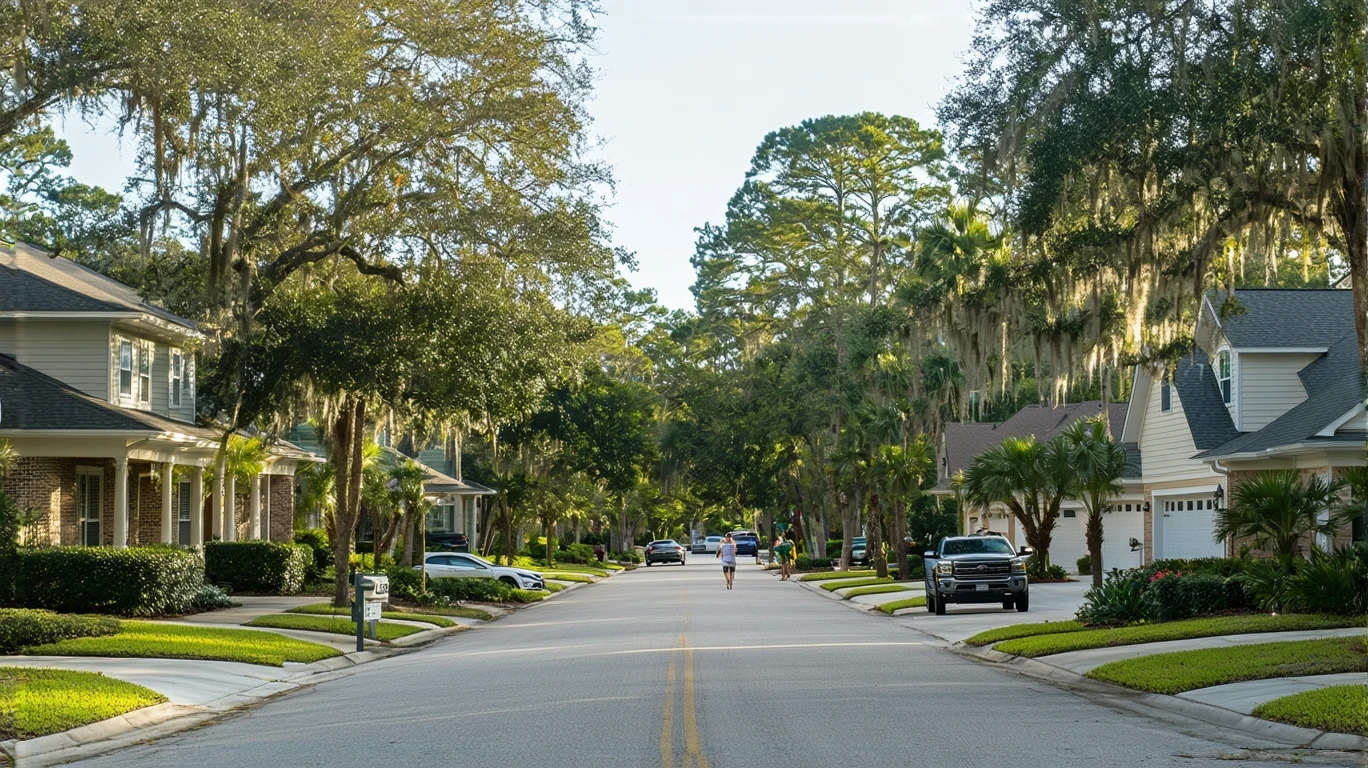
Living in Sanford means your cost profile is shaped as much by where you settle as by what you earn. The city has rail transit, but only households near the SunRail line can use it to avoid daily driving. It has walkable pockets with higher pedestrian infrastructure, but most neighborhoods require a car for every errand. Grocery stores and services are clustered along commercial corridors, so access depends on proximity—not citywide convenience.
For a household near downtown with access to the rail station, daily life can involve fewer car trips, lower fuel costs, and the ability to walk to a handful of errands. For a household three miles out in a residential subdivision, every trip is a drive: work, groceries, appointments, everything. Same city, same income, but the second household spends significantly more on transportation and has less control over that expense.
Parks and green space are well-integrated throughout Sanford, which adds quality of life but doesn’t reduce costs. What does reduce costs is living in a location that minimizes driving. The city’s structure rewards proximity to transit and commercial corridors, and it penalizes distance with higher transportation exposure and more time spent managing logistics.
How this article was built: In addition to public economic data, this article incorporates location-based experiential signals derived from anonymized geographic patterns—such as access density, walkability, and land-use mix—to reflect how day-to-day living actually feels in Sanford, FL.
Cost Exposure Profiles
In Sanford, cost exposure is dominated by two factors: housing entry cost and transportation dependence. Housing is the largest single expense for nearly every household, but it’s relatively stable once locked in—either through a mortgage or a lease. Transportation, by contrast, is variable and controllable, but only if you live in the right place.
Low-exposure situations: Households near the SunRail line who can commute by rail, live close to commercial corridors for errands, and occupy energy-efficient homes face the lowest ongoing cost pressure. They’ve minimized transportation spending, reduced cooling-season utility swings, and positioned themselves to handle errands without constant driving.
High-exposure situations: Households in outer residential areas with long car commutes, multiple vehicles, and older or poorly insulated homes face compounding cost pressure. Transportation costs are high and recurring, utility bills swing sharply in summer, and every errand requires planning and fuel. The difference isn’t income—it’s structure.
The city doesn’t exclude anyone based on cost alone, but it rewards proximity and penalizes distance. Renters face lease renewal risk but avoid maintenance volatility. Owners gain payment stability but absorb property taxes, insurance, and upkeep. Commuters near rail save significantly on transportation; commuters farther out pay for it every month.
Frequently Asked Questions
Is Sanford more affordable than Orlando in 2026? Yes, Sanford generally offers lower housing entry costs than downtown Orlando, with a median home value of $241,400 compared to higher metro core prices. However, transportation costs can offset that advantage if your commute requires long drives or if you’re far from the SunRail line.
What does a typical cost profile look like in Sanford? Housing dominates, followed by transportation and utilities. The biggest variability comes from commute length and proximity to transit or commercial corridors—households near rail and services spend significantly less on transportation than those in outer residential areas.
Do utilities cost more in Sanford than in nearby areas? Utility costs in Sanford are moderate and consistent with the broader Central Florida region. Electricity at 15.80¢ per kWh isn’t unusually high, but the extended cooling season means summer bills can climb for households without efficient air conditioning or insulation.
What costs tend to surprise newcomers in Sanford? Transportation is the biggest surprise. Many newcomers underestimate how much driving they’ll do and how quickly fuel, maintenance, and vehicle costs add up—especially if they’re commuting to Orlando or living far from commercial corridors.
Are property taxes higher in Sanford than in other Florida cities? Property taxes in Sanford are typical for Seminole County and generally lower than some other metro areas, but they’re still a significant ongoing cost for homeowners. Florida’s lack of state income tax shifts more burden to property and sales taxes.
Is Sanford a good value for renters or buyers? Sanford offers better value for buyers planning to stay long-term, as ownership locks in housing costs and builds equity. Renters gain flexibility but face exposure to lease increases in a market with steady demand and limited rental supply.
How much does car dependency affect monthly costs in Sanford? Car dependency is a major cost factor. Households with long commutes or multiple vehicles can spend as much on transportation as they do on rent, especially with gas at $3.98 per gallon. Proximity to SunRail or commercial corridors significantly reduces this exposure.
Does Sanford’s cost of living favor any particular household type? Sanford tends to favor households that can access rail transit, live near commercial corridors, and plan to stay long enough to benefit from homeownership. It’s less favorable for renters with long car commutes or those in energy-inefficient homes facing high summer cooling costs.