
How much is enough to feel at ease? In Germantown, the answer depends less on hitting a specific number and more on whether your household structure, commute tolerance, and expectations align with how costs actually behave here. This isn’t a place where income alone determines comfort—it’s where the relationship between what you earn, how you live, and what you’re willing to trade off shapes whether you feel stretched or stable.
Germantown sits in the Washington, DC metro area with a median household income of $109,268 per year—a figure that reflects a professional, dual-income baseline rather than an affordability ceiling. But income pressure here isn’t about whether you can technically afford the rent or mortgage. It’s about whether you can absorb the friction: the commute, the utility swings, the logistics of running a household when walkable errands aren’t always an option and family infrastructure is thinner than the income level might suggest.
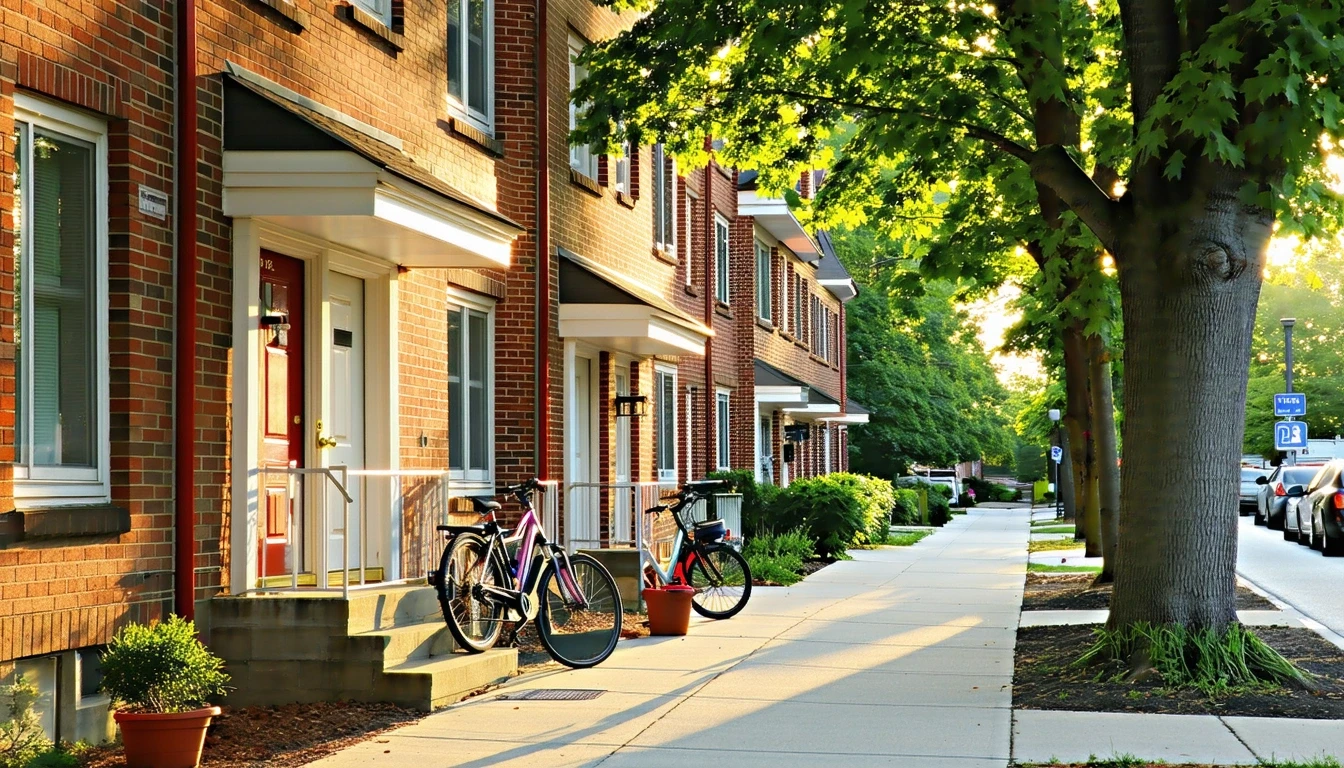
What “Living Comfortably” Means in Germantown
Comfort in Germantown is defined by control over time and predictability over bills. It means choosing whether to drive or take the train without that choice dictating your budget. It means seasonal utility bills that fluctuate but don’t force you to adjust other spending. It means housing that doesn’t consume so much of your income that every other decision becomes a tradeoff.
Locals expect space—whether that’s a townhome with a small yard or a larger single-family home with room to spread out. They expect reliable climate control through humid summers and cold winters. They expect access to groceries, healthcare, and dining without excessive planning. And increasingly, they expect some ability to work from home at least part of the week, reducing the daily commute burden that defines much of the area’s lifestyle.
Comfort here is not luxury. It’s the absence of constant financial negotiation. It’s being able to replace a car repair without panic, to run the air conditioning without guilt, to take your family out to dinner without checking the account first. For many households, that threshold is reachable—but only if the structure of their income, their commute, and their household size fit the way Germantown actually works.
Where Income Pressure Shows Up First
Housing is the first and most persistent source of pressure. The median gross rent is $1,908 per month, and the median home value is $393,700. For renters, that monthly figure is non-negotiable and rises with lease renewals. For owners, the mortgage may be fixed, but property taxes, insurance, and maintenance are not. Single-income households renting alone often find themselves spending a disproportionate share of their earnings on housing, leaving little room for volatility elsewhere.
Utilities add seasonal unpredictability. Electricity rates sit at 20.61¢/kWh, and natural gas costs $15.96 per MCF. Summers bring extended cooling demands, and winters require consistent heating. For households in larger homes or those with older HVAC systems, utility bills can swing significantly month to month, creating pressure points that feel manageable in spring and fall but acute in January and July.
Transportation introduces a time-versus-money tension that many households underestimate before moving here. The average commute is 33 minutes, and 53.6% of workers face long commutes. Gas prices at $4.10 per gallon mean that driving 25 miles round trip five days a week adds up quickly. Rail transit is present, which gives some households an alternative, but only if their work location and schedule align with the service. For families, transportation pressure multiplies: school drop-offs, errands, and activities often require a second vehicle, doubling both the fixed costs and the fuel exposure.
For families specifically, income pressure also shows up in logistics complexity. School density and playground density are both below typical thresholds for a community at this income level, meaning that even well-resourced families spend more time coordinating, driving, and planning than they might expect. The infrastructure for family life exists, but it’s not as dense or as accessible as the income profile suggests it should be.
How the Same Income Feels Different by Household
Households at similar income levels often experience very different pressure depending on their structure, commute flexibility, and tolerance for planning.
Single adults face the most direct housing pressure. Renting alone at the median rate consumes a significant portion of even a solid professional salary. Utilities are more manageable in a smaller space, but transportation costs remain fixed. The rail option helps if work is accessible via transit, but for those who drive, the combination of rent, commute fuel, and parking can leave little room for discretionary spending. Comfort is achievable, but it requires either a higher income or a willingness to live with less space and fewer amenities than peers in coupled households.
Couples without children often find Germantown more financially viable. Dual incomes make housing accessible, whether renting or buying. Grocery access is strong in certain corridors, and the presence of both walkable pockets and rail transit means that some couples can reduce car dependency if their routines align. Utility costs are shared, and the absence of childcare or school logistics keeps schedules flexible. For this group, comfort is less about income level and more about whether both partners can tolerate the commute or negotiate remote work.
Families experience the most variability. On paper, the median household income suggests that Germantown is well-suited to family life. In practice, families face higher fixed costs—larger homes, higher utility bills, multiple vehicles—and more logistical friction. School and playground infrastructure is limited relative to the population, meaning that even families with comfortable incomes spend significant time managing transportation and activities. Errands are corridor-clustered rather than broadly accessible, so running a household here often requires a car and advance planning. Families at or above the median income generally feel stable, but those below it often feel the squeeze across multiple categories at once.
The Comfort Threshold (Qualitative)
The transition to comfort in Germantown happens when housing no longer dictates every other decision. It’s the point where a household can absorb a utility spike, a car repair, or a rent increase without restructuring their spending. It’s when commute costs are predictable rather than painful, and when discretionary choices—dining out, taking a weekend trip, upgrading a phone—don’t require advance negotiation.
For dual-income professional households, this threshold is often reachable. For single-income families or single adults renting alone, it requires either a higher salary or a willingness to accept tradeoffs in space, location, or convenience. The threshold isn’t a number—it’s the point where bills stop dictating behavior and choices start to expand.
What shifts at this point is not luxury, but flexibility. Households below the threshold make decisions in sequence: pay rent, then utilities, then transportation, then see what’s left. Households above it make decisions in parallel: they can plan, save, and spend simultaneously without constant recalibration. That difference defines comfort more than any single income figure ever could.
Why Online Cost Calculators Get Germantown Wrong
Most cost-of-living calculators reduce Germantown to a set of averages: median rent, typical utilities, estimated transportation. They produce a total, imply a required income, and move on. But totals don’t explain why two households at the same income level feel entirely different levels of pressure.
Calculators miss the structure of costs. They don’t account for the fact that housing is non-negotiable but utilities swing seasonally. They don’t capture the time cost of a long commute or the logistical burden of managing a family in a place where schools and playgrounds are spread thin. They don’t reflect the reality that rail transit exists but only helps if your destination aligns, or that grocery access is strong in some corridors but sparse in others.
They also assume lifestyle uniformity. A calculator might estimate transportation costs based on a single vehicle and average commute, but it won’t tell you that families here often need two cars, or that working from home even two days a week dramatically changes your fuel and time exposure. It won’t explain that comfort depends as much on your tolerance for planning and driving as it does on your paycheck.
People feel surprised after moving to Germantown not because the costs were hidden, but because the cost structure didn’t match their assumptions. The rent was listed. The commute time was mappable. But the interaction between those factors—and the way they compound across a household—only becomes clear once you’re living it.
How to Judge Whether Your Income Fits Germantown
Rather than asking “Is my income high enough?”, ask whether your household structure and expectations align with how costs and logistics actually work here.
How sensitive are you to housing tradeoffs? If you need to rent alone and expect a spacious apartment in a walkable area, your income will need to be significantly above the median. If you’re willing to share costs with a partner or accept a longer commute for lower rent, the threshold drops.
Can you absorb seasonal utility swings? If a $100–$150 increase in summer or winter utility bills would force you to cut back elsewhere, you’re operating close to the edge. Comfort requires enough cushion that seasonal volatility is noticeable but not disruptive.
Is time or money your limiting factor? If you can work from home or have schedule flexibility, Germantown’s commute burden eases significantly. If you’re commuting five days a week to a job that’s 40 minutes away, the time and fuel costs accumulate quickly, and no amount of income fully compensates for that daily drain.
How much logistical friction can you tolerate? If you expect to walk to the grocery store, drop your kids at a nearby playground, and run errands on foot, Germantown will frustrate you. If you’re comfortable driving, planning ahead, and coordinating schedules, the infrastructure works fine—but it requires acceptance that convenience here is car-enabled, not car-optional.
How much flexibility do you expect month to month? If you want discretionary income left over after fixed costs, your household income needs to comfortably exceed the combined weight of housing, transportation, and utilities. If you’re living paycheck to paycheck, even at a solid salary, Germantown’s cost structure will feel relentless.
FAQs About Living Comfortably in Germantown
Is Germantown affordable for single people?
It depends on your income and housing expectations. Single adults renting alone face significant housing costs relative to their income. Comfort is achievable with a strong salary or a willingness to accept a smaller space, a longer commute, or both. Sharing housing costs makes Germantown far more accessible.
Do you need a car to live comfortably here?
For most households, yes. Rail transit exists and helps some commuters, and there are walkable pockets, but grocery access is corridor-clustered and errands generally require a car. Families almost always need at least one vehicle, and many need two. If you’re planning to rely solely on transit or walking, your day-to-day experience will involve significant friction.
How much do utilities really vary by season?
Utility costs shift noticeably between moderate months and extreme weather months. Summers bring extended air conditioning demands, and winters require consistent heating. The swing isn’t catastrophic, but it’s enough that households operating without a financial cushion feel the difference. Larger homes and older systems amplify the volatility.
Is Germantown a good fit for families on a single income?
It’s challenging. Housing costs are substantial, transportation often requires two vehicles, and the limited density of schools and playgrounds increases logistical complexity. Single-income families at or above the median can make it work, but those below often feel pressure across multiple categories simultaneously. Dual income provides significantly more breathing room.
What’s the biggest cost surprise people face after moving here?
The compounding effect of commute time and transportation costs. Many people underestimate how much driving they’ll do—not just for work, but for errands, school, and activities—and how quickly fuel, maintenance, and vehicle depreciation add up. The time cost is equally significant: long commutes erode flexibility and make every other aspect of household management harder.
How this article was built: In addition to public economic data, this article incorporates location-based experiential signals derived from anonymized geographic patterns—such as access density, walkability, and land-use mix—to reflect how day-to-day living actually feels in Germantown, MD.
Germantown can work well for some households—but only if expectations match reality. Comfort here isn’t about reaching a magic income number. It’s about whether your household structure, commute tolerance, and logistical flexibility align with a place where costs are manageable but friction is real, where professional incomes are common but convenience requires planning, and where stability is achievable if you’re willing to navigate the tradeoffs that come with it.