
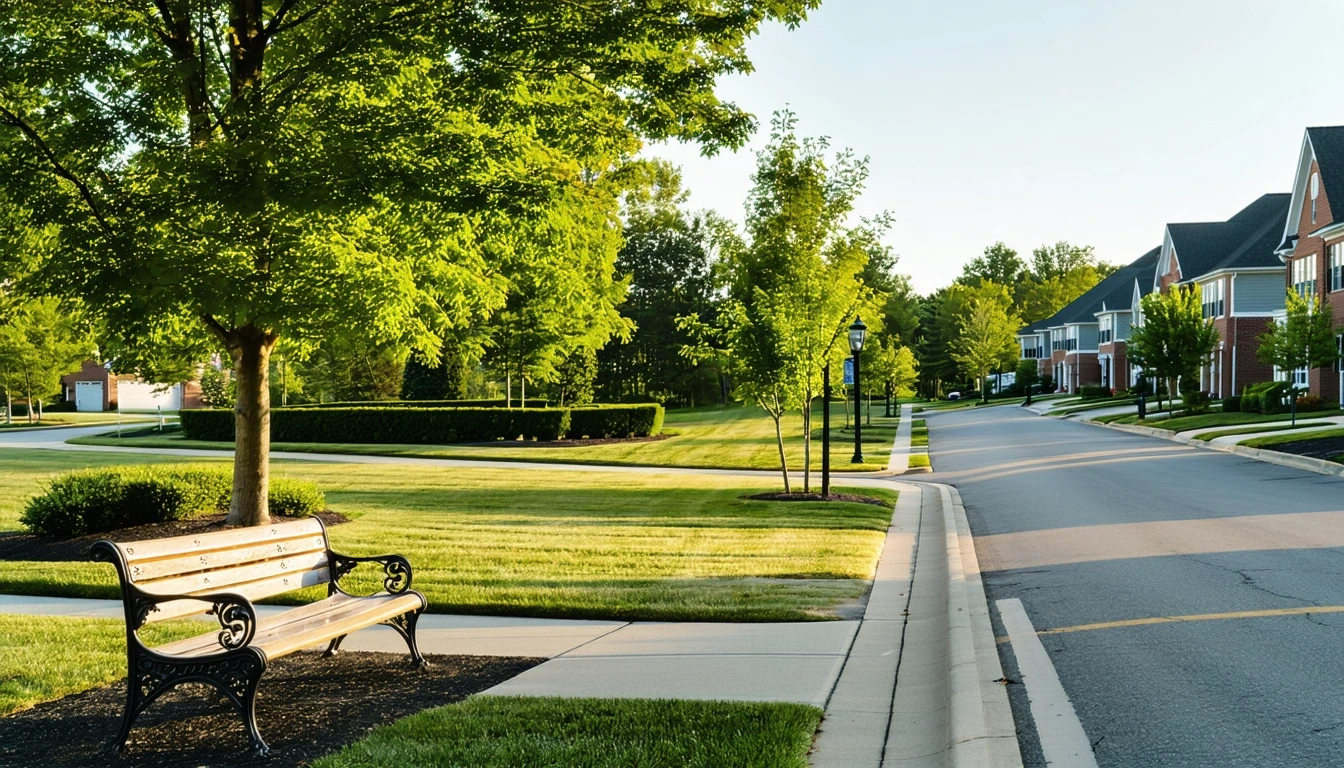
Here’s a common myth: McLean and Fairfax are interchangeable Northern Virginia suburbs with nearly identical costs. Both sit in the Washington DC metro, both offer access to federal employment hubs, and both attract educated, high-earning households. But the cost structure—where expenses concentrate, how predictable they are, and which households feel pressure most—differs in ways that matter for day-to-day budgeting in 2026.
Fairfax and McLean share a regional footprint, but they don’t share the same cost behavior. Fairfax offers documented housing benchmarks, strong family-oriented infrastructure, and bus-based transit. McLean brings rail access, lower fuel costs, but substantially higher heating expenses and sparser school and playground density. The decision between them isn’t about which is “cheaper overall”—it’s about which cost pressures align with your household’s non-negotiables and which tradeoffs you’re equipped to manage.
This comparison explains how housing entry barriers, utility volatility, transportation dependence, and daily logistics differ between Fairfax and McLean. It’s built for households deciding where to live in 2026, not which city saves money on paper.
Housing Costs
Fairfax provides clear housing cost signals: the median home value sits at $649,600, and median gross rent runs $1,972 per month. These figures reflect a market where single-family homes dominate ownership pathways and apartments serve renters who prioritize access to employment corridors without the capital requirements of buying. The entry barrier for ownership is front-loaded and substantial, but once cleared, housing costs become predictable. Renters face ongoing monthly obligations that adjust with lease renewals, but the baseline is visible and stable relative to more volatile markets.
McLean’s housing data isn’t captured in the same way, but the structural differences are evident through infrastructure patterns and regional positioning. Both cities show mixed land use and walkable pockets, meaning residential and commercial spaces coexist in ways that support daily errands without requiring long drives. However, McLean’s proximity to rail transit and its reputation as a high-income enclave suggest that housing competition—particularly for single-family homes near Metro stations—intensifies pressure on entry costs. Without documented rent or home value benchmarks, it’s harder to quantify, but the cost structure in McLean likely skews toward higher acquisition costs in exchange for transit convenience and established neighborhood character.
For renters, Fairfax offers a documented baseline that helps with planning. Apartments near bus lines provide access to employment centers, grocery stores, and schools without requiring immediate car ownership. McLean renters, by contrast, gain rail access but lose the visibility that comes with published rent benchmarks. Families looking to buy face a similar tradeoff: Fairfax’s $649,600 median home value is a known quantity, while McLean’s housing market operates with less transparency but potentially higher competition for homes near Metro stations. First-time buyers sensitive to predictability may find Fairfax easier to plan around; those prioritizing transit access and willing to navigate a less-documented market may prefer McLean’s rail advantage.
| Housing Type | Fairfax | McLean |
|---|---|---|
| Median Home Value | $649,600 | Data not available |
| Median Gross Rent | $1,972/month | Data not available |
| Ownership Entry Barrier | High, documented | Likely higher, less visible |
| Rental Predictability | Baseline visible | Less documented |
The housing takeaway depends on what drives your decision. Households that need to model costs before committing—especially first-time buyers or renters comparing multiple suburbs—benefit from Fairfax’s transparency. Households willing to trade documentation for transit access, and who can absorb higher entry competition, may find McLean’s rail connectivity worth the opacity. Families with school-age children should note that Fairfax shows substantially stronger family infrastructure density, which often correlates with housing demand in neighborhoods zoned for higher-performing schools. McLean’s limited school and playground density suggests fewer family-oriented neighborhoods, which may reduce competition for family-sized homes but also limits options for households prioritizing walkable access to parks and schools.
Utilities and Energy Costs
Utility cost behavior in Fairfax and McLean hinges on heating exposure, not cooling. Both cities experience the same mid-Atlantic climate—hot, humid summers and cold winters—but the cost structure differs because of natural gas pricing. Fairfax’s natural gas price sits at $15.45 per MCF, while McLean’s reaches $20.71 per MCF. That’s a substantial gap, and it shows up most clearly in households that heat with gas during winter months. Electricity rates are nearly identical (15.27¢/kWh in Fairfax vs 15.94¢/kWh in McLean), so cooling costs track closely. The real divergence happens when temperatures drop and heating systems run for extended periods.
For households in older single-family homes—common in both cities—heating costs dominate winter utility bills. Homes built before modern insulation standards lose heat faster, meaning furnaces cycle more frequently and gas consumption rises. In Fairfax, that exposure is significant but manageable; in McLean, the higher gas price amplifies the same usage into a steeper monthly obligation. Apartments and newer townhomes, by contrast, tend to have better insulation and smaller square footage, which reduces baseline heating demand. Renters in multi-unit buildings may also benefit from shared walls that passively reduce heat loss, lowering gas usage even in older buildings.
Household size and home age interact with these price differences in predictable ways. A single adult in a newer apartment uses minimal heating and sees little difference between the two cities. A family of four in a 2,500-square-foot home built in the 1980s, however, feels the gap acutely. Winter months bring higher gas bills in both cities, but McLean households face steeper increases for the same usage. Predictability also differs: electricity costs remain relatively stable year-round because cooling demand in summer roughly offsets heating demand in winter for electric systems, but gas heating introduces seasonal volatility that’s harder to smooth out across months.
Utility programs exist in both cities—time-of-use rates, efficiency rebates, weatherization assistance—but these don’t eliminate the structural cost difference. They reduce exposure at the margin, which helps households that can invest in upgrades or shift usage to off-peak hours. For households stretched thin by housing costs, however, the gap in natural gas pricing remains a fixed pressure point that recurs every winter. Renters have less control over insulation quality or heating system efficiency, meaning they absorb volatility without the ability to mitigate it through capital improvements.
Utility takeaway: Households heating larger, older homes face higher ongoing costs in McLean due to natural gas pricing. Fairfax offers lower heating exposure for the same usage, which matters most for families in single-family homes and anyone planning to stay through multiple winters. Renters in newer apartments see minimal difference, but homeowners sensitive to seasonal volatility should factor heating costs into their monthly budget planning, especially if they’re comparing homes of similar size and age across the two cities.
Groceries and Daily Expenses
Both Fairfax and McLean show high food and grocery establishment density, meaning access to supermarkets, specialty stores, and prepared food options is broadly available rather than concentrated in a few corridors. This structural similarity reduces the friction cost of daily errands—you’re not driving fifteen minutes each way for milk or spending extra on convenience stores because the nearest grocery is too far. Households in both cities can shop at big-box retailers, regional chains, and neighborhood markets without requiring a dedicated grocery trip that eats into weekend time or weekday flexibility.
Price sensitivity, however, depends more on household habits than on structural access. Single adults who eat out frequently or rely on prepared foods face similar exposure in both cities: restaurant density is high, coffee shops are plentiful, and takeout options cluster near transit hubs and commercial corridors. The cost pressure comes from frequency, not availability. Couples managing two incomes but limited cooking time may find themselves spending more on convenience without realizing it, especially if both work long hours and default to takeout rather than meal planning. Families, by contrast, feel grocery costs more acutely because volume matters—feeding three or four people daily means larger carts, more frequent trips, and less flexibility to substitute expensive items.
The distinction between Fairfax and McLean isn’t about grocery prices themselves—both cities sit in the same regional price parity zone—but about how daily logistics interact with spending habits. Fairfax’s strong family infrastructure (high school and playground density) suggests neighborhoods where families cluster, which often correlates with more family-oriented grocery options and bulk-buying access. McLean’s limited family infrastructure density implies fewer family-heavy neighborhoods, which may mean less emphasis on bulk retailers and more on specialty or convenience-focused stores. That doesn’t make McLean more expensive, but it does shift the default shopping pattern toward smaller, more frequent purchases unless households actively seek out big-box options.
Dining out and convenience spending also depend on proximity to commercial corridors. Both cities have mixed land use, meaning restaurants and cafes sit near residential areas rather than requiring a deliberate trip. That convenience reduces the friction cost of eating out but increases the temptation to spend on prepared food when cooking feels like too much effort. Households sensitive to this creep—especially dual-income couples without kids—should recognize that access cuts both ways: it makes life easier, but it also makes impulse spending easier.
Grocery and daily expense takeaway: Families managing larger grocery volumes benefit from Fairfax’s stronger family infrastructure, which correlates with better access to bulk-buying options and family-oriented retail. Single adults and couples face similar spending pressure in both cities, driven more by convenience habits than by structural access. Households that default to takeout or prepared foods should expect similar exposure in both places, but those who meal-plan and shop strategically will find ample options in either city to keep costs predictable.
Taxes and Fees
Property taxes, sales taxes, and recurring fees shape long-term cost exposure in ways that differ from monthly rent or utility bills. Both Fairfax and McLean sit in the same county and state tax structure, meaning sales tax rates and vehicle registration fees apply uniformly. The real divergence comes from property taxes, which depend on assessed home values, and from city-specific fees like trash collection, water, and stormwater management. These costs are less visible during the apartment-hunting or house-shopping phase but accumulate into significant ongoing obligations once you’ve moved in.
For homeowners, property taxes in Fairfax are tied to the documented median home value of $649,600. Without equivalent data for McLean, it’s harder to compare directly, but the structural expectation is that higher home values—common in McLean’s established neighborhoods near Metro stations—translate into higher annual property tax bills. Renters don’t pay property taxes directly, but landlords pass those costs through in rent, meaning the same pressure exists in diluted form. The difference is predictability: homeowners see the bill annually and can plan for it; renters experience it as part of lease renewals, where it’s harder to isolate from other rent increases.
HOA fees add another layer, particularly in townhome and condo communities. Both cities have mixed housing stock, meaning some neighborhoods include mandatory HOA fees that cover landscaping, shared amenities, and exterior maintenance. These fees can range from modest (under $100/month) to substantial (several hundred dollars monthly), depending on what’s included. Households comparing similar homes in Fairfax and McLean should ask what the HOA covers—trash, water, and exterior upkeep bundled into the fee can simplify budgeting, but they also lock in a recurring cost that rises over time as the HOA adjusts for maintenance and reserve funding.
Recurring city fees—trash collection, water, sewer, stormwater—vary by jurisdiction and housing type. Single-family homeowners typically pay these separately, while apartment renters see them bundled into rent or charged as a flat monthly fee. The predictability of these costs depends on whether they’re billed as a fixed fee or as usage-based charges. Water and sewer bills, for instance, scale with household size and usage patterns, meaning a family of four pays more than a single adult. Trash and stormwater fees are often fixed, which makes them easier to budget but also means they don’t adjust downward if you use less.
Tax and fee takeaway: Homeowners in McLean likely face higher property tax exposure due to higher home values, though the absence of documented data makes direct comparison difficult. Fairfax offers more transparency for households modeling long-term costs. HOA fees and city service charges apply in both cities, but the structure and predictability depend on housing type and neighborhood. Long-term residents should expect these costs to rise gradually, especially property taxes tied to home value appreciation and HOA fees adjusted for inflation and reserve funding needs.
Getting Around: Transit and Commute Reality
Transportation costs in Fairfax and McLean depend less on gas prices—though McLean’s $2.88/gallon vs Fairfax’s $3.37/gallon offers a modest advantage—and more on whether you can avoid driving daily. Fairfax operates with bus-only transit, meaning commuters rely on Fairfax Connector and regional bus lines to reach Metro stations, employment hubs, and commercial centers. That works for households near major bus corridors, but it introduces time friction: buses run on fixed schedules, transfers add wait time, and coverage thins in residential neighborhoods farther from main roads. The average commute in Fairfax runs 28 minutes, but 51% of workers face long commutes, suggesting that many residents drive rather than rely on transit for work trips.
McLean, by contrast, has rail transit access via the Silver Line, which connects directly to Washington DC, Tysons, and Reston without requiring a bus transfer. That structural difference matters most for households where one or both adults commute to DC or Tysons daily. Rail service runs more frequently than buses, operates on a predictable schedule, and avoids traffic congestion that slows down car commutes during peak hours. For single adults or dual-income couples working in the District, McLean’s rail access reduces both time cost and the need for a second vehicle. Fairfax households making the same commute either drive and pay for parking, or take a bus to a Metro station and add transfer time to the trip.
Car dependence differs between the two cities, but not as much as transit access alone would suggest. Both Fairfax and McLean show walkable pockets and high grocery density, meaning daily errands—groceries, pharmacies, coffee—don’t require driving if you live near a commercial corridor. Fairfax has notable bike infrastructure (high bike-to-road ratio), while McLean shows moderate cycling presence. That gives Fairfax an edge for households that bike for errands or recreation, but it doesn’t eliminate the need for a car if your job, daycare, or regular activities sit outside walkable range. McLean’s rail access helps with commuting but doesn’t replace a car for weekend trips, household logistics, or errands in areas not served by Metro.
Households with school-age children face different transportation tradeoffs. Fairfax’s strong family infrastructure—high school and playground density—means more neighborhoods where kids can walk or bike to school and parks. McLean’s limited family infrastructure suggests fewer walkable school options, which increases car dependence for drop-offs, pickups, and after-school activities. That time cost compounds when both parents work, especially if school and work locations don’t align with transit routes.
Transportation takeaway: McLean’s rail access reduces commute time and car dependence for workers heading to DC or Tysons, making it a better fit for transit-dependent households. Fairfax’s bus-only system works for some corridors but adds time friction and limits coverage, meaning most households still need a car for work and family logistics. Families with kids benefit from Fairfax’s walkable school access, which reduces daily driving. Single adults and couples prioritizing commute convenience over family infrastructure may prefer McLean’s rail advantage despite higher heating costs and less transparent housing data.
Where Cost Pressure Concentrates Differently
Housing dominates the cost experience in Fairfax because the entry barrier is documented, visible, and substantial. The $649,600 median home value and $1,972 monthly rent provide clear benchmarks that let households model whether they can afford to buy or rent before committing. McLean’s housing costs remain less transparent, but the combination of rail access and established neighborhood character suggests higher competition and steeper entry costs, especially near Metro stations. Renters in Fairfax know what they’re signing up for; renters in McLean navigate a market with fewer published baselines, which increases uncertainty but may also reduce competition if fewer households can model affordability in advance.
Utilities introduce more volatility in McLean due to natural gas pricing. The $20.71/MCF rate vs Fairfax’s $15.45/MCF means that households heating larger, older homes face steeper winter bills for the same usage. Fairfax households experience seasonal swings too, but the baseline exposure is lower, which makes budgeting easier and reduces the risk of bill shock during cold snaps. Electricity costs track closely in both cities, so cooling expenses in summer don’t differ meaningfully. The real gap shows up in winter, and it compounds for families in single-family homes where heating demand scales with square footage and insulation quality.
Transportation patterns matter more in Fairfax because bus-only transit limits coverage and adds time friction. Households that can’t rely on buses for work commutes default to driving, which introduces fuel costs, parking fees, and vehicle maintenance into the monthly budget. McLean’s rail access reduces car dependence for commuters heading to DC or Tysons, but it doesn’t eliminate the need for a vehicle if your job, errands, or family logistics require flexibility. The lower gas price in McLean ($2.88/gallon) helps at the margin, but it doesn’t offset the structural advantage of rail transit for households where commuting drives daily schedules.
Daily living and groceries show similar accessibility in both cities—high food and grocery density means errands don’t require long drives or dedicated trips. The difference lies in how family infrastructure shapes neighborhood character. Fairfax’s strong school and playground density suggests more family-oriented retail and bulk-buying options, which helps households managing larger grocery volumes. McLean’s limited family infrastructure implies fewer neighborhoods designed around families, which may shift shopping patterns toward smaller, more frequent purchases unless households actively seek out big-box stores. That doesn’t make McLean more expensive, but it does mean families need to plan more deliberately to avoid convenience spending creep.
The better choice depends on which costs dominate your household. Households sensitive to heating volatility and winter bill spikes may prefer Fairfax’s lower natural gas pricing, especially if they’re buying or renting a larger home. Households prioritizing commute convenience and willing to absorb higher heating costs may find McLean’s rail access worth the tradeoff. Families with school-age children benefit from Fairfax’s stronger family infrastructure, which reduces car dependence for school and park access. Single adults and dual-income couples without kids face fewer infrastructure constraints, making McLean’s transit advantage more valuable if work locations align with Metro routes.
For households sensitive to housing entry barriers, the difference is less about price and more about predictability. Fairfax offers visible benchmarks that support planning; McLean requires more research and flexibility to navigate a less-documented market. For households sensitive to utility volatility, Fairfax provides lower baseline heating exposure, which matters most over multiple winters. For households sensitive to time cost and commute friction, McLean’s rail access reduces daily travel time and makes car-free or one-car living more viable, especially for workers commuting to DC or Tysons.
How the Same Income Feels in Fairfax vs McLean
Single Adult
For a single adult, housing becomes the first non-negotiable cost, and Fairfax’s documented rent baseline ($1,972/month) makes it easier to model whether an apartment fits within budget. McLean’s rail access reduces commute time and may eliminate the need for a car if work sits along the Silver Line, but the absence of published rent data makes it harder to plan before moving. Flexibility exists in grocery and dining habits—both cities offer high food establishment density—but convenience spending creeps up faster when takeout and coffee shops sit within walking distance. Heating costs matter less in a smaller apartment, so McLean’s higher natural gas pricing doesn’t create meaningful pressure for single adults in newer buildings.
Dual-Income Couple
For a dual-income couple, transportation becomes non-negotiable if both partners commute to different locations. McLean’s rail access helps if one or both work in DC or Tysons, reducing the need for two cars and cutting parking costs. Fairfax’s bus-only transit adds time friction, meaning most couples default to driving, which locks in fuel, insurance, and maintenance costs for two vehicles. Flexibility exists in housing—couples without kids can choose smaller homes or apartments—but utility volatility increases if they rent or buy a larger space. McLean’s higher natural gas pricing compounds winter heating costs in older homes, while Fairfax offers lower baseline exposure for the same square footage.
Family with Kids
For families, school and playground access become non-negotiable, and Fairfax’s strong family infrastructure (high school and playground density) reduces car dependence for daily logistics. McLean’s limited family infrastructure means fewer walkable school options, which increases driving for drop-offs, pickups, and after-school activities. Flexibility disappears in grocery spending—families need larger volumes and more frequent trips—but both cities offer broadly accessible food and grocery options. Heating costs hit harder in McLean because families typically occupy larger homes, and the higher natural gas pricing amplifies winter bills. Time cost matters more than cash cost for many families, and Fairfax’s walkable school access reduces the daily scheduling friction that compounds when both parents work.
Decision Matrix: Which City Fits Which Household?
| Decision Factor | If You’re Sensitive to This… | Fairfax Tends to Fit When… | McLean Tends to Fit When… |
|---|---|---|---|
| Housing entry + space needs | Predictability and transparency in rent or purchase price | You need visible benchmarks to model costs before committing | You can navigate a less-documented market and prioritize transit access over price transparency |
| Transportation dependence + commute friction | Daily commute time and ability to avoid owning two cars | You work locally or can tolerate bus transfers and longer commute times | You commute to DC or Tysons and benefit from direct rail access |
| Utility variability + home size exposure | Winter heating bills and seasonal cost swings | You’re heating a larger or older home and want lower baseline gas pricing | You live in a smaller or newer space where heating demand stays low |
| Grocery strategy + convenience spending creep | Managing larger volumes and avoiding impulse takeout costs | You’re feeding a family and benefit from bulk-buying access in family-oriented neighborhoods | You’re a single adult or couple with flexible meal habits and high food establishment density nearby |
| Fees + friction costs (HOA, services, upkeep) | Ongoing obligations that rise over time and reduce flexibility | You want transparency in property taxes and city fees tied to documented home values | You’re willing to absorb higher property tax exposure in exchange for established neighborhood character |
| Time budget (schedule flexibility, errands, logistics) | Daily driving for school, errands, and activities | You have school-age kids and benefit from walkable access to schools and playgrounds | You’re a single adult or couple without kids and prioritize commute convenience over family infrastructure |
Lifestyle and Daily Living
Fairfax and McLean both sit in the Washington DC metro, meaning access to federal employment, cultural institutions, and regional amenities doesn’t differ meaningfully. Both cities experience the same mid-Atlantic climate—hot, humid summers and cold winters—so outdoor activity patterns track closely. The real lifestyle distinction comes from family infrastructure and transit access, which shape how households spend time and manage daily logistics.
Fairfax’s strong family infrastructure—high school and playground density, integrated green space with parks and water features—makes it easier for families to build routines around walkable access to schools, parks, and recreational facilities. Neighborhoods designed with families in mind often include sidewalks, crosswalks, and traffic calming measures that make it safer for kids to walk or bike independently. That reduces the daily driving burden for parents and gives children more autonomy in their own neighborhoods. McLean’s limited family infrastructure suggests fewer neighborhoods built around schools and playgrounds, which increases car dependence for families but may appeal to households without kids who prioritize other amenities.
Both cities show walkable pockets