
“I thought I could ditch my car when I moved here—there’s a bus stop right outside my building. Then I realized the bus doesn’t go where I need it to go, and it doesn’t run when I need it to run.”
That’s the commuter paradox in Fairfax, VA: transit exists, but it doesn’t replace driving for most people. The city sits in a suburban corridor west of Washington, DC, where development patterns favor cars, roads stretch between destinations, and public transportation plays a supporting role rather than a starring one. Understanding how people actually get around here—and who can realistically live without a car—requires looking past the presence of bus stops and into the structure of daily life.
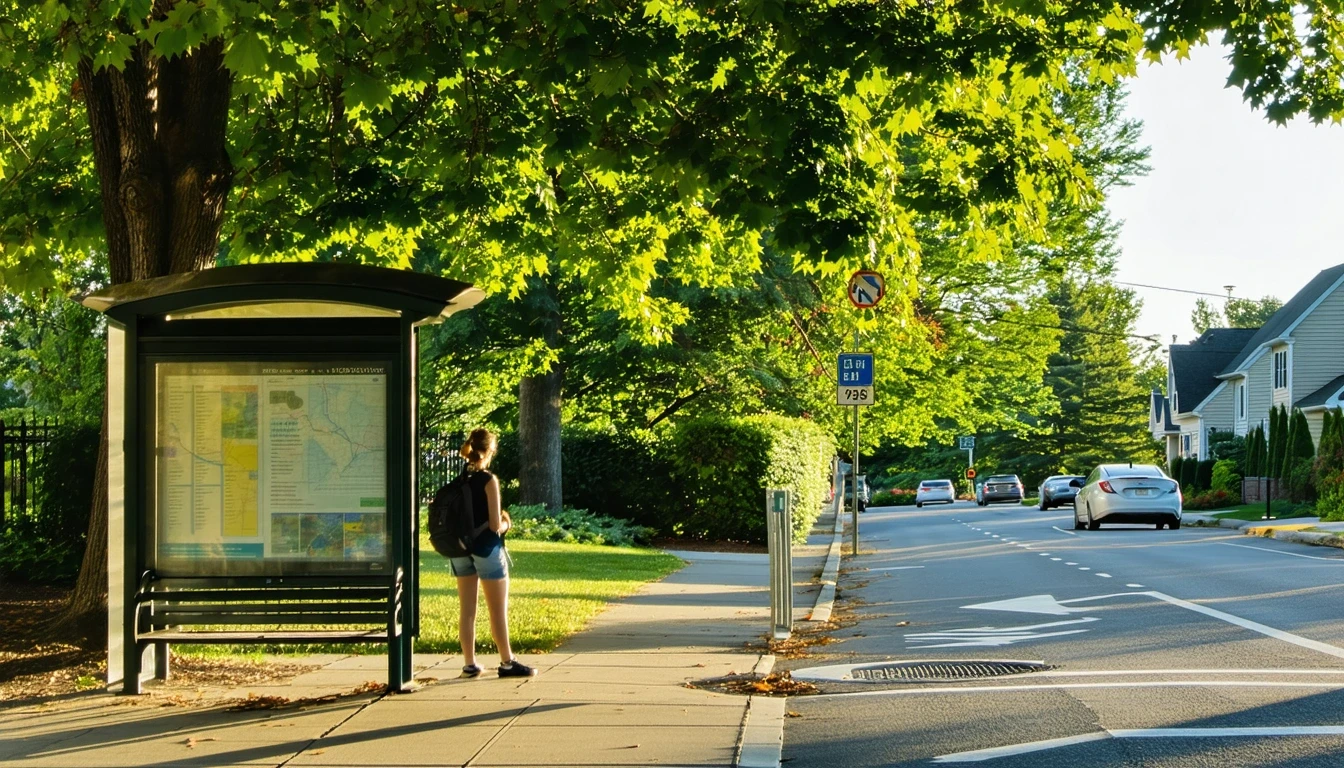
How People Get Around Fairfax
Fairfax is primarily a car-first environment, but it’s not uniformly so. The city contains walkable pockets where pedestrian infrastructure is dense and errands are accessible on foot, particularly in older residential cores and mixed-use corridors. In these areas, sidewalks connect homes to grocery stores, clinics, and parks, and the pedestrian-to-road ratio exceeds typical suburban thresholds. Bike infrastructure is notably present, with dedicated lanes and paths woven through parts of the city.
But step outside these pockets, and the reality shifts. Residential subdivisions spread across terrain that prioritizes lot size over connectivity. Destinations cluster along commercial strips designed for parking lots, not foot traffic. Even where sidewalks exist, crossing wide arterials or navigating auto-oriented intersections introduces friction that discourages walking for anything beyond recreation.
The result is a split transportation reality: some residents can run daily errands on foot or by bike, while others depend entirely on a car to reach the same grocery store, pharmacy, or school. Newcomers often misjudge which category they’ll fall into based on proximity to a bus stop or the presence of a sidewalk, only to discover that walkability and transit access don’t always align with convenience or coverage.
Public Transit Availability in Fairfax
Public transit in Fairfax often centers around systems such as Fairfax Connector, Metrobus, and CUE Bus, though coverage and service patterns vary significantly by area. These are bus-only networks—there is no rail service within city limits, and connections to regional rail require transfers or driving to a station outside Fairfax.
Transit works best along established corridors where residential density, employment centers, and commercial nodes align. In these areas, bus service provides a viable option for commuters traveling to predictable destinations during peak hours. Riders heading to government offices, university campuses, or regional transit hubs can often structure their day around available routes.
Where transit falls short is in coverage breadth, schedule flexibility, and last-mile connectivity. Peripheral neighborhoods see limited or no service. Evening and weekend frequencies drop, making errands or social trips difficult to time. Multi-stop journeys—picking up groceries, dropping off a child, stopping at a clinic—become logistically complex or impossible without a car. Even in well-served corridors, gaps in sidewalk connectivity or long distances between stops can make the walk to the bus stop itself a barrier.
Transit in Fairfax is not absent, but it is not comprehensive. It serves specific populations traveling specific routes at specific times. For everyone else, it functions as an occasional backup rather than a primary mode.
Driving & Car Dependence Reality
For most residents, driving is not optional. The city’s layout spreads housing, employment, schools, and services across a geography that assumes car ownership. Parking is abundant and typically free at residential buildings, shopping centers, and offices, reinforcing the expectation that everyone arrives by car.
Car dependence is not just about distance—it’s about structure. Fairfax lacks the density and land-use mix that would allow most people to consolidate errands into a single walking trip. A household might live near a park and a bus stop but still need to drive to reach a pediatrician, a hardware store, or a weekend activity. The friction isn’t always mileage; it’s the number of separate trips required and the lack of alternatives when a car isn’t available.
This dependence creates exposure. Households must budget for vehicle purchase or lease, insurance, maintenance, and fuel. They must navigate parking constraints in denser areas or during events. They absorb the time cost of traffic congestion, which is common on regional connectors during peak hours. And they lose flexibility when a car is in the shop, a household member can’t drive, or a second vehicle becomes necessary.
Driving in Fairfax is predictable and controlled, but it is also obligatory for the majority of residents. The question isn’t whether you’ll need a car—it’s whether you can structure your life to need only one.
Commuting Patterns & Daily Mobility
Commuting in Fairfax is shaped by its position within the Washington, DC metro region. Many residents work outside city limits, traveling to federal offices, defense contractors, or corporate campuses scattered across Northern Virginia and the District. The average commute takes 28 minutes, but that figure masks significant variation: 51.0% of workers face long commutes, reflecting the reality of regional job dispersion and highway dependence.
A small share—7.8%—work from home, a figure that reflects pre-pandemic norms and suggests that remote work, while present, is not the dominant pattern here. For the majority, commuting is a daily obligation, and the structure of that commute determines much of their transportation cost and time exposure.
Single-destination commuters—those traveling to the same office or campus each day—can sometimes build a routine around transit if their destination is served by a direct bus route. But multi-stop commuters, parents managing school drop-offs, or workers with variable schedules find transit impractical. Flexibility favors driving, and most Fairfax households prioritize flexibility over the potential savings of transit use.
Daily mobility extends beyond commuting. Running errands, attending appointments, and managing household logistics all require transportation, and the accessibility of these tasks varies widely depending on where in Fairfax you live. In walkable cores with high grocery and food establishment density, a household can handle many daily needs on foot. In peripheral areas, every task requires a car, and the cumulative time and planning burden adds up quickly.
Who Transit Works For—and Who It Doesn’t
Transit is a realistic option for a narrow slice of Fairfax residents: renters in walkable cores near bus corridors, individuals with flexible schedules, and commuters traveling to single, well-served destinations. These households can structure their routines around available routes, tolerate schedule constraints, and fill gaps with walking or biking.
Transit does not work well for families managing multiple stops, residents in peripheral subdivisions, or anyone whose work or life requires off-peak travel. Parents coordinating school, activities, and errands face logistical complexity that transit cannot accommodate. Households in areas with limited or no bus service have no practical alternative to driving. Workers with evening shifts, weekend obligations, or variable hours find that service frequency drops precisely when they need it.
The distinction is not about preference or values—it’s about fit. A single professional renting near a bus line to a Metro-accessible job can live car-free or car-light. A family of four in a single-family home two miles from the nearest grocery store cannot. Fairfax’s transportation infrastructure serves the first group adequately and the second group not at all.
Transportation Tradeoffs in Fairfax
Choosing between transit and driving in Fairfax is less about cost comparison and more about control, predictability, and exposure. Driving offers flexibility: you leave when you want, stop where you need to, and adjust on the fly. You absorb the cost of fuel, insurance, and maintenance, but you gain autonomy and the ability to manage a complex household schedule.
Transit offers lower direct costs but introduces constraints. You depend on fixed schedules, limited coverage, and the availability of connecting infrastructure. You trade money for time and convenience, and that tradeoff only makes sense if your daily routine aligns with where buses go and when they run.
For most Fairfax households, the tradeoff tilts toward driving. The city’s layout, the regional job market, and the structure of family life all assume car access. Transit remains a supplemental option, useful in specific corridors for specific trips, but not a comprehensive alternative to car ownership.
The real tradeoff is not transit versus driving—it’s where money goes in a car-dependent environment and whether proximity to walkable cores or transit corridors can reduce that dependence enough to matter.
FAQs About Transportation in Fairfax (2026)
Is public transit usable for daily commuting in Fairfax?
It depends entirely on where you live and where you work. If you’re in a walkable core near a bus corridor and commuting to a well-served destination, transit can be viable. For most residents, especially those in peripheral areas or with multi-stop routines, driving is the only practical option.
Do most people in Fairfax rely on a car?
Yes. The city’s layout, job dispersion, and limited transit coverage make car ownership necessary for the majority of households. Even residents with access to bus service often keep a car for errands, off-peak travel, and flexibility.
Which areas of Fairfax are easiest to live in without a car?
Walkable pockets with high pedestrian infrastructure density, notable bike presence, and broadly accessible grocery and food options offer the best chance of reducing car dependence. These areas tend to be older residential cores and mixed-use corridors, but even here, most residents still own a car for trips beyond the immediate neighborhood.
How does commuting in Fairfax compare to nearby cities?
Fairfax sits within a regional commute shed where long commutes are common—51.0% of workers here face extended travel times. The average commute of 28 minutes reflects a mix of local trips and longer regional hauls, typical of suburban Washington, DC metro communities. Transit options are more limited than in urban cores closer to rail lines.
Can you bike for transportation in Fairfax?
Bike infrastructure is notably present in parts of Fairfax, with dedicated lanes and paths that support cycling for errands and recreation. However, connectivity varies, and cycling as a primary transportation mode works best in areas with mixed land use and shorter distances between destinations. For longer commutes or trips across the city, biking is less practical.
How Transportation Fits Into the Cost of Living in Fairfax
Transportation is not just a line item—it’s a structural factor that shapes where you can live, how you spend your time, and what flexibility you retain. In Fairfax, car dependence is the default, and that dependence creates ongoing exposure to fuel prices, insurance premiums, maintenance schedules, and the risk of unexpected repair costs.
But transportation also interacts with housing choice. Living in a walkable core with access to transit corridors may reduce the need for a second vehicle or allow a household to rely on a car less frequently. That proximity often comes with higher rent or home prices, creating a tradeoff between transportation costs and housing costs. The math is not always straightforward, and the right choice depends on household size, work locations, and daily routines.
For a fuller picture of how transportation fits alongside housing, utilities, and other expenses, see Your Monthly Budget in Fairfax: Where It Breaks.
Understanding transportation in Fairfax means recognizing that the city offers pockets of walkability and bus service, but not a comprehensive alternative to driving. The question is not whether you can avoid owning a car—it’s whether your specific situation allows you to use it less, and whether that reduction is worth the tradeoffs in convenience, time, and location.
How this article was built: In addition to public economic data, this article incorporates location-based experiential signals derived from anonymized geographic patterns—such as access density, walkability, and land-use mix—to reflect how day-to-day living actually feels in Fairfax, VA.