
How Grocery Costs Feel in Fairfax
Grocery prices in Fairfax sit in a relatively comfortable zone for many households, particularly when measured against the city’s median household income of $128,708 per year. Food costs here don’t dominate the budget the way housing or childcare might, but they’re still a meaningful line item—and one where household size, store choice, and shopping habits create noticeable variation in how tight or loose the grocery experience feels. For singles and younger professionals, grocery spending tends to be manageable and flexible, with room to prioritize quality or convenience without serious strain. For families with children, the volume effect changes the equation: buying for four or five people instead of one or two means that small per-item price differences compound quickly, and the gap between discount-tier and premium-tier shopping becomes a real budget consideration rather than an abstract preference.
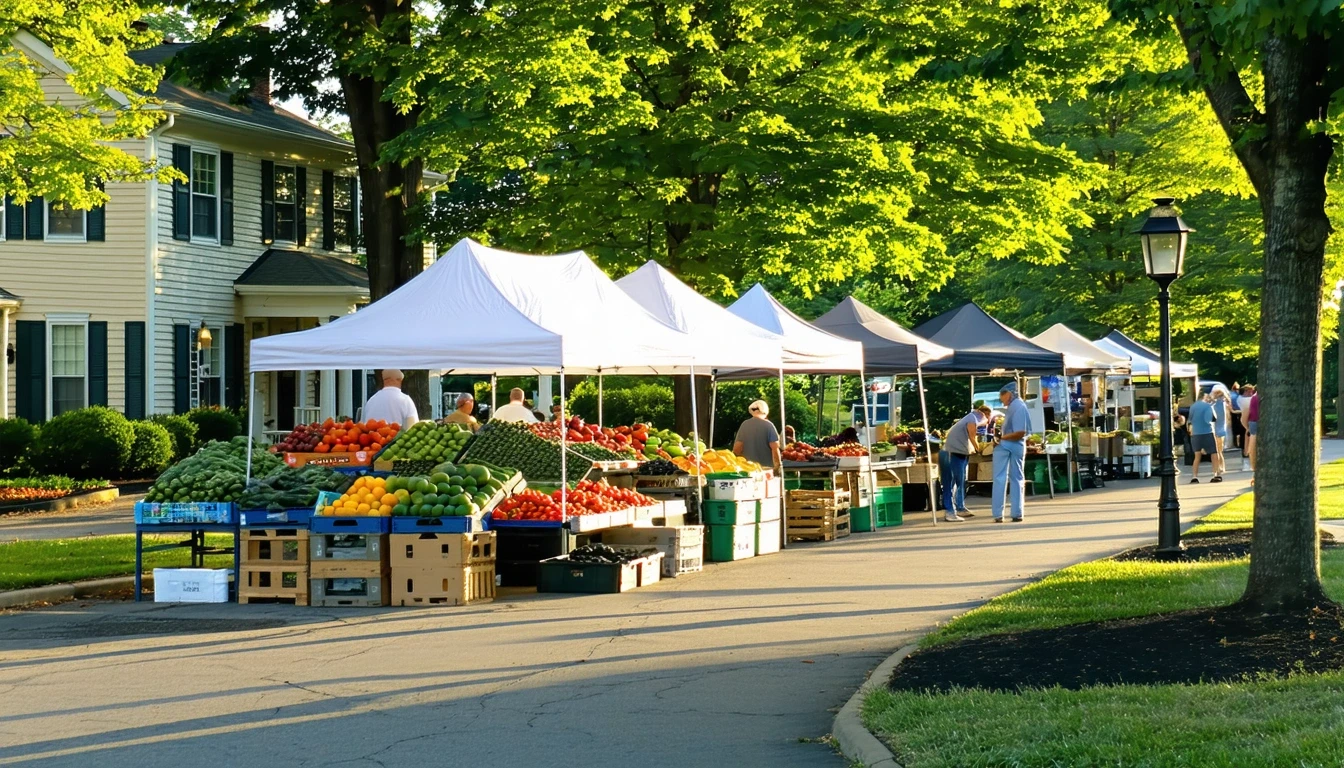
What makes Fairfax distinct is the density and accessibility of grocery options. The city’s high concentration of food and grocery establishments—combined with walkable pockets and mixed residential-commercial land use—means many households can reach multiple store tiers without long drives. This isn’t just a convenience factor; it’s a cost control mechanism. When discount grocers, mid-tier chains, and specialty markets are all within a few miles, households gain the practical ability to split their shopping: staples from the budget store, fresh produce from the mid-tier grocer, and occasional specialty items from the premium option. That kind of flexibility reduces the pressure to commit to a single store’s pricing structure and allows households to adapt their shopping patterns as income, household size, or priorities shift over time.
The result is that grocery costs in Fairfax feel less like a fixed expense and more like a variable one—responsive to effort, planning, and access. Households earning near or above the median typically don’t experience grocery shopping as a source of financial stress, though they remain aware of price differences and adjust accordingly. Households below the median, or those with larger families, feel the pressure more acutely and tend to be more strategic about where they shop, when they buy, and how they balance quality against cost. The city’s food retail landscape supports both approaches, but it doesn’t eliminate the underlying sensitivity that comes with feeding a household in a region where other costs—particularly housing—claim a significant share of income.
Grocery Price Signals (Illustrative)
The table below shows illustrative prices for common staple items in Fairfax, adjusted for regional price parity. These figures are not store-specific or week-specific; they’re anchors that help explain how grocery prices tend to compare locally, not a complete shopping list or a prediction of what any single trip will cost.
| Item | Illustrative Price |
|---|---|
| Bread (per pound) | $1.79/lb |
| Cheese (per pound) | $4.54/lb |
| Chicken (per pound) | $1.99/lb |
| Eggs (per dozen) | $2.42/dozen |
| Ground beef (per pound) | $6.54/lb |
| Milk (per half-gallon) | $3.91/half-gallon |
| Rice (per pound) | $1.04/lb |
Derived estimate based on national baseline adjusted by regional price parity; not an observed local price.
These prices illustrate relative positioning rather than checkout-level accuracy. Ground beef and cheese sit at the higher end of the staple spectrum, while rice, bread, and chicken remain more accessible. Eggs and milk fall in the middle, sensitive to seasonal and supply-chain shifts but generally stable over short periods. For a single person or couple, these prices don’t create meaningful strain when shopping occurs once or twice a week. For a family of four buying multiples of each item weekly, the cumulative effect becomes more visible, and the difference between buying chicken at $1.99 per pound versus premium organic poultry at $8 or $9 per pound starts to matter in ways that show up clearly in monthly spending patterns.
What these numbers don’t capture is the variation across store tiers. The same pound of chicken might cost $1.79 at a discount grocer, $2.19 at a mid-tier chain, and $2.99 or more at a premium market. Cheese, ground beef, and fresh produce show even wider spreads. The illustrative figures above represent a blended middle ground, but real-world grocery costs in Fairfax depend heavily on where you shop, not just what you buy. That’s why store choice and access density matter so much in explaining why some households feel grocery pressure and others don’t.
Store Choice & Price Sensitivity
Grocery price pressure in Fairfax varies more by store tier than by any single “average” price level. Discount grocers—no-frills chains focused on private-label staples and high-volume turnover—offer the lowest baseline costs, often 15–25% below mid-tier competitors on comparable items. These stores work well for households prioritizing cost control, bulk buying, and minimal brand loyalty. The tradeoff is narrower selection, less emphasis on organic or specialty products, and a shopping experience built around efficiency rather than ambiance. For singles, young professionals, or families managing tight budgets, discount-tier shopping is a practical and effective way to reduce food costs without sacrificing nutrition or variety in staple categories.
Mid-tier chains represent the middle ground: broader selection, recognizable national brands, frequent sales and loyalty programs, and a more polished shopping environment. Prices here sit above discount levels but below premium, and the flexibility to mix store-brand and name-brand items gives households more control over where they spend and where they save. Mid-tier stores dominate Fairfax’s grocery landscape and serve the widest range of households, from median-income families to retirees to professionals who value convenience and variety without premium pricing. These stores also tend to anchor mixed-use developments and residential corridors, making them accessible on foot or by short drive for many residents.
Premium grocers—specialty markets, organic-focused chains, and high-end independents—cater to households prioritizing quality, sourcing, and product differentiation over cost. Prices here can run 30–50% above discount tiers for comparable items, and the gap widens further for organic, local, or specialty goods. For Fairfax households earning near or above the median, premium shopping is a viable choice that reflects preferences rather than necessity. For households below the median or managing larger family sizes, premium stores serve a supplemental role: occasional trips for specific items rather than primary weekly shopping. The city’s density of grocery options means households can access premium stores without being dependent on them, preserving flexibility and reducing the risk of budget creep.
What Drives Grocery Pressure Here
Income is the most important factor shaping how grocery costs feel in Fairfax. At the median household income of $128,708 per year, food spending represents a smaller share of the budget than in lower-income cities, and households have more room to absorb price increases, choose higher-quality options, or shop less strategically without immediate financial strain. Below the median, particularly for single-income households or those earning in the $50,000–$75,000 range, grocery costs become a more active area of budget management. Price sensitivity increases, store choice matters more, and the gap between discount and mid-tier shopping shows up clearly in monthly cash flow.
Household size amplifies price sensitivity in predictable ways. A single person spending $60–$80 per week on groceries experiences food costs as a modest, flexible line item. A family of four spending $200–$250 per week faces a different reality: grocery shopping becomes one of the largest recurring expenses outside of housing and transportation, and small per-item price differences—$0.50 more per pound of chicken, $1 more per gallon of milk—compound across dozens of items each week. Larger families also face volume pressure: buying in bulk saves money per unit but requires upfront cash and storage space, creating a secondary access barrier for renters in smaller apartments or households managing week-to-week budgets.
Regional distribution and access patterns also shape grocery pressure in ways that aren’t immediately visible in price comparisons. Fairfax’s high grocery density and mixed land use mean most households can reach multiple store tiers within a few miles, reducing the friction involved in comparison shopping or splitting trips between discount and mid-tier grocers. In lower-density suburbs or rural areas, households often face a binary choice: shop at the nearest store regardless of price, or drive 20–30 minutes to access alternatives. Fairfax’s structure removes that constraint for most residents, creating practical opportunities to manage costs through behavior rather than simply accepting the pricing structure of the closest store.
Practical Ways People Manage Grocery Costs
The most effective cost control lever in Fairfax is store choice. Households that split their shopping between discount grocers for staples and mid-tier chains for fresh produce, dairy, and occasional variety reduce their overall food spending without sacrificing quality or nutrition. This approach requires slightly more time and planning than one-stop shopping, but the city’s grocery density makes it logistically feasible for many residents. The key is knowing which categories offer the largest price gaps across tiers—meat, cheese, packaged goods, and frozen items tend to show the widest spreads, while fresh produce and dairy are often more competitively priced across stores.
Meal planning and shopping lists reduce impulse purchases and help households buy only what they’ll actually use, cutting waste and avoiding the budget creep that comes from unplanned trips or convenience purchases. Cooking in larger batches and freezing portions extends the value of bulk purchases and reduces the temptation to eat out when time is short. These strategies don’t require extreme frugality or sacrifice; they’re about creating structure and predictability around food spending, which matters most for households managing multiple competing budget priorities or dealing with irregular income.
Loyalty programs, digital coupons, and sale cycles offer incremental savings that add up over time, particularly for households shopping consistently at mid-tier chains. Many stores in Fairfax offer app-based discounts, personalized offers based on purchase history, and rotating weekly sales on high-turnover items. Taking advantage of these programs requires minimal effort and can reduce costs by 5–10% on a typical shopping trip. The savings aren’t transformative, but they’re meaningful for households operating on tight margins or trying to preserve flexibility in other budget categories.
Groceries vs Eating Out (Directional)
The tradeoff between cooking at home and eating out in Fairfax is less about absolute cost and more about time, convenience, and household rhythm. Cooking at home consistently offers lower per-meal costs, particularly for families, but it requires planning, shopping, prep time, and cleanup—costs that don’t show up on a receipt but matter in terms of household labor and schedule pressure. Eating out or ordering delivery eliminates that labor but introduces a significant cost premium: a meal that costs $8–$12 per person to prepare at home might cost $15–$25 per person at a casual restaurant, before tip.
For Fairfax households earning near or above the median, the decision often comes down to convenience and preference rather than strict affordability. Professionals working long hours, dual-income couples managing tight schedules, or parents juggling childcare and commutes may choose to eat out several times a week as a time-saving measure, accepting the cost premium as a tradeoff for reduced stress and preserved flexibility. For households below the median or managing larger families, eating out becomes a less frequent choice—reserved for special occasions, social events, or weeks when time pressure overrides budget discipline.
The city’s density of dining options and grocery stores means households can shift between cooking and eating out based on weekly needs rather than being locked into one pattern. That flexibility is valuable, but it also creates the risk of budget drift: occasional restaurant meals can quietly become habitual ones, and the cumulative cost difference becomes visible only when reviewing monthly spending. The households that manage this tradeoff most effectively are those that set intentional boundaries—cooking most nights, eating out once or twice a week, and treating delivery as an exception rather than a default.
FAQs About Grocery Costs in Fairfax (2026)
Is it cheaper to shop in bulk in Fairfax? Bulk buying reduces per-unit costs, particularly for staples like rice, pasta, canned goods, and frozen items, but it requires upfront cash and storage space. Households with the capacity to buy and store larger quantities see meaningful savings over time, while renters in smaller apartments or those managing week-to-week budgets may find bulk shopping less practical.
Which stores in Fairfax are best for low prices? Discount-tier grocers offer the lowest baseline costs, often 15–25% below mid-tier chains on comparable items. Mid-tier stores provide broader selection and frequent sales, making them competitive for households willing to shop strategically. Premium stores serve a supplemental role for most households, used selectively rather than for weekly staple shopping.
How much more do organic items cost in Fairfax? Organic products typically carry a premium of 20–50% over conventional equivalents, with the gap widest for meat, dairy, and fresh produce. For households prioritizing organic sourcing, shopping at mid-tier chains during sales or buying selectively at discount grocers helps manage the cost difference without eliminating access to organic options.
How do grocery costs for two adults in Fairfax tend to compare to nearby cities? Fairfax’s grocery prices reflect regional price parity that sits slightly below the national average, meaning food costs here are generally comparable to or modestly lower than in higher-cost metro areas. The city’s income levels and store density create a relatively comfortable grocery environment for most households, though price sensitivity still varies by household size and income tier.
How do households in Fairfax think about grocery spending when cooking at home? Most households view grocery spending as a controllable expense that responds to effort and planning. Store choice, meal planning, and strategic use of sales and bulk buying are common cost management tools. Families and below-median earners tend to be more intentional about these strategies, while higher-income households often prioritize convenience and quality over cost optimization.
How Groceries Fit Into the Cost of Living in Fairfax
Grocery costs in Fairfax represent a meaningful but manageable share of household budgets, particularly when compared to housing, which dominates the cost structure for most residents. While food spending is responsive to household size and shopping behavior, it doesn’t create the same long-term financial pressure or lock-in effects that housing, transportation, or childcare do. That makes groceries one of the more flexible budget categories—a place where households can adjust spending up or down based on income changes, priorities, or short-term financial needs without triggering major lifestyle disruption.
For a complete picture of how grocery costs interact with housing, utilities, transportation, and other recurring expenses, see Your Monthly Budget in Fairfax: Where It Breaks. That article walks through the full cost structure and helps households understand where money goes, which categories drive the largest budget shares, and where flexibility exists to adjust spending based on income and priorities.
The key takeaway for Fairfax is that grocery costs don’t operate in isolation. They’re part of a broader household budget shaped by income, housing choices, commute patterns, and family size. The city’s high grocery density, accessible store tiers, and relatively strong income levels create a food retail environment that supports a wide range of shopping behaviors and budget strategies. Households that approach grocery spending with intentionality—choosing stores strategically, planning meals, and taking advantage of the city’s access density—can manage food costs effectively without sacrificing quality or variety. Those who shop reactively or default to convenience without considering cost will see higher spending, but even then, grocery costs in Fairfax remain proportionally smaller than in lower-income or lower-access cities.
How this article was built: In addition to public economic data, this article incorporates location-based experiential signals derived from anonymized geographic patterns—such as access density, walkability, and land-use mix—to reflect how day-to-day living actually feels in Fairfax, VA.