
Fairfax is considered expensive in 2026, anchored by a median home value of $649,600 and median rent of $1,972 per month. The value proposition depends on housing entry cost versus the city’s walkable pockets and strong family infrastructure, rather than car dependence alone.
When Sarah Chen accepted a job in the Washington, D.C. metro area, she started her apartment search expecting typical suburban tradeoffs: affordable rent in exchange for long drives and sparse amenities. What she found in Fairfax surprised her. The rent wasn’t low—$1,972 per month for a median apartment—but the daily logistics were easier than she’d anticipated. Grocery stores clustered within walking distance of many neighborhoods. Parks appeared every few blocks. Her commute, while not trivial, didn’t dominate her week the way it had in her previous city. Still, the sticker shock was real, and she quickly realized that understanding Fairfax’s cost structure meant looking beyond the rent check to see where money actually flows each month.
Overall Cost of Living Snapshot
Fairfax operates with a regional price parity index of 97, meaning that overall price levels sit slightly below the national baseline when adjusted for purchasing power. That figure, however, masks the city’s true cost structure. Housing dominates financial pressure here, with both ownership and rental entry points well above national medians. The median home value of $649,600 creates a steep barrier for buyers, while the median gross rent of $1,972 per month reflects the broader Northern Virginia rental market’s premium pricing.
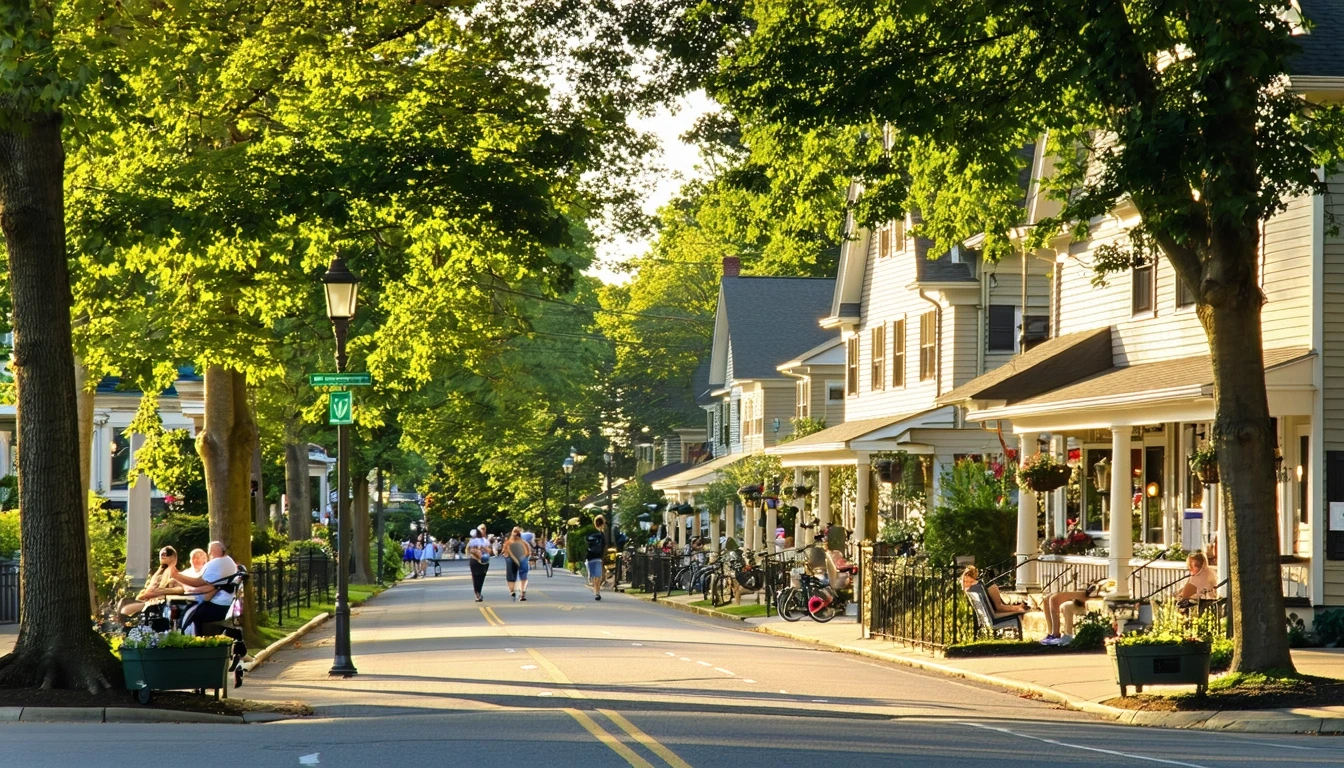
What differentiates Fairfax from other expensive suburban markets is the texture of day-to-day living. The city’s pedestrian infrastructure exceeds typical suburban norms, with a high pedestrian-to-road ratio that supports walking in many neighborhoods. Food and grocery establishments are broadly accessible, with densities that exceed high thresholds for both categories. This means that while housing costs are steep, the friction of running errands is lower than in car-dependent suburbs where every gallon of milk requires a drive.
Transportation costs remain significant but vary widely depending on commute patterns. With 51.0% of workers facing long commutes and an average commute time of 28 minutes, vehicle ownership and fuel expenses create recurring exposure. Gas prices of $3.37 per gallon combine with commute distance to produce meaningful monthly outlays for those who drive daily. However, only 7.8% of workers report working from home, meaning most residents face some form of transportation cost.
Utilities introduce moderate seasonal volatility. Electricity rates of 15.27¢/kWh and natural gas prices of $15.45 per MCF (approximately 100 therms) create exposure during both cooling and heating seasons, though neither fuel source dominates cost pressure year-round. The Mid-Atlantic climate drives demand for air conditioning in summer and heating in winter, but the swings are less extreme than in regions with harsher seasonal extremes.
Driver verdict: Housing entry cost is the primary financial gate in Fairfax, but the city’s walkable pockets and strong family infrastructure reduce the compounding burden of car dependency and errands logistics that typically accompany suburban living. Surprises come not from day-to-day prices—which remain close to national norms—but from the upfront capital required to secure housing and the recurring exposure tied to commute length.
Housing Costs (Primary Driver)
Housing in Fairfax is structured around ownership, with a median home value of $649,600 that reflects the city’s position within the Washington, D.C. metro area. This price point creates a high barrier to entry for buyers, requiring substantial down payments and mortgage capacity. For those who clear that threshold, ownership offers stability in monthly housing costs, though property taxes, insurance, and maintenance introduce ongoing obligations that renters avoid.
Renting in Fairfax costs a median of $1,972 per month, a figure that includes gross rent (base rent plus utilities paid to the landlord). This price reflects the broader Northern Virginia rental market, where proximity to D.C. and strong local employment drive demand. Renters gain flexibility and avoid the capital requirements of ownership, but they remain exposed to lease renewals and rent adjustments that can shift financial pressure year over year.
The renting-versus-owning decision in Fairfax hinges on time horizon and capital availability. Renters who anticipate relocating within a few years avoid the transaction costs and illiquidity of homeownership, while those planning to stay long-term face the question of whether they can assemble the down payment and whether monthly mortgage costs (including taxes and insurance) compare favorably to rent. The city’s strong family infrastructure—high densities of both schools and playgrounds—makes it appealing for households planning to stay, which tilts the calculus toward ownership for those who can manage the entry cost.
Conclusion: Fairfax is an ownership-dominant city with a high barrier to entry. Renting offers a viable path for those in transition or building capital, but the long-term value proposition favors buyers who can afford the upfront cost and plan to stay.
| Housing Type | Cost Anchor | What That Buys You |
|---|---|---|
| Median Home Purchase | $649,600 | Ownership stability, equity accumulation, exposure to property taxes and maintenance |
| Median Rental | $1,972/month | Flexibility, no capital requirement, exposure to lease renewals and rent adjustments |
Utilities & Energy Risk
Utilities in Fairfax introduce moderate seasonal volatility, driven by the Mid-Atlantic climate’s demand for both cooling and heating. Electricity rates of 15.27¢/kWh sit near the national average, and for illustrative context, a household using 1,000 kWh per month would face a baseline electric bill of approximately $153 before fees and taxes. Summer air conditioning and winter supplemental heating (if electric) drive the highest usage months, but the swings are less severe than in regions with extreme heat or cold.
Natural gas, priced at $15.45 per MCF (roughly 100 therms), provides the primary heating fuel for many homes. For illustrative context, a household using 1 MCF per month during heating season would see a gas bill of around $15.45 before fees and taxes, though actual usage varies widely based on home size, insulation, and thermostat settings. The key exposure is not the per-unit price but the duration and intensity of the heating season, which can extend from late fall through early spring.
The combination of moderate electricity rates and natural gas pricing creates a utility cost structure that is neither negligible nor dominant. Households in well-insulated homes with efficient HVAC systems face lower exposure, while those in older or larger homes may see utility bills rise meaningfully during peak seasons. The volatility is predictable—summer and winter bring higher bills—but the magnitude depends heavily on household behavior and housing stock.
Risk classification: Moderate. Utilities create recurring seasonal exposure but do not dominate the cost structure the way housing does. The primary lever for managing this exposure is housing choice (insulation, efficiency, size) rather than fuel prices themselves.
Groceries & Daily Costs
Grocery costs in Fairfax reflect regional price parity that sits slightly below the national baseline, with derived estimates placing common items near national norms: bread at $1.79 per pound, chicken at $1.99 per pound, eggs at $2.42 per dozen, and ground beef at $6.54 per pound. These figures, adjusted for regional price parity, suggest that grocery spending in Fairfax does not create outsized pressure compared to other mid-Atlantic cities. Derived estimate based on national baseline adjusted by regional price parity; not an observed local price.
What matters more than individual item prices is the accessibility of grocery options. Fairfax exhibits high grocery establishment density, meaning that most residents live within a short distance of multiple food shopping options. This reduces the time and transportation cost associated with stocking a household, a meaningful advantage in a region where commute times already consume 28 minutes on average. The ability to walk or make quick trips for groceries lowers the compounding cost of car dependency that often accompanies suburban living.
For households comparing Fairfax to other Washington, D.C. metro suburbs, grocery costs are unlikely to be the differentiating factor. The pressure comes from housing and transportation, not from the price of milk or produce. Families, in particular, benefit from the city’s broadly accessible food options, which align with the strong family infrastructure—high school and playground densities—that characterizes the city’s built environment.
Transportation Reality
Transportation in Fairfax creates recurring exposure that varies widely depending on commute patterns and household vehicle count. The average commute time of 28 minutes sits near regional norms, but 51.0% of workers face long commutes, meaning that a substantial share of residents spend significant time and money traveling to work. With only 7.8% working from home, most households must account for daily transportation costs.
Gas prices of $3.37 per gallon combine with commute distance to produce meaningful monthly outlays for drivers. The city’s walkable pockets and notable cycling infrastructure provide alternatives for short trips and errands, but the region’s employment centers—many located outside Fairfax itself—require car or bus access for most workers. Bus service is present, offering a lower-cost alternative to driving, but the absence of rail transit limits options for those seeking faster or more frequent connections to D.C. or other metro hubs.
The transportation cost structure in Fairfax is not uniform. Households with one vehicle and a short commute face lower exposure than those with two vehicles and long daily drives. The city’s high pedestrian-to-road ratio and high bike-to-road ratio mean that non-car mobility is viable for errands and local trips, reducing the need to drive for every gallon of milk or pharmacy run. This distinguishes Fairfax from purely car-dependent suburbs where every trip requires ignition.
The financial implication is that transportation tradeoffs in Fairfax hinge on job location and household composition. Those who work locally or have flexible schedules can minimize vehicle costs, while those commuting to D.C. or other metro employment centers face recurring fuel, maintenance, and time costs that compound over months and years.
Cost Exposure Profiles
Cost exposure in Fairfax is shaped by three primary factors: housing entry cost, commute length, and household vehicle count. These variables interact to create distinct financial profiles, with low-exposure and high-exposure situations differing more in structure than in income level.
Low-exposure situations: Renters or owners who secured housing before recent price increases, workers with short commutes or remote work arrangements, and households that can rely on walking or cycling for daily errands face the lowest recurring cost pressure. The city’s broadly accessible grocery options and integrated park access reduce the need for frequent driving, while moderate utility costs remain predictable and manageable with efficient housing stock.
High-exposure situations: Recent buyers or renters facing current market prices, workers with long commutes to D.C. or other metro hubs, and households with multiple vehicles face compounding cost pressure. The $649,600 median home value creates a steep entry barrier, and the 51.0% long commute rate signals that many residents must absorb significant transportation costs on top of housing. Utility volatility adds seasonal swings, particularly for larger or older homes with less efficient heating and cooling systems.
The distinction is not about who can or cannot afford Fairfax, but rather about which cost levers dominate financial planning. Housing entry cost is the primary gate, but transportation exposure and utility seasonality determine how much margin remains after securing a place to live. The city’s walkable pockets and strong family infrastructure provide meaningful offsets for those who can access them, reducing the compounding burden of car dependency that typically accompanies suburban housing markets.
How this article was built: In addition to public economic data, this article incorporates location-based experiential signals derived from anonymized geographic patterns—such as access density, walkability, and land-use mix—to reflect how day-to-day living actually feels in Fairfax, VA.
Frequently Asked Questions
Is Fairfax more affordable than Arlington or Alexandria in 2026? Fairfax tends to offer lower housing entry costs than Arlington or Alexandria, though it remains expensive by national standards. The tradeoff often involves longer commutes and less direct rail access to D.C., which shifts cost pressure from rent to transportation.
What does a typical cost profile look like in Fairfax? Housing dominates, with median rent of $1,972 per month or a median home value of $649,600. Transportation costs vary widely based on commute length, and utilities introduce moderate seasonal swings. Day-to-day grocery and errands costs remain close to national norms.
Do utilities cost more in Fairfax than in nearby Virginia cities? Utility rates in Fairfax sit near regional averages, with electricity at 15.27¢/kWh and natural gas at $15.45 per MCF. The cost structure is similar to other Northern Virginia cities, with seasonal volatility driven by heating and cooling demand rather than unusually high rates.
What costs tend to surprise newcomers in Fairfax? The high housing entry cost—both for buying and renting—often surprises those relocating from lower-cost regions. Additionally, the prevalence of long commutes (51.0% of workers) means that transportation costs can compound quickly for those working outside the city.
Are property taxes higher in Fairfax than in Loudoun County? Property tax structures vary across Northern Virginia jurisdictions, and rates depend on assessed home values and local millage rates. Fairfax’s high median home value of $649,600 means that even moderate tax rates produce significant annual obligations, a factor that ownership-focused households must account for when comparing nearby counties.
Is Fairfax a good value for families in 2026? Fairfax offers strong family infrastructure, with high densities of schools and playgrounds, as well as integrated park access. The value proposition depends on whether a household can manage the high housing entry cost and whether the city’s walkable pockets and accessible errands reduce the compounding burden of car dependency that often accompanies suburban living.
How does Fairfax compare to D.C. for overall cost of living? Fairfax generally offers lower housing costs than Washington, D.C. proper, but the tradeoff often involves longer commutes and reliance on bus transit rather than rail. The regional price parity index of 97 suggests that non-housing costs remain close to national norms, making housing the primary differentiator.
What’s the biggest financial risk of moving to Fairfax? The biggest risk is underestimating the combined impact of high housing entry costs and transportation exposure. A household that secures housing but faces a long commute may find that fuel, vehicle maintenance, and time costs erode the savings from choosing Fairfax over closer-in metro options.
—