
Housing in Ocoee operates within the broader Orlando metro market, but the city’s position as a western suburb introduces specific cost pressures that don’t always mirror regional headlines. With a median home value of $325,100 and median gross rent at $1,756 per month, Ocoee sits in a zone where neither renting nor buying offers an obvious escape from budget tension. What matters here isn’t just the sticker price—it’s how Ocoee’s infrastructure, climate, and development patterns shape the long-term cost experience of keeping a roof overhead.
This article breaks down the real cost pressures in Ocoee, explaining how housing costs behave in this city, what drives volatility, and which household types face the steepest tradeoffs. If you’re deciding between renting and owning—or trying to understand why housing feels expensive even when the numbers look manageable—this is the structure you need to see.
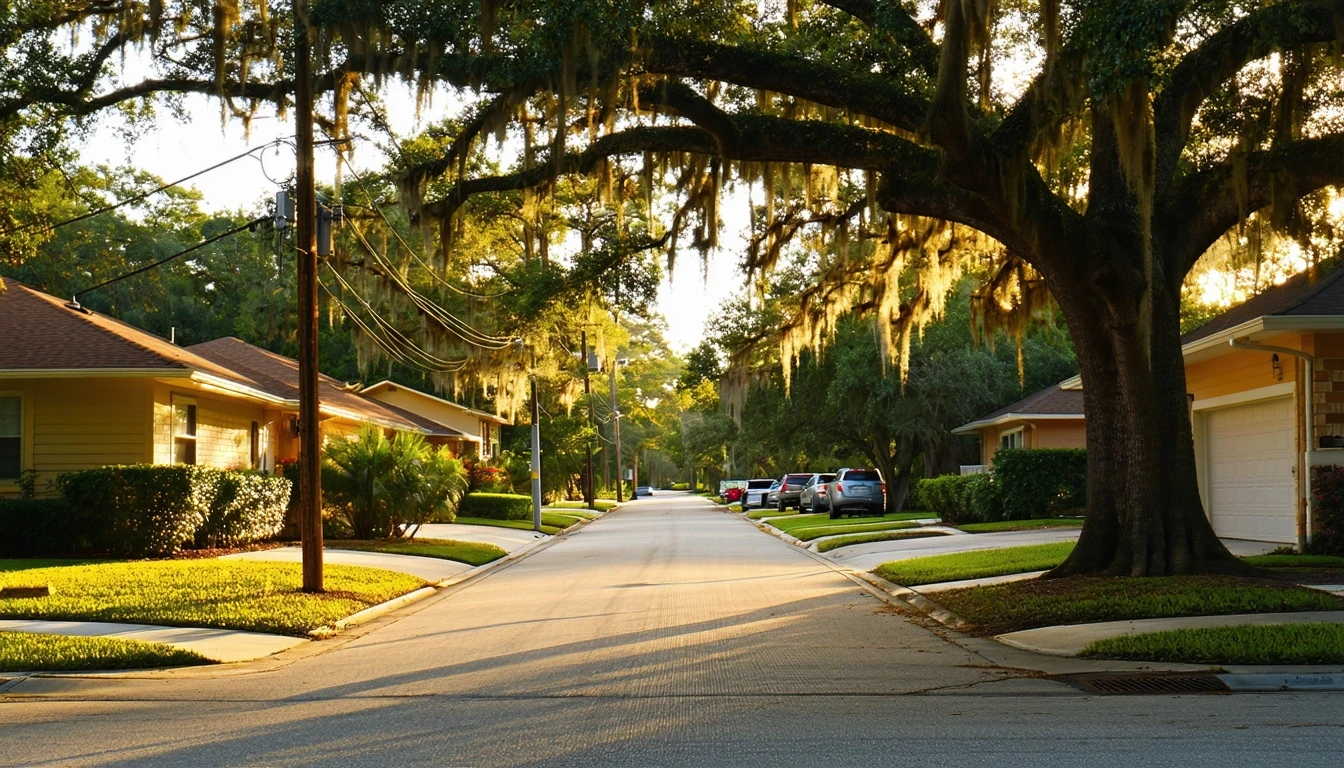
The Housing Market in Ocoee Today
Ocoee’s housing market reflects its role as a commuter-oriented suburb with mixed infrastructure. The city has moderate pedestrian infrastructure relative to its road network, and food and grocery options cluster along commercial corridors rather than distributing evenly across neighborhoods. That clustering matters: where you live in Ocoee determines not just your commute time, but how much planning and vehicle dependency your daily errands require.
Home values here are shaped by proximity to those corridors, school access, and commute routes into Orlando. The median household income of $88,828 per year supports homeownership in principle, but the capital required for entry and the ongoing exposure to Florida’s property insurance environment, tax structure, and storm-season maintenance create a cost profile that extends well beyond the purchase price. Renters face a different but related pressure: $1,756 per month in gross rent represents a substantial budget share, and the corridor-clustered layout of services means rental location isn’t just about the unit—it’s about access.
What newcomers often misunderstand is that Ocoee’s housing costs aren’t driven by scarcity or exclusivity. They’re driven by infrastructure dependency. The city has bus service but no rail, and the pedestrian-to-road ratio sits in a middle band—enough to support some walkability in pockets, but not enough to eliminate car dependency for most households. That makes housing choice inseparable from transportation and errands planning, which in turn makes the total cost of living here harder to predict from rent or mortgage alone.
Renting in Ocoee
At $1,756 per month, median gross rent in Ocoee reflects both the Orlando metro’s broader rental pressure and the city’s specific position within it. Renters here are paying for access to a suburban layout with moderate infrastructure, but they’re not paying for walkable convenience or transit flexibility. The city’s food and grocery density sits in a medium band, concentrated along corridors, which means rental location determines how much time and fuel you spend on routine errands.
Rental availability in Ocoee skews toward single-family homes and smaller multifamily complexes rather than large apartment towers. That affects turnover, lease flexibility, and the likelihood of rent increases tied to broader market swings rather than building-specific factors. Renters in Ocoee should expect that their housing cost is tightly coupled to vehicle ownership and fuel expense—there’s no realistic scenario where renting here eliminates transportation costs, and the 32-minute average commute with over half of workers facing long commutes means location within the city directly affects daily time cost.
The rental experience here also reflects Florida’s climate exposure. Cooling costs are not optional—they’re a structural part of the budget, and renters in units with older HVAC systems or poor insulation face sustained high electricity bills during the extended hot season. Utility responsibility varies by lease, but even when some costs are bundled, the electricity rate of 15.02¢/kWh applied to consistent cooling demand creates a baseline expense that doesn’t fluctuate much month to month—it just stays high.
Owning a Home in Ocoee
Homeownership in Ocoee begins with a median home value of $325,100, but the cost structure extends well beyond the purchase. Florida’s property tax framework, insurance requirements, and storm-season maintenance exposure create ongoing obligations that shift the ownership experience from predictable to variable. Owners here are exposed to forces renters can defer: roof and exterior wear from humidity and storms, HVAC replacement cycles driven by near-constant use, and insurance premiums that respond to statewide market conditions rather than individual property performance.
Ownership in Ocoee also means navigating the city’s governance and development patterns. Some neighborhoods operate under homeowner associations with varying fee structures and rule enforcement; others do not. That inconsistency means buyers need to assess not just the property but the institutional layer that governs it. The presence of a hospital, pharmacies, and moderate school density provides local access to essential services, but the mixed building heights and land use mean neighborhood character varies significantly across the city.
What distinguishes ownership here from renting is control over long-term cost exposure. Owners can invest in insulation, HVAC efficiency, and storm-resistant exterior materials—interventions that reduce volatility but require upfront capital. Renters face the same climate and infrastructure pressures but lack the ability to mitigate them. That makes ownership in Ocoee a better fit for households with capital reserves and the capacity to absorb irregular, high-cost maintenance events, while renting suits those prioritizing flexibility and lower entry cost despite higher ongoing monthly obligations.
Apartment vs House in Ocoee — Cost Behavior Comparison
The distinction between renting an apartment and renting or owning a house in Ocoee isn’t just about square footage—it’s about exposure, control, and access. The table below reflects cost categories that behave meaningfully differently in Ocoee due to climate, infrastructure, and housing stock characteristics. Categories that would be generic or identical are omitted.
| Expense Category | Apartment | House |
|---|---|---|
| Cooling (Electricity) | Lower total usage due to smaller conditioned space; may lack control over system efficiency | Higher total usage due to larger space; owner-occupants can upgrade HVAC and insulation to reduce long-term exposure |
| Exterior Maintenance | Typically covered by landlord or association; renter has no cost or control | Owner fully exposed to roof, siding, and storm damage repair; humidity accelerates wear cycles |
| Access to Corridor Services | Often located near commercial corridors due to zoning; shorter drive to groceries and errands | More dispersed across residential zones; access depends on specific neighborhood location within Ocoee |
| Parking and Vehicle Dependency | Assigned or shared parking; vehicle still required for most errands and commutes | Private driveway or garage; vehicle dependency identical but storage more convenient |
Why these categories? Cooling exposure is dominant in Ocoee due to extended heat and humidity, and the ability to control system efficiency differs sharply between renters and owners. Exterior maintenance is driven by Florida’s storm season and humidity, which accelerate wear on houses but are invisible to apartment renters. Access to corridor services reflects Ocoee’s clustered food and grocery layout—apartments tend to locate near these corridors, while houses spread across less dense residential zones. Vehicle dependency is universal here, but the form of housing affects convenience, not necessity.
Categories like water, trash, and internet are omitted because they don’t vary meaningfully by housing type in Ocoee—they’re either bundled, metered, or priced similarly regardless of structure. The comparison above isolates what actually changes based on how and where you live in this city.
Utilities & Upkeep Differences
Utility and maintenance exposure in Ocoee is shaped by two forces: climate and infrastructure age. Cooling is the dominant utility cost, driven by extended summer heat and high humidity that keeps air conditioning systems running for months without break. The electricity rate of 15.02¢/kWh applies to sustained, high-volume usage, and households in older homes or poorly insulated units face the steepest bills. Heating exposure is minimal—rare cold nights mean negligible natural gas or electric heating costs, and the natural gas price of $23.62/MCF reflects usage that’s largely irrelevant outside of water heating or cooking.
Maintenance exposure in Ocoee is noticeable, not catastrophic, but it’s persistent. Humidity accelerates mold, mildew, and exterior paint degradation. Storm season brings wind and rain that test roofs, gutters, and siding. HVAC systems work harder and fail sooner than they would in milder climates. For apartment renters, these costs are deferred to landlords, though they may surface indirectly through rent increases or delayed repairs. For homeowners, they’re direct and irregular, requiring either ongoing cash reserves or reactive spending when systems fail.
The difference between apartments and houses here isn’t just scale—it’s control and exposure. Apartment dwellers in Ocoee benefit from smaller conditioned spaces and landlord-covered exterior maintenance, but they can’t upgrade insulation, replace inefficient HVAC units, or install storm-resistant materials. Homeowners absorb higher baseline costs but gain the ability to reduce long-term volatility through capital investment. In a climate where cooling and exterior durability drive the majority of upkeep costs, that control matters more than the size of the space.
Rent vs Buy: Long-Term Exposure in Ocoee
The rent-versus-buy decision in Ocoee isn’t a math problem—it’s a risk profile. Renters face predictable monthly obligations but no control over lease renewals, rent increases, or the condition of the systems that drive utility costs. Owners face higher entry costs and irregular maintenance expenses, but they gain the ability to stabilize long-term housing costs and mitigate climate-driven volatility through upgrades and improvements.
Renting in Ocoee makes sense for households prioritizing flexibility, lower upfront capital, and the ability to relocate without transaction costs. It’s a better fit for those who value predictable monthly budgets over long-term cost control, and for those who don’t have the reserves to absorb a sudden roof replacement or HVAC failure. But renters here remain exposed to forces they can’t control: landlord decisions, market-driven rent increases, and the performance of systems they didn’t choose and can’t replace.
Ownership in Ocoee makes sense for households with capital reserves, stable income, and the capacity to manage irregular, high-cost maintenance events. It’s a better fit for those who plan to stay long enough to justify the transaction costs of buying and selling, and for those who value the ability to invest in efficiency, durability, and storm resistance. Owners here trade predictability for control, and they absorb the full exposure to Florida’s property insurance market, tax structure, and climate-driven wear cycles.
What matters most in Ocoee is understanding that neither path eliminates cost pressure—they just distribute it differently. Renters pay consistently but remain vulnerable to external decisions. Owners pay irregularly but gain the tools to reduce long-term exposure. The choice depends on which form of uncertainty you’re better equipped to manage, and how long you plan to stay.
FAQs About Housing Costs in Ocoee
What drives housing costs in Ocoee, FL?
Housing costs in Ocoee are driven by proximity to commercial corridors, commute access to Orlando, and the infrastructure dependency created by the city’s mixed pedestrian and transit environment. Home values reflect demand for locations that minimize daily vehicle time, while rental costs reflect the broader Orlando metro market and the limited flexibility of Ocoee’s corridor-clustered services layout.
Is it cheaper to rent or buy in Ocoee?
Neither renting nor buying in Ocoee is definitively cheaper—they distribute costs differently. Renting at $1,756 per month offers lower entry cost and flexibility but no control over renewals or system efficiency. Buying at a median home value of $325,100 requires significant capital and exposes owners to irregular maintenance and insurance costs, but allows long-term cost stabilization through upgrades and improvements.
How does climate affect housing costs in Ocoee?
Ocoee’s extended hot, humid season creates dominant cooling costs that persist for months, and the electricity rate of 15.02¢/kWh applies to sustained high usage. Humidity and storm season accelerate exterior maintenance cycles, increasing roof, siding, and HVAC replacement frequency. These forces affect both renters and owners, but owners can mitigate them through insulation, system upgrades, and storm-resistant materials.
Does housing location within Ocoee matter for cost?
Yes. Ocoee’s food and grocery options cluster along commercial corridors, and the city’s moderate pedestrian infrastructure means most households depend on vehicles for errands and commutes. Housing closer to these corridors reduces daily vehicle time and fuel cost, while housing in more dispersed residential zones increases planning burden and transportation expense. The 32-minute average commute reflects this variability.
What should renters in Ocoee watch for in lease terms?
Renters in Ocoee should clarify utility responsibility, especially for electricity, since cooling costs are sustained and substantial. They should also assess HVAC system age and insulation quality, as these directly affect monthly bills. Lease renewal terms matter in a market where rent increases respond to metro-wide pressure rather than building-specific factors, and parking arrangements matter because vehicle dependency is functionally universal here.
Making Housing Choices in Ocoee
Housing costs in Ocoee reflect the city’s infrastructure, climate, and position within the Orlando metro. At $325,100 for a median home and $1,756 per month for median rent, neither path offers an escape from budget pressure—they just distribute it differently. Renters gain flexibility and lower entry cost but remain exposed to landlord decisions and market-driven increases. Owners gain control and the ability to stabilize long-term costs but absorb irregular, high-cost maintenance and insurance exposure.
What matters most here is understanding that Ocoee’s housing costs are inseparable from its infrastructure. The corridor-clustered layout of services, the mixed pedestrian and transit environment, and the dominant cooling exposure driven by Florida’s climate all shape the cost experience in ways that don’t show up in rent or purchase price alone. Households that succeed here are those that match their housing choice to their capacity for vehicle dependency, irregular cost absorption, and long-term planning.
For more context on how housing fits into your monthly budget in Ocoee, or for guidance on managing the logistics of relocating, see our pods vs trucks guide for a breakdown of moving costs and tradeoffs.
How this article was built: In addition to public economic data, this article incorporates location-based experiential signals derived from anonymized geographic patterns—such as access density, walkability, and land-use mix—to reflect how day-to-day living actually feels in Ocoee, FL.