
What does it actually feel like to live in Sanford? The answer depends on what you’re looking for — and how you feel about a city caught between its historic roots and a fast-evolving future. Sanford sits just north of Orlando, close enough to borrow some metro energy but far enough to keep a distinct, small-town identity. That proximity creates both opportunity and tension: some residents love the balance, while others feel the friction of a place still figuring out what it wants to be.
74 out of 100 residents say they’re happy in Sanford. For many, that satisfaction comes from affordability, access to green space, and a sense of community that feels more personal than what you’d find deeper in the metro. But happiness here isn’t universal — it’s conditional. People who thrive in Sanford tend to appreciate tradeoffs: walkable pockets rather than walkable everywhere, rail access to Orlando rather than a full transit network, revitalized downtown charm alongside strip-mall sprawl. Those who struggle often came expecting urban texture, nightlife variety, or seamless walkability throughout, and found a city still leaning heavily on cars and corridors.
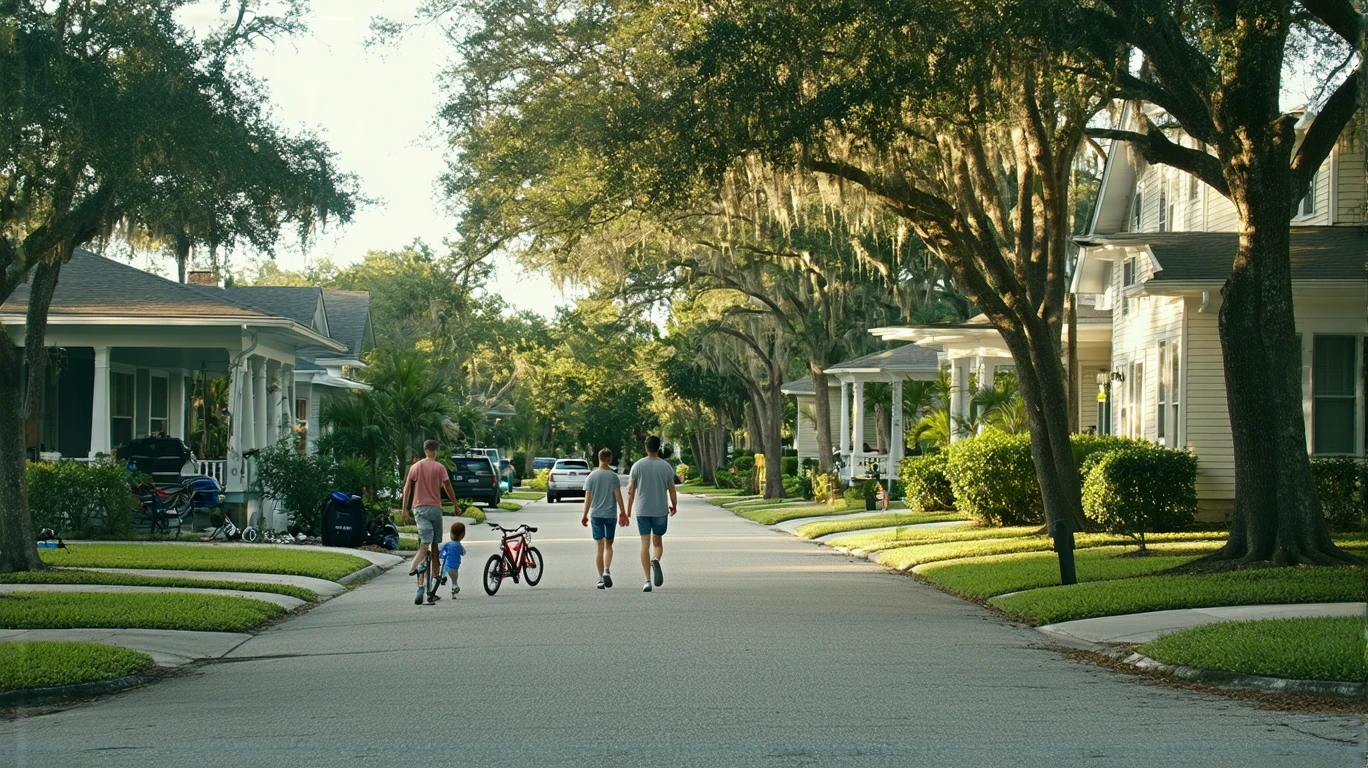
What Defines Sanford’s Emotional Landscape
Sanford’s vibe is shaped by contradiction. The historic downtown along First Street feels intimate and intentional — brick storefronts, weekend markets, waterfront views of Lake Monroe. It’s the kind of place where people linger, where local pride runs deep. But drive a few miles in any direction and you’ll hit suburban sprawl: big-box retail, residential pods, wide roads built for speed, not strolling. That split creates an identity question that shows up in nearly every conversation about the city: Is Sanford a small town growing up, or a suburb trying to remember its roots?
The presence of SunRail — commuter rail connecting Sanford to downtown Orlando — adds another layer. It’s an asset many residents treasure, especially those commuting south for work. But the rail line doesn’t change the fact that most daily errands still require a car. Food and grocery options cluster along commercial corridors rather than spreading evenly across neighborhoods, and while some areas offer sidewalks and mixed-use development, much of the city remains car-dependent by design. People who value the option to occasionally leave the car behind appreciate what Sanford offers; those who want to live car-free will find it limiting.
Parks and outdoor space, on the other hand, are a consistent bright spot. Sanford’s park density is high, and the waterfront access along Lake Monroe and the St. Johns River gives the city a recreational edge that many suburban peers lack. Residents talk about morning walks along the RiverWalk, weekend afternoons at Fort Mellon Park, and the simple pleasure of having green space woven into daily life. For families and outdoor-oriented individuals, this texture matters — it’s one of the things that makes Sanford feel less generic than other Orlando-area suburbs.
Social Media Buzz in Sanford
Online, Sanford’s community conversations reflect both pride and impatience. Local Facebook groups and regional subreddit threads tend to focus on a few recurring themes: downtown revitalization, traffic and growth pressure, and debates about what kind of city Sanford should become. The tone is rarely neutral — people either love the direction things are headed or worry the city is losing what made it special in the first place.
“I moved here because it felt like a real town, not just another suburb. Downtown actually has personality, and I can take the train to Orlando when I need to. It’s not perfect, but it works for us.”
“The traffic on 17-92 is getting ridiculous. Every time they build something new, it just gets worse. I miss when Sanford felt small.”
“People complain, but where else near Orlando can you get this much house, this close to the water, with actual parks nearby? You just have to know what you’re getting.”
The emotional range is wide: gratitude for affordability and access, frustration with infrastructure that hasn’t kept pace with growth, protectiveness over the historic downtown, and cautious optimism about new restaurants and shops. What’s largely absent is indifference — people care about Sanford’s trajectory, even when they disagree about where it should go.
How Local Coverage Frames the City
Local news and community outlets tend to frame Sanford through the lens of change and identity. Coverage doesn’t dwell on crises or scandals so much as it tracks the ongoing negotiation between preservation and development, nostalgia and progress. The recurring topics feel less like breaking news and more like long-running conversations:
- “Community Debates What Growth Should Look Like”
- “New Dining and Retail Options Arrive Downtown”
- “Residents Weigh Convenience Against Small-Town Character”
- “Waterfront Access and Parks Remain Key Draw”
- “SunRail Ridership and Commuter Patterns Evolve”
The tone is generally constructive, focused on civic engagement rather than conflict. But there’s an underlying tension: Sanford is no longer the sleepy town it once was, and not everyone is comfortable with that. The coverage reflects a city in transition, trying to grow without erasing what made it worth moving to in the first place.
Review-Based Public Perception
On platforms like Google, Yelp, and Nextdoor, Sanford’s public perception splits along expectation lines. People who wanted suburban affordability near Orlando, with some walkable charm and outdoor access, tend to leave positive reviews. Those who expected urban density, extensive dining variety, or walkability throughout often feel let down.
Praise tends to focus on downtown’s character, the waterfront, park access, and the SunRail connection. Complaints center on traffic congestion along major corridors, limited nightlife, uneven walkability, and a sense that amenities are clustered rather than distributed. There’s also recurring mention of healthcare access — while clinics and pharmacies are present, the absence of a local hospital means some residents travel to nearby cities for more comprehensive care.
Neighborhood variation plays a role, too. Newer planned developments offer modern amenities and tidy streetscapes but can feel generic. Older pockets near downtown have more character but sometimes less polish. The experience of living in Sanford depends significantly on which part of the city you call home — and whether your daily routines align with where services and walkability actually exist.
Comparison to Nearby Cities
| Dimension | Sanford | Winter Park | Lake Mary |
|---|---|---|---|
| Overall Vibe | Historic charm meets suburban sprawl | Upscale, walkable, polished throughout | Corporate, newer, family-oriented |
| Walkability | Strong downtown, car-dependent elsewhere | Walkable across much of the city | Mostly car-dependent |
| Affordability | More accessible housing costs | Premium pricing, higher income base | Mid-to-high range, corporate influence |
| Dining & Nightlife | Growing but limited variety | Extensive, diverse, well-established | Chain-heavy, family-focused |
| Transit Access | SunRail available | SunRail available, denser stops | Limited transit, car-centric |
Sanford occupies a middle ground between Winter Park’s polished urbanism and Lake Mary’s suburban efficiency. If you want walkable streets, boutique shopping, and a well-established dining scene, Winter Park delivers — but at a price. If you prioritize newer construction, corporate job proximity, and family-friendly suburban predictability, Lake Mary fits the bill. Sanford offers something in between: affordability, rail access, waterfront character, and pockets of walkability, but without the consistency or density of Winter Park or the newness of Lake Mary. It’s a city for people who value access over perfection, and who don’t mind navigating tradeoffs to get it.
What Locals Are Saying
“We moved here from deeper in Orlando because we wanted more space and a slower pace, but we didn’t want to give up access to the city. SunRail makes that possible. Downtown Sanford has more personality than I expected.”
“I love the parks and the waterfront, but I wish there were more local restaurants and things to do at night. You end up driving to Winter Park or Orlando a lot if you want variety.”
“It’s affordable, and that matters. We’re raising kids here, and the schools are decent, the neighborhoods are safe, and we have a yard. It’s not fancy, but it works.”
“The traffic on the main roads is frustrating. It feels like the infrastructure hasn’t caught up with how many people are moving here. You learn to avoid certain times and routes.”
“I’ve been here for twenty years, and it’s changed a lot. Some of it’s good — downtown looks better than it has in decades. But it’s also busier, more crowded, less like the small town I moved to.”
“If you’re looking for walkability everywhere, this isn’t it. But if you’re okay with driving most places and want a few walkable spots to enjoy on weekends, Sanford delivers.”
“The waterfront is underrated. A lot of people don’t realize how much outdoor space there is here until they actually explore it.”
Does Sanford Feel Like a Good Fit?
Sanford doesn’t try to be everything to everyone, and that’s part of its identity. It works best for people who value proximity to Orlando without living in the thick of it, who appreciate historic character but don’t need it everywhere, and who are comfortable with a city still figuring out how to balance growth with preservation. Families seeking affordability and outdoor space, remote workers wanting small-town texture with metro access, and commuters who value the SunRail connection tend to find alignment here.
It’s less suited to those expecting urban walkability throughout, extensive nightlife, or a fully developed amenity ecosystem. The city’s reliance on cars for most errands, the uneven distribution of services, and the ongoing tension between old and new can feel limiting if your expectations don’t match the reality on the ground.
Ultimately, Sanford’s vibe is defined by tradeoffs — and how you feel about living here depends on whether those tradeoffs align with what you need. If you’re drawn to a city in transition, where affordability and access come with some rough edges and growing pains, Sanford might feel like home. If you need consistency, density, or a fully realized urban experience, you’ll likely find yourself looking elsewhere — or spending a lot of time in the car heading south.
For a clearer sense of how these tradeoffs play out financially, explore monthly spending in Sanford or dive into what it takes to live comfortably here. And if you’re weighing housing pressure as part of your decision, understanding the local market will help you see whether Sanford’s affordability advantage still holds — and for how long.
How this article was built: In addition to public economic data, this article incorporates location-based experiential signals derived from anonymized geographic patterns—such as access density, walkability, and land-use mix—to reflect how day-to-day living actually feels in Sanford, FL.
The perspectives shown reflect commonly expressed local sentiment and recurring themes in public discussion, rather than individual accounts.