
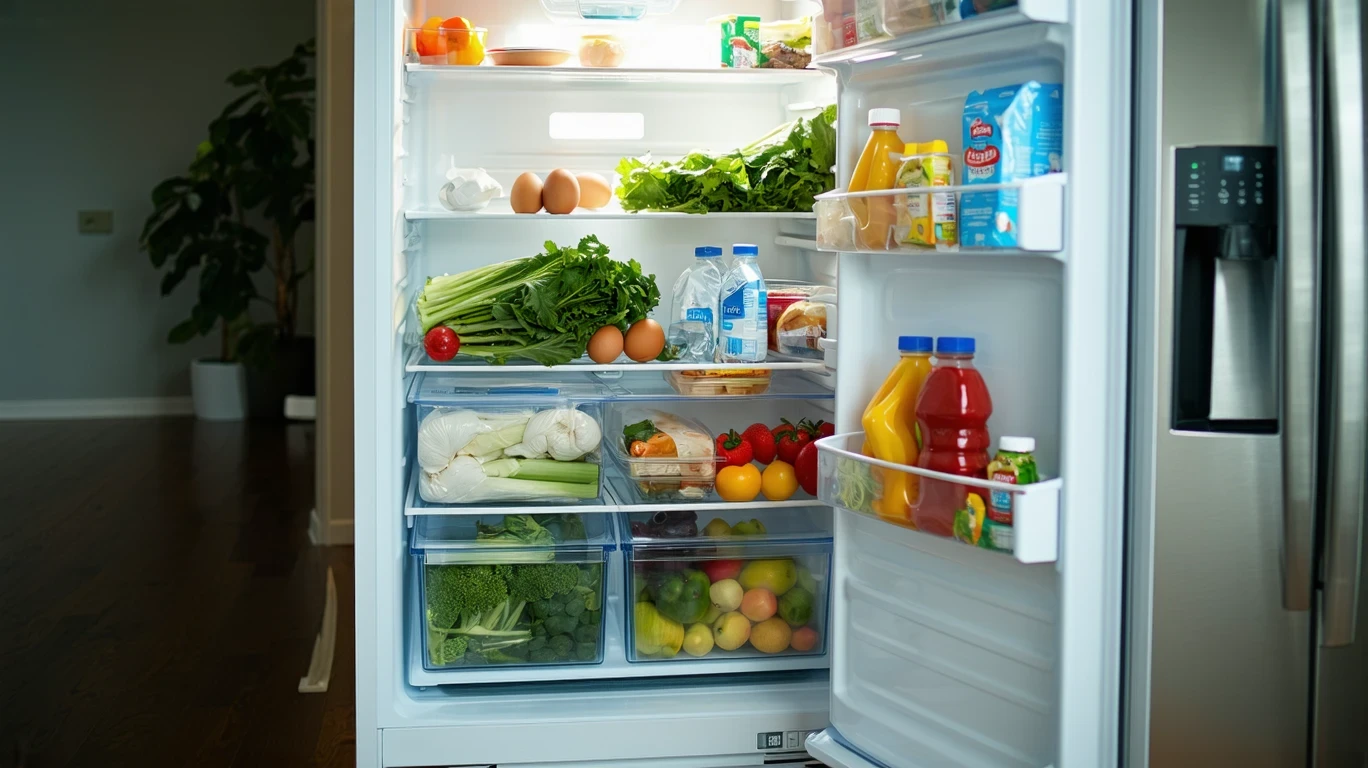
How Grocery Costs Feel in West Chester
Grocery prices in West Chester sit modestly below the national baseline, reflecting a regional price environment that runs about 6% under the U.S. average across most consumer categories. That gap shows up in everyday staples—bread, eggs, chicken, milk—where prices tend to track a few cents to a few dimes lower than what you’d encounter in higher-cost metros. For households earning near or above the city’s median income of $106,150 per year, that advantage translates into breathing room: grocery bills don’t dominate the budget the way housing or transportation might. But the experience isn’t uniform. Singles and young professionals notice groceries as a manageable, flexible line item. Families with multiple children feel the pressure differently—not because individual prices are high, but because volume and frequency amplify every price point. A gallon of milk at $3.85 per half-gallon doesn’t sound steep until you’re buying it three times a week.
What matters most in West Chester isn’t whether groceries are “cheap” in absolute terms—it’s how store choice, household size, and shopping habits interact with the local price structure. The city’s food and grocery establishments cluster along commercial corridors rather than distributing evenly across neighborhoods, which means accessing the lowest prices often requires intentional routing. Some parts of West Chester offer walkable access to grocery options, supported by higher pedestrian infrastructure density in pockets of the city, but most households still plan around driving. That setup rewards those who can consolidate trips, compare prices across tiers, and absorb the time cost of seeking out discounts. For retirees on fixed incomes or single-income families managing tight margins, the difference between shopping at a discount grocer versus a premium format can define whether the grocery budget feels controlled or constantly strained.
The pressure isn’t about sticker shock—it’s about sensitivity. A household buying for one or two people can navigate price swings by switching proteins, buying smaller quantities, or timing purchases around sales. A household buying for four or five loses that flexibility. Staples become non-negotiable, repetition becomes relentless, and the cumulative effect of even modest per-unit prices adds up faster than income growth typically offsets. In West Chester, where the cost structure leans heavily toward housing and transportation, groceries represent one of the few categories where behavior and store selection still offer meaningful control. That makes understanding the local price landscape—and the practical levers available—essential for anyone trying to manage household expenses without constant recalibration.
Grocery Price Signals (Illustrative)
These prices illustrate how staple items tend to compare locally—not a full shopping list. They’re derived from national baselines adjusted for regional price parity and reflect typical ranges you might encounter across mid-tier grocery formats in West Chester. They are not observed checkout prices, and they don’t account for sales, promotions, or store-specific pricing strategies. Use them as reference points for understanding relative cost positioning, not as a forecast of what any single trip will cost.
Derived estimate based on national baseline adjusted by regional price parity; not an observed local price.
| Item | Illustrative Price |
|---|---|
| Bread | $1.73/lb |
| Cheese | $4.55/lb |
| Chicken | $1.92/lb |
| Eggs | $2.42/dozen |
| Ground Beef | $6.35/lb |
| Milk | $3.85/half-gallon |
| Rice | $1.00/lb |
Ground beef stands out as the highest per-pound cost on this list, which is typical for protein but still meaningful for households that rely on it as a weekly staple. Chicken, by contrast, offers a lower entry point and more flexibility for meal planning. Eggs and milk—both high-frequency purchases for families—sit in a range that feels reasonable on a per-unit basis but scales quickly when buying multiples. Rice and bread anchor the low end, providing budget-friendly volume for households willing to plan around them. The gap between the cheapest and most expensive items here isn’t dramatic, but it’s wide enough that substitution and planning can shift weekly spending noticeably without requiring drastic changes in diet or quality.
What these prices don’t show is variance by store tier. The same dozen eggs might run $2.00 at a discount grocer and $3.50 at a premium format. The same pound of chicken might appear as $1.50 in a bulk pack at a warehouse club and $2.75 pre-portioned and organic at a specialty retailer. West Chester’s corridor-clustered grocery accessibility means those tiers exist side by side in some areas and require longer drives in others. For households with time, transportation, and storage capacity, that variance creates opportunity. For those without, it creates friction—and often, a default toward convenience that costs more per unit over time.
Store Choice & Price Sensitivity
Grocery price pressure in West Chester varies more by store tier than by any single “average” experience. Discount grocers—chains that emphasize private label, limited selection, and no-frills formats—typically deliver the lowest per-unit prices, especially on staples like milk, eggs, bread, and canned goods. Mid-tier supermarkets offer broader selection, more national brands, and better prepared food options, but at a markup that can run 15–25% higher on comparable items. Premium formats—whether organic-focused, specialty, or high-service—add another layer of cost, often justified by sourcing, convenience, or product differentiation, but rarely by necessity. For a household buying the same basket of staples week after week, the cumulative difference between shopping discount versus premium can rival the cost of a utility bill over the course of a month.
In West Chester, access to discount tiers isn’t universal. The city’s grocery landscape clusters along commercial corridors, and not every neighborhood sits within easy reach of every format. Some residents can walk or make a short drive to a discount grocer; others face a choice between a nearby mid-tier store or a longer trip to save. That geography creates a quiet sorting mechanism: households with flexible schedules, reliable transportation, and storage space can optimize for price. Households without those advantages often pay more by default, not by preference. The difference isn’t always visible in a single receipt, but it compounds over time—especially for families buying in volume or retirees managing fixed incomes where every percentage point matters.
Store tier also determines how much control a household has over volatility. Discount grocers tend to hold prices steadier and rely less on promotional cycles, which makes budgeting easier but reduces the upside of strategic shopping. Mid-tier and premium stores run frequent sales, but those sales reward planning, comparison, and the ability to stock up when prices dip. For households that can’t absorb upfront cost or lack storage, those promotions become irrelevant. The result is a two-tier experience: those who can plan around store choice and timing face moderate, manageable grocery costs; those who can’t face higher costs and less predictability, even in a city where baseline prices run below the national average.
What Drives Grocery Pressure Here
Income plays the largest role in determining whether grocery costs feel light or heavy in West Chester. At a median household income of $106,150, most families can absorb typical grocery spending without it crowding out other priorities. But that median masks significant variation. Households earning below $60,000—whether single-income families, retirees, or early-career workers—experience groceries as a more binding constraint, especially when combined with the city’s above-average housing costs and car-dependent transportation patterns. For these households, even modest grocery bills become a focal point for cost control, and small price differences across stores or weeks can determine whether the budget holds or breaks.
Household size amplifies every price point. A single professional buying for one might spend $250–$350 per month on groceries without much planning. A family of four buying the same per-person diet could easily double that on a per-capita basis due to waste, packaging inefficiency, and the need to keep a wider variety of items on hand. Add a teenager or two, and the math shifts again—not because individual items cost more, but because volume and frequency eliminate the flexibility that smaller households take for granted. In West Chester, where food accessibility clusters along corridors rather than distributing evenly, larger households also face more friction: more trips, more time, more exposure to convenience purchases that erode savings.
Regional distribution and access patterns shape who can reach the lowest prices and who defaults to paying more. West Chester’s mixed urban form and walkable pockets mean some neighborhoods support errand consolidation on foot, which can reduce the friction of multi-stop shopping. But most of the city still requires driving to access the full range of grocery formats, and that introduces a time-versus-cost tradeoff. Households with one working adult and limited vehicle access often shop closer to home, even when prices run higher. Households with two vehicles and flexible schedules can optimize across multiple stores, chasing discounts and stocking up when it makes sense. The difference in annual grocery spending between these two patterns can easily reach four figures, even when both households live in the same zip code and earn similar incomes.
Seasonality affects grocery costs, though the impact in West Chester is more about product availability and promotional cycles than dramatic price swings. Fresh produce costs fluctuate with growing seasons, and proteins see periodic volatility tied to supply chains and demand shifts. But the city’s position in the Midwest—with access to regional distribution networks and proximity to agricultural zones—tends to smooth out the extremes. What matters more than season is whether a household can adapt: switching from out-of-season berries to apples, buying chicken when beef prices spike, or leaning into shelf-stable staples when fresh options run high. That adaptability requires both knowledge and flexibility, and it’s easier to execute when income provides a buffer and store access provides options.
Practical Ways People Manage Grocery Costs
The most effective lever for controlling grocery costs in West Chester is store selection. Shopping at a discount grocer for staples—milk, eggs, bread, rice, canned goods—and reserving mid-tier or premium stores for specialty items or prepared foods can reduce weekly spending without requiring significant changes in diet or quality. The key is separating routine purchases from discretionary ones and routing accordingly. Households that treat every grocery trip as a single-stop convenience errand tend to pay more; those who plan around two or three stores and consolidate trips around other errands tend to pay less. The time cost is real, but for families managing tight budgets, the savings justify the friction.
Buying in bulk works when storage and upfront cost aren’t barriers. Warehouse clubs and bulk formats offer lower per-unit prices on non-perishables, frozen goods, and proteins that freeze well, but they require the ability to spend more in a single trip and the space to store larger quantities. For families with a chest freezer and room in the pantry, bulk buying can smooth out price volatility and reduce shopping frequency. For singles, renters with limited kitchen space, or households living paycheck to paycheck, bulk buying often isn’t practical—and forcing it can lead to waste that erases any savings. The strategy works, but only when the household structure supports it.
Planning meals around what’s already on hand and what’s on sale reduces both waste and impulse spending. Households that shop with a list, check pantry inventory before leaving, and build meals around sale proteins or seasonal produce tend to spend less than those who shop reactively or rely on convenience. The discipline required isn’t extreme, but it does require time—time to plan, time to compare, time to cook from scratch rather than defaulting to prepared or packaged options. For dual-income households or single parents managing multiple responsibilities, that time cost can outweigh the financial savings, which is why convenience often wins even when it costs more.
Avoiding prepared foods and pre-portioned items reduces cost per meal, but increases labor. A rotisserie chicken costs more per pound than a whole raw chicken, but it eliminates prep time and decision fatigue. Pre-cut vegetables, bagged salads, and single-serve snacks all carry convenience premiums that add up quickly over a month. Households that can absorb the time cost of cooking from scratch and portioning their own snacks will see lower grocery bills; those that can’t will pay for convenience, and that’s a rational tradeoff when time is the binding constraint. The goal isn’t to eliminate convenience—it’s to recognize where it’s worth the cost and where it’s not.
Groceries vs Eating Out (Directional)
The tradeoff between groceries and eating out in West Chester isn’t purely financial—it’s about time, energy, and household structure. Cooking at home almost always costs less per meal than dining out or ordering delivery, but it requires planning, shopping, prep, cooking, and cleanup. For a single professional working long hours, the cost difference might not justify the time and effort. For a family of four, the math tilts heavily toward cooking: a home-cooked dinner for four might run $12–$18 in ingredients, while the same meal at a casual restaurant could easily hit $50–$70 before tip. Delivery adds another layer of cost—service fees, tips, markups—that can push a $30 order to $45 or more.
Frequency matters more than individual decisions. Eating out once or twice a week as a deliberate choice—whether for convenience, socialization, or a break from cooking—fits into most budgets without much strain. Eating out four or five times a week, or defaulting to delivery whenever cooking feels inconvenient, can double or triple monthly food costs compared to a household that cooks most meals at home. In West Chester, where median incomes provide cushion, many households can afford that pattern without financial stress. But for those managing tighter margins—whether due to lower income, higher fixed costs, or debt obligations—the difference between cooking and eating out often determines whether the monthly budget closes in the black or the red.
The practical middle ground is intentional substitution: cooking simple, repeatable meals during the week and reserving dining out for weekends or special occasions. Batch cooking, leftovers, and freezer-friendly meals reduce the daily decision load and make it easier to avoid the convenience trap. The goal isn’t to eliminate eating out—it’s to make sure it’s a choice, not a default, and to recognize that every meal eaten out is a meal that could have cost a fraction of the price at home. For households trying to control costs without feeling deprived, that shift in framing makes the tradeoff easier to manage.
FAQs About Grocery Costs in West Chester (2026)
Is it cheaper to shop in bulk in West Chester? Bulk buying can reduce per-unit costs on non-perishables, frozen goods, and proteins, but only if you have the upfront cash and storage space to make it work. Warehouse clubs offer meaningful savings for families who can buy larger quantities and use them before spoilage, but singles or renters with limited kitchen space may find that bulk buying leads to waste that erodes any savings.
Which stores in West Chester are best for low prices? Discount-tier grocers typically offer the lowest prices on staples like milk, eggs, bread, and canned goods, while mid-tier supermarkets provide broader selection at a moderate markup. Premium formats add cost for organic, specialty, or prepared options. The lowest total cost usually comes from splitting trips: staples at discount stores, specialty items elsewhere.
How much more do organic items cost in West Chester? Organic and specialty items generally carry a premium over conventional equivalents, often running higher by a noticeable margin depending on category and format. The gap tends to be widest on produce and dairy, narrower on shelf-stable goods. Whether that premium is worth it depends on household priorities and budget flexibility, not on any measurable cost-of-living advantage unique to West Chester.
How do grocery costs for two adults in West Chester tend to compare to nearby cities? West Chester’s regional price parity runs about 6% below the national average, which suggests grocery costs should feel modestly lighter than in higher-cost metros. But the actual experience depends more on store choice, shopping habits, and household income than on baseline price differences. A household shopping discount formats in West Chester will likely spend less than one shopping premium formats in a pricier city, but the reverse can also be true.
How do households in West Chester think about grocery spending when cooking at home? Most households treat groceries as a controllable expense—one of the few categories where behavior and store choice still offer meaningful leverage. Families tend to focus on staples, plan around sales, and separate routine purchases from discretionary ones. Singles and young professionals often prioritize convenience and variety over cost minimization, while retirees and single-income families tend to optimize more aggressively around price and waste reduction.
Does West Chester’s layout make grocery shopping easier or harder? Grocery stores cluster along commercial corridors rather than distributing evenly across neighborhoods, which means most households drive to shop. Some areas offer walkable access to grocery options, supported by higher pedestrian infrastructure in parts of the city, but car dependency is still the norm. That setup rewards those who can consolidate trips and compare across stores, but it adds friction for households with limited transportation or tight schedules.
How does household size affect grocery costs in West Chester? Household size amplifies every price point. A single person might spend moderately on groceries without much planning, but a family of four buying the same per-person diet will spend significantly more due to volume, waste, and the need to keep a wider variety of items on hand. Larger households also lose the flexibility to substitute or skip purchases, which makes them more sensitive to price swings and less able to absorb volatility without adjusting behavior.
How Groceries Fit Into the Cost of Living in West Chester
Groceries sit in the middle of West Chester’s cost structure—less dominant than housing, less variable than transportation, but more controllable than either. For most households, grocery spending represents a meaningful but manageable share of the monthly budget, especially when income levels provide cushion and store choice offers leverage. The city’s regional price advantage—running about 6% below the national baseline—shows up in everyday staples, but it doesn’t eliminate the pressure that comes from household size, income constraints, or the time cost of optimizing across store tiers. What makes groceries feel affordable or tight in West Chester isn’t the sticker price on any single item—it’s how store access, shopping habits, and household structure interact with the local price landscape.
For a full picture of how groceries fit into monthly expenses—and how they interact with housing, utilities, transportation, and other fixed costs—see the detailed breakdown in Monthly Spending in West Chester: The Real Pressure Points. That article walks through the complete cost structure, explains where money goes, and identifies which categories drive the tightest margins for different household types. Groceries are one piece of the puzzle, but understanding the whole picture requires seeing how all the pieces fit together and where trade-offs become necessary.
The most important takeaway is that grocery costs in West Chester are manageable for households willing to engage with store choice, plan around sales, and separate routine purchases from discretionary ones. The city’s price environment doesn’t eliminate pressure, but it also doesn’t create the kind of relentless cost escalation that forces constant recalibration. For families, the key is recognizing that volume and frequency amplify every price point, and that tier choice compounds over time. For singles and retirees, the key is understanding that flexibility and planning offer more control than income alone. And for everyone, the key is treating groceries as a category where behavior still matters—one of the few places in the cost structure where intentional decisions can still move the needle without requiring drastic lifestyle changes.
How this article was built: In addition to public economic data, this article incorporates location-based experiential signals derived from anonymized geographic patterns—such as access density, walkability, and land-use mix—to reflect how day-to-day living actually feels in West Chester, OH.