
West Chester sits in the northern Cincinnati metro, where suburban housing demand meets a market shaped by commuter access, corridor-based commercial development, and a cost structure that rewards ownership stability over rental flexibility. The median home value of $289,200 positions West Chester above many Ohio suburbs, yet the regional price parity index of 94 signals that overall living costs run below the national baseline—a combination that creates distinct tradeoffs for renters and buyers navigating this market.
Understanding the real cost pressures in West Chester requires looking beyond the purchase price or monthly rent figure. Housing costs here are shaped by car dependency driven by corridor-clustered errands, limited school density that complicates family logistics, and ownership exposure to maintenance and tax volatility that renters avoid but buyers must plan for. The median household income of $106,150 per year suggests strong earning capacity, yet that income advantage narrows quickly when car costs, commute time, and household logistics enter the equation.
This article explains how housing costs behave in West Chester—what drives them, where they diverge between renting and owning, and which household types fit the market’s structure versus those who face friction at every turn.
The Housing Market in West Chester Today
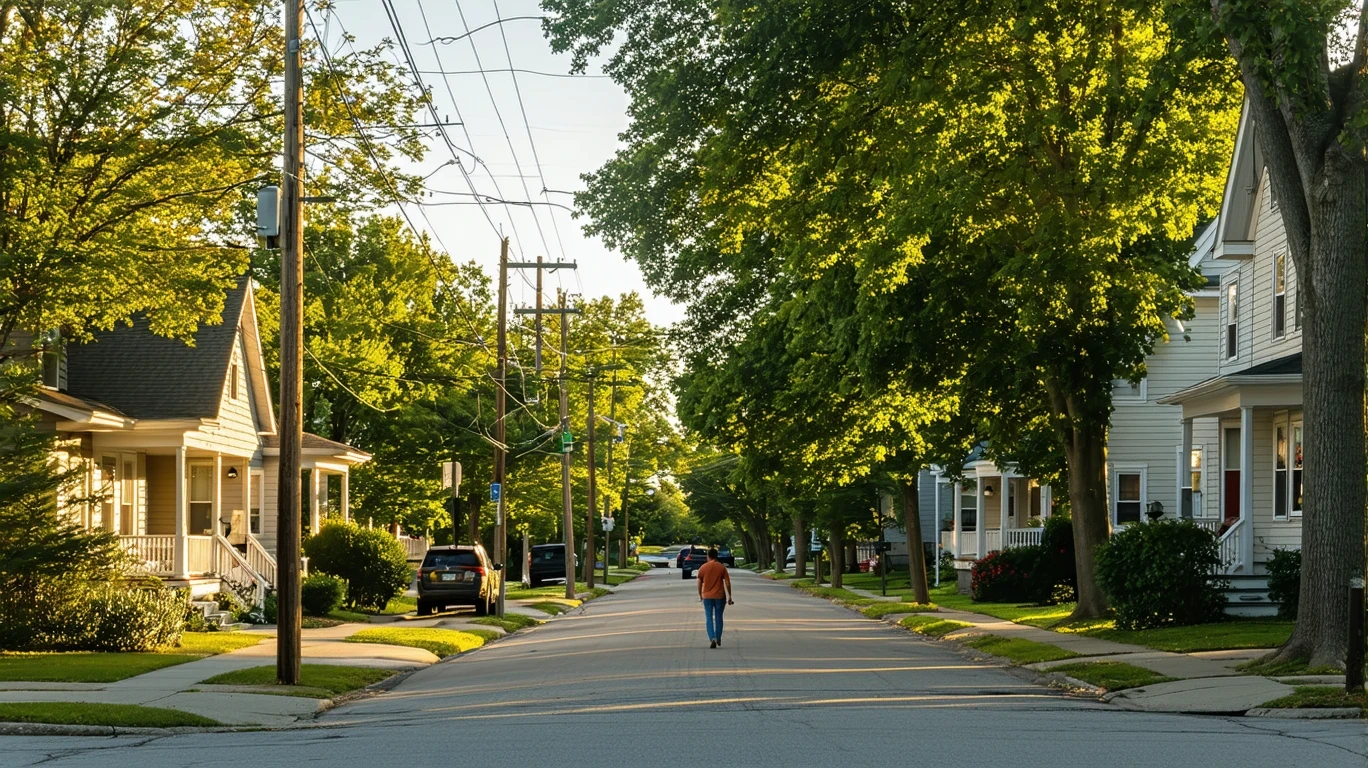
West Chester’s housing market reflects its role as a commuter suburb with mixed-use pockets and strong hospital presence, but limited walkable errands infrastructure and sparse school density. The pedestrian-to-road ratio exceeds high thresholds in certain neighborhoods, creating walkable pockets, yet food and grocery density remains in the medium band—meaning most errands require intentional car trips rather than spontaneous walks. This structure favors households with predictable routines and reliable transportation over those seeking spontaneous, car-free convenience.
The $289,200 median home value sits comfortably within reach for dual-income professional households, particularly those commuting to Cincinnati who value suburban space and hospital access. Yet that same price point becomes a stretch for single-income renters or families navigating the added cost of car dependency and longer school commutes. The market rewards buyers who prioritize stability and control over flexibility, and penalizes renters who face $1,381 per month in median gross rent without building equity or locking in predictable costs.
What newcomers often misunderstand is that West Chester’s housing costs are not just about the price—they’re about the logistics. Corridor-clustered errands mean grocery runs, pharmacy stops, and routine shopping require planning and driving. Limited school density means families may face longer bus routes, private school tuition, or daily carpool coordination. These frictions don’t appear on a rent vs buy calculator, but they shape the real cost experience every month.
Renting in West Chester
At $1,381 per month, the median gross rent in West Chester reflects demand from commuters, hospital workers, and professionals who value proximity to Cincinnati without urban density. Rental availability concentrates along commercial corridors where mixed land use supports both residential and commercial activity, but walkable errands remain limited. Renters gain flexibility and avoid property tax exposure, yet they absorb volatility at lease renewal and lack control over maintenance timelines or unit-level efficiency upgrades.
Renters in West Chester typically face car dependency as a baseline cost. Corridor-clustered food and grocery options mean even routine errands require driving, and the moderate bike-to-road ratio suggests cycling remains a recreational activity rather than a primary transportation mode. For households without reliable vehicle access, rental convenience erodes quickly—what looks affordable on paper becomes logistically expensive in practice.
Rental pressure in West Chester also reflects the limited school density. Families renting with school-age children may find themselves navigating longer bus routes or considering private options, adding cost and complexity that ownership households can sometimes mitigate through neighborhood selection. Renters lack that geographic control, making school logistics a recurring friction point rather than a one-time decision.
Owning a Home in West Chester
Ownership in West Chester means locking in predictable housing costs in a market where the median home value of $289,200 aligns with strong household income but demands careful attention to car costs, maintenance exposure, and property tax volatility. Buyers gain control over efficiency upgrades, school district selection, and long-term cost predictability, but they also absorb the full weight of upkeep, governance, and tax changes that renters avoid.
Property taxes in Ohio vary by school district, county levies, and voter-approved measures, creating exposure that shifts over time. West Chester homeowners face this volatility without the ability to relocate at lease end—ownership trades flexibility for stability, and that tradeoff intensifies when tax levies pass or assessment cycles adjust valuations. Buyers who underestimate this exposure often find themselves squeezed by costs they assumed were fixed.
Maintenance and upkeep in West Chester reflect the region’s climate—moderate heating and cooling seasons, occasional storm exposure, and housing stock that ranges from newer suburban builds to older single-family homes. Newer construction may reduce short-term maintenance costs but often comes with homeowner association governance and fees. Older homes offer lower purchase prices but higher upkeep exposure, particularly for roofing, HVAC, and insulation efficiency.
Ownership also changes the logistics equation. Buyers can select neighborhoods with shorter school commutes, proximity to specific grocery corridors, or access to parks and water features. That control matters in a city where errands cluster along corridors rather than distributing evenly, and where school density remains below thresholds that would support walkable access.
Apartment vs House in West Chester — Cost Behavior Comparison
| Expense Category | Apartment | House |
|---|---|---|
| Heating & Cooling | Lower square footage and shared walls reduce heating and cooling exposure; tenants typically lack control over efficiency upgrades | Larger square footage and detached structure increase heating and cooling exposure; owners can invest in insulation, HVAC upgrades, and programmable systems to reduce long-term costs |
| Maintenance Responsibility | Landlord absorbs appliance replacement, structural repairs, and exterior upkeep; tenant waits for landlord timeline | Owner absorbs all maintenance costs and controls timing; exposure increases with housing age and deferred upkeep |
| Errands & Car Dependency | Apartments along commercial corridors may reduce drive distance to groceries and pharmacies, but walkability remains limited due to corridor clustering | Houses in residential zones often require longer drives to errands; car dependency is baseline regardless of housing type |
| School Logistics | Renters lack control over school district selection; limited school density increases bus route length and complexity | Buyers can select neighborhoods based on school proximity or district quality, reducing daily logistics burden for families |
Methodology note: The table above includes only expense categories where housing type creates meaningfully different cost behavior in West Chester. Generic distinctions (e.g., “houses have yards”) were omitted. Differences reflect local factors including corridor-clustered errands, limited school density, moderate climate exposure, and mixed housing stock age. Rows focus on cost exposure and control, not absolute dollar amounts.
Utilities & Upkeep Differences
Utility exposure in West Chester varies more by housing age and efficiency than by housing type alone. At 17.66¢/kWh for electricity and $13.33/MCF for natural gas, the region’s moderate climate keeps heating and cooling costs from dominating budgets the way they do in extreme climates, yet inefficient insulation or aging HVAC systems can still create noticeable seasonal spikes.
Apartment tenants typically face lower absolute utility costs due to smaller square footage and shared walls, but they lack control over efficiency upgrades—leaky windows, outdated thermostats, and poor insulation remain the landlord’s decision. Homeowners absorb higher baseline utility costs due to larger square footage and detached structure, but they gain the ability to invest in programmable thermostats, insulation upgrades, and high-efficiency HVAC systems that reduce long-term exposure.
Upkeep differences in West Chester also reflect the city’s housing stock variability. Newer suburban builds often come with lower immediate maintenance costs but higher HOA fees and governance restrictions. Older single-family homes offer lower purchase prices but higher exposure to roof replacement, foundation settling, and aging plumbing. Apartment tenants avoid these costs entirely but absorb the landlord’s deferred maintenance through slower repair timelines and limited unit-level control.
Storm exposure in the region remains moderate, but occasional severe weather can accelerate roof wear, siding damage, and drainage issues—costs that homeowners bear directly and apartment tenants avoid. For buyers, understanding the age and condition of major systems (HVAC, roof, water heater) before purchase is critical to avoiding surprise expenses that rental budgets never encounter.
Rent vs Buy: Long-Term Exposure in West Chester
The structural difference between renting and owning in West Chester is not about monthly payment size—it’s about volatility, control, and exposure over time. Renters face lease renewal increases that track market demand, with no ability to lock in costs or build equity. Owners face property tax changes, maintenance surprises, and insurance adjustments, but they gain predictability in their core housing cost and the ability to control when and how they spend on upkeep.
Renters in West Chester avoid property tax exposure, which matters in a state where school levies and county measures can shift tax burdens without homeowner control. They also avoid maintenance cost spikes—when a furnace fails or a roof leaks, the landlord absorbs the expense. Yet renters also lack the ability to improve efficiency, select school districts through housing location, or benefit from equity accumulation as home values shift.
Owners gain control but absorb risk. Property taxes can rise due to voter-approved levies or assessment changes. Maintenance costs can spike unexpectedly, particularly in older housing stock. Insurance premiums can adjust due to regional storm patterns or claims history. Yet owners also lock in their principal and interest payments (on fixed-rate mortgages), control the timing and quality of repairs, and build equity that renters never access.
For households planning to stay in West Chester long-term, ownership typically reduces total housing cost volatility despite higher upfront exposure. For households prioritizing flexibility, career mobility, or avoiding maintenance risk, renting preserves optionality at the cost of equity and long-term cost control. The choice is not about affordability in a single month—it’s about which risks and tradeoffs align with a household’s timeline and priorities.
FAQs About Housing Costs in West Chester
Is the median rent in West Chester affordable for single-income households?
At $1,381 per month, median gross rent in West Chester represents a significant share of income for single earners, particularly when car dependency, commute costs, and corridor-clustered errands add logistical expenses. Dual-income households or those with strong individual earnings find more breathing room, but single-income renters often face tight margins even before utilities and transportation enter the budget.
How does car dependency affect housing costs in West Chester?
Corridor-clustered food and grocery density means most errands require intentional car trips rather than spontaneous walks. Even in neighborhoods with high pedestrian-to-road ratios, walkable errands remain limited. This structure adds fuel, maintenance, and insurance costs to every household budget, effectively increasing the true cost of housing beyond rent or mortgage alone.
What should buyers know about property taxes in West Chester?
Property taxes in Ohio vary by school district, county levies, and voter-approved measures. West Chester homeowners face exposure to tax changes over time, particularly when school levies pass or assessment cycles adjust valuations. Buyers should budget for tax volatility as part of long-term ownership cost, not assume taxes remain fixed at closing.
Does limited school density in West Chester affect housing decisions for families?
Yes. School density in West Chester falls below low thresholds, meaning families often face longer bus routes, private school consideration, or daily carpool coordination. Homebuyers can mitigate this by selecting neighborhoods with shorter school commutes, but renters lack that geographic control and absorb the logistics burden without the ability to relocate strategically.
How do utilities and maintenance costs differ between apartments and houses in West Chester?
Apartments typically have lower absolute utility costs due to smaller square footage and shared walls, but tenants lack control over efficiency upgrades. Houses face higher heating and cooling exposure due to larger size and detached structure, but owners can invest in insulation, HVAC efficiency, and programmable systems to reduce long-term costs. Maintenance responsibility also shifts entirely to homeowners, who control timing and quality but absorb all costs.
Making Housing Choices in West Chester
Housing costs in West Chester reward households who prioritize stability, car access, and long-term control over those seeking rental flexibility or walkable convenience. The $289,200 median home value aligns with strong household income, yet the real cost experience depends on car dependency, school logistics, and maintenance exposure—factors that vary widely by housing type, location, and household composition.
Renters gain flexibility and avoid property tax volatility, but they absorb lease renewal increases and lack control over efficiency or school district selection. Owners lock in predictable core housing costs and gain equity, but they face maintenance surprises, tax changes, and upkeep exposure that renters never encounter. The choice is not about which option costs less in a single month—it’s about which risks, tradeoffs, and logistics align with a household’s timeline and priorities.
For dual-income professionals commuting to Cincinnati, families prioritizing school district control, or households seeking long-term cost predictability, ownership in West Chester offers strong fit. For single-income renters, households prioritizing career mobility, or those without reliable vehicle access, the market’s structure creates friction that no rent vs buy calculator can fully capture.
Understanding monthly spending in West Chester means recognizing that housing costs extend beyond rent or mortgage—they include car dependency, errands logistics, school commutes, and maintenance exposure. The city’s corridor-clustered errands, limited school density, and mixed housing stock create a cost structure that varies widely by household type and housing choice. Buyers and renters alike benefit from understanding not just what housing costs, but how it behaves over time and what tradeoffs it demands.
For those planning a move to West Chester, comparing moving company costs and options early in the process can reduce logistical friction and preserve budget flexibility for the housing search itself.
How this article was built: In addition to public economic data, this article incorporates location-based experiential signals derived from anonymized geographic patterns—such as access density, walkability, and land-use mix—to reflect how day-to-day living actually feels in West Chester, OH.