
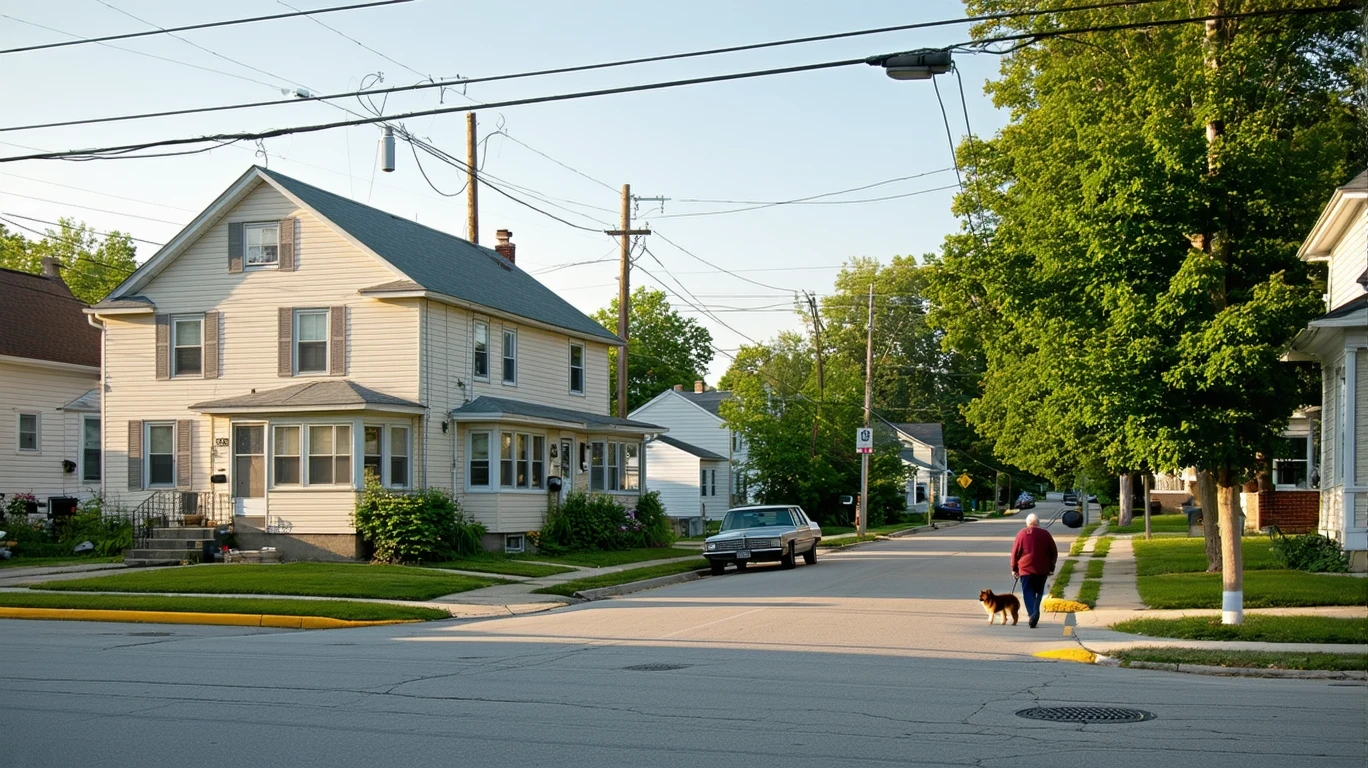
West Chester and Cincinnati sit just miles apart in the same metro area, yet the cost structure of daily life feels distinctly different between them. West Chester operates as a commuter-oriented suburb with newer housing stock and car-dependent infrastructure, while Cincinnati offers older urban neighborhoods, rail transit access, and a denser park network. For households deciding between the two in 2026, the choice isn’t about which city costs less overall—it’s about which cost pressures align with your household’s income structure, commute pattern, and tolerance for variability versus predictability.
Both cities share the same regional price environment and similar utility rates, but housing entry barriers, transportation dependence, and daily errands accessibility diverge sharply. A dual-income household prioritizing space and newer construction may find West Chester’s housing market more aligned with their needs, even as it demands higher upfront costs and longer commutes. A single adult or couple seeking lower rent, walkable errands, and transit options may find Cincinnati’s older housing stock and neighborhood-level amenities reduce both cash outlay and time friction. The decision hinges on where cost pressure concentrates for your household—and whether you’re more exposed to housing entry costs, ongoing transportation expenses, or the unpredictability of older home maintenance.
What follows is a structured comparison of how costs behave differently in West Chester versus Cincinnati, focusing on mechanisms rather than totals, and explaining which households feel each difference most acutely.
Housing Costs
Housing represents the most visible structural difference between West Chester and Cincinnati. In West Chester, the median home value stands at $289,200, while Cincinnati’s median home value is $192,000. For renters, West Chester’s median gross rent is $1,381 per month compared to Cincinnati’s $893 per month. These differences reflect not just price levels but the type of housing stock available, the age of construction, and the trade-off between space and urban proximity.
West Chester’s housing market skews toward single-family homes built in the past two decades, with larger lots, attached garages, and subdivision layouts. This housing form delivers more square footage and newer mechanical systems, but it front-loads costs into the purchase price or monthly rent. Households entering the market face higher down payment requirements for buyers or higher baseline rent for renters, with less flexibility to trade space for savings. Cincinnati’s housing stock is older and more varied, spanning dense urban blocks, mid-century neighborhoods, and converted multi-family buildings. This diversity creates more entry points at lower price levels, but it also introduces variability in maintenance costs, heating efficiency, and renovation needs.
For first-time buyers, West Chester’s higher home values translate into larger mortgages and higher monthly obligations, even as newer construction reduces immediate repair exposure. Cincinnati’s lower home values ease the entry barrier, but buyers inherit older systems—furnaces, windows, roofing—that may require capital investment within the first few years of ownership. Renters face a similar trade-off: West Chester’s higher rents buy predictability and modern amenities, while Cincinnati’s lower rents come with more variability in unit quality and landlord responsiveness. Families prioritizing space, school access, and low-maintenance housing may find West Chester’s cost structure worth the premium. Singles, couples, or households planning shorter tenures may find Cincinnati’s lower entry costs and neighborhood-level walkability reduce both cash outlay and logistical friction.
| Housing Type | West Chester | Cincinnati |
|---|---|---|
| Median Home Value | $289,200 | $192,000 |
| Median Gross Rent | $1,381/month | $893/month |
| Typical Housing Form | Newer single-family subdivisions | Older urban and mid-century neighborhoods |
Housing takeaway: West Chester imposes higher entry costs but delivers newer construction and predictable maintenance exposure. Cincinnati offers lower entry barriers and more housing diversity, but older stock introduces variability in upkeep and energy efficiency. Households sensitive to upfront costs or seeking transit-adjacent living may prefer Cincinnati’s structure. Households prioritizing space, newer systems, and car-oriented convenience may find West Chester’s premium justified by reduced friction over time.
Utilities and Energy Costs
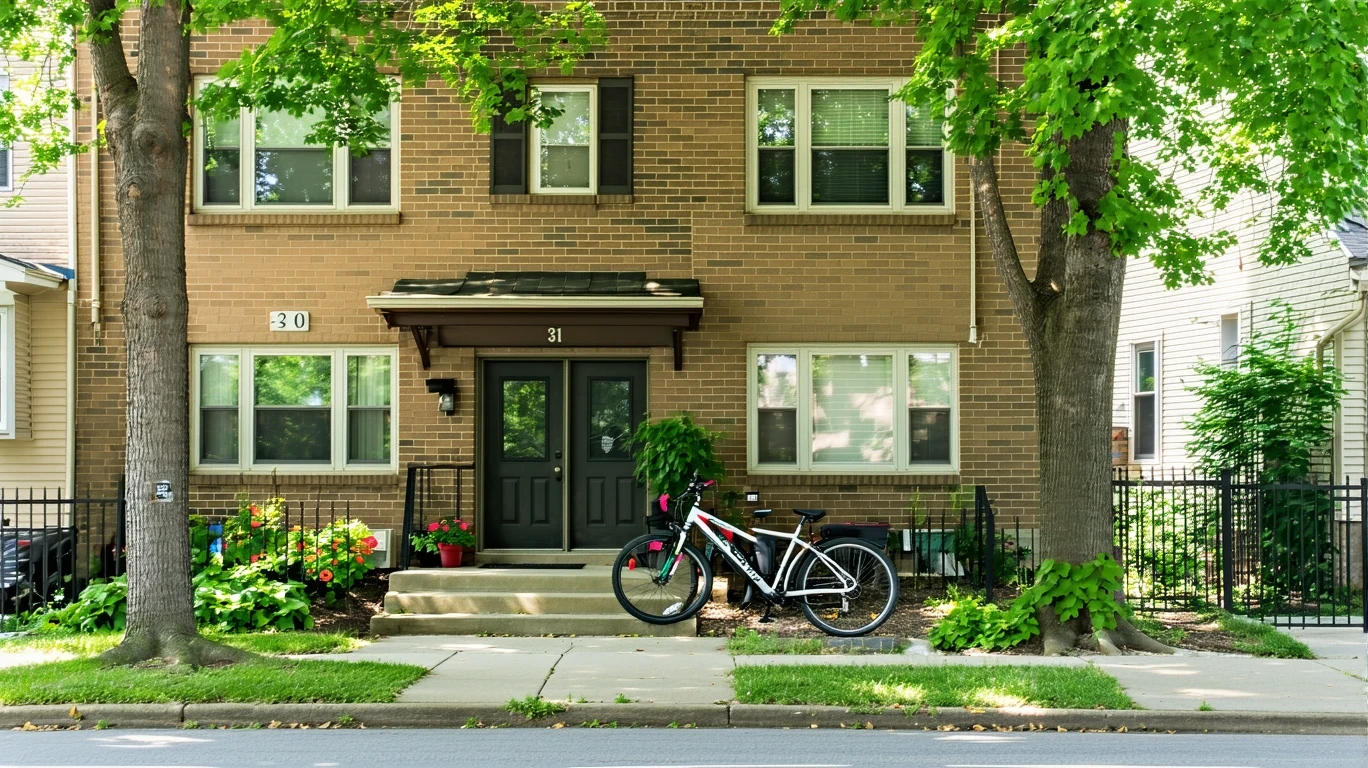
Utility cost behavior in West Chester and Cincinnati is shaped less by rate differences—which are minimal—and more by housing stock age, home size, and household routines. West Chester’s electricity rate is 17.66¢/kWh, while Cincinnati’s is 17.31¢/kWh. Natural gas pricing shows a wider gap: West Chester pays $13.33/MCF compared to Cincinnati’s $11.25/MCF. These rate differences matter less than the structural factors that drive usage: insulation quality, HVAC system age, and the square footage being conditioned.
West Chester’s newer housing stock typically includes better insulation, modern HVAC systems, and energy-efficient windows, which reduce baseline heating and cooling loads. However, larger home sizes—common in suburban subdivisions—mean more volume to heat in winter and cool in summer, offsetting some of the efficiency gains. Cincinnati’s older housing stock varies widely: well-maintained historic homes with updated systems can perform efficiently, while neglected properties with original windows and aging furnaces experience higher seasonal volatility. The slightly lower natural gas rate in Cincinnati helps, but it doesn’t eliminate exposure for households in poorly insulated units.
For households in apartments or smaller homes, utility costs in both cities remain manageable and predictable, with minimal seasonal swings. Families in larger single-family homes face more pronounced exposure, particularly during winter heating months. In West Chester, that exposure is moderated by newer construction but amplified by square footage. In Cincinnati, exposure depends heavily on the specific property: a renovated rowhouse in a walkable neighborhood may outperform a sprawling older ranch on the city’s edge. Renters in Cincinnati should verify whether utilities are included or separately metered, as older buildings sometimes bundle costs unpredictably. Renters in West Chester typically face separate metering but benefit from landlords maintaining newer systems.
Utility takeaway: West Chester’s newer housing stock reduces volatility but larger home sizes sustain baseline usage. Cincinnati’s older stock introduces variability, with exposure concentrated in properties that haven’t been updated. Households in smaller units or apartments experience similar costs in both cities. Families in single-family homes should evaluate insulation quality and system age rather than relying solely on rate differences, as housing form drives exposure more than price per kilowatt-hour.
Groceries and Daily Expenses
Grocery and daily expense pressure in West Chester and Cincinnati reflects access patterns more than price differences. Both cities share the same regional price environment, with derived grocery estimates showing minimal variation: bread costs roughly $1.73–$1.74 per pound, ground beef $6.33–$6.35 per pound, and eggs $2.35–$2.42 per dozen in both locations. The meaningful difference lies in how households access food and manage convenience spending, shaped by infrastructure and errands accessibility.
West Chester’s corridor-clustered food and grocery establishment density means most households rely on planned trips to big-box stores or chain supermarkets along major roads. This structure favors bulk buying and rewards households with flexible schedules, storage space, and reliable transportation. Convenience spending—grabbing coffee, picking up a forgotten item, or ordering takeout—requires intentional travel, which can reduce impulse purchases but also increases time friction for busy families. Cincinnati’s similarly corridor-clustered food density is tempered by denser neighborhood pockets where smaller grocers, corner markets, and walkable dining options reduce the need for every errand to be a car trip. This doesn’t necessarily lower grocery bills, but it shifts the trade-off from price sensitivity to time flexibility.
For single adults or couples, Cincinnati’s walkable errands pockets allow for smaller, more frequent shopping trips, reducing food waste and eliminating the need to plan around bulk storage. Families managing larger grocery volumes may find West Chester’s big-box access more efficient, even as it demands more planning and vehicle dependence. Dining out and prepared food costs behave similarly in both cities, but Cincinnati’s denser restaurant landscape and transit-adjacent neighborhoods make casual dining more accessible without driving. West Chester’s dining options cluster along commercial corridors, requiring intentional trips and often favoring chain restaurants over independent spots.
Groceries takeaway: Price differences between West Chester and Cincinnati are negligible. The real distinction is access structure: West Chester rewards planned bulk shopping and car-dependent errands, while Cincinnati offers more walkable convenience at the cost of fewer big-box options. Households sensitive to time friction and preferring smaller, frequent trips may find Cincinnati’s errands accessibility reduces logistical burden. Families prioritizing bulk savings and storage efficiency may prefer West Chester’s corridor-based retail concentration.
Taxes and Fees
Tax and fee structures in West Chester and Cincinnati introduce different ongoing obligations, with property taxes representing the most significant divergence. While specific tax rates aren’t provided in the data, the housing value gap between the two cities creates predictable differences in property tax exposure. West Chester’s higher median home value of $289,200 generates higher annual property tax bills compared to Cincinnati’s $192,000 median, even if millage rates were identical. For homeowners, this means West Chester imposes a higher ongoing obligation tied to housing value, while Cincinnati’s lower home values reduce that baseline exposure.
Beyond property taxes, both cities impose local fees for services such as trash collection, water, and stormwater management, though the structure and predictability of these fees vary. West Chester’s suburban infrastructure often bundles services through municipal billing or HOA fees in newer subdivisions, creating predictability but limiting flexibility. Cincinnati’s older municipal structure may bill services separately, introducing more line items but also more control over usage-based costs. HOA fees are more common in West Chester’s newer developments, sometimes covering landscaping, snow removal, or shared amenities, but adding a fixed monthly obligation that renters don’t face and that homeowners can’t reduce.
Renters in both cities are partially insulated from property tax exposure, as landlords incorporate those costs into rent. However, West Chester’s higher property taxes likely contribute to its higher median rent, while Cincinnati’s lower property tax baseline allows for more competitive rental pricing. For long-term homeowners, West Chester’s tax structure rewards stable income and rewards households planning to stay several years, as the predictability of newer infrastructure reduces surprise assessments. Cincinnati’s older infrastructure may introduce special assessments for street repairs, sewer upgrades, or water line replacements, creating less predictable spikes in annual obligations.
Taxes and fees takeaway: West Chester’s higher home values generate higher property tax exposure, even as newer infrastructure reduces special assessment risk. Cincinnati’s lower home values ease baseline tax obligations but older infrastructure introduces variability in municipal fees and assessments. Homeowners planning long tenures in West Chester should budget for higher predictable taxes. Homeowners in Cincinnati should verify neighborhood-level infrastructure condition to assess special assessment risk. Renters feel these differences indirectly through rent levels, with West Chester’s higher rents partially reflecting property tax passthrough.
Transportation & Commute Reality
Transportation cost pressure in West Chester and Cincinnati diverges sharply, driven less by gas prices and more by infrastructure, commute patterns, and the viability of car-free living. West Chester’s average commute time is 23 minutes, with 31.0% of workers experiencing long commutes and only 4.4% working from home. Gas prices in West Chester are $2.78 per gallon, compared to Cincinnati’s $3.41 per gallon. These numbers tell part of the story, but the real difference lies in how each city’s structure shapes daily travel.
West Chester’s car-oriented layout and walkable pockets mean most households depend on personal vehicles for commuting, errands, and accessing services. The 23-minute average commute reflects suburban-to-suburban or suburban-to-urban travel patterns, often along highways or arterial roads with minimal transit alternatives. The 31.0% long commute share signals that a significant portion of West Chester households face extended drive times, increasing fuel consumption, vehicle wear, and time costs. The low 4.4% work-from-home rate suggests most workers must travel daily, sustaining consistent transportation expenses regardless of gas price fluctuations.
Cincinnati’s rail transit presence and higher-confidence walkable pockets create more flexibility for households willing to prioritize transit access or walkable neighborhoods. While commute data isn’t available for Cincinnati, the presence of rail service and denser park and errands infrastructure suggests some households can reduce or eliminate car dependence, particularly those living and working within transit-served corridors. However, Cincinnati’s higher gas price of $3.41 per gallon means households that do rely on cars face steeper per-gallon costs, even if total miles driven may be lower due to denser land use.
For single adults or couples, Cincinnati’s transit and walkability options allow for car-light or car-free living in certain neighborhoods, eliminating insurance, maintenance, and parking costs entirely. West Chester offers no comparable transit infrastructure, meaning every household must budget for at least one vehicle. Families with multiple workers or school-age children face compounded transportation exposure in West Chester, as each household member’s schedule may require separate vehicle access. In Cincinnati, families in transit-adjacent neighborhoods can reduce vehicle count, though this requires accepting trade-offs in housing form and neighborhood selection.
Transportation takeaway: West Chester’s lower gas prices are offset by universal car dependence, longer commutes, and minimal transit alternatives. Cincinnati’s higher gas prices are mitigated by rail transit access and denser walkable neighborhoods, though car-dependent households face steeper fuel costs. Households sensitive to commute time and vehicle dependence may find Cincinnati’s transit options reduce both cash outlay and time friction. Households prioritizing suburban commutes and car-oriented convenience may find West Chester’s infrastructure better aligned, despite higher vehicle reliance.
Cost Structure Comparison
Housing dominates the cost experience in both West Chester and Cincinnati, but the nature of that pressure differs. West Chester front-loads costs into higher home values and rents, rewarding households with stable dual incomes and longer planning horizons. Cincinnati distributes housing costs more variably, with lower entry barriers but higher exposure to maintenance unpredictability in older stock. For renters, West Chester’s higher baseline rent buys predictability; Cincinnati’s lower rent introduces more variability in unit quality and landlord responsiveness.
Utilities introduce more volatility in Cincinnati due to older housing stock, though well-maintained properties can match or outperform West Chester’s newer builds. West Chester’s larger home sizes sustain higher baseline usage despite better insulation, meaning families in single-family homes face similar seasonal exposure in both cities, just driven by different factors. Households in apartments or smaller homes experience minimal utility differences, as rates are nearly identical and usage scales with square footage more than location.
Daily living and groceries show negligible price differences, but access structure matters. West Chester’s corridor-clustered retail rewards bulk shopping and planned trips, favoring households with storage space and flexible schedules. Cincinnati’s denser errands pockets reduce logistical friction for smaller, more frequent trips, benefiting singles and couples who prioritize walkability over bulk savings. Neither city offers a clear cost advantage in groceries—the difference is whether your household values time flexibility or price efficiency.
Transportation patterns matter more in West Chester, where car dependence is universal and long commutes affect nearly one-third of workers. Cincinnati’s rail transit and walkable neighborhoods allow some households to reduce or eliminate vehicle costs, though this requires prioritizing transit-adjacent housing and accepting trade-offs in space or modernity. For car-dependent households, Cincinnati’s higher gas prices increase per-gallon costs, but denser land use may reduce total miles driven.
The decision between West Chester and Cincinnati isn’t about which city costs less—it’s about which cost structure aligns with your household’s income stability, commute flexibility, and tolerance for variability. Households sensitive to housing entry costs may prefer Cincinnati’s lower barriers. Households sensitive to commute friction and vehicle dependence may prefer Cincinnati’s transit options. Households prioritizing space, newer construction, and predictable maintenance may find West Chester’s premium justified by reduced long-term friction, even as it demands higher upfront cash flow and universal car ownership.
How the Same Income Feels in West Chester vs Cincinnati
Single Adult
For a single adult, housing becomes the first non-negotiable cost, and Cincinnati’s lower rent allows more breathing room for discretionary spending or savings. Flexibility exists in transportation: Cincinnati’s rail transit and walkable neighborhoods allow car-free living in select areas, eliminating insurance and maintenance entirely. West Chester demands a vehicle, adding fixed costs that compress flexibility regardless of income level. Commute friction matters less for singles without school or childcare logistics, but West Chester’s longer average commute still imposes time costs that Cincinnati’s denser layout can reduce.
Dual-Income Couple
For dual-income couples, West Chester’s higher housing costs become more manageable when split across two earners, and the premium for newer construction reduces maintenance surprises that could disrupt cash flow. Flexibility disappears in transportation: both partners likely need vehicles in West Chester, doubling fixed costs, while Cincinnati’s transit options allow one-car households in certain neighborhoods. The role of commute friction intensifies with two schedules: West Chester’s car dependence and longer commutes consume more time, while Cincinnati’s transit and walkability reduce coordination complexity for couples balancing work and errands.
Family with Kids
For families, housing space becomes non-negotiable first, and West Chester’s larger single-family homes align with school-age logistics, even as higher costs strain budgets. Flexibility exists in Cincinnati’s lower housing entry costs, but older stock introduces maintenance unpredictability that families with tight schedules may struggle to absorb. Commute friction and car dependence compound with multiple schedules: West Chester’s infrastructure assumes multi-vehicle households, while Cincinnati’s transit-adjacent neighborhoods allow some families to reduce vehicle count, though this requires accepting smaller homes or older construction. Time cost versus cash cost becomes the defining trade-off, with West Chester offering space and predictability at the expense of higher fixed obligations and universal driving.
Decision Matrix: Which City Fits Which Household?
| Decision Factor | If You’re Sensitive to This… | West Chester Tends to Fit When… | Cincinnati Tends to Fit When… |
|---|---|---|---|
| Housing entry + space needs | You prioritize lower upfront costs or need flexibility to move | You value newer construction and can absorb higher entry costs for predictable maintenance | You prioritize lower entry barriers and can manage variability in older housing stock |
| Transportation dependence + commute friction | You want to minimize vehicle costs or reduce commute time | You accept universal car dependence and longer commutes for suburban convenience | You can prioritize transit-adjacent neighborhoods and reduce or eliminate vehicle ownership |
| Utility variability + home size exposure | You want predictable bills and minimal seasonal swings | You live in newer construction with efficient systems despite larger square footage | You choose well-maintained older properties or smaller units to reduce baseline usage |
| Grocery strategy + convenience spending creep | You prefer walkable errands or smaller frequent trips | You favor bulk shopping and have storage space for planned trips | You value walkable convenience and can manage smaller, more frequent grocery runs |
| Fees + friction costs (HOA, services, upkeep) | You want to avoid fixed monthly obligations or surprise assessments | You accept higher predictable property taxes and possible HOA fees for newer infrastructure | You prioritize lower baseline taxes but can absorb variability in municipal fees or special assessments |
| Time budget (schedule flexibility, errands, logistics) | You need to minimize time spent on errands or commuting | You have flexible schedules and can absorb longer commutes for suburban space | You value denser errands access and transit options to reduce logistical friction |
Lifestyle Fit
West Chester and Cincinnati offer distinct lifestyle textures shaped by infrastructure, land use, and daily routines. West Chester’s walkable pockets and mixed building heights create suburban neighborhoods with some pedestrian infrastructure, but the overall layout remains car-oriented. Food and grocery establishments cluster along corridors, and parks are present but not densely integrated throughout the city. The hospital is accessible, but family infrastructure—particularly school density—falls below thresholds, meaning families may face longer drives for school access or extracurricular activities. The 23-minute average commute and 31.0% long commute share reflect a community where most residents travel outside the city for work, sustaining daily vehicle dependence.
Cincinnati’s walkable pockets are more pronounced, with higher-confidence pedestrian infrastructure and rail transit service that allows car-light living in select neighborhoods. Parks are densely integrated throughout the city, and food establishments exceed density thresholds in certain corridors, creating more walkable errands options. Family infrastructure is more present, with school density in the medium band, though playground density remains low. The mixed building heights and strong land-use mix signal a more urban environment where residential and commercial uses coexist, reducing the need for every errand to be a planned car trip. The presence of rail transit fundamentally changes mobility options for households willing to prioritize transit-adjacent neighborhoods.
For households valuing outdoor access, Cincinnati’s integrated park density and water features create more opportunities for casual recreation without driving. West Chester’s parks are present but less densely distributed, meaning families often drive to access green space. For households prioritizing family amenities, Cincinnati’s higher school density offers more options within shorter distances, though both cities have hospital access. For households seeking walkable daily life, Cincinnati’s denser errands accessibility and transit presence reduce logistical friction, while West Chester’s corridor-clustered retail rewards households with vehicles and storage space.
West Chester’s median household income is $106,150 per year, reflecting a community of dual-income families and professionals commuting to regional employment centers. Cincinnati’s median household income is $49,191 per year, signaling a more economically diverse population with varied housing and transportation needs. These income differences don’t determine affordability—they reflect the types of households each city attracts and the cost structures that align with those household profiles.
Frequently Asked Questions
How do housing costs in West Chester compare to Cincinnati in 2026?
West Chester’s median home value is $289,200 and median rent is $1,381 per month, compared to Cincinnati’s $192,000 median home value and $893 per month median rent. West Chester’s higher costs reflect newer construction and larger single-family homes, while Cincinnati’s lower entry barriers come with more variability in housing stock age and maintenance needs. Households prioritizing space and predictable upkeep may find West Chester’s premium justified, while those seeking lower entry costs and neighborhood diversity may prefer Cincinnati’s structure.
Is it cheaper to live in West Chester or Cincinnati if I don’t own a car?
Cincinnati offers rail transit and denser walkable neighborhoods, making car-free living viable in select areas and eliminating vehicle ownership costs entirely. West Chester has no transit infrastructure and universal car dependence, meaning every household must budget for at least one vehicle. For households able to prioritize transit-adjacent neighborhoods in Cincinnati, the savings from eliminating car ownership, insurance, and maintenance can offset higher per-gallon gas prices and allow for lower overall transportation spending.
Which city has lower utility bills, West Chester or Cincinnati?
Electricity rates are nearly identical—17.66¢/kWh in West Chester versus 17.31¢/kWh in Cincinnati—and natural gas pricing differs modestly at $13.33/MCF in West Chester versus $11.25/MCF in Cincinnati. The real difference lies in housing stock: West Chester’s newer construction offers better insulation but larger square footage, while Cincinnati’s older stock varies widely in efficiency. Households in well-maintained smaller homes or apartments will see similar utility costs in both cities, while families in larger single-family homes face exposure driven more by home size and system age than by location.
How do grocery costs differ between West Chester and Cincinnati in 2026?
Grocery prices are nearly identical between West Chester and Cincinnati, with both cities sharing the same regional price environment. The meaningful difference is access structure: West Chester’s corridor-clustered retail favors bulk shopping and planned car trips, while Cincinnati’s denser errands pockets allow for smaller, more frequent trips on foot or via transit. Households valuing time flexibility and walkable convenience may find Cincinnati’s structure reduces logistical burden, while those prioritizing bulk savings and storage efficiency may prefer West Chester’s big-box access.
Which city is better for families with kids, West Chester or Cincinnati?
West Chester offers larger single-family homes and newer construction, aligning with families seeking space and predictable maintenance, though school density is limited and most family activities require driving. Cincinnati provides higher school density and more integrated parks, reducing travel time for family errands, though housing stock is older and more variable. Families prioritizing space and car-oriented convenience may find West Chester’s infrastructure better aligned, while those valuing walkable parks, shorter school commutes, and transit options may prefer Cincinnati’s denser family amenities despite trade-offs in housing modernity.
Conclusion
West Chester and Cincinnati present fundamentally different cost structures, each aligned with distinct household priorities. West Chester rewards dual-income households with stable cash flow, longer planning horizons, and tolerance for car dependence, offering newer housing stock, predictable maintenance, and suburban space at the cost of higher entry barriers and universal vehicle reliance. Cincinnati rewards households prioritizing lower housing entry costs, transit flexibility, and walkable errands, offering neighborhood diversity, rail access, and integrated parks at the cost of older housing stock and more variable maintenance exposure.
Neither city is universally cheaper—the decision hinges on which costs dominate your household’s budget and which trade-offs you’re equipped to manage. Households sensitive to upfront housing costs, commute friction, or vehicle dependence may find Cincinnati’s structure reduces both cash outlay and logistical burden. Households prioritizing space, newer construction, and suburban predictability may find West Chester’s premium justified by reduced long-term friction, even as it demands higher fixed obligations and longer commutes. The right choice depends on whether your household values lower entry barriers and transit flexibility, or whether you’re willing to absorb higher costs for space, modernity, and car-oriented convenience.
How this article was built: In addition to public economic data, this article incorporates location-based experiential signals derived from anonymized geographic patterns—such as access density, walkability, and land-use mix—to reflect how day-to-day living actually feels in West Chester, OH.