
What’s comfort worth? In West Chester, that question doesn’t have a single answer—it has a structure. Comfort here isn’t about hitting a magic number; it’s about whether your income gives you room to make choices instead of just covering obligations. The difference between feeling stretched and feeling stable often comes down to how well your earnings match the specific pressures this place creates: housing that’s priced for space and newness, a layout that assumes you’ll drive most places, and utility bills that swing with the seasons.
West Chester sits in the northern Cincinnati metro, where the median household income runs around $106,150 per year. That figure reflects a community built largely around families with dual earners, white-collar commuters, and retirees who bought in years ago. But averages don’t tell you whether your income will feel adequate here—or whether you’ll spend the first year surprised by where the money actually goes.
What “Living Comfortably” Means in West Chester
Comfort in West Chester is defined by predictability and choice. It means you can rent or buy without sacrificing space or condition. It means your commute to Cincinnati or Dayton doesn’t eat your evening. It means you run the air conditioning in July and the heat in January without checking your account balance first. And it means errands—groceries, pharmacies, appointments—don’t require an hour of driving and planning every week.
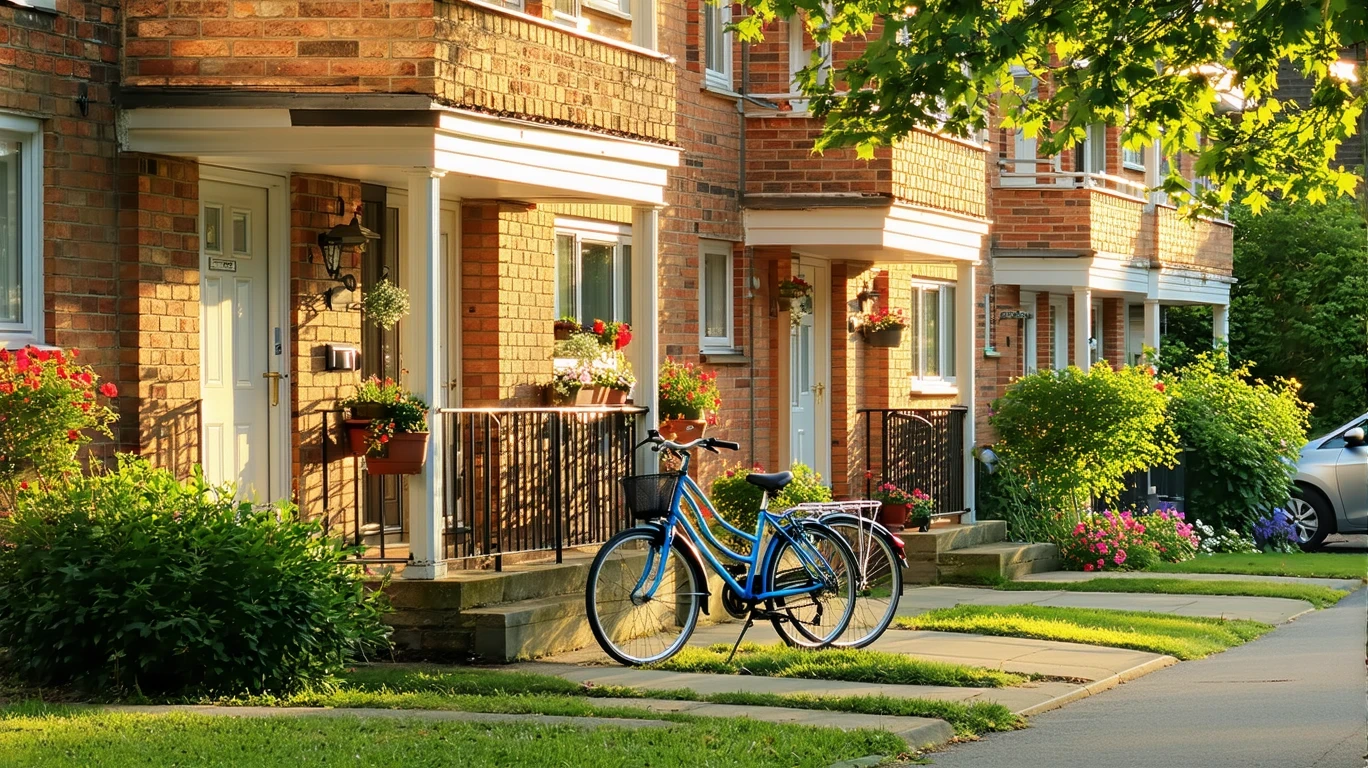
This is a place where comfort also includes a yard, updated appliances, and a two-car garage. Expectations here are suburban: single-family homes, decent school access, low crime, and the assumption that you’ll drive to most things. If your idea of comfortable living includes walkable daily errands or taking transit to work, West Chester will feel like a mismatch—not because it’s unaffordable, but because the infrastructure doesn’t support that lifestyle.
Comfort is also seasonal. Summers here bring heat and humidity that make air conditioning non-negotiable. Winters are cold enough that heating costs matter. If your income doesn’t leave room to absorb a few hundred dollars of swing between July and February, you’ll feel that pressure every year.
Where Income Pressure Shows Up First
Housing dominates the financial experience here. The median home value sits at $289,200, and median rent runs $1,381 per month. Those numbers reflect newer construction, larger floor plans, and neighborhoods designed in the last twenty years. If you’re renting, you’re paying for space and condition but not building equity. If you’re buying, you’re committing to property taxes, insurance that’s climbed steadily, and maintenance on systems that all age at once in these newer builds.
The next pressure point is transportation. West Chester’s layout assumes car ownership. The pedestrian-to-road ratio exceeds typical suburban levels in some pockets, but that doesn’t mean you can skip the car—it just means some neighborhoods have sidewalks. Food and grocery establishments cluster along commercial corridors rather than spreading evenly, so even a quick errand often means driving. Commute times average 23 minutes, but that’s one-way, and it assumes you’re not hitting Cincinnati rush hour. Gas here runs about $2.78 per gallon, but the real cost is the assumption that every adult in the household will drive daily.
Utilities add volatility. Electricity costs 17.66¢ per kWh, and natural gas runs $13.33 per thousand cubic feet. In a 2,000-square-foot home with central air and forced-air heat, summer and winter bills can feel like a second rent payment. There’s no way to avoid this expense—comfort here is climate-controlled, and the weather demands it.
For families, logistics create a hidden cost. School density falls below typical thresholds, meaning not every neighborhood has a nearby elementary school. That adds drive time, carpool complexity, and scheduling friction. Playgrounds and parks exist but aren’t always walkable from home. The result is more time in the car and less flexibility in daily routines.
How the Same Income Feels Different by Household
A single adult earning $60,000 gross can rent a one-bedroom apartment and cover expenses, but there’s little room for error. The car is mandatory, and any surprise expense—car repair, medical bill—immediately creates pressure. Comfort, in this scenario, means stable employment and no debt. There’s no cushion for lifestyle upgrades or significant savings.
A couple with no kids and a combined income of $90,000 experiences West Chester very differently. They can afford a two-bedroom rental or consider buying a starter home. With two incomes, they can absorb the commute costs, split errands, and handle seasonal utility swings without cutting back. Comfort here starts to include choices: saving for a down payment, dining out regularly, or upgrading to a newer car. The pressure exists, but it’s manageable.
Families face the most complexity. A household with two kids and a combined income of $110,000 might seem aligned with the median, but the experience depends entirely on housing timing and logistics capacity. If they bought five years ago, they’re stable. If they’re buying now, the mortgage will stretch them. The need for a larger home, the drive time to schools, the errands that require a car, and the inability to rely on walking or transit all compound. Comfort, for this household, requires not just income but also time, planning capacity, and tolerance for car dependency.
The Comfort Threshold (Qualitative)
The transition to comfort in West Chester happens when income stops dictating every decision. It’s the point where you can choose between renting and buying based on preference, not just affordability. Where a $200 utility bill doesn’t require a budget adjustment. Where you can absorb a car repair, a medical copay, or a school fee without stress.
This threshold isn’t the same for everyone. A single person might reach it at a lower income than a family of four. A couple who works from home avoids commute costs entirely, shifting their pressure points. Someone with student debt or medical expenses will need more income to feel the same level of ease.
What’s consistent is this: comfort in West Chester requires enough income to cover housing, transportation, and utilities with enough margin left over that surprises don’t create crises. It’s not about luxury—it’s about predictability and the ability to make decisions without constant tradeoffs.
Why Online Cost Calculators Get West Chester Wrong
Most cost-of-living calculators will tell you West Chester is affordable because the regional price parity index sits at 94—below the national baseline. They’ll add up rent, groceries, and gas, then spit out a number that seems reasonable. But those tools don’t capture the structure of life here.
They don’t account for the fact that walkable errands aren’t an option for most residents, so every household needs at least one car—and most need two. They don’t reflect the seasonal utility swings that come with humid summers and cold winters. They don’t measure the time cost of a place where schools, groceries, and parks require driving. And they don’t distinguish between the financial experience of someone who bought a home in 2015 versus someone buying today.
People feel surprised after moving here because the cost structure doesn’t match the total. The rent might be manageable, but the car insurance, the gas, the utilities, and the time spent driving all add friction that doesn’t show up in a calculator. Comfort isn’t just about whether you can pay the bills—it’s about whether the bills leave you with flexibility, time, and choice.
How to Judge Whether Your Income Fits West Chester
Instead of asking “Is my income enough?”, ask these questions:
- Can you afford housing and still save? If rent or a mortgage takes more than a third of your gross income, every other expense will feel tight.
- Does car dependency bother you? If you prefer walking, biking, or transit, West Chester will feel limiting no matter your income.
- Can you absorb a few hundred dollars of utility variation each year? If seasonal swings create stress, your income isn’t aligned with the climate reality here.
- Do you have time to manage logistics? Errands, school runs, and commutes all require a car and planning. If your schedule is already tight, this adds pressure that income alone won’t solve.
- How much flexibility do you expect month to month? If you want discretionary income for travel, hobbies, or dining out, your income needs to clear monthly expenses with room to spare.
Your answers will tell you more than any income threshold ever could.
FAQs About Living Comfortably in West Chester
Is $80,000 a year enough to live comfortably in West Chester?
For a single person or couple without kids, yes—likely with some margin for savings and flexibility. For a family, it will feel tight, especially if you’re buying a home or managing childcare costs.
Do you need two incomes to live comfortably here?
Not necessarily, but dual incomes make everything easier. With one income, you’ll need to be more intentional about housing costs, commute distance, and discretionary spending.
How much do utilities really add to monthly costs?
It varies by home size and season, but expect meaningful swings between summer cooling and winter heating. In a typical single-family home, the difference between a mild month and a peak month can be significant enough to affect cash flow if you’re already stretched.
Does the lower cost of living here mean my salary will go further?
Not automatically. The regional price index is below the national average, but that doesn’t account for car dependency, utility volatility, or the time costs of suburban logistics. Your salary will go further than in a high-cost metro, but not as far as a simple index suggests.
What’s the biggest financial surprise people face after moving here?
Most people underestimate how much they’ll spend on transportation and how much time they’ll spend in the car. The layout assumes driving, and that affects not just your budget but your daily routine and flexibility.
How this article was built: In addition to public economic data, this article incorporates location-based experiential signals derived from anonymized geographic patterns—such as access density, walkability, and land-use mix—to reflect how day-to-day living actually feels in West Chester, OH.
West Chester can work well for some households—but only if expectations match reality. Comfort here isn’t just about income; it’s about whether your earnings, lifestyle preferences, and tolerance for car-dependent suburban life align with what this place actually requires.