
What does it actually feel like to live in West Chester? For some, it’s the comfortable rhythm of suburban life with solid income, good schools, and easy access to Cincinnati. For others, it’s the quiet frustration of needing a car for nearly everything, or the sense that the town is caught between identities—part planned suburb, part evolving community hub. The vibe here isn’t one thing; it’s a negotiation between what West Chester was built to be and what residents now expect from it.
Understanding whether West Chester feels like home depends less on statistics and more on alignment: what you’re leaving behind, what you’re hoping to find, and how much you value convenience over texture. The emotional tone of this place rewards certain tradeoffs and resists others.
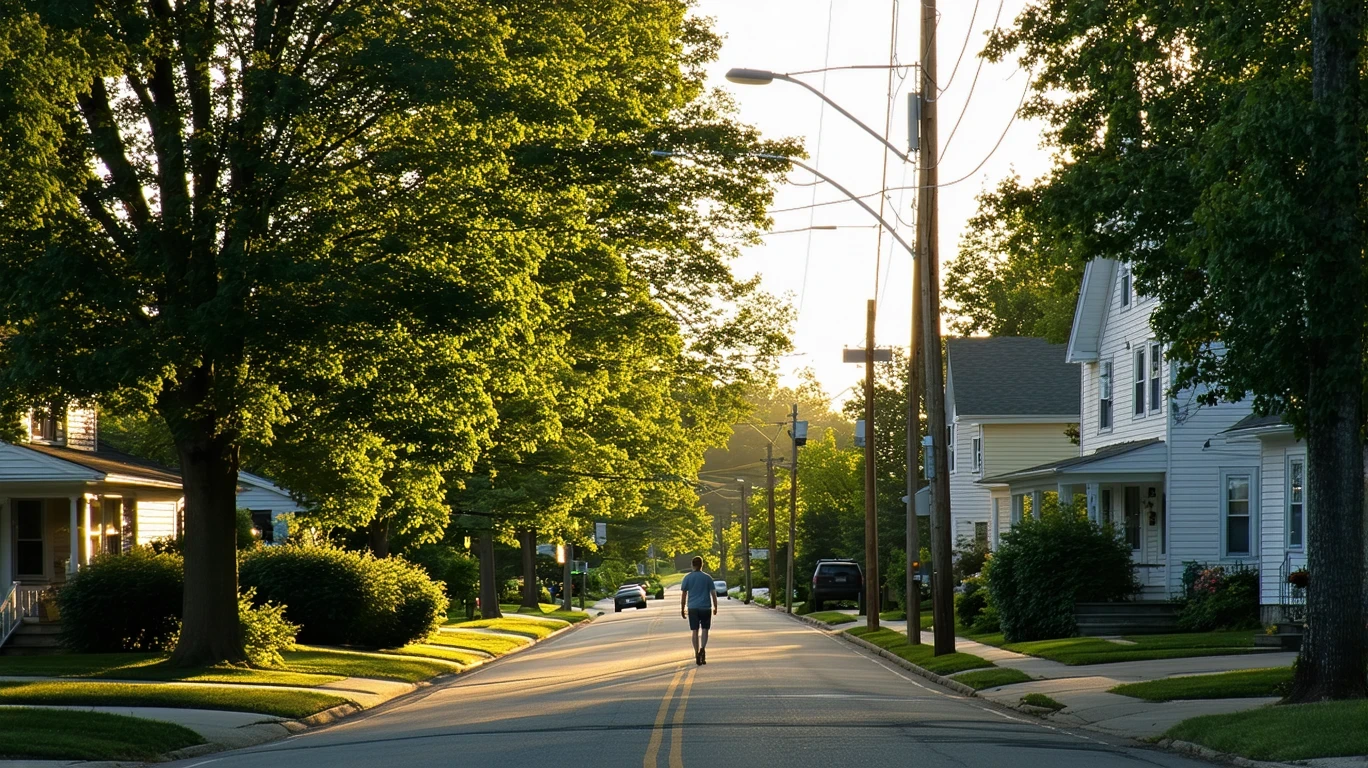
The Emotional Landscape of West Chester
West Chester tends to feel stable, orderly, and financially comfortable. With a median household income well above the national average, the town attracts families and professionals who want predictability, safety, and access to amenities without the density or unpredictability of urban life. There’s pride here—pride in well-kept neighborhoods, in low unemployment, in proximity to jobs and healthcare.
But that stability comes with a specific texture. The town’s structure leans heavily on corridors for errands and services, meaning that even though walkable pockets exist in parts of West Chester, day-to-day life still revolves around the car for most households. Green space is present, and the hospital adds a layer of security that families appreciate, but the pedestrian infrastructure doesn’t extend uniformly across the community. For people who wanted a classic suburb with occasional walking options, that feels fine. For those who expected more integrated walkability or spontaneous neighborhood life, it can feel limiting.
The recurring tension in local sentiment isn’t about whether West Chester is “good”—it’s about whether it matches what you thought you were getting. Newcomers from denser areas sometimes feel the friction of car dependency more acutely. Long-time residents who value quiet and order sometimes feel uneasy about growth and change. And younger professionals working remotely occasionally express restlessness, wishing for more third places, more variety, more serendipity.
What People Are Talking About Online
In local Facebook groups and broader regional forums, West Chester residents tend to discuss growth, convenience, and identity. There’s frequent conversation about new development—some of it excited, some of it wary. People talk about traffic patterns, school quality, and where to find specific services. The tone is generally civil and practical, though debates about density, zoning, and what kind of place West Chester should become can get heated.
Composite sentiment from these discussions might sound like:
- “It’s a great place to raise kids if you don’t mind driving everywhere. Everything you need is here, just not always walkable.”
- “I moved here for the income and the schools, and I got that. But I do miss being able to walk to a coffee shop or grab dinner without getting in the car.”
- “West Chester feels like it’s trying to figure out what it wants to be—still suburban, but with more going on than it used to have.”
The emotional range is wide but grounded. People aren’t angry; they’re negotiating expectations. The town delivers on safety, income stability, and access to healthcare. It delivers less consistently on spontaneity, walkability, and urban texture.
How Local Coverage Frames the Community
Local news and community outlets tend to frame West Chester through the lens of growth, infrastructure, and quality of life. Coverage often highlights new businesses, school achievements, and regional economic strength. There’s also recurring attention to development proposals, traffic concerns, and the balance between preserving suburban character and accommodating demand.
Timeless headline-style themes include:
- “Community Debates What Growth Should Look Like”
- “New Retail and Dining Options Arrive Along Key Corridors”
- “Residents Weigh Convenience Against Quiet”
- “Schools and Safety Remain Top Draw for Families”
- “West Chester’s Identity Evolves as Population Grows”
The framing is rarely negative, but it’s not uncritical either. There’s an ongoing conversation about whether the town is growing in ways that serve existing residents or simply attracting more of the same. The tone reflects a community that’s prosperous and functional, but also one that’s still figuring out its long-term personality.
Review-Based Public Perception
On platforms like Google Reviews, Yelp, and Nextdoor-style forums, West Chester earns consistent praise for cleanliness, safety, and access to services. Families appreciate the hospital, the parks, and the sense of order. Retirees and empty-nesters often describe it as comfortable and low-stress.
But there’s also a pattern of mild disappointment from residents who expected more walkability or neighborhood vitality. Newer planned areas tend to feel polished but somewhat sterile to some reviewers. Older pockets offer more character but less consistency in infrastructure. The corridor-based layout means that errands are accessible by car but rarely by foot, which frustrates households trying to reduce car dependency or raise kids with more independent mobility.
Common praise themes:
- Safe, clean, well-maintained
- Good schools and healthcare access
- Convenient to Cincinnati without the density
Common critique themes:
- Car-dependent for most daily tasks
- Limited walkable dining or entertainment districts
- Can feel homogenous or lacking in spontaneity
The reviews don’t suggest a broken place—they suggest a place that works very well for a specific profile and less well for others. Expectation alignment is everything.
How West Chester Compares to Nearby Communities
| Dimension | West Chester | Mason | Fairfield |
|---|---|---|---|
| Overall Vibe | Stable, orderly, car-dependent with walkable pockets | Family-focused, planned, very suburban | More working-class, older infrastructure, mixed character |
| Walkability Feel | Pockets exist but errands clustered on corridors | Limited, very car-oriented | Varies by neighborhood, some older walkable areas |
| Income & Expectation Level | High income, high expectations for convenience | Similar income, similar expectations | More moderate income, fewer amenity expectations |
| Community Personality | Transitional, debating growth and identity | Settled suburban identity | Grittier, more diverse, less polished |
West Chester sits between Mason’s more uniform suburban polish and Fairfield’s older, more varied character. If you want the highest level of suburban predictability and don’t mind car dependency, Mason might feel more consistent. If you’re looking for housing tradeoffs that include older, more affordable options with neighborhood texture, Fairfield might offer more variety. West Chester offers a middle path: higher income, good services, selective walkability, and an ongoing conversation about what kind of place it wants to be.
Voices from the Community
Here’s how different residents might describe the experience of living in West Chester:
- Young family, newcomer: “We moved here for the schools and the income. It’s safe, clean, and everything works. I do wish we could walk to more things, but we knew it was a suburb going in.”
- Remote worker, early 30s: “It’s comfortable, but I get a little stir-crazy. There’s not much spontaneous social life. I end up driving into Cincinnati for anything interesting.”
- Retiree, long-time resident: “I’ve seen this place grow a lot. It’s still quiet and safe, but it’s busier than it used to be. I’m glad the hospital is here—that matters more now.”
- Parent with school-age kids: “The schools are solid, and the parks are nice. I just wish my kids could bike to a friend’s house or walk to get ice cream. Everything requires me to drive them.”
- Commuter to Cincinnati: “The commute is manageable, and I like coming home to something quieter. But I do feel like I’m always in the car—work, errands, everything.”
- Newcomer from urban area: “I thought ‘walkable pockets’ meant I could ditch my car sometimes. It really just means there are sidewalks in some neighborhoods. You still drive everywhere.”
- Long-time resident, protective: “People complain, but they moved here for a reason. It’s not supposed to be a city. If you want that, Cincinnati is right there.”
The range of sentiment reflects a community that works well for people who want suburban order and can afford it, but less well for those seeking walkable spontaneity or urban texture. The friction isn’t about failure—it’s about fit.
Does West Chester Feel Like a Good Fit?
West Chester tends to work for households that value income stability, safety, healthcare access, and suburban predictability. It works for families who don’t mind driving for errands and who prioritize school quality and green space over walkability. It works for professionals who want proximity to Cincinnati without the density, and for retirees who appreciate order and low stress.
It tends to frustrate people who expected more integrated walkability, spontaneous neighborhood life, or urban amenities. It can feel limiting to younger residents seeking variety, to families hoping their kids could navigate independently, and to anyone trying to reduce car dependency. The town’s identity is still evolving, and that transition creates both opportunity and uncertainty.
If you’re considering West Chester, the key question isn’t whether it’s a happy place—it’s whether the tradeoffs it offers align with what you actually need. The town delivers on stability, income, and access. It delivers less on texture, spontaneity, and pedestrian freedom. Understanding that gap is the difference between feeling at home and feeling restless.
For a clearer sense of how day-to-day costs shape household decisions, or what quality of life factors matter most in practice, exploring those dimensions can help clarify whether West Chester’s vibe matches your expectations—or whether the friction points outweigh the rewards.
How this article was built: In addition to public economic data, this article incorporates location-based experiential signals derived from anonymized geographic patterns—such as access density, walkability, and land-use mix—to reflect how day-to-day living actually feels in West Chester, OH.
The perspectives shown reflect commonly expressed local sentiment and recurring themes in public discussion, rather than individual accounts.