
Deciding whether to rent or buy in Summerlin South means understanding more than just the price of entry—it means recognizing how this master-planned community’s structure, amenities, and cost exposures shape your housing experience over time. With a median home value of $593,800 and median rent at $2,194 per month, Summerlin South sits firmly in the higher tier of the Las Vegas metro market, reflecting both its planned development character and the regional price environment (RPP index of 116). The choice between renting and owning here isn’t just financial—it’s about how much control, predictability, and long-term exposure you’re willing to take on in a low-rise, amenity-rich suburb where walkable pockets and integrated green space coexist with limited family infrastructure.
The Housing Market in Summerlin South Today
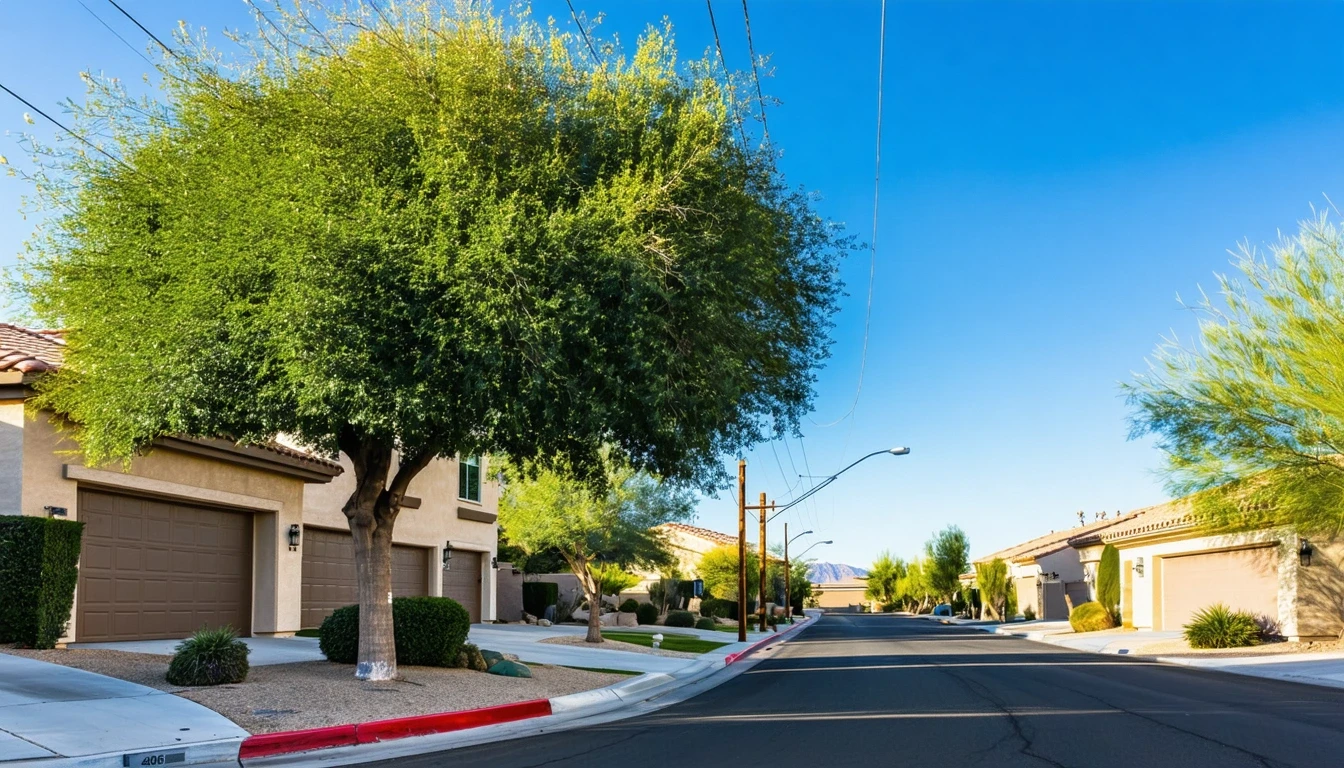
Summerlin South’s housing market reflects the deliberate design and phased development typical of master-planned communities in the Las Vegas valley. Unlike older, organically grown neighborhoods, this area was built with intentional land-use mix, pedestrian-friendly pockets, and integrated parks—qualities that show up in both the physical layout and the price structure. The median home value of $593,800 positions Summerlin South well above many other Las Vegas suburbs, a premium driven not just by square footage but by access to planned amenities, maintained common areas, and a cohesive residential character.
What newcomers often misunderstand is that this premium isn’t only about the home itself—it’s about the governance, maintenance expectations, and community standards that come with master-planned living. The low-rise building character and mixed land use create a suburban environment that feels more walkable than typical car-dependent sprawl, yet the limited density of schools and playgrounds signals that this community wasn’t optimized for young families in the same way it was optimized for green space and healthcare access. That tradeoff is baked into the market.
The regional price parity index of 116 confirms that Summerlin South’s cost structure runs above the national baseline, a reflection of both Nevada’s tax environment and the Las Vegas metro’s housing demand dynamics. For buyers, this means the sticker price is only part of the equation—ongoing costs, from utilities in a desert climate to potential community fees, layer on top of the purchase price in ways that vary significantly from renting.
Renting in Summerlin South
At $2,194 per month, the median gross rent in Summerlin South reflects the same premium that drives home values: planned amenities, maintained surroundings, and access to healthcare and parks. Renters here are paying for predictability and flexibility—costs are known upfront, maintenance is typically covered, and the ability to relocate without selling a property remains intact. For households prioritizing mobility or unwilling to absorb ownership risk in a high-value market, renting offers a clear path.
Rental availability in Summerlin South tends to cluster in specific developments and corridors, consistent with the area’s corridor-clustered food and grocery access. This means renters may need to be selective about location within the community to balance rent cost, commute access, and proximity to daily errands. The presence of bus service provides some transit optionality, but the area’s walkable pockets are unevenly distributed—choosing a rental near one of these zones can reduce car dependency for routine trips, while choosing farther out increases reliance on driving.
Renters also avoid exposure to the volatility that homeowners face: property tax changes, insurance rate swings, and unexpected maintenance costs don’t land on the tenant. In a desert climate where cooling systems work hard and outdoor landscaping requires consistent upkeep, that insulation has real value. However, renters sacrifice control—lease renewals, building policy changes, and rent adjustments remain at the landlord’s discretion, and the ability to modify living space or lock in long-term cost predictability is limited.
Owning a Home in Summerlin South
Owning a home in Summerlin South means taking on the full cost structure of a master-planned community in a high-value market. The $593,800 median home value represents a significant upfront commitment, and the ongoing expenses—property taxes, insurance, utilities, and likely homeowner association fees—add layers of exposure that renters don’t carry. While the feed doesn’t specify local tax rates or HOA costs, master-planned communities typically involve governance structures that assess fees for common area maintenance, landscaping, and amenity upkeep. These aren’t optional, and they don’t disappear if your financial situation changes.
Property taxes in Nevada are structured differently than in high-income-tax states, but the absence of state income tax doesn’t eliminate the need for revenue—property assessments and local levies still apply, and in a community with this level of planned infrastructure, those costs are embedded in ownership. Insurance in the desert brings its own considerations: while flood risk is generally low, wind, dust, and extreme heat can stress roofing, HVAC systems, and exterior finishes in ways that drive both premiums and claims over time.
Maintenance exposure in Summerlin South is shaped by climate and construction. Cooling systems run extensively during the long, hot season, and outdoor spaces—whether xeriscaped or irrigated—require either water costs or desert-appropriate upkeep. The low-rise building character means most homes are single-family or low-density attached, which generally increases the owner’s direct responsibility for exterior maintenance compared to higher-density housing. Owners also gain control: the ability to modify, upgrade, and stabilize housing costs over time, but that control comes with the obligation to fund and manage every system, surface, and structure on the property.
Apartment vs House in Summerlin South — Cost Behavior Comparison
| Expense Category | Apartment | House |
|---|---|---|
| Cooling costs | Lower total exposure due to smaller conditioned space and shared wall insulation | Higher exposure due to larger square footage and greater exterior surface area in desert heat |
| Outdoor maintenance | Typically covered by property management or HOA; minimal direct cost | Owner responsibility; requires either irrigation, xeriscape investment, or ongoing desert landscaping labor |
| Governance fees | Often included in rent or HOA dues; less transparency but predictable | Separate HOA assessments common in master-planned areas; visible and variable over time |
| Parking and access | Assigned or shared parking; walkable pockets may reduce car dependency for some errands | Private garage or driveway; car dependency higher outside walkable zones |
Methodology note: The table includes only categories where Summerlin South’s desert climate, master-planned governance structure, and low-rise mixed-use form create meaningful cost behavior differences. Generic distinctions (e.g., interior square footage, appliance counts) are excluded because they don’t vary in locally specific ways. Cooling exposure is driven by Summerlin South’s extended hot season; outdoor maintenance reflects desert landscaping norms; governance fees reflect master-planned community structure; and parking/access differences tie to the uneven distribution of walkable pockets identified in local infrastructure patterns.
Utilities & Upkeep Differences
Utility exposure in Summerlin South is dominated by cooling demand. The desert climate drives extended air conditioning use, and at 13.98¢/kWh, electricity costs add up quickly in larger homes with significant glass, vaulted ceilings, or older HVAC systems. Apartments and smaller attached homes benefit from shared-wall insulation and reduced conditioned space, which directly lowers cooling costs. Houses, especially those with south- or west-facing exposure and minimal shading, face notably higher seasonal utility bills.
Natural gas, priced at $9.29/MCF, plays a smaller role here than in cold-climate cities—heating demand is minimal, and gas is more commonly used for water heating, cooking, or pool equipment where present. The cost structure is therefore less volatile seasonally than in places where heating drives winter spikes, but the summer electricity load is the dominant exposure and it recurs every year.
Upkeep differences are also climate-driven. Desert conditions stress exterior paint, roofing materials, and seals around windows and doors. Dust infiltration is constant, and outdoor surfaces—from driveways to patios—experience thermal expansion and UV degradation. Houses require owners to fund and schedule these repairs; apartment residents typically see these costs absorbed into rent or HOA dues, with less visibility but also less direct control. The integrated green space and water features that define Summerlin South’s appeal require maintenance funding, and in master-planned communities, that cost is often shared through assessments rather than individualized.
Rent vs Buy: Long-Term Exposure in Summerlin South
The structural difference between renting and owning in Summerlin South is about control and exposure, not just monthly outflow. Renters face lease renewal risk and potential rent adjustments, but they avoid property tax changes, insurance volatility, major system failures, and the long-term cost of aging infrastructure. Owners gain stability in housing cost structure—once a mortgage is in place, the principal and interest are fixed—but they absorb every other form of volatility: tax assessments, insurance rate changes, HVAC replacement, roof repairs, and HOA fee increases.
In a master-planned community, ownership also means participation in governance. HOA fees fund amenities, landscaping, and common area maintenance, but they can also rise to cover deferred maintenance, legal costs, or capital improvements. Renters are insulated from these decisions; owners are bound by them. Over time, this creates diverging risk profiles: renters trade cost predictability for flexibility and lower responsibility, while owners trade upfront capital and ongoing exposure for control and the potential to stabilize their largest household expense.
The long cooling season, the low-rise housing form, and the planned infrastructure all mean that ownership in Summerlin South involves sustained, climate-driven costs that don’t diminish as the home ages—in fact, they often increase as systems wear and efficiency declines. Renters avoid that aging curve; owners live on it. Neither path is universally better, but the fit depends on how much volatility you can absorb, how long you plan to stay, and whether you value control over convenience.
FAQs About Housing Costs in Summerlin South
Is renting or buying more common in Summerlin South, NV?
Ownership is more prevalent in Summerlin South due to its master-planned, single-family residential character, but rental options exist primarily in specific apartment communities and attached-home developments. The high median home value creates a meaningful entry barrier, so renting remains a practical choice for newcomers, those prioritizing flexibility, or households unwilling to take on the full cost exposure of ownership in a high-value market.
What drives the cost difference between apartments and houses in Summerlin South?
The primary drivers are cooling exposure, outdoor maintenance responsibility, and governance structure. Houses have larger conditioned spaces and greater exterior surface area, which increases electricity costs during the extended hot season. They also require owners to fund landscaping, exterior repairs, and system upkeep directly, whereas apartments typically bundle these costs into rent or HOA dues with less visibility but more predictability.
How does Summerlin South’s master-planned structure affect housing costs?
Master-planned communities involve governance structures—usually HOAs—that assess fees for common area maintenance, landscaping, amenity upkeep, and sometimes utilities. These fees are mandatory for owners and can increase over time to cover capital improvements or deferred maintenance. The tradeoff is access to maintained parks, walkable pockets, and cohesive community standards, but the cost is less flexible than in unplanned neighborhoods.
Does the desert climate in Summerlin South increase homeownership costs?
Yes, in specific ways. Cooling costs dominate utility bills during the long hot season, and homes with poor insulation, older HVAC systems, or significant sun exposure face notably higher electricity use. Exterior materials—roofing, paint, seals—degrade faster under intense UV and thermal cycling, increasing maintenance frequency. Outdoor landscaping requires either irrigation investment or desert-appropriate design, both of which carry ongoing costs. Renters are typically insulated from these exposures; owners absorb them directly.
What should renters know about housing costs in Summerlin South, NV?
Renters should expect corridor-clustered access to groceries and errands, meaning location within Summerlin South affects convenience and car dependency. The area’s walkable pockets are unevenly distributed, so choosing a rental near one can reduce transportation costs and time. Rent at $2,194/month reflects the premium for planned amenities and maintained surroundings, but it also buys predictability—utility volatility, maintenance surprises, and governance fee increases don’t land on tenants.
Making Housing Choices in Summerlin South
Housing costs in Summerlin South are shaped by deliberate planning, desert climate, and a market that values amenities, green space, and low-rise residential character. Renters gain flexibility and insulation from ownership volatility, while owners gain control and the ability to stabilize long-term housing costs—but only by absorbing property taxes, insurance, maintenance, and governance fees that layer on top of the purchase price. The decision isn’t just about whether you can afford the entry point; it’s about whether the ongoing cost structure, the climate-driven exposures, and the master-planned governance model fit how you want to live and what risks you’re prepared to manage.
For households prioritizing walkability, healthcare access, and integrated parks, Summerlin South delivers—but the limited family infrastructure means families with school-age children may need to weigh amenities against educational and recreational density. For those comparing costs across the metro, understanding what shapes the cost of living in Summerlin South provides essential context for evaluating whether this community’s premium aligns with your priorities. And for anyone planning a move, knowing how your monthly budget in Summerlin South will actually break down—including the interplay between housing, transportation, and utilities—helps translate sticker prices into lived financial reality.
How this article was built: In addition to public economic data, this article incorporates location-based experiential signals derived from anonymized geographic patterns—such as access density, walkability, and land-use mix—to reflect how day-to-day living actually feels in Summerlin South, NV.