
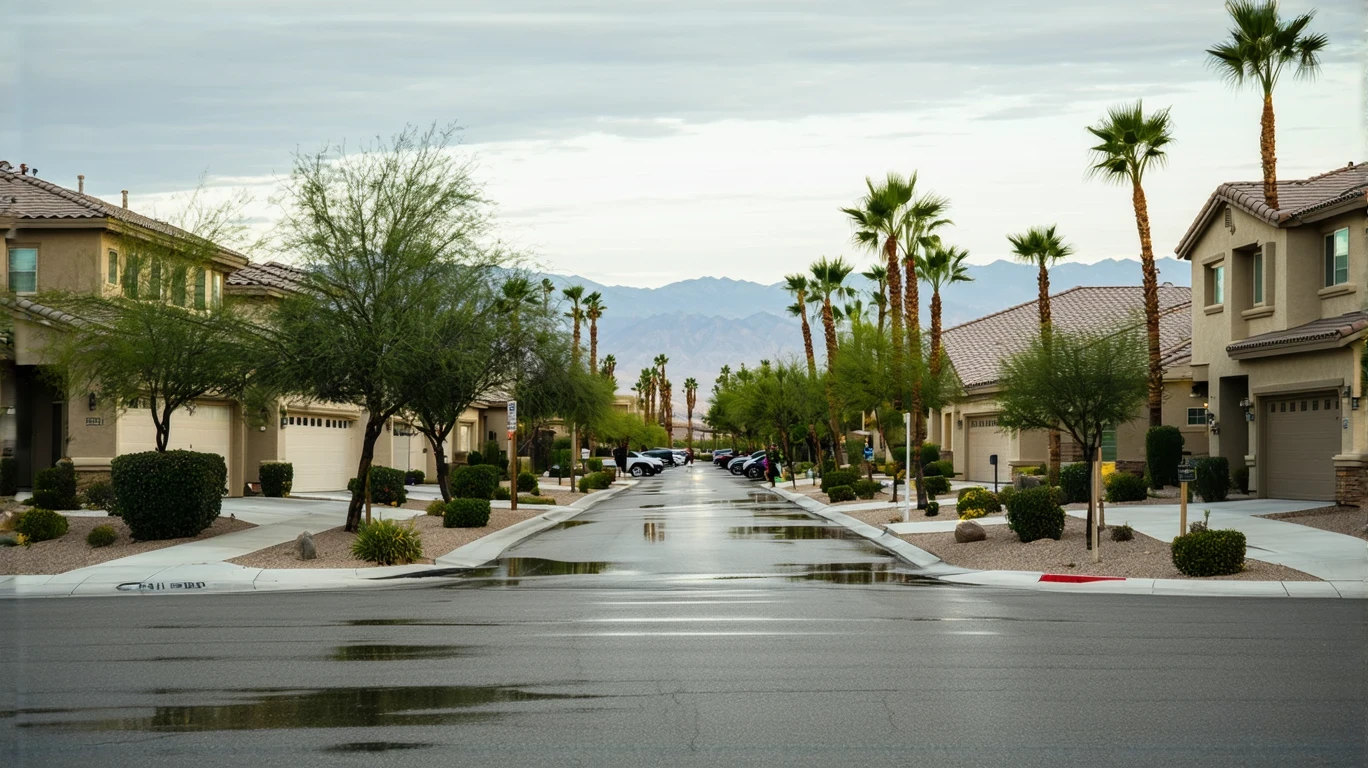
Median rent in Summerlin South sits at $2,194 per month—nearly $840 more than Las Vegas’s $1,356—yet both cities share the same metro unemployment rate of 5.8%. The difference isn’t about job availability or economic health; it’s about where cost pressure concentrates and which households feel it most. Summerlin South and Las Vegas sit within the same greater Las Vegas metro area, but they offer distinctly different cost structures. Summerlin South operates as a newer, low-rise planned community with higher housing entry costs, integrated park access, and lower natural gas prices. Las Vegas provides broader errands accessibility, rail transit service, more vertical building forms, and lower housing barriers. For households deciding between the two in 2026, the choice hinges less on total affordability and more on which costs dominate daily life—housing entry vs ongoing flexibility, car dependence vs transit viability, predictability vs access.
This comparison explains where cost pressure shows up differently in each city, how household types experience those differences, and which structural factors matter most when income, commute patterns, or family logistics shift. Neither city is universally cheaper; each fits different priorities.
Housing Costs
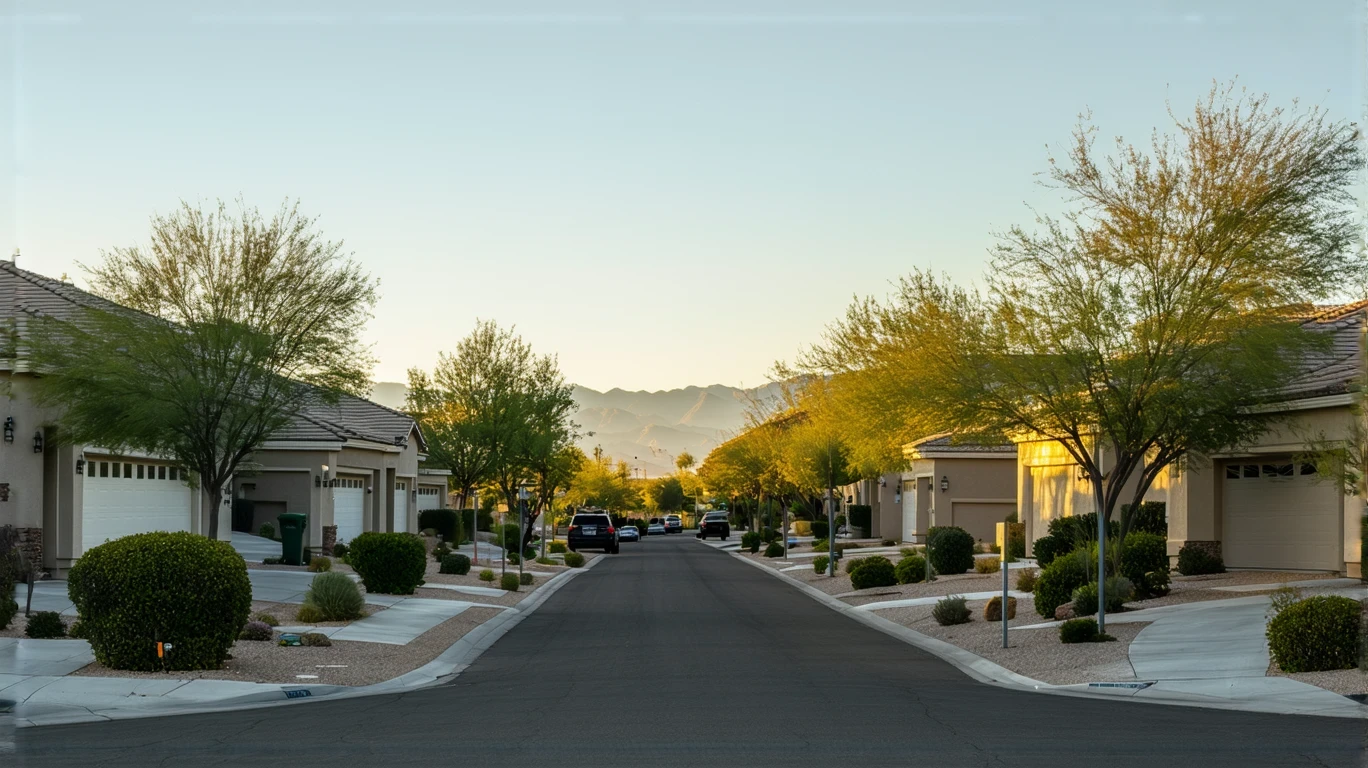
Housing represents the starkest structural difference between Summerlin South and Las Vegas. Summerlin South’s median home value stands at $593,800, while Las Vegas sits at $365,300. Median gross rent in Summerlin South reaches $2,194 per month compared to Las Vegas’s $1,356 per month. These aren’t small variations—they reflect fundamentally different housing markets within the same metro region. Summerlin South’s housing stock skews toward newer, low-rise single-family construction in planned developments, which drives both purchase prices and rental rates upward. Las Vegas offers a broader mix of housing types, including older single-family homes, apartment complexes, and more vertical building forms, creating more entry points across price tiers.
For renters, the difference in median gross rent shapes monthly obligations significantly. A household renting in Summerlin South faces higher baseline housing costs, which leaves less room for discretionary spending or savings unless income scales accordingly. Las Vegas renters encounter lower rent obligations, which can provide more flexibility for transportation, utilities, or variable expenses. Renters prioritizing newer construction, quieter residential character, or integrated park access may find Summerlin South’s rental market aligned with those preferences, even at higher cost. Renters seeking lower monthly obligations, proximity to urban amenities, or access to rail transit may prefer Las Vegas’s rental landscape.
For prospective buyers, the gap in median home values translates directly into down payment requirements, mortgage size, and ongoing property-related costs. Summerlin South’s higher home values demand larger upfront capital and higher monthly mortgage payments, even when interest rates and loan terms remain constant. Las Vegas’s lower median home value reduces the entry barrier for first-time buyers or households without substantial savings. However, home value alone doesn’t capture the full picture—property taxes, HOA fees, insurance, and maintenance costs vary by neighborhood, age of construction, and housing type. In some Summerlin South neighborhoods, HOA fees may bundle landscaping, shared amenities, or community services, adding predictable monthly obligations. In parts of Las Vegas, older housing stock may require more frequent repairs or upgrades, introducing less predictable costs over time.
| Housing Type | Summerlin South | Las Vegas |
|---|---|---|
| Median Home Value | $593,800 | $365,300 |
| Median Gross Rent | $2,194/month | $1,356/month |
| Typical Housing Form | Low-rise, newer single-family | Mixed, more vertical options |
Housing takeaway: Summerlin South imposes higher housing entry costs—both for renters and buyers—but offers newer construction and low-rise residential character. Las Vegas provides lower rent and purchase barriers, broader housing type diversity, and more vertical living options. Households with higher incomes or prioritizing space and newness may absorb Summerlin South’s housing pressure more easily. Households seeking lower monthly obligations, urban access, or first-time buyer entry points will find Las Vegas more accommodating. The primary pressure in Summerlin South is front-loaded (entry barrier); in Las Vegas, it’s distributed across access, age, and variability.
Utilities and Energy Costs
Utility cost behavior in both cities reflects the realities of desert living—extended cooling seasons, minimal heating needs, and electricity-dominated energy use. Summerlin South’s electricity rate sits at 13.98¢/kWh, while Las Vegas’s rate is 14.20¢/kWh. The difference is narrow, and both cities experience similar cooling demands driven by triple-digit summer heat. However, natural gas pricing diverges more noticeably: Summerlin South’s natural gas price is $9.29/MCF, compared to Las Vegas’s $11.96/MCF. Natural gas use in both cities remains limited—primarily for water heating, cooking, or occasional winter heating—but households relying on gas appliances or pool heating will feel the difference in Summerlin South’s favor.
Cooling costs dominate utility exposure in both cities. Air conditioning runs nearly year-round, with peak usage stretching from late spring through early fall. Households in newer Summerlin South construction may benefit from better insulation, energy-efficient windows, and modern HVAC systems, which can reduce electricity consumption even when rates are similar. Older homes in parts of Las Vegas may experience higher cooling costs due to less efficient building envelopes, single-pane windows, or aging air conditioning units. Apartment dwellers in both cities often see lower utility bills than single-family homeowners, as smaller square footage and shared walls reduce cooling load.
Household size and housing type interact with utility costs in predictable ways. A single adult in a one-bedroom apartment will experience lower baseline electricity use than a family of four in a three-bedroom house, regardless of city. However, the gap between apartment and single-family utility costs may feel wider in Summerlin South, where single-family homes tend to be newer and larger. In Las Vegas, the broader mix of housing types—including older, smaller single-family homes and mid-rise apartments—creates more variability in utility exposure. Families managing larger homes should expect higher summer electricity bills in both cities, but those in Summerlin South may see slightly lower natural gas costs if they use gas for water heating or pool equipment.
Utility takeaway: Both cities impose similar electricity-driven cooling costs, with Summerlin South offering a modest advantage in natural gas pricing. Households in newer, well-insulated homes experience more predictable utility costs; those in older construction face higher variability. Single adults and couples in apartments encounter lower baseline utility exposure than families in single-family homes. The primary cost driver in both cities is cooling, not heating, and households should plan for extended high-usage months rather than seasonal spikes.
Groceries and Daily Expenses
Grocery and everyday spending pressure differs between Summerlin South and Las Vegas not because of dramatic price gaps, but because of how access, density, and shopping habits shape cost behavior. Las Vegas shows broadly accessible food and grocery density, meaning residents encounter more options within shorter distances—big-box stores, discount grocers, ethnic markets, and convenience chains all appear frequently across neighborhoods. Summerlin South’s food and grocery density clusters along corridors, meaning residents may need to drive slightly farther or plan trips more deliberately to access the same variety. This difference doesn’t necessarily raise prices, but it does affect convenience, trip frequency, and the likelihood of impulse purchases or last-minute errands.
Price sensitivity plays out differently depending on household size and shopping strategy. Single adults and couples who shop infrequently, buy in bulk, or cook at home regularly can navigate both cities without significant cost differences, especially if they’re willing to drive to discount grocers or warehouse clubs. Families managing larger grocery volumes—weekly hauls for multiple people, school lunches, snacks—may feel more pressure in Summerlin South if corridor clustering limits nearby options or forces longer trips. In Las Vegas, the higher density of grocery options means families can more easily compare prices, switch stores, or take advantage of sales without adding significant travel time.
Dining out and convenience spending introduce another layer of cost exposure. Las Vegas’s broader accessibility to restaurants, coffee shops, and prepared food options makes it easier to spend frequently on takeout, quick meals, or social dining. That convenience can erode grocery savings if households slip into higher dining-out frequency. Summerlin South’s lower density of food establishments may naturally limit impulse dining spending, but it can also mean fewer options for quick, affordable meals when time is tight. Households with unpredictable schedules or limited time for meal prep may find Las Vegas’s food access more flexible, even if it introduces more temptation to spend.
Groceries takeaway: Las Vegas offers broader, denser grocery and food access, which supports price comparison and convenience but also increases exposure to dining-out spending. Summerlin South’s corridor-clustered grocery access requires more planning but may naturally limit impulse food spending. Families managing large grocery volumes benefit more from Las Vegas’s density; single adults and couples with disciplined shopping habits can navigate either city without major cost differences. The primary difference is access friction, not price levels.
Taxes and Fees
Nevada imposes no state income tax, which benefits residents of both Summerlin South and Las Vegas equally. However, property taxes, sales taxes, and local fees introduce structural differences that affect households differently depending on housing type, consumption patterns, and length of residence. Property taxes in Nevada are calculated based on assessed home values, and while specific rates vary by county and district, the gap in median home values between Summerlin South and Las Vegas translates directly into different property tax obligations. A home valued at $593,800 in Summerlin South will generate higher annual property tax bills than a home valued at $365,300 in Las Vegas, even if the effective tax rate remains constant. For homeowners, this difference compounds over time and affects long-term ownership costs.
Sales taxes apply to most goods and services in both cities, and while rates are set at the county level, consumption patterns shape how much households actually pay. Families with children, frequent diners, or households that purchase vehicles, furniture, or electronics regularly will see sales tax accumulate more noticeably. Single adults or couples with lower consumption footprints experience less sales tax pressure. Because Las Vegas offers broader access to retail and dining options, households there may encounter more frequent opportunities to spend—and thus pay sales tax—compared to Summerlin South, where lower retail density may naturally limit transaction volume.
Local fees—trash collection, water, sewer, HOA dues—vary widely by neighborhood and housing type. In some Summerlin South planned communities, HOA fees bundle services like landscaping, community pool access, or security, creating predictable monthly obligations that can range from modest to substantial depending on the development. In parts of Las Vegas, older neighborhoods may lack HOAs entirely, reducing monthly fees but shifting responsibility for yard maintenance, exterior upkeep, and repairs directly to homeowners. Renters in both cities typically see some fees embedded in rent (trash, water), but those in HOA-governed communities may face additional restrictions or pass-through costs.
Taxes and fees takeaway: Summerlin South homeowners face higher property tax exposure due to higher home values, and HOA fees may add predictable monthly costs in planned communities. Las Vegas homeowners encounter lower property tax obligations and more variability in fee structures depending on neighborhood age and governance. Renters in both cities experience relatively similar fee exposure, though HOA-governed rentals may introduce additional costs. The primary difference is predictability: Summerlin South’s fees tend to be more structured and bundled; Las Vegas’s fees vary more by housing type and location.
Transportation & Commute Reality
Transportation costs in Summerlin South and Las Vegas diverge in two key areas: fuel prices and transit viability. Summerlin South’s gas price sits at $5.01/gal, while Las Vegas’s gas price is $3.67/gal. For households that drive daily—whether commuting, running errands, or managing family logistics—this difference accumulates over time, especially for those covering longer distances or operating multiple vehicles. Summerlin South’s higher gas prices increase the cost of car dependence, while Las Vegas’s lower fuel costs reduce the financial friction of driving.
Transit infrastructure also differs meaningfully. Las Vegas offers rail transit service in addition to bus routes, which provides more viable alternatives to driving for households living or working near rail corridors. Summerlin South operates with bus-only transit service, which limits non-car options for most residents. In Las Vegas, the average commute time is 25 minutes, and 38.1% of workers experience long commutes, suggesting that many residents travel significant distances for work. Only 4.6% of Las Vegas workers work from home, meaning the vast majority rely on either personal vehicles or transit. Summerlin South lacks comparable commute data in the input feed, but its suburban, low-rise character and corridor-clustered errands accessibility suggest that most residents depend on cars for daily mobility.
Households in Summerlin South face higher per-gallon fuel costs and limited transit alternatives, which concentrates transportation pressure on vehicle ownership, fuel budgets, and maintenance. Households in Las Vegas encounter lower fuel costs and access to rail transit, which provides more flexibility for reducing car dependence—though only for those living or working near transit routes. Families managing school drop-offs, extracurricular activities, or multi-stop errands will likely rely on cars in both cities, but the fuel cost difference makes that reliance more expensive in Summerlin South. Single adults or couples with flexible schedules and proximity to rail in Las Vegas may reduce transportation costs by using transit for commuting and reserving car use for weekends or specific errands.
Transportation takeaway: Summerlin South imposes higher fuel costs and relies on bus-only transit, increasing car dependence and transportation expense. Las Vegas offers lower gas prices and rail transit access, which reduces fuel costs and provides viable alternatives for some households. Families and multi-vehicle households feel fuel price differences more acutely; single adults near transit routes in Las Vegas gain the most flexibility. The primary difference is cost per mile driven and the presence of non-car options.
Cost Structure Comparison
Housing dominates the cost experience in Summerlin South. The combination of higher median home values and higher median rent creates a front-loaded financial barrier that shapes which households can enter the market and how much flexibility remains after housing costs are covered. Utilities introduce modest predictability advantages—slightly lower electricity rates and notably lower natural gas prices—but these don’t offset the housing gap. Transportation costs layer additional pressure through higher gas prices, and the absence of rail transit limits alternatives for reducing car dependence. Summerlin South’s cost structure favors households with higher incomes, lower sensitivity to housing entry costs, and willingness to absorb fuel expenses in exchange for newer construction, low-rise residential character, and integrated park access.
Las Vegas distributes cost pressure differently. Lower housing entry costs—both for renters and buyers—create more accessible pathways into the market, leaving more income available for utilities, transportation, and discretionary spending. Broader grocery and food accessibility reduces errands friction but also increases exposure to convenience spending and dining-out temptation. Rail transit presence provides viable alternatives to driving for some households, and lower gas prices reduce the cost of car dependence for those who still drive. Las Vegas’s cost structure favors households seeking lower monthly obligations, flexibility in housing type, and access to urban amenities without requiring the highest incomes.
Utilities and energy exposure behave similarly in both cities, with cooling costs dominating and natural gas use remaining limited. Summerlin South’s lower natural gas price offers a modest advantage for households using gas appliances or pool heating, but the difference is narrow. Families in larger, older homes face higher utility variability in both cities, while apartment dwellers experience more predictable, lower baseline costs.
Daily living and groceries create different friction points. Las Vegas’s broadly accessible food and grocery density supports price comparison and convenience, but it also makes frequent dining out easier and more tempting. Summerlin South’s corridor-clustered grocery access requires more planning and longer trips, which may naturally limit impulse spending but also reduces flexibility for last-minute errands or quick meals.
For households sensitive to housing entry costs, Las Vegas offers a clearer advantage. For households prioritizing newer housing stock, lower natural gas costs, and integrated green space, Summerlin South provides those features at a higher price. The better choice depends on which costs dominate the household—front-loaded housing barriers vs ongoing flexibility, car dependence vs transit viability, predictability vs access.
How the Same Income Feels in Summerlin South vs Las Vegas
Single Adult
For a single adult, housing becomes the first non-negotiable cost, and the difference between Summerlin South’s median rent and Las Vegas’s median rent determines how much income remains for everything else. In Summerlin South, higher rent obligations compress flexibility for dining out, entertainment, or savings unless income scales accordingly. In Las Vegas, lower rent leaves more room for discretionary spending or building an emergency fund. Transportation pressure depends on commute distance and proximity to transit—single adults near rail lines in Las Vegas gain flexibility to reduce car use, while those in Summerlin South face higher fuel costs and limited transit alternatives. Grocery costs remain manageable in both cities for disciplined shoppers, but Las Vegas’s broader food access makes convenience spending easier to slip into.
Dual-Income Couple
For a dual-income couple, housing still dominates, but the ability to split costs reduces the relative burden compared to single adults. In Summerlin South, higher rent or mortgage payments may feel more manageable with two incomes, especially if both partners prioritize newer construction and quieter residential character. In Las Vegas, lower housing costs free up income for travel, dining, or savings, and broader errands accessibility reduces time friction for managing household logistics. Transportation becomes more complex if both partners commute—Summerlin South’s higher gas prices and car dependence increase costs for two-vehicle households, while Las Vegas’s rail transit and lower fuel prices offer more flexibility. Utility costs remain similar in both cities, though couples in larger homes face higher cooling exposure.
Family with Kids
For families, housing, transportation, and errands friction all intensify. Summerlin South’s higher housing costs hit harder when families need more bedrooms, and the corridor-clustered grocery access adds time costs for weekly shopping, school drop-offs, and extracurricular logistics. Higher gas prices compound the cost of managing multiple daily trips, and limited transit options mean families rely almost entirely on cars. In Las Vegas, lower housing entry costs provide more breathing room for families managing larger grocery volumes, childcare, or school expenses, and broader food accessibility reduces errands friction. Rail transit remains less useful for families managing complex schedules, but lower fuel costs ease the burden of frequent driving. Utility exposure increases for families in both cities as larger homes and more occupants drive up cooling costs, but Summerlin South’s lower natural gas prices offer modest relief for families using gas appliances.
Decision Matrix: Which City Fits Which Household?
| Decision Factor | If You’re Sensitive to This… | Summerlin South Tends to Fit When… | Las Vegas Tends to Fit When… |
|---|---|---|---|
| Housing entry + space needs | Down payment size, monthly rent, mortgage obligations | You prioritize newer, low-rise construction and can absorb higher entry costs | You need lower monthly obligations or lack substantial savings for down payments |
| Transportation dependence + commute friction | Fuel costs, transit access, car reliance | You accept higher gas prices and car dependence in exchange for residential character | You want lower fuel costs or access to rail transit for commuting flexibility |
| Utility variability + home size exposure | Cooling costs, natural gas use, seasonal bills | You use natural gas appliances or pool heating and value lower gas prices | You prioritize similar electricity rates and accept slightly higher natural gas costs |
| Grocery strategy + convenience spending creep | Errands friction, dining-out temptation, food access density | You plan trips deliberately and prefer lower density to limit impulse spending | You value broad food access for price comparison and convenience, even with dining temptation |
| Fees + friction costs (HOA, services, upkeep) | Predictable monthly obligations, bundled services, property taxes | You accept higher property taxes and HOA fees for bundled amenities and newer infrastructure | You prefer lower property tax obligations and more variability in fee structures |
| Time budget (schedule flexibility, errands, logistics) | Errands consolidation, transit viability, multi-stop trips | You tolerate longer errands trips and car dependence for quieter residential settings | You need dense errands access and rail transit options to reduce time friction |
Lifestyle Fit
Summerlin South and Las Vegas offer distinctly different lifestyle textures, even within the same metro area. Summerlin South operates as a planned community with integrated park access, low-rise residential character, and walkable pockets that support pedestrian activity within neighborhoods. The city’s green space access exceeds high density thresholds, and water features add visual appeal and recreational options. However, family infrastructure remains limited—school and playground density fall below thresholds, which may require families to travel farther for educational or recreational amenities. Healthcare access includes hospital presence and pharmacies, providing routine and emergency care locally. The overall feel skews suburban, quiet, and newer, with mixed residential and commercial land use supporting some walkability for errands within specific corridors.
Las Vegas presents a more urban, vertical, and accessible environment. The city’s building height profile exceeds high thresholds, creating a denser, more compact urban form. Rail transit service provides viable alternatives to driving for residents living or working near transit corridors, and bus service supplements coverage. Food and grocery density exceeds high thresholds, meaning residents encounter more options within shorter distances for daily errands. Park access remains present but doesn’t reach the same integrated density as Summerlin South, and family infrastructure also shows limited school and playground density. Healthcare access mirrors Summerlin South, with hospital presence and pharmacies available. The overall feel is more urban, faster-paced, and vertically oriented, with broader access to dining, entertainment, and retail.
Lifestyle factors indirectly affect costs in both cities. Summerlin South’s walkable pockets and integrated parks may reduce recreation spending for households that prioritize outdoor activities close to home, but the corridor-clustered grocery access and car dependence increase transportation time and fuel costs. Las Vegas’s rail transit and broadly accessible errands reduce car reliance for some households, lowering fuel and maintenance expenses, but the density of dining and entertainment options increases exposure to discretionary spending. Families prioritizing outdoor space, quieter residential settings, and newer construction may find Summerlin South’s lifestyle more aligned with those preferences, even at higher housing costs. Households seeking urban access, transit flexibility, and denser amenities may prefer Las Vegas’s lifestyle, especially if lower housing costs free up income for entertainment and dining.
Quick fact: Summerlin South’s park density exceeds high thresholds, with water features present, supporting outdoor recreation close to home.
Quick fact: Las Vegas offers rail transit service in addition to bus routes, providing more viable alternatives to driving for residents near transit corridors.
Frequently Asked Questions
Is Summerlin South or Las Vegas more affordable for renters in 2026?
Las Vegas offers lower median gross rent at $1,356 per month compared to Summerlin South’s $2,194 per month, which reduces monthly housing obligations and leaves more income available for other expenses. Renters seeking lower baseline costs and broader access to urban amenities will find Las Vegas more accommodating, while those prioritizing newer construction and quieter residential character may accept Summerlin South’s higher rent.
Which city has lower transportation costs, Summerlin South or Las Vegas?
Las Vegas has lower gas prices at $3.67/gal compared to Summerlin South’s $5.01/gal, and it offers rail transit service in addition to bus routes, which provides more alternatives to driving. Households that drive frequently or operate multiple vehicles will experience lower fuel costs in Las Vegas, while those in Summerlin South face higher per-gallon expenses and rely almost entirely on cars.
How do grocery costs compare between Summerlin South and Las Vegas in 2026?
Grocery costs are shaped more by access and shopping habits than by price differences. Las Vegas shows broadly accessible food and grocery density, meaning residents encounter more options within shorter distances for price comparison and convenience. Summerlin South’s corridor-clustered grocery access requires more planning and longer trips, which may limit impulse spending but also reduces flexibility for last-minute errands.
Do utilities cost more in Summerlin South or Las Vegas?
Electricity rates are similar—Summerlin South at 13.98¢/kWh and Las Vegas at 14.20¢/kWh—but natural gas prices differ more noticeably, with Summerlin South at $9.29/MCF compared to Las Vegas’s $11.96/MCF. Households using natural gas for water heating, cooking, or pool heating will see lower costs in Summerlin South, though cooling-driven electricity use dominates utility exposure in both cities.
Which city is better for families, Summerlin South or Las Vegas?
Both cities show limited family infrastructure, with school and playground density below thresholds, meaning families may need to travel farther for educational or recreational amenities. Summerlin South offers integrated park access and quieter residential settings but imposes higher housing costs and transportation expenses. Las Vegas provides lower housing entry costs and broader errands accessibility but lacks the same green space density. Families prioritizing outdoor space and newer construction may prefer Summerlin South; those seeking lower monthly obligations and urban access may choose Las Vegas.
Conclusion
Summerlin South and Las Vegas present fundamentally different cost structures within the same metro area. Summerlin South concentrates pressure on housing entry—both rent and purchase—while offering lower natural gas costs, integrated park access, and newer low-rise construction. Las Vegas distributes costs more evenly, with lower housing barriers,