
Maya and her partner had been tracking Summerlin South for months—drawn by the parks, the newer housing stock, and the promise of a quieter pace than the Las Vegas core. They earned a combined $95,000 and felt confident they could make it work. But three months after moving, they were surprised by how tight things felt. The rent was manageable on paper, but summer utility bills, the need for two cars despite some walkable streets, and the lack of nearby schools for their toddler added friction they hadn’t anticipated. They weren’t struggling—but they weren’t comfortable, either.
Understanding what it takes to live comfortably in Summerlin South isn’t about hitting a magic income number. It’s about recognizing which costs dominate, how your household type interacts with the place’s structure, and whether your expectations align with the tradeoffs you’ll actually face.
What “Living Comfortably” Means in Summerlin South
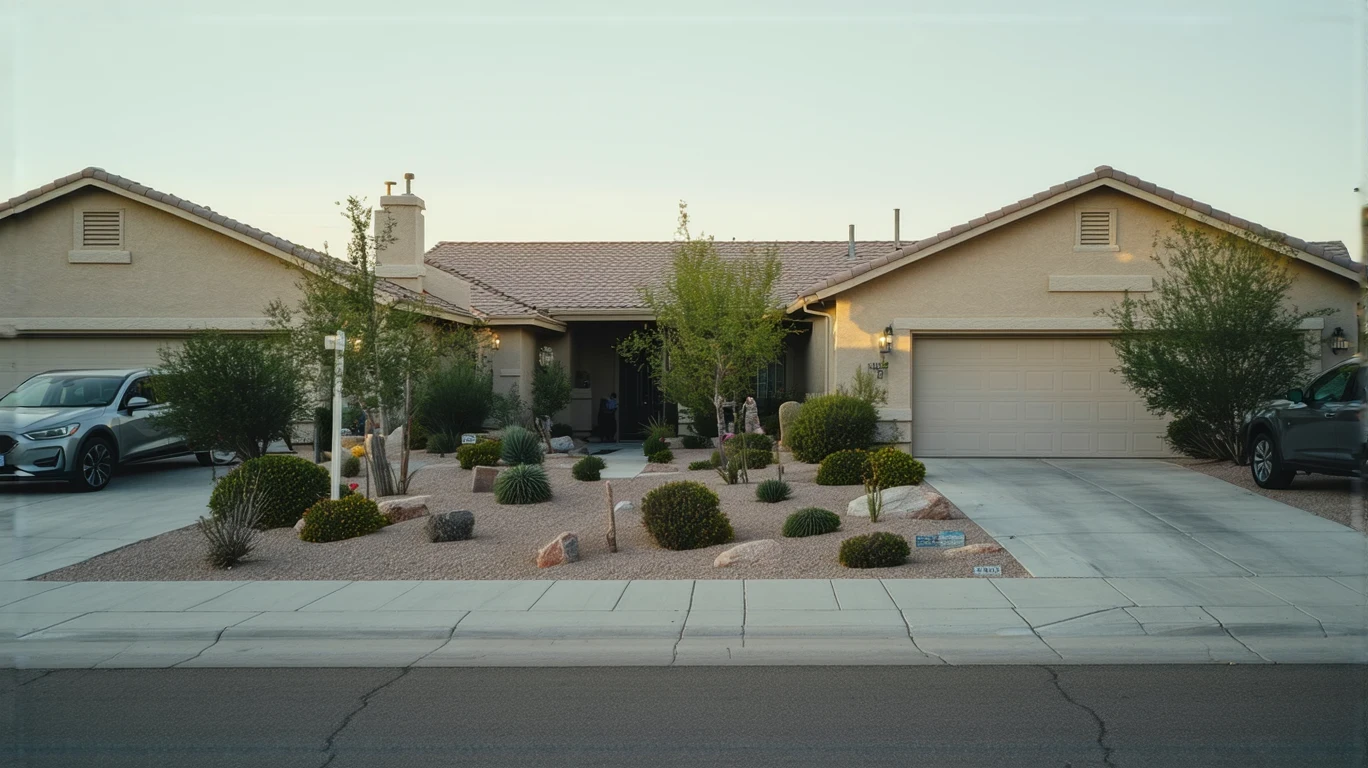
Comfort in Summerlin South is defined by space, climate control, and access—not by urban amenities or walkable errand loops. The community is low-rise and residential, with substantial pedestrian infrastructure in pockets and park density that exceeds typical suburban thresholds. But daily errands remain clustered along corridors, and family infrastructure—schools and playgrounds—falls below density benchmarks. This creates a lived experience where you can walk for recreation but still drive for groceries, appointments, and school drop-offs.
Comfort here means:
- Securing housing without stretching your income to the breaking point
- Absorbing seasonal utility swings driven by extended cooling seasons and triple-digit summer heat
- Owning and fueling at least one car per adult, even in walkable pockets
- Having enough flexibility to handle month-to-month variability without stress
Comfort is not universal. It’s shaped by what you expect from your surroundings, how much space you need, and how sensitive you are to financial pressure when costs don’t distribute evenly across the year.
Where Income Pressure Shows Up First
In Summerlin South, housing dominates. The median home value is $593,800, and the median gross rent is $2,194 per month. For renters, that figure alone consumes a significant share of income before utilities, transportation, or food enter the picture. For buyers, the home value translates into mortgage payments, property taxes, insurance, and maintenance—all of which scale with the size and age of the property.
Utility costs add seasonal volatility. Electricity rates sit at 13.98¢/kWh, and in a climate with long, hot summers, cooling a single-family home can mean sustained high usage. Natural gas, priced at $9.29/MCF, plays a smaller role but still contributes during cooler months. The pressure isn’t the rate—it’s the intensity and duration of exposure.
Transportation costs layer on top. Gas prices reach $5.01/gal, and the community’s structure—despite walkable pockets—requires car ownership for most household tasks. Errands are corridor-clustered, not neighborhood-distributed, so even short trips add up. Families face additional pressure: limited school and playground density means longer drives or private alternatives, adding both time and money to the equation.
For families, the mismatch between park access and family infrastructure creates a hidden cost. You can walk to green space, but you’ll drive to school, playdates, and activities. That’s not a failure of the place—it’s the structure, and it shapes how income gets spent.
How the Same Income Feels Different by Household
Households at similar income levels often experience very different pressure depending on size, expectations, and how they use the community’s infrastructure.
Single adults face lower absolute costs but still confront housing as the dominant expense. A one-bedroom rental or small condo eases the burden compared to a family home, but $2,194 per month represents the median—not the floor. Walkable pockets offer some lifestyle value for recreation, but car ownership remains necessary for errands and work. Utility costs scale with square footage, so smaller spaces provide some relief during peak cooling months. The limited family infrastructure is irrelevant, but the lack of transit alternatives beyond bus service means transportation costs remain fixed.
Couples benefit from dual income, which eases the proportional weight of housing and utilities. But the same structural forces apply: car dependency persists despite walkability, and day-to-day costs don’t shrink just because two people share them. Utility bills don’t halve with two incomes, and fuel costs double if both partners commute. The corridor-clustered errands model means planning and time investment, even if the financial pressure is less acute than for single earners.
Families experience the most intense pressure. Housing costs rise with space needs—more bedrooms, larger cooling loads, higher maintenance. The limited school and playground density forces longer trips, private school tuition, or acceptance of sparse local options. Walkable parks provide some value, but they don’t replace the infrastructure families rely on daily. Utility costs scale with square footage, and summer cooling bills can dominate monthly budgets. Families also face less flexibility: fixed school schedules, activity costs, and the need for reliable transportation remove the margin that singles and couples might preserve.
The Comfort Threshold (Qualitative)
The transition to comfort in Summerlin South happens when housing stops dictating every other decision. It’s the point where:
- You can absorb a $150 summer utility spike without rearranging your budget
- Car ownership and fuel costs feel like logistics, not sacrifices
- You can choose housing based on preference, not just affordability
- Saving becomes plausible, not aspirational
- Tradeoffs ease—you’re not constantly choosing between comfort and cost
This threshold isn’t a number. It’s a state where your income exceeds the community’s structural demands by enough margin that variability doesn’t create stress. For some households, that happens at the median income of $110,911 per year. For others—especially families in larger homes or single earners covering full housing costs—it requires more.
The threshold also depends on expectations. If you expect walkability to reduce car costs, or assume park access substitutes for school proximity, you’ll feel the gap more acutely. If you enter knowing the structure and plan accordingly, the same income stretches further.
Why Online Cost Calculators Get Summerlin South Wrong
Most cost-of-living calculators reduce Summerlin South to a set of averages: median rent, typical utilities, standard transportation. They miss the texture that shapes how money actually gets spent.
Calculators don’t account for:
- Seasonal utility volatility: They assume steady monthly costs, but cooling-season exposure creates peaks that dominate summer budgets.
- The walkability paradox: Pedestrian infrastructure exists, but errands remain car-dependent. Calculators see walkable pockets and assume lower transportation costs—but households still own and fuel vehicles.
- Family infrastructure gaps: Park density is high, but school and playground density is low. Calculators don’t capture the time and money families spend compensating for that mismatch.
- Housing cost distribution: Median rent is $2,194, but that figure includes a wide range. Calculators don’t explain what you get at that price, or what tradeoffs you’ll face below it.
People feel surprised after moving because the totals looked manageable, but the distribution didn’t match their assumptions. The calculator said they could afford it. The lived experience said otherwise.
How to Judge Whether Your Income Fits Summerlin South
Instead of asking “How much do I need?” ask yourself:
- How sensitive am I to housing tradeoffs? Can you accept a smaller space, older finishes, or a less convenient location to stay within budget? Or do you need a specific type of home to feel settled?
- Can I absorb seasonal utility swings? Will a $100–$200 summer spike in cooling costs force you to cut elsewhere, or can you handle it as part of the rhythm?
- Is time or money my limiting factor? Corridor-clustered errands mean planning and driving. If your schedule is tight, that’s a cost calculators don’t measure.
- How much flexibility do I expect month to month? Summerlin South rewards households with margin. If you’re budgeting to the dollar, variability will feel more punishing here than in places with flatter cost curves.
- Do I have school-age children? If so, are you prepared for limited local school and playground density, and the time or money required to compensate?
These questions don’t produce a pass/fail score. They surface whether your income, expectations, and flexibility align with what Summerlin South actually demands.
FAQs About Living Comfortably in Summerlin South
Is the median household income enough to live comfortably in Summerlin South?
The median household income is $110,911 per year. For some households—especially couples without children or single adults in smaller spaces—that income provides meaningful margin. For families in larger homes or single earners covering full housing and transportation costs, it may stretch tight. Comfort depends on household size, expectations, and how much flexibility you need month to month.
Does the walkability in Summerlin South reduce transportation costs?
Summerlin South has substantial pedestrian infrastructure in pockets, and park density is high. But daily errands remain corridor-clustered, and family infrastructure is limited. Most households still own and fuel at least one car per adult. Walkability offers recreational value, but it doesn’t eliminate car dependency for groceries, work, or school.
How do utility costs affect comfort in Summerlin South?
Utility costs are shaped by intensity and duration, not just rates. Extended cooling seasons and triple-digit summer heat mean sustained high electricity usage. Households in larger homes or with lower tolerance for indoor heat will see utility bills dominate summer budgets. Comfort depends on your ability to absorb those swings without stress.
What income level makes Summerlin South feel easy instead of tight?
There’s no single threshold. Comfort happens when housing stops dictating every other decision, when seasonal utility spikes don’t require budget reshuffling, and when saving becomes plausible. For some, that’s near the median income. For others—especially families or those expecting more space—it requires significantly more. The transition is qualitative, not numeric.
Are there hidden costs that surprise people after moving to Summerlin South?
Yes. The mismatch between walkable pockets and car-dependent errands surprises people who assume pedestrian infrastructure reduces transportation costs. Limited family infrastructure—sparse schools and playgrounds—forces families to drive farther or pay for private alternatives. Seasonal utility volatility catches households off guard if they budget for flat monthly costs. These aren’t failures of the place—they’re structural realities that shape how income gets spent.
How this article was built: In addition to public economic data, this article incorporates location-based experiential signals derived from anonymized geographic patterns—such as access density, walkability, and land-use mix—to reflect how day-to-day living actually feels in Summerlin South, NV.
Summerlin South can work well for some households—but only if expectations match reality. The place offers space, park access, and pockets of walkability, but it demands car ownership, tolerance for utility volatility, and acceptance of limited family infrastructure. If your income provides enough margin to absorb those demands without constant tradeoffs, comfort is attainable. If it doesn’t, the gap will show up quickly—not in the totals, but in the daily friction of making it work.