
Summerlin South is considered expensive in 2026, with a median home value of $593,800 and median rent of $2,194 per month anchoring the cost structure. The value proposition depends on housing entry cost versus car dependence and day-to-day logistics in a suburb where grocery access clusters along corridors rather than spreading evenly across neighborhoods.
Maya pulled into the parking lot of a grocery store off Town Center Drive, mentally tallying the week’s haul. She’d been in Summerlin South three months now, and the rhythm was starting to click: one big shopping trip every Saturday, gas fill-ups twice a week, and a careful eye on the AC thermostat as spring edged toward summer. The apartment was more than she’d paid in Reno, but the trade was space, newer construction, and a neighborhood where she could actually walk her dog without feeling like she was trespassing on someone’s driveway. Still, she knew the real cost wasn’t just the rent—it was the car, the distance between errands, and the fact that “quick trips” didn’t really exist here.
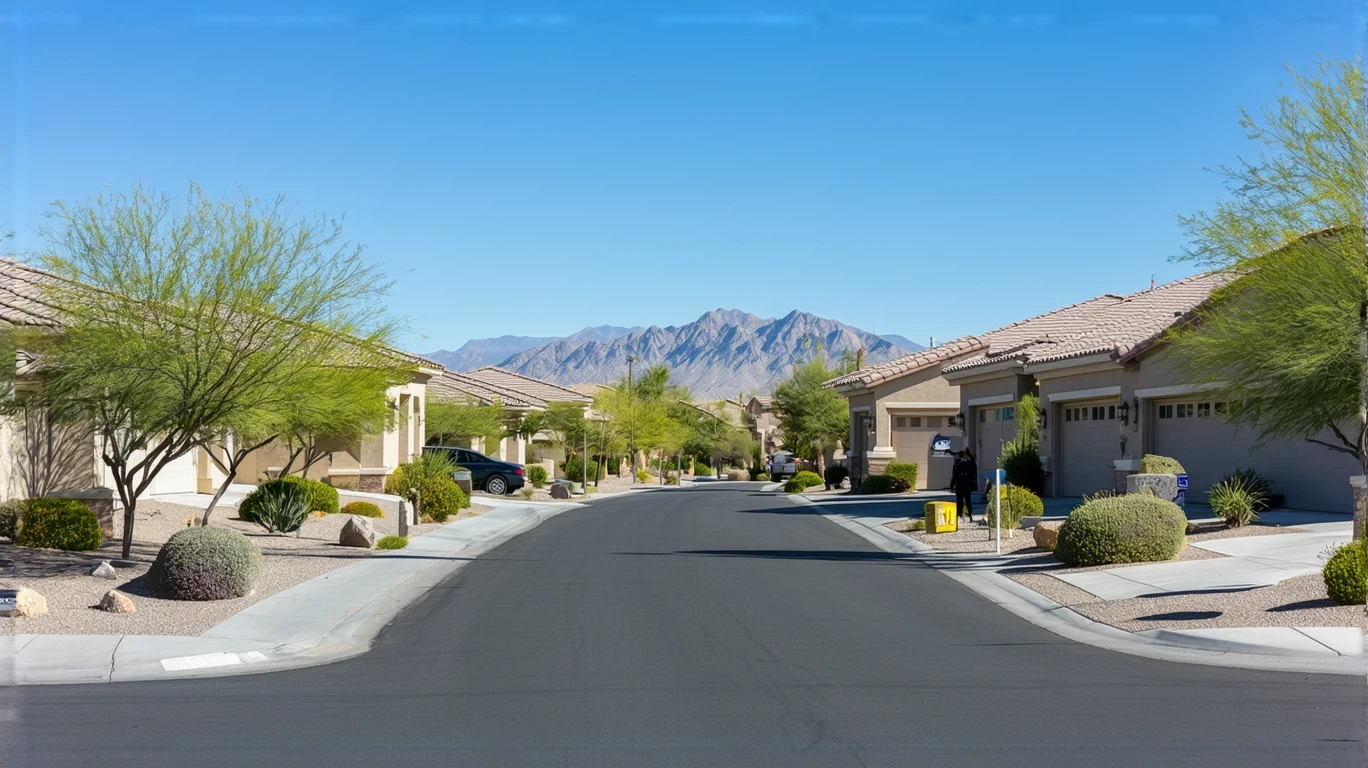
Overall Cost of Living Snapshot
Summerlin South’s cost structure is shaped primarily by housing, with ownership and rental markets both priced well above state and national medians. The regional price parity index of 116 signals that goods and services here run about 16% above the national baseline, but that figure alone doesn’t capture the texture of expenses. What dominates is the upfront cost of securing housing—whether buying into a master-planned community or renting a newer unit—and the ongoing obligation of car ownership in a suburb where transit is limited to bus service and grocery options cluster along commercial corridors rather than within easy walking distance of most residential streets.
Day-to-day costs—groceries, gas, utilities—add pressure, but they don’t define affordability here the way housing does. The unemployment rate of 5.8% reflects a labor market with some slack, and the median household income of $110,911 per year suggests that many residents are positioned to absorb higher housing costs. But income alone doesn’t determine fit; the real question is whether a household can handle the combination of high entry costs, car dependency, and moderate utility exposure without sacrificing financial flexibility.
Driver verdict: Housing entry cost is the primary gate, transportation is the recurring tax, and utility seasonality introduces moderate swing risk. Surprises come not from grocery prices or gas but from the logistics burden of a place where errands require planning and driving is non-negotiable.
Housing Costs (Primary Driver)
At $593,800, the median home value in Summerlin South reflects a market built around newer construction, planned communities, and low-rise residential development. This isn’t a city where older housing stock offers a discount; the building character skews toward single-family homes and low-rise multifamily, and the price floor is accordingly high. For buyers, the cost isn’t just the purchase price—it’s property taxes, homeowners association fees (common in master-planned areas), insurance, and maintenance on properties that are often less than two decades old but still require upkeep in a desert climate.
Renters face a median gross rent of $2,194 per month, a figure that includes some utilities in multifamily complexes but rarely all of them. That rent level positions Summerlin South as a place where renting is a long-term financial commitment, not a temporary cost-saving measure. The rental market here serves households who want access to newer amenities, planned green space, and proximity to the broader Las Vegas metro without the upfront capital required for ownership.
The renting-versus-owning calculus hinges on time horizon and capital availability. Ownership makes sense for households planning to stay five years or more and who can manage the down payment and ongoing fixed costs. Renting works for those prioritizing flexibility, avoiding maintenance risk, or building savings before committing to a purchase. This is not a transitional city where people rent cheaply and leave; it’s a suburb where both renters and owners are making deliberate, longer-term choices about [housing tradeoffs](https://indexyard.com/best-moving-companies-guide/).
Conclusion: Summerlin South is an ownership-oriented suburb with a high entry cost for both buying and renting.
| Housing Type | Cost Anchor | What That Buys You |
|---|---|---|
| Median Home Value | $593,800 | Newer single-family or low-rise ownership in planned community, with HOA obligations and desert-climate maintenance |
| Median Gross Rent | $2,194/month | Access to newer multifamily units, some utilities included, proximity to green space and commercial corridors |
Utilities & Energy Risk
Electricity is the dominant utility expense in Summerlin South, driven by extended cooling season in a climate where triple-digit summer heat is routine. At 13.98¢ per kilowatt-hour, the rate sits near the national average, but the volume of usage—not the rate—determines the bill. For illustrative context, a household using 1,000 kWh per month would face a baseline charge around $140 before fees and taxes during moderate months, with usage climbing significantly from June through September as air conditioning runs continuously.
Natural gas, priced at $9.29 per thousand cubic feet, plays a smaller role here than in colder climates. Heating demand is minimal, concentrated in a short winter window, and many newer units rely on electric heat pumps rather than gas furnaces. For context, a household using 1 MCF (roughly 100 therms) in a cooler month might see a gas charge near $9 to $10 before fees, but most months see negligible usage.
The risk profile is moderate: electricity costs are predictable in direction (summer spikes are certain) but variable in magnitude depending on unit insulation, thermostat discipline, and whether a household has access to time-of-use rates or efficiency programs. Gas volatility is low because usage is low. The real exposure is cooling, and households that underestimate summer usage or lack control over thermostat settings (e.g., renters in units with poor insulation) face the highest swing risk.
Groceries & Daily Costs
Grocery costs in Summerlin South reflect the regional price parity index of 116, meaning that food prices run moderately above the national baseline. Derived estimates based on that adjustment suggest staples like bread, chicken, and rice cost slightly more than in lower-cost regions, but the pressure is incremental rather than severe. For example, ground beef and cheese—higher-ticket items—carry more noticeable markups, while pantry staples remain relatively accessible.
The bigger factor isn’t price per item but access friction. Food and grocery establishments cluster along commercial corridors rather than distributing evenly across neighborhoods, meaning most households drive to shop rather than walk. This doesn’t raise the per-item cost, but it does mean grocery shopping is a planned, batched activity rather than a spontaneous errand. For households accustomed to neighborhood markets or walkable access, the shift adds time and requires more intentional planning around meals and inventory.
The household impact is moderate: grocery prices are higher than in less expensive metros, but the real cost is the logistics burden of corridor-clustered access and the need to own and operate a vehicle to manage routine food shopping efficiently.
Transportation Reality
Summerlin South is car-dependent. While pedestrian infrastructure supports localized walking in pockets—particularly in planned communities with internal sidewalks and trail networks—and bus service provides a baseline transit option, the structure of daily life here assumes vehicle ownership. Grocery stores, medical facilities, and employment centers are spread across the broader Las Vegas metro, and reaching them without a car requires significant time and route planning.
Gas prices of $5.01 per gallon are well above the national average, and that cost compounds with distance. For illustrative context, a commuter driving 25 miles round trip daily in a vehicle averaging 25 miles per gallon would use about 20 gallons per month, translating to roughly $100 in fuel costs before considering maintenance, insurance, or parking. Households with two working adults or those commuting to employment centers outside Summerlin South face double or triple that exposure.
The transportation structure here isn’t punitive, but it’s non-negotiable. This is a place where [getting around](https://indexyard.com/best-moving-companies-guide/) requires a reliable vehicle, and the recurring cost of fuel, insurance, and upkeep functions as a fixed expense rather than a discretionary one. Households that can reduce commute frequency—through remote work or clustered errand runs—gain significant cost control; those who cannot face sustained, predictable transportation pressure.
Cost Exposure Profiles
Cost exposure in Summerlin South concentrates in three areas: housing entry, transportation dependence, and utility seasonality. The structure of expenses here rewards households that can absorb high upfront costs (down payment or first-month rent plus deposit) and manage ongoing fixed obligations (car ownership, summer cooling) without month-to-month volatility.
Low-exposure situations: Owners who bought before recent price escalation, remote workers who minimize commuting, households in well-insulated units with controlled cooling costs, and those who can batch errands to reduce fuel consumption. These households face predictable, manageable costs once the housing entry hurdle is cleared.
High-exposure situations: Renters facing annual lease renewals in a tight market, dual-commuter households driving long distances daily, residents in older or poorly insulated units with high summer cooling bills, and single-vehicle households where any maintenance issue disrupts access to work or errands. These situations layer fixed costs with volatility, reducing financial flexibility.
The difference isn’t income level—it’s structural fit. A household earning less but working remotely and living in an efficient unit may face lower ongoing pressure than a higher-earning household commuting 40 miles daily in two vehicles. The city’s cost structure rewards stability, planning, and control over variables like commute distance and cooling usage, and penalizes households exposed to volatility in housing, transportation, or utility costs.
Frequently Asked Questions
Is Summerlin South more affordable than Henderson in 2026? Summerlin South and Henderson both sit in the expensive tier for the Las Vegas metro, with similar housing and transportation pressures. Directional differences exist in specific neighborhoods, but neither offers a clear affordability advantage at the metro level.
What does a typical cost profile look like in Summerlin South? Housing dominates, followed by transportation (fuel, insurance, maintenance) and utilities (primarily summer cooling). Grocery and daily costs add moderate pressure but don’t define the overall structure the way housing entry cost and car dependency do.
Do utilities cost more in Summerlin South than nearby areas? Electricity rates are near the regional average, but total utility costs depend on cooling usage during extended summer heat. Natural gas costs are low due to minimal heating demand, so the primary exposure is air conditioning volume, not rate differences.
What costs tend to surprise newcomers in Summerlin South? The logistics burden of car dependency and corridor-clustered errands surprises households accustomed to walkable access. Summer cooling bills and HOA fees (for homeowners in planned communities) also catch some residents off guard if they underestimate seasonal or community-level obligations.
Are property taxes higher in Summerlin South than North Las Vegas? Property tax rates vary by jurisdiction and assessed value, but Summerlin South’s higher median home values generally result in higher absolute tax bills even if rates are comparable. Specific comparisons require reviewing county assessor data for each area.
Can you live in Summerlin South without a car? Technically possible using bus service, but highly restrictive. The layout assumes vehicle ownership, and most errands—groceries, healthcare, employment—require either long transit times or significant walking distances from bus stops. Households without cars face substantial time costs and limited access.
How much does summer cooling typically add to utility bills in Summerlin South? The increase depends on unit insulation, thermostat settings, and household size, but expect cooling to dominate electricity usage from June through September. Households in poorly insulated units or those keeping thermostats below 75°F during peak heat will see the largest seasonal swings.
Is Summerlin South a good fit for renters or owners? Both, but for different reasons. Owners benefit from equity building in a stable, planned community with strong amenities. Renters gain flexibility and avoid maintenance risk but pay a premium for newer units and accept that rent is a long-term cost rather than a transitional savings strategy.
How this article was built: In addition to public economic data, this article incorporates location-based experiential signals derived from anonymized geographic patterns—such as access density, walkability, and land-use mix—to reflect how day-to-day living actually feels in Summerlin South, NV.
—