
A household earning $95,000 a year in Oviedo can feel stretched or stable depending entirely on whether they’re renting a three-bedroom near downtown or own a paid-off ranch on the north side. The difference isn’t the income—it’s the tradeoffs embedded in how that income gets used. Living comfortably in Oviedo isn’t about hitting a magic number; it’s about whether your expectations, your household structure, and your tolerance for seasonal swings align with what this Orlando-area suburb actually costs.
This article explains where income pressure shows up in Oviedo, how the same earnings feel different across household types, and what separates households that feel stable from those constantly recalibrating. It won’t tell you a required income figure—because that number changes with every choice you make.
What “Living Comfortably” Means in Oviedo
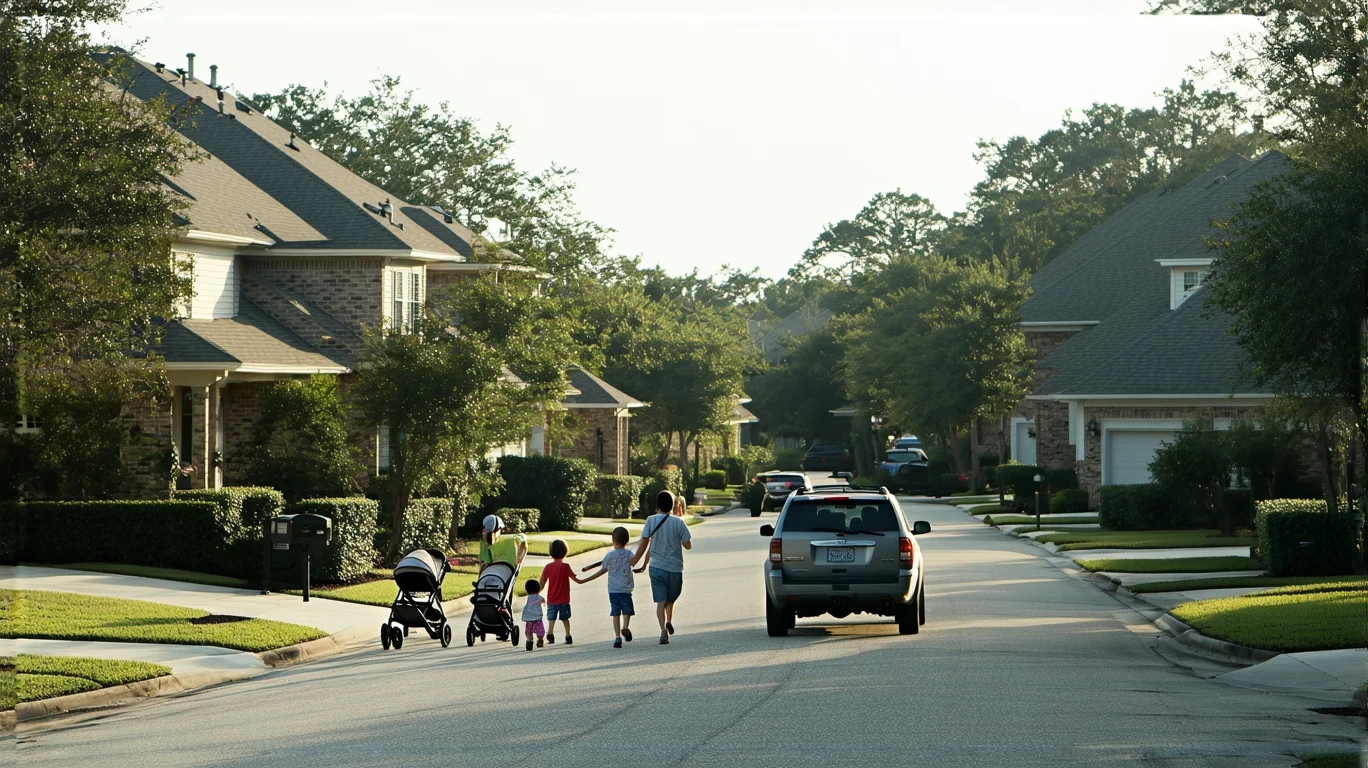
Comfort in Oviedo typically means securing a single-family home or townhouse with yard space, keeping the air conditioning running through Florida’s long cooling season without anxiety, and maintaining a car that handles daily errands and commutes without becoming a financial liability. It means absorbing summer electricity bills that spike with triple-digit heat, covering routine healthcare at local clinics, and having enough slack in the budget that an unexpected $800 repair doesn’t trigger a crisis.
Comfort here is also temporal. Oviedo sits within the Orlando metro’s commuter orbit, and many residents trade time for housing affordability—choosing this suburb specifically because it offers more space and lower density than closer-in neighborhoods. That tradeoff works well for some households and poorly for others, depending on how they value predictability, convenience, and control over their day.
Expectations matter more than income alone. A household accustomed to walkable errands, frequent dining out, and minimal car dependency will find Oviedo’s structure—where groceries, schools, and services cluster along corridors rather than within walking distance of most homes—more friction-filled than a household comfortable with car-based logistics and planned trips.
Where Income Pressure Shows Up First
Housing dominates financial stress in Oviedo, not because prices are extreme relative to the metro, but because the gap between renting and owning is wide and the options within each tier are limited. The median gross rent sits at $1,902 per month, while the median home value is $397,300. Renters face steady lease renewal pressure in a market where landlords can push rates upward with limited friction. Owners, meanwhile, absorb property taxes, insurance premiums that reflect Florida’s storm exposure, and maintenance costs that come with older single-family stock.
Utility costs add seasonal volatility that many newcomers underestimate. Electricity rates run 15.92¢ per kilowatt-hour, and cooling a typical home through June, July, and August can mean bills that double or triple compared to winter months. Households without savings buffers often find themselves adjusting thermostats uncomfortably high or deferring other expenses to cover peak-season usage.
Transportation pressure in Oviedo is less about fuel prices—currently $4.06 per gallon—and more about the inevitability of car ownership and the time cost of reaching work, healthcare, or social activities. The city’s infrastructure supports driving far better than it supports walking or transit. Errands and groceries cluster along commercial corridors, and while grocery density is high, food establishment density sits in the medium band. That means planned trips work well, but spontaneous errands or quick stops require intentional routing.
How this article was built: In addition to public economic data, this article incorporates location-based experiential signals derived from anonymized geographic patterns—such as access density, walkability, and land-use mix—to reflect how day-to-day living actually feels in Oviedo, FL.
For families, the pressure point often emerges around school access and childcare logistics. School density in Oviedo falls below low thresholds, meaning families may face longer drives or bus routes to reach preferred schools. Playground density is similarly limited, which affects how easily young children can access outdoor play without a car trip. These aren’t catastrophic gaps, but they add planning friction that households with multiple children feel acutely.
How the Same Income Feels Different by Household
A single adult earning $70,000 gross annually (roughly $5,833 per month before taxes) can live comfortably in Oviedo if they rent a one-bedroom apartment, keep utility usage moderate, and don’t carry significant debt. That same income supports a stable, low-drama lifestyle with room for savings and discretionary spending. The structure of Oviedo—car-dependent, moderately priced, with decent grocery access—doesn’t create major friction for a single person with straightforward needs.
A couple earning $95,000 combined faces a different calculus. If they rent a two-bedroom townhouse near the $1,902 median, they’ll spend roughly 24% of gross income on rent alone, leaving enough margin for utilities, transportation, and food without constant stress. But if they’re trying to save for a down payment while also managing two car payments and student loans, that same income can feel tight. The difference isn’t the number—it’s the goals and obligations layered on top of it.
Families with children experience the most variability. A household earning $120,000 might feel stretched if they’re paying $2,400 in rent, covering childcare for two kids, managing higher utility bills in a larger home, and driving multiple vehicles to handle school, activities, and work commutes. The same income feels more comfortable if one parent works from home, the family owns a home with a fixed mortgage, and the kids are school-aged rather than in daycare. Oviedo’s limited school density and modest family infrastructure mean that families here often need more logistical flexibility and vehicle access than similarly sized households in denser suburbs.
The Comfort Threshold (Qualitative)
Comfort in Oviedo begins when housing costs stop dictating every other decision. That threshold isn’t a number—it’s the point where a household can absorb a $200 summer utility spike without rearranging the month, where choosing to eat out doesn’t mean skipping another expense, and where car maintenance is an annoyance rather than a crisis.
It’s also the point where saving becomes routine rather than aspirational. Households below this threshold often feel like they’re managing successfully until something breaks—a timing belt, an AC compressor, a surprise medical bill—and then the margin disappears. Households above it have enough slack that disruptions are manageable, not destabilizing.
For renters, comfort often depends on whether they can stay in place without annual lease anxiety. For owners, it depends on whether the home’s equity and fixed costs provide stability or whether insurance hikes, tax reassessments, and deferred maintenance create a different kind of treadmill.
Why Online Cost Calculators Get Oviedo Wrong
Most cost-of-living calculators treat Oviedo as a data point in the Orlando metro, then spit out a single “required income” figure based on national averages and broad assumptions. They miss the texture entirely.
They don’t account for the fact that Oviedo’s pedestrian-to-road ratio is high in pockets, meaning some residents enjoy walkable access to parks and greenspace, while others live in purely car-dependent zones. They don’t capture the reality that grocery density is strong but food establishment density is only moderate, which means cooking at home is well-supported but spontaneous dining or convenience errands require more planning.
Calculators assume uniform household behavior—they estimate transportation costs using average commute distances and fuel prices, but they don’t reflect that Oviedo’s structure makes two-car households nearly universal for families, or that commute time (not just distance) shapes daily stress. They estimate utility costs using state averages, ignoring that Florida’s long cooling season and Oviedo’s 15.92¢/kWh electricity rate create summer bills that feel nothing like the annual average.
Most importantly, they treat comfort as a total rather than a tradeoff. A calculator might say a family of four needs $110,000 to live in Oviedo, but it won’t tell you that $110,000 feels very different if you’re renting versus owning, if you work from home versus commuting to downtown Orlando, or if you have one child in daycare versus two kids in public school.
How to Judge Whether Your Income Fits Oviedo
Instead of asking “Is my income enough?”, ask these questions:
- Can you absorb seasonal utility swings? If a $250 summer electricity bill would force you to defer other expenses, Oviedo’s cooling season will create recurring stress.
- How sensitive are you to housing pressure? If you’re renting and your lease renews annually, are you prepared for potential increases? If you’re buying, can you handle property tax and insurance adjustments without refinancing?
- Is time or money your limiting factor? Oviedo offers more space and lower density than closer-in Orlando neighborhoods, but that often means longer drives and more time spent managing logistics. If your income is tight but your schedule is flexible, that tradeoff may work. If both are constrained, it won’t.
- How much logistical complexity can your household handle? Families with young children face more planning friction here due to limited school density and modest playground access. Single adults or couples without kids face far less.
- Do you need walkable errands, or are you comfortable with car-based routines? Oviedo’s infrastructure supports planned driving trips well. It does not support spontaneous, on-foot errands in most areas.
These questions don’t produce a required income figure, but they clarify whether your income—whatever it is—will feel adequate or insufficient given how Oviedo actually works.
FAQs About Living Comfortably in Oviedo
What income do most people need to feel comfortable in Oviedo?
There’s no universal threshold because comfort depends on household size, housing tenure, debt load, and expectations. A single adult might feel stable at $65,000 gross annually, while a family of four might feel stretched at $110,000 if they’re renting, managing childcare, and commuting. The question isn’t what most people need—it’s whether your specific situation aligns with what Oviedo costs.
Is Oviedo more affordable than other Orlando suburbs?
Oviedo sits in the middle range for the metro. It’s less expensive than Winter Park or Maitland but typically costs more than Apopka or Sanford. The tradeoff is space and lower density in exchange for longer drives and more car dependency. Whether that’s “affordable” depends on what you’re comparing it to and what you value.
Can you live in Oviedo without a car?
Technically possible, but practically difficult for most households. While some areas have higher pedestrian infrastructure and notable cycling presence, the city’s overall structure assumes car ownership. Groceries, healthcare, and schools are accessible by car but rarely within walking distance. Households without vehicles face significant logistical friction.
How much do utilities really cost in Oviedo?
Electricity dominates utility costs due to Florida’s extended cooling season. At 15.92¢ per kilowatt-hour, a household using 1,000 kWh per month in summer would see a bill around $159 before fees and taxes—but actual usage often runs higher during peak heat. Natural gas is less common here, priced at $23.62 per thousand cubic feet. Households that underestimate summer cooling costs often feel surprised by the seasonal swing.
Does Oviedo work well for families with kids?
It depends on the family’s logistical capacity and expectations. School density is low, meaning longer drives or bus routes are common. Playground density is also limited, so families with young children often need to plan outings rather than walk to nearby play spaces. Families with flexible schedules, reliable vehicles, and comfort with car-based routines tend to adapt well. Families already stretched thin on time or money may find the added friction difficult.
What’s the biggest financial surprise people face after moving to Oviedo?
Summer utility bills and the inevitability of two-car ownership for families. Many newcomers underestimate how much cooling a Florida home costs during peak months, and they don’t anticipate that Oviedo’s layout makes a second vehicle nearly essential for households with multiple working adults or school-aged children. Both costs are manageable if planned for, but they catch people off guard if they’re budgeting based on prior experience in denser or cooler climates.
Oviedo can work well for some households—but only if expectations match reality. The city offers space, greenspace access, and a suburban structure that supports families and individuals comfortable with car-based routines and seasonal cost swings. It does not offer walkable convenience, dense transit options, or predictable month-to-month expenses. Comfort here depends less on hitting an income target and more on whether your household’s rhythms, flexibility, and financial margin align with what this place actually demands.