
Imagine this: You’ve just accepted a job offer in the Tampa metro area, and you’re weighing whether New Port Richey could be home. The rent looks manageable on paper. The commute seems doable. But something nags at you—will your income actually feel comfortable here, or will you be counting pennies every month?
That question doesn’t have a single numeric answer, because comfort isn’t just about hitting a salary threshold. It’s about whether your income aligns with how this place actually works—the tradeoffs it demands, the flexibility it offers, and the pressures it applies to different household types.
What “Living Comfortably” Means in New Port Richey
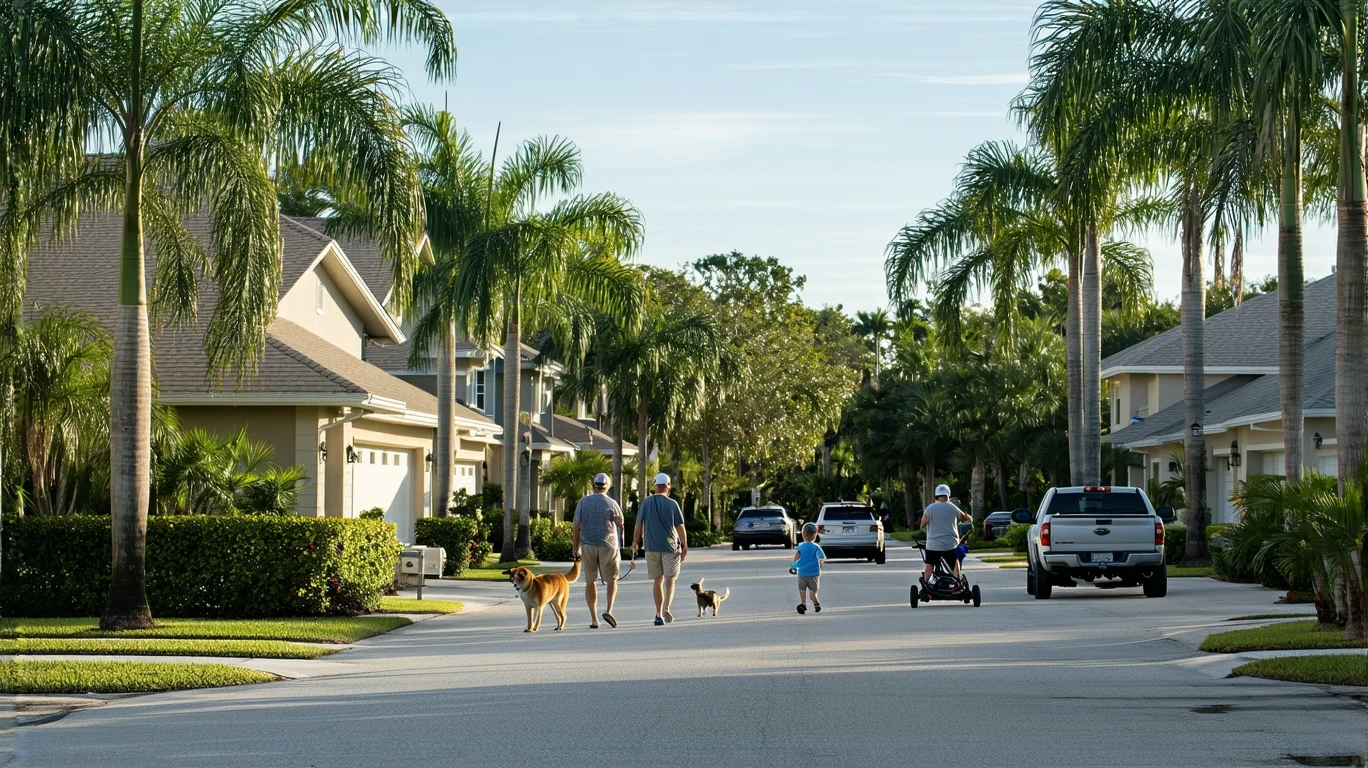
Comfort in New Port Richey isn’t about luxury. It’s about breathing room: the ability to cover housing, utilities, and transportation without those three categories dictating every other decision you make. It means absorbing a high summer electric bill without panic. It means choosing where to live based on preference, not just desperation. It means having enough left over that an unexpected car repair doesn’t cascade into a financial crisis.
For many residents, comfort also means space—both physical and temporal. The housing stock here is predominantly low-rise and spread out, which often translates to more square footage per dollar than you’d find in denser metro cores. But that spatial advantage comes with a tradeoff: you’ll spend time in the car. The average commute runs 29 minutes, and over 40% of workers face what counts as a long commute. If your definition of comfort includes walkable errands or a quick trip to work, New Port Richey’s structure may feel like a compromise.
Climate control is another non-negotiable piece of the comfort equation. This is coastal Florida, where extended heat and humidity mean air conditioning isn’t optional—it’s a recurring monthly cost that swings with the season. Comfort here requires budgeting for that volatility, not just the average.
Where Income Pressure Shows Up First
In New Port Richey, financial pressure tends to surface in three places: housing, utilities, and transportation. These aren’t isolated line items—they interact, and the tradeoffs you make in one category ripple into the others.
Housing costs set the baseline. The median gross rent sits at $1,095 per month, while the median home value is $139,500. Those figures look modest compared to many Florida metros, but they need to be weighed against the local income reality: the median household income is $42,254 per year. That creates a tighter margin than the raw numbers suggest, especially for renters who don’t benefit from locked-in mortgage payments.
Utility volatility adds another layer. Electricity rates run 15.02¢ per kilowatt-hour, and in a climate where cooling dominates expenses for much of the year, a household running typical air conditioning can see bills climb substantially during summer months. Natural gas, priced at $23.62 per thousand cubic feet, plays a smaller role here than in colder climates, but the electricity burden is relentless and seasonal. If your income doesn’t leave room to absorb those swings, comfort erodes quickly.
Transportation costs aren’t just about gas, though at $3.72 per gallon, fuel expenses add up for anyone commuting regularly. The bigger issue is structural: New Port Richey’s layout and errands infrastructure mean most households depend on a car for daily life. While grocery density is relatively high in certain corridors, food establishments are more moderately distributed, and the pedestrian-to-road ratio sits in the middle band—enough to support some walkability, but not enough to eliminate car dependency. Bus service exists, but without rail transit, households that can’t afford reliable vehicle access face significant friction.
For families, pressure points multiply. Playground infrastructure is present and meets moderate density thresholds, but school density falls below those same benchmarks. That means families may face longer drives for school access, adding both time and transportation costs to the daily routine. It’s not insurmountable, but it’s a planning burden that households without children don’t carry.
How the Same Income Feels Different by Household
Income pressure isn’t uniform—it’s shaped by household composition, expectations, and flexibility. A salary that feels workable for one household type can feel strained for another, even when the numbers are identical.
Single adults often find New Port Richey more forgiving, particularly if they’re willing to prioritize cost over walkability. The lower end of the rental market is accessible, and one-person households face fewer logistical demands. Errands can be batched. Commutes, while time-consuming, don’t require coordinating multiple schedules. Utility costs, though seasonal, are easier to manage in a smaller space. The tradeoff is lifestyle: if you value spontaneous walkable outings or a tight-knit neighborhood feel, the corridor-clustered errands structure and car-oriented layout may feel isolating.
Couples experience moderate housing pressure but gain efficiency in transportation. Sharing a vehicle—or splitting commutes strategically—reduces per-person costs. Rent or mortgage payments, while significant, are split across two incomes. The challenge for couples often centers on expectations: if both partners work and commutes run long, time becomes the limiting factor. Comfort, in that case, depends less on income and more on whether the household can tolerate spending substantial time in transit.
Families face the most complex equation. Housing costs don’t scale linearly—larger units command higher rents, and homeownership, while more stable, requires upfront capital many families lack. School access adds logistical weight, particularly given the lower school density. Playground infrastructure is present, which helps, but the need to drive for most errands and activities means transportation costs—and time costs—compound. Families at similar income levels to single adults or couples often feel significantly more pressure, not because expenses are wildly higher, but because the margin for error is thinner and the demands are less flexible.
The Comfort Threshold (Qualitative)
There’s a point—difficult to pin to a single number—where income shifts from constraining to enabling. Below that threshold, every decision is a tradeoff. Above it, choices expand.
In New Port Richey, crossing that threshold means you can absorb a summer utility spike without adjusting other spending. It means you can choose housing based on commute time or neighborhood preference, not just rent price. It means an unexpected car repair is an annoyance, not a crisis. It means you’re saving, even modestly, rather than running a zero balance each month.
For many households, that transition happens when income provides enough buffer to cover the big three—housing, utilities, transportation—and still leave discretionary room. It’s not about eating out weekly or taking vacations. It’s about the absence of constant financial negotiation.
The threshold varies by household type. A single adult might cross it at a lower income than a family of four, simply because the logistical and spatial demands are lighter. But the qualitative shift is the same: comfort begins when your income stops dictating your behavior.
Why Online Cost Calculators Get New Port Richey Wrong
Most cost-of-living calculators will spit out a tidy total for New Port Richey: add up rent, utilities, groceries, transportation, and maybe healthcare. The number looks reasonable. You think, “I can do this.”
Then you arrive, and the experience doesn’t match the spreadsheet.
The problem isn’t that the calculators lie—it’s that they flatten complexity. They give you an average utility bill, but they don’t tell you that your July bill might be double your February bill. They estimate transportation costs based on fuel prices, but they don’t account for the time cost of a car-dependent layout or the friction of corridor-clustered errands. They assume you’ll find housing at the median rent, but they don’t explain that the median might come with a longer commute or fewer walkable amenities.
Calculators also ignore household-specific pressures. A family trying to navigate school access in an area with low school density faces a different reality than a single adult who can live anywhere and drive anywhere. The total might be the same, but the experience is not.
People feel surprised after moving because the costs that matter most aren’t always the ones that show up in a budget template. It’s the cumulative effect of driving everywhere. It’s the mental load of planning grocery trips instead of walking to a corner store. It’s the reality that “affordable” housing often means trading convenience for cost.
How to Judge Whether Your Income Fits New Port Richey
Rather than asking “Is my salary enough?”, ask yourself these questions:
- How sensitive are you to housing tradeoffs? Can you live farther from work or in a less walkable area if it means lower rent? Or do you need proximity and convenience, even at higher cost?
- Can you absorb seasonal utility swings? If your electric bill doubles in summer, does that create genuine hardship, or is it an annoyance you can handle?
- Is time or money your limiting factor? If saving $200 on rent means adding 20 minutes to your commute, is that a trade you’re willing to make?
- How much flexibility do you expect month to month? Do you need discretionary income for dining out, entertainment, and spontaneity? Or are you comfortable with a tighter budget that prioritizes essentials?
- How do you feel about car dependency? If nearly every errand requires driving, does that feel normal and fine, or does it feel like a burden?
- If you have children, how important is school proximity? Are you prepared to drive farther for school access, or is walkable school access a non-negotiable?
Your answers to these questions matter more than any income threshold. New Port Richey works well for households that value space over walkability, who can tolerate seasonal cost swings, and who don’t mind spending time in the car. It works less well for those who need tight margins, walkable convenience, or minimal logistical complexity.
FAQs About Living Comfortably in New Port Richey
Is New Port Richey affordable compared to the rest of Florida?
Compared to metro cores like Tampa or St. Petersburg, yes—housing costs are lower. But “affordable” is relative to income, and the local median household income is modest. What looks cheap compared to Tampa might still feel tight if your earnings are at or below the local median.
Can a single income support a family here?
It depends on the income level and the family’s flexibility. A single earner at or near the median income will face significant pressure, particularly given housing costs, utility volatility, and the logistical demands of family life in a car-dependent area. Families with one income and lower housing costs—perhaps through homeownership with an older, paid-off mortgage—may manage, but there’s little margin for error.
Do utility costs really vary that much by season?
Yes. Coastal Florida’s extended heat and humidity mean air conditioning runs for much of the year, and summer bills can be substantially higher than winter bills. If your budget assumes a flat monthly utility cost, you’ll be caught off guard.
Is it possible to live here without a car?
Technically possible, but practically difficult. Bus service exists, but the layout of the city and the corridor-clustered distribution of grocery and food options mean most errands require a vehicle. Households without reliable car access face significant time costs and limited flexibility.
How does New Port Richey compare to nearby cities for families?
New Port Richey offers lower housing costs than many nearby areas, but school density is below typical thresholds, meaning families may need to drive farther for school access. Playground infrastructure is present, which helps, but the overall structure favors households that prioritize cost and space over walkable convenience and proximity to schools.
How this article was built: In addition to public economic data, this article incorporates location-based experiential signals derived from anonymized geographic patterns—such as access density, walkability, and land-use mix—to reflect how day-to-day living actually feels in New Port Richey, FL.
Final Thought
New Port Richey can work well for some households—but only if expectations match reality. If you value space, can absorb seasonal cost swings, and don’t mind car dependency, your income may stretch further here than in denser, pricier metros. But if you need walkable convenience, tight cost predictability, or minimal logistical complexity, the same income may feel strained. Comfort isn’t about hitting a magic number—it’s about whether the way this place works aligns with the way you live.