
New Port Richey is considered relatively affordable in 2026, with a median home value of $139,500 and median gross rent of $1,095 per month. The value proposition depends on balancing low housing entry costs against car dependence and cooling-season utility exposure.
When Sarah moved to New Port Richey from Atlanta last spring, she expected her biggest expense to be rent. What she didn’t anticipate was how much her daily commute and summer air conditioning bills would reshape her monthly financial picture. Within three months, she realized that the city’s cost structure rewards those who can buy in early and keep their commute short—but punishes those who rely on long drives and rental renewals.
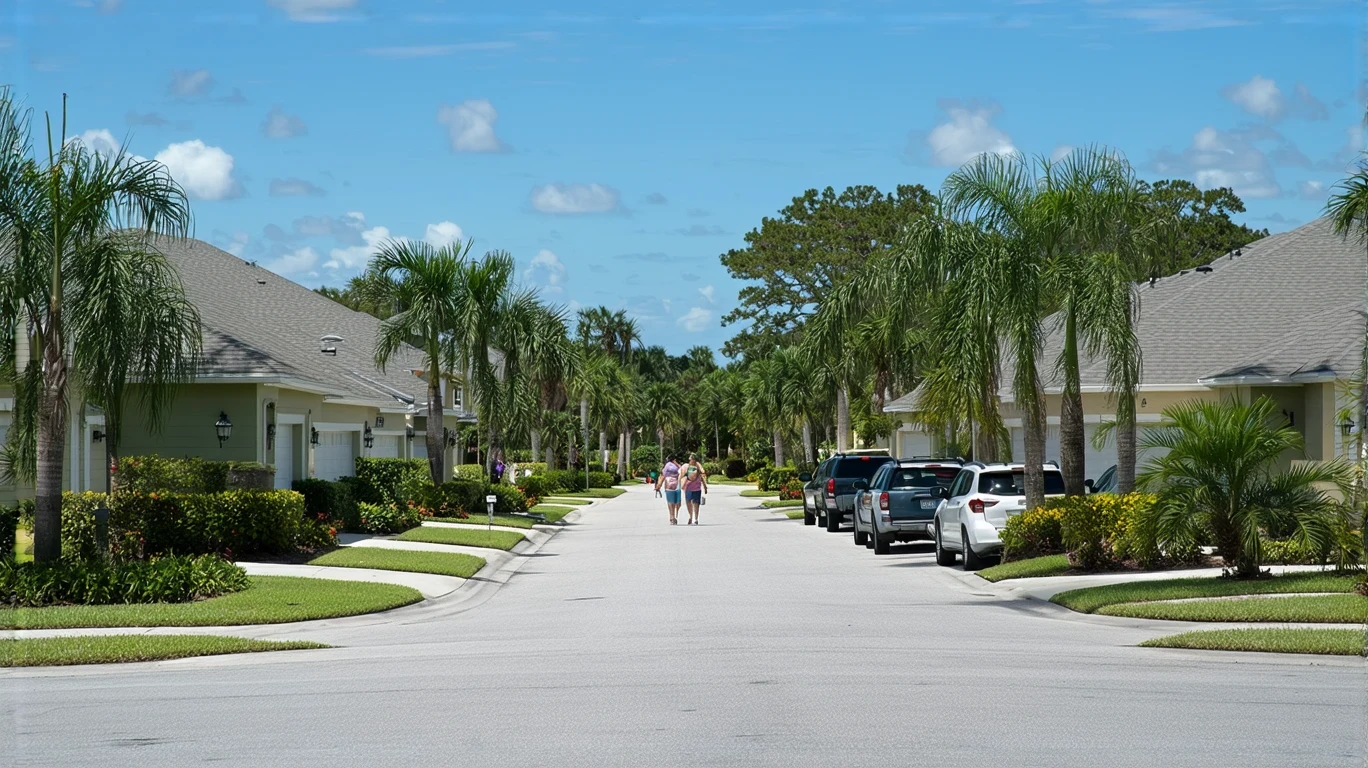
Overall Cost of Living Snapshot
New Port Richey operates as a moderately priced Gulf Coast suburb within the Tampa metro area, where cost pressure concentrates in three distinct zones: housing entry, transportation dependence, and seasonal utility volatility. The regional price parity index of 103 places the area just above the national baseline, but that modest premium masks significant internal variation in how costs land depending on household structure and commute patterns.
The primary cost driver here is housing entry cost, which remains accessible compared to coastal Florida markets but still represents the largest single financial commitment for most households. What distinguishes New Port Richey from pricier Tampa-area alternatives is not day-to-day expenses—groceries, gas, and routine bills track closely with regional norms—but rather the lower threshold required to secure stable housing, whether renting or buying.
Transportation emerges as the second-most influential cost factor. The city’s mixed mobility texture supports moderate pedestrian infrastructure, but bus-only transit service and corridor-clustered errands accessibility mean most households depend heavily on personal vehicles. With an average commute time of 29 minutes and 40.6% of workers facing long commutes, transportation costs function less as a line item and more as a recurring structural exposure that scales with distance and vehicle count.
Utility seasonality introduces the third pressure point. Extended cooling seasons driven by hot, humid summers push electricity consumption well above winter baselines, and at 15.02¢/kWh, summer bills can dominate monthly cash flow for renters in older units or owners in poorly insulated homes.
Driver verdict: Housing entry cost dominates the financial equation, but surprises come from transportation dependence and cooling-season utility swings—not from groceries or routine expenses.
Housing Costs (Primary Driver)
Housing in New Port Richey presents a clear tradeoff: low entry costs in exchange for exposure to maintenance volatility (for owners) or renewal risk (for renters). The median home value of $139,500 positions the city as one of the more accessible ownership markets in the Tampa metro area, appealing to first-time buyers and retirees seeking to lock in predictable housing costs. Median gross rent of $1,095 per month offers a lower-cost alternative to buying, but renters face the ongoing risk of lease renewals in a market where rental pricing can shift quickly.
The decision between renting and owning here hinges on time horizon and financial flexibility. Ownership provides insulation from rental market volatility and the opportunity to stabilize long-term housing costs, but it also transfers responsibility for maintenance, insurance, and property taxes—all of which can fluctuate. Renting preserves mobility and offloads maintenance risk, but it leaves households exposed to annual rent adjustments that can erode affordability over time.
New Port Richey functions as a transitional city for many households: affordable enough to enter, but structured in a way that rewards those who can transition from renting to owning within a few years. The low-rise urban form and mixed land use create a suburban texture where single-family homes dominate, and multifamily rental options cluster along specific corridors.
| Housing Type | Cost Anchor | What That Buys You |
|---|---|---|
| Median Home Purchase | $139,500 | Entry-level ownership with maintenance responsibility and tax/insurance exposure |
| Median Rental | $1,095/month | Flexibility and maintenance offload, but renewal risk and no equity build |
Utilities & Energy Risk
Utility costs in New Port Richey are shaped primarily by cooling-season intensity rather than baseline rates. Electricity priced at 15.02¢/kWh sits near the Florida average, but the extended summer heat and high humidity typical of the Gulf Coast drive consumption well above what the rate alone would suggest. Households in older homes or units with minimal insulation face the highest exposure, as air conditioning runs continuously from late spring through early fall.
Natural gas, priced at $23.62 per MCF, plays a smaller role in most households. Heating demand remains minimal given the region’s mild winters, so gas costs tend to be negligible outside of water heating or cooking. The real volatility comes from electricity, where usage swings between moderate winter baselines and summer peaks can double or triple monthly bills depending on home efficiency and thermostat discipline.
Risk classification: moderate. Utility costs won’t destabilize most budgets, but they introduce meaningful seasonal variability that renters and new homeowners often underestimate. The gap between winter and summer bills is wide enough to require planning, especially for households in less-efficient housing stock.
Groceries & Daily Costs
Grocery costs in New Port Richey track closely with regional norms, reflecting the city’s position within the Tampa metro area rather than any localized premium or discount. Derived estimates based on the regional price parity index suggest that staple items like bread, chicken, eggs, and milk cost slightly more than the national baseline, but the difference is modest—typically a few cents per pound or per unit.
For most households, grocery pressure comes not from individual item pricing but from the cumulative effect of feeding a family over time in a market where prices drift upward gradually. The corridor-clustered accessibility of grocery stores means that while options exist, they may not be evenly distributed across all neighborhoods. Households in areas with lower food establishment density may need to drive farther for weekly shopping, adding transportation costs to the grocery equation.
Day-to-day costs beyond groceries—pharmacy items, household supplies, personal care—follow similar patterns. Prices are neither notably high nor notably low, but the city’s car-dependent structure means that running errands often involves multiple stops spread across different corridors, which can add time and fuel costs to routine tasks.
Transportation Reality
Transportation in New Port Richey functions as a fixed cost for most households, not a discretionary one. The city’s mixed mobility texture supports some pedestrian activity in specific areas, but the combination of bus-only transit service and corridor-clustered errands accessibility means that personal vehicles remain the primary—and often only—viable option for commuting, errands, and household logistics.
The average commute time of 29 minutes reflects a regional pattern where many residents work outside New Port Richey, often in Tampa or surrounding suburbs. With 40.6% of workers facing long commutes and only 16.2% working from home, the majority of households are locked into daily driving routines that consume both time and money. Current gas prices of $3.72 per gallon add a recurring expense that scales with commute distance and vehicle count.
For single-vehicle households with short commutes, transportation costs remain manageable. But for families juggling multiple jobs, school drop-offs, and errands across dispersed locations, the car dependence inherent in New Port Richey’s structure becomes a significant and ongoing financial exposure. There’s no easy substitution: transit options are limited, and the city’s layout makes walking or biking impractical for most daily needs.
Cost Exposure Profiles
Cost exposure in New Port Richey varies sharply depending on housing tenure, commute length, and vehicle dependency. Low-exposure households—typically homeowners with short commutes and a single vehicle—benefit from stable housing costs, minimal transportation overhead, and the ability to manage utility seasonality through efficiency upgrades. These households face predictable monthly expenses and limited vulnerability to external cost shocks.
High-exposure households—often renters with long commutes, multiple vehicles, and high cooling needs—encounter a fundamentally different cost structure. Rental renewals introduce housing volatility, extended commutes multiply fuel and maintenance costs, and inefficient housing stock amplifies summer utility bills. For these households, cost pressure compounds across multiple categories simultaneously, leaving little room for unexpected expenses.
The distinction between low and high exposure is not about income level but about structural positioning. A renter with a 45-minute commute and two cars faces higher recurring costs than a homeowner with a 15-minute commute and one vehicle, even if their incomes are identical. New Port Richey rewards those who can minimize commute distance, secure ownership early, and reduce vehicle dependency—but it penalizes those who cannot.
Frequently Asked Questions
Is New Port Richey more affordable than Tampa in 2026? Yes, particularly for housing entry costs. New Port Richey’s median home value of $139,500 and median rent of $1,095 per month are significantly lower than Tampa’s, though transportation costs may offset some of the savings depending on commute patterns.
What does a typical cost profile look like in New Port Richey? Most households see housing as the dominant expense, followed by transportation and utilities. The exact balance depends on whether you rent or own, how far you commute, and how much you drive for errands and daily logistics.
Do utilities cost more in New Port Richey than nearby areas? Electricity rates are close to the Florida average, but extended cooling seasons mean total utility costs can be higher than in less humid or more temperate parts of the state. Winter utility bills are typically much lower.
What costs tend to surprise newcomers in New Port Richey? Transportation dependence and summer utility bills are the most common surprises. Many newcomers underestimate how much they’ll spend on gas and vehicle maintenance, and how high air conditioning costs can climb during peak summer months.
Are property taxes higher in New Port Richey than in other Tampa-area suburbs? Property tax rates vary by jurisdiction and assessment practices, but New Port Richey’s lower home values generally result in lower absolute tax bills compared to pricier Tampa-area markets, even if rates are similar.
Is New Port Richey a good fit for renters long-term? It depends on renewal risk tolerance. Renting offers flexibility and lower entry costs, but the lack of rent control and potential for annual increases make long-term renting less predictable than ownership in this market.
How much does car dependency add to monthly costs in New Port Richey? The impact scales with commute distance and vehicle count. Households with long commutes and multiple vehicles face significantly higher fuel, insurance, and maintenance costs than those with short commutes and a single car.
Can you live in New Port Richey without a car? It’s difficult for most households. Bus service exists, but the city’s layout and corridor-clustered errands accessibility make daily life without a personal vehicle impractical for work, shopping, and routine tasks.
How this article was built: In addition to public economic data, this article incorporates location-based experiential signals derived from anonymized geographic patterns—such as access density, walkability, and land-use mix—to reflect how day-to-day living actually feels in New Port Richey, FL.
—