

The myth: Norman is cheaper because rents are lower. The reality in 2026 is more textured. Mustang and Norman sit just miles apart in the Oklahoma City metro, but the way cost pressure shows up—and which households feel it most—depends less on advertised prices and more on how daily life is structured. Norman’s college-town density brings lower rent but higher utility exposure and a rental market shaped by student turnover. Mustang offers lower home prices and more predictable energy costs, but sparse errands accessibility means more driving, more planning, and more time spent managing household logistics. For families weighing space against convenience, or renters comparing monthly obligations against long-term flexibility, the decision isn’t about which city costs less—it’s about which cost structure fits the household’s actual rhythms and constraints.
Both cities share the same regional economy, similar employment patterns (unemployment at 2.8% in Mustang, 2.9% in Norman), and comparable access to the broader Oklahoma City metro. But housing form, utility pricing, and the density of daily destinations create different friction points. Mustang’s low-rise, car-oriented layout rewards households that value predictability and can absorb the time cost of driving for groceries, errands, and services. Norman’s college influence brings more rental options and walkable pockets near campus, but heating costs and rental volatility introduce different trade-offs. Understanding where each city’s cost pressure concentrates—and which households are most exposed—requires looking past median figures and into the mechanics of how money and time get spent week to week.
This comparison explains how housing, utilities, groceries, transportation, and daily logistics behave differently in Mustang and Norman in 2026. It does not calculate total cost of living or declare a winner. Instead, it shows which households are more exposed to which costs, and why the same income can feel stable in one city and tight in the other depending on what dominates the household budget and schedule.
Housing Costs: Entry Barrier vs. Ongoing Obligation
Housing costs in Mustang and Norman follow different patterns, and the difference matters most at two decision points: the upfront barrier to entry, and the ongoing monthly obligation. Mustang’s median home value sits at $212,200, while Norman’s is $224,900—a structural difference that affects down payment requirements, mortgage qualification, and the financial threshold for ownership. For first-time buyers or households stretching to purchase, Mustang’s lower entry point creates more breathing room. Norman’s higher home values reflect proximity to the University of Oklahoma and a rental market that competes with ownership, pushing purchase prices up even as rents stay competitive.
On the rental side, the pattern reverses. Norman’s median gross rent is $1,004 per month, compared to Mustang’s $1,147 per month. That $143 difference reflects Norman’s college-driven rental supply and the prevalence of smaller units and older housing stock near campus. Renters in Norman benefit from more options and lower monthly obligations, but they also face more turnover, more competition during academic cycles, and less stability in lease renewals. Mustang’s rental market skews toward single-family homes and newer construction, which raises rent but also reduces volatility and offers more space per dollar for families or households prioritizing yard access and quieter surroundings.
The housing stock itself introduces another layer of differentiation. Mustang’s low-rise character and suburban layout favor detached homes with predictable maintenance costs and lower density. Norman’s mix includes more apartments, duplexes, and older homes near the university, which can mean lower rents but also higher utility exposure (older windows, less insulation, more variability in heating and cooling efficiency). For renters, Norman’s lower monthly obligation comes with trade-offs in predictability and unit quality. For buyers, Mustang’s lower purchase price and newer housing stock reduce both entry friction and ongoing maintenance risk, but at the cost of higher property taxes tied to newer infrastructure and services.
| Housing Type | Mustang | Norman |
|---|---|---|
| Median Home Value | $212,200 | $224,900 |
| Median Gross Rent | $1,147/month | $1,004/month |
| Typical Housing Form | Low-rise, single-family, newer construction | Mixed apartments, duplexes, older homes near campus |
Housing takeaway: Renters face lower monthly obligations in Norman but more turnover and less unit consistency. Buyers face lower entry barriers in Mustang and more predictable ongoing costs tied to newer housing stock. Families prioritizing space and stability may find Mustang’s structure easier to navigate; young professionals or students prioritizing flexibility and lower monthly rent may prefer Norman’s rental market. The decision hinges on whether the household is more exposed to entry costs or ongoing monthly pressure, and whether predictability or flexibility matters more in the next 2–3 years.
Utilities and Energy Costs: Predictability vs. Seasonal Volatility
Utility costs in Mustang and Norman diverge sharply in structure, and the difference shows up most clearly during heating months. Mustang’s natural gas price sits at $11.08 per MCF, while Norman’s is $36.97 per MCF—a gap large enough to change how households experience winter. Natural gas typically fuels heating in both cities, and Oklahoma’s cold snaps (though shorter than northern climates) still require consistent furnace use from November through March. In Norman, that heating obligation becomes a larger, less predictable line item, especially in older homes with less insulation or less efficient HVAC systems. Mustang’s lower natural gas pricing flattens that seasonal spike, making winter utility bills more stable and easier to budget around.
Electricity rates also differ, though less dramatically. Mustang’s rate is 12.25¢ per kWh; Norman’s is 13.34¢ per kWh. That gap matters most in summer, when air conditioning dominates usage and households in both cities run cooling systems for extended stretches during Oklahoma’s hot, humid months. The difference compounds for families in larger homes or older housing stock with less efficient cooling infrastructure. In Norman, the combination of higher electricity rates and older rental units near campus can push summer bills higher than expected, especially for tenants who lack control over insulation, window quality, or thermostat settings. Mustang’s newer housing stock and slightly lower electricity rate reduce that exposure, particularly for single-family homeowners who’ve invested in efficient HVAC or weatherization.
The interaction between housing type and utility structure creates different cost profiles. In Mustang, single-family homes with modern construction and predictable natural gas pricing allow households to plan utility budgets with more confidence. Seasonal swings exist, but they’re less extreme. In Norman, apartments and older homes introduce more variability: tenants may face higher baseline usage due to poor insulation, and the higher natural gas price amplifies heating costs in winter. Families or dual-income households managing larger homes feel the difference more acutely; single adults in smaller apartments may find Norman’s higher per-unit rates less burdensome simply because total usage stays lower.
Utility cost exposure also depends on household size and daily routines. Families with kids at home during the day, remote workers, or retirees who run heating and cooling more consistently face higher cumulative costs in Norman due to both rate structure and housing age. In Mustang, the same household benefits from lower natural gas pricing and newer construction that reduces baseline waste. The trade-off isn’t total dollars—it’s predictability versus volatility, and whether the household has flexibility to adjust usage or absorb seasonal spikes without reshuffling other budget categories.
Utility takeaway: Mustang offers more predictable utility costs, especially for heating, due to lower natural gas pricing and newer housing stock. Norman introduces more volatility, with higher electricity and natural gas rates compounding the exposure for households in older homes or larger units. Families, remote workers, and households sensitive to seasonal budget swings may find Mustang’s structure easier to manage. Renters in smaller Norman apartments may experience less absolute cost but more unpredictability depending on unit quality and lease terms.
Groceries and Daily Expenses: Price Sensitivity vs. Access Friction
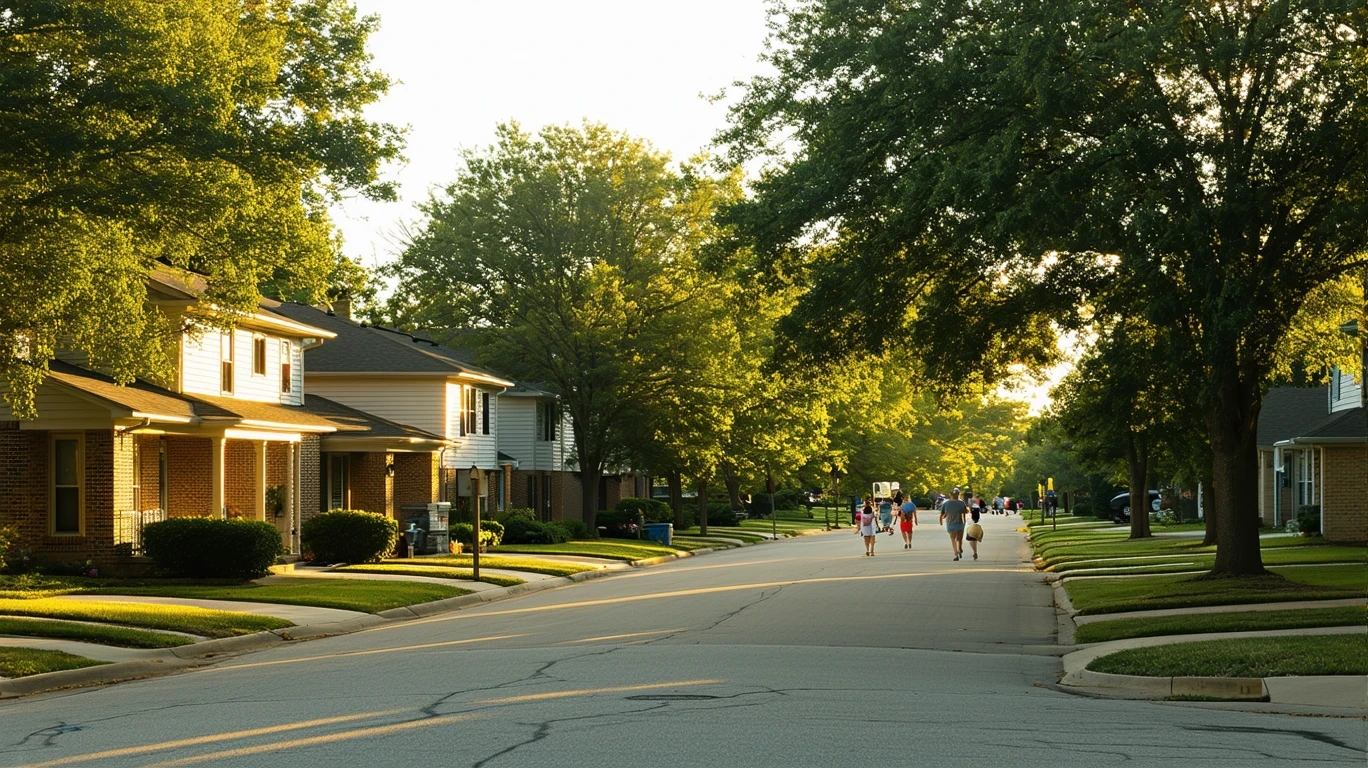
Grocery and daily spending pressure in Mustang and Norman differs less in price and more in access friction and the time cost of managing errands. Both cities share the same regional price parity (RPP index of 91), meaning grocery staples, household goods, and everyday items cost roughly the same at checkout. But the density of food and grocery establishments—and the logistics required to reach them—creates different cost experiences for different households. In Mustang, food and grocery density falls below low thresholds, meaning fewer nearby options and more driving required to complete a weekly shopping trip. That sparse accessibility doesn’t raise prices, but it does raise the time and fuel cost of managing household logistics, especially for families juggling multiple errands or households without flexible schedules.
Norman’s college-town density brings more food options closer together, including budget grocers, ethnic markets, and prepared food outlets concentrated near campus and along main corridors. That clustering reduces the time cost of errands and creates more flexibility for households that prioritize convenience or want to split shopping across multiple trips. It also introduces more temptation for convenience spending—coffee shops, takeout, and quick-service dining that can quietly inflate monthly budgets for young professionals, students, or dual-income couples who trade time for convenience. In Mustang, the lack of nearby options forces more intentional planning and reduces impulse spending, but it also means every grocery run requires a longer drive and more upfront time investment.
The structural difference shows up most clearly for families managing larger grocery volumes and frequent restocking. In Mustang, a household might consolidate errands into one or two big trips per week, driving to a big-box store or regional grocery chain and buying in bulk to minimize repeat visits. That strategy works well for households with storage space, flexible schedules, and the ability to plan meals in advance. In Norman, the same family might benefit from more frequent, smaller trips to nearby stores, reducing the need for bulk storage and allowing more flexibility to adjust menus based on sales or availability. The trade-off is between time efficiency (fewer trips, more planning) and schedule flexibility (more trips, less advance planning required).
Dining out and convenience spending follow similar patterns. Norman’s restaurant density and proximity to campus create more opportunities for casual dining, coffee runs, and takeout—options that feel accessible but add up quickly for households that default to convenience when schedules get tight. Mustang’s sparser layout reduces those temptations but also limits options for households that want or need prepared food as a backup. Single adults and couples may find Norman’s density more aligned with their routines; families with kids and tighter schedules may find Mustang’s forced planning reduces both decision fatigue and unplanned spending.
Groceries takeaway: Price levels are similar, but access friction differs. Mustang requires more driving, more planning, and more intentional grocery management, which can reduce convenience spending but raises the time cost of errands. Norman offers more nearby options and flexibility, which lowers logistics friction but increases exposure to convenience spending creep. Families managing large volumes may prefer Mustang’s bulk-shopping structure; young professionals and couples prioritizing schedule flexibility may find Norman’s density easier to navigate day to day.
Taxes and Fees: Predictability and Structural Differences
Taxes and fees in Mustang and Norman follow different structural patterns, though specific rates aren’t available in the data. What matters for households is how predictability, housing type, and length of ownership interact with local tax and fee structures. Property taxes in both cities fund schools, infrastructure, and municipal services, but newer development in Mustang often comes with higher assessed values and correspondingly higher annual property tax bills. That’s the trade-off for newer roads, updated utilities, and lower maintenance risk. Norman’s older housing stock and more established neighborhoods may carry lower assessed values in some areas, reducing annual property tax obligations but also reflecting older infrastructure and potentially higher maintenance costs over time.
Sales taxes affect daily spending in both cities, and Oklahoma’s state and local tax structure means most purchases—groceries excluded in many cases—carry a combined rate that households feel at checkout. The impact is distributed rather than concentrated, meaning it shows up across all spending categories rather than as a single large bill. For households that spend more on goods (furniture, electronics, home improvement), the cumulative effect can be significant, but it’s harder to track and easier to overlook compared to property taxes or utility bills. Renters feel sales tax pressure more acutely than homeowners because they lack the property tax deduction that can offset some ownership costs at tax time.
Fees vary by neighborhood and housing type. In Mustang, newer subdivisions may include HOA fees that cover landscaping, shared amenities, or neighborhood maintenance. Those fees add predictability (services are bundled and managed externally) but also reduce flexibility (you pay whether you use the amenities or not). In Norman, older neighborhoods and rental properties near campus typically lack HOA structures, which lowers recurring fees but shifts responsibility for maintenance and upkeep to individual owners or landlords. Renters benefit from fewer pass-through fees, but they also have less control over how landlords manage property upkeep and whether those costs eventually get passed along in rent increases.
Trash collection, water, and sewer fees also differ by city and housing type. Single-family homeowners in Mustang typically pay these fees separately, which makes them visible and easier to budget but also adds to the monthly checklist of obligations. In Norman, some rental properties bundle utilities and fees into rent, which simplifies budgeting but obscures the true cost and reduces tenant control over usage. For long-term homeowners, the predictability of separate billing allows more control and the ability to adjust usage; for renters prioritizing simplicity, bundled fees reduce administrative friction even if they limit visibility.
Taxes and fees takeaway: Mustang’s newer development often brings higher property taxes but more predictable infrastructure and services. Norman’s older housing stock may carry lower assessed values but introduces more variability in maintenance and fee structures. Homeowners planning to stay several years may find Mustang’s predictability easier to manage; renters and short-term residents may prefer Norman’s lower entry friction and fewer pass-through fees. The primary difference is structure and visibility, not magnitude—households that value control and transparency may prefer Mustang’s separate billing, while those prioritizing simplicity may find Norman’s bundled approach easier to navigate.
Transportation and Commute Reality
Transportation costs in Mustang and Norman are shaped less by gas prices and more by the density of daily destinations and the role of the car in managing household logistics. Gas prices differ slightly—$2.96 per gallon in Mustang, $2.38 per gallon in Norman—but without commute data for either city, the more meaningful difference is how often households need to drive and how far they need to go to complete routine errands. In Mustang, sparse food and grocery density means most trips require a car, and the distance between home, work, shopping, and services adds up quickly. Families managing school drop-offs, grocery runs, and weekend errands may find themselves driving 20–30 miles per day just to handle routine logistics, even if individual trips feel short.
Norman’s college-town density and clustering of services near campus reduce the need for long drives to complete errands, especially for households living near the university or along main corridors. That doesn’t eliminate car dependency—both cities lack robust public transit—but it does reduce the cumulative mileage required to manage daily life. For households with one car or single adults trying to minimize driving, Norman’s layout offers more flexibility. For families with multiple drivers and more complex schedules, Mustang’s car-oriented structure is easier to navigate because parking is abundant, traffic is lighter, and the infrastructure assumes everyone is driving.
The interaction between errands accessibility and transportation costs shows up most clearly for households managing tight schedules. In Mustang, the time cost of driving—combined with sparse nearby options—means every errand requires more planning and more fuel. A forgotten grocery item or last-minute pharmacy run can easily add 20–30 minutes and several miles to the day. In Norman, the same household benefits from more nearby options and shorter distances, which reduces both time and fuel costs but also increases the temptation to make multiple smaller trips instead of consolidating errands. The trade-off is between efficiency (fewer, longer trips) and flexibility (more, shorter trips), and which approach fits depends on household size, schedule rigidity, and tolerance for planning.
Commute patterns to Oklahoma City or other metro employers likely differ by household, but both cities require a car for most work trips. Mustang’s location on the western edge of the metro may add 10–15 minutes to commutes heading east or downtown, while Norman’s position to the south creates similar time costs for northbound commuters. Without specific commute data, the key insight is that both cities assume car ownership and that the primary transportation difference is how much driving is required outside of work—for groceries, errands, healthcare, and daily logistics. Mustang’s sparse accessibility raises that baseline; Norman’s density lowers it.
Transportation takeaway: Both cities require cars, but Mustang’s sparse errands accessibility adds more daily driving and planning friction. Norman’s density reduces the cumulative mileage required for routine logistics, especially for households near campus or main corridors. Families managing complex schedules may find Mustang’s car-oriented layout easier to navigate; single adults and couples prioritizing shorter trips and more flexibility may prefer Norman’s clustering of services. The decision is less about gas prices and more about how much time and fuel the household spends managing daily logistics outside of work.
Cost Structure Comparison
Housing pressure in Mustang and Norman concentrates at different points in the ownership and rental lifecycle. Mustang’s lower home values reduce the entry barrier for buyers, making it easier to qualify for a mortgage and accumulate equity in newer, low-maintenance housing stock. Norman’s lower rents reduce monthly obligations for renters, especially those in smaller units or willing to navigate the college-driven rental market. Families prioritizing long-term stability and predictable housing costs may find Mustang’s ownership structure easier to manage. Young professionals, students, or households prioritizing flexibility and lower monthly rent may find Norman’s rental market better aligned with their needs. The difference isn’t which city is cheaper—it’s whether the household is more exposed to entry costs or ongoing monthly obligations, and whether predictability or flexibility dominates the decision.
Utilities introduce more volatility in Norman due to higher natural gas and electricity rates, compounded by older housing stock that increases baseline usage. Mustang’s lower natural gas pricing and newer construction flatten seasonal swings and make heating costs more predictable, especially for families or remote workers who run HVAC systems more consistently. The difference matters most for households managing tight budgets or those with limited flexibility to absorb unexpected seasonal spikes. Single adults in smaller apartments may feel the rate difference less acutely; families in larger homes or older units in Norman face more exposure to utility volatility and less control over usage efficiency.
Groceries and daily expenses cost roughly the same at checkout, but the logistics required to complete errands differ sharply. Mustang’s sparse accessibility forces more driving, more planning, and more time spent managing household logistics. That structure reduces convenience spending but raises the time and fuel cost of routine errands. Norman’s density lowers logistics friction and creates more flexibility for smaller, more frequent trips, but it also increases exposure to convenience spending creep—coffee, takeout, and quick-service dining that can quietly inflate monthly budgets. Families managing large grocery volumes and tight schedules may prefer Mustang’s forced planning and bulk-shopping structure. Couples and single adults prioritizing schedule flexibility and nearby options may find Norman’s density easier to navigate day to day.
Transportation patterns matter more in Mustang because sparse errands accessibility adds cumulative mileage and time costs to daily life. Norman’s clustering of services near campus and along corridors reduces the baseline driving required to manage routine logistics, though both cities assume car ownership and lack robust transit alternatives. The difference is less about commute distance and more about how much driving is required outside of work—for groceries, healthcare, errands, and household management. Households with one car or those trying to minimize driving may find Norman’s layout more forgiving. Families with multiple drivers and complex schedules may find Mustang’s car-oriented infrastructure easier to navigate because parking is abundant and traffic is lighter.
The better choice depends on which costs dominate the household and which trade-offs feel more manageable. Households sensitive to housing entry barriers may prefer Mustang’s lower home values and predictable ownership costs. Households sensitive to monthly rent obligations may prefer Norman’s lower rents and more flexible rental market. Households sensitive to utility volatility may prefer Mustang’s lower natural gas pricing and newer housing stock. Households sensitive to errands friction and time costs may prefer Norman’s density and clustering of services. For families managing tight schedules and large grocery volumes, the difference is less about price and more about predictability versus flexibility, and whether the household has the time and planning capacity to navigate Mustang’s sparser layout or the budget discipline to avoid Norman’s convenience spending temptations.
How the Same Income Feels in Mustang vs Norman
Single Adult
For a single adult, Norman’s lower rent and denser errands accessibility reduce both monthly obligations and the time cost of managing daily logistics. Groceries, dining, and services cluster near campus and along main corridors, making it easier to complete errands without long drives or extensive planning. The trade-off is higher utility exposure in older rental units and more temptation for convenience spending that can quietly inflate monthly budgets. Mustang’s higher rent and sparse accessibility require more driving and more intentional planning, but predictable utility costs and fewer nearby dining options reduce volatility and limit impulse spending. Flexibility exists in Norman through lower rent and nearby options; predictability exists in Mustang through stable utility costs and forced planning that reduces convenience spending creep.
Dual-Income Couple
For a dual-income couple, the primary friction is time management and the logistics required to coordinate errands, commutes, and household responsibilities. Norman’s density reduces the time cost of groceries and daily errands, allowing more flexibility to split trips or handle last-minute needs without extensive driving. Higher utility costs and rental volatility introduce more budget uncertainty, especially in older units or during seasonal swings. Mustang’s sparse accessibility requires more planning and longer drives, but lower natural gas pricing and newer housing stock reduce utility volatility and make monthly budgets more predictable. The couple’s tolerance for planning versus their need for schedule flexibility determines which structure feels more stable—Norman rewards adaptability and proximity, while Mustang rewards intentionality and predictable ongoing costs.
Family with Kids
For a family with kids, non-negotiable costs concentrate around housing space, school access, and the logistics of managing multiple schedules and frequent errands. Mustang’s lower home values reduce the entry barrier to ownership and provide access to newer, low-maintenance housing stock with predictable utility costs. Sparse errands accessibility and limited school density add time costs and require more driving, but the car-oriented layout and abundant parking make multi-stop errands easier to manage. Norman’s lower rents offer more flexibility for renters, but higher home values raise the entry barrier for buyers, and older housing stock increases utility volatility. Denser errands accessibility reduces driving time, but limited family infrastructure and rental market volatility introduce different friction points. Families prioritizing long-term stability and predictable costs may find Mustang’s structure easier to navigate; families prioritizing lower rent and shorter errands trips may find Norman’s density more forgiving, though at the cost of higher utility exposure and less housing predictability.
Decision Matrix: Which City Fits Which Household?
| Decision Factor | If You’re Sensitive to This… | Mustang Tends to Fit When… | Norman Tends to Fit When… |
|---|---|---|---|
| Housing entry + space needs | Down payment size, mortgage qualification, or long-term equity building | You prioritize lower home values, newer construction, and predictable ownership costs | You prioritize lower monthly rent, more rental options, and flexibility over ownership |
| Transportation dependence + commute friction | Daily driving distance, fuel costs, or time spent managing errands | You have multiple drivers, value abundant parking, and can absorb longer errands trips | You want shorter trips to groceries and services, or you’re trying to minimize daily mileage |
| Utility variability + home size exposure | Seasonal bill swings, heating costs, or baseline energy usage | You want predictable natural gas pricing and newer housing stock that reduces waste | You’re in a smaller unit where higher rates matter less, or you can absorb seasonal volatility |
| Grocery strategy + convenience spending creep | Time spent shopping, impulse purchases, or dining out frequency | You prefer bulk shopping, intentional planning, and fewer nearby dining temptations | You value nearby options, flexible trip timing, and the ability to make smaller, frequent runs |
| Fees + friction costs (HOA, services, upkeep) | Recurring fees, bundled services, or visibility into what you’re paying for | You want predictable HOA-managed services and newer infrastructure with lower maintenance risk | You prefer fewer recurring fees, more control over services, and lower pass-through costs as a renter |
| Time budget (schedule flexibility, errands, logistics) | How much time you spend driving, planning, or coordinating household tasks | You have flexible schedules, can plan ahead, and value fewer but longer consolidated trips | You need schedule flexibility, want shorter trips, and prefer nearby options for last-minute needs |
Lifestyle Fit: How Daily Life Feels Different
Lifestyle differences between Mustang and Norman reflect their underlying structure—Mustang’s suburban, car-oriented layout versus Norman’s college-influenced density and clustering of services. In Mustang, daily life revolves around the car, with most errands, services, and recreational activities requiring a drive. The low-rise character and newer housing stock create quieter neighborhoods with more yard space and less foot traffic, which appeals to families prioritizing privacy and outdoor space. Parks and green spaces are present, and water features add recreational options, but accessing them typically requires driving rather than walking. The sparse accessibility of groceries and services means households need to plan errands in advance and consolidate trips, which reduces spontaneity but also limits the friction of navigating crowded parking lots or competing for limited nearby options.
Norman’s college-town character introduces more density, more foot traffic, and more visible activity, especially near the University of Oklahoma campus. Restaurants, coffee shops, and retail options cluster along main corridors, creating more opportunities for casual dining, socializing, and entertainment without extensive driving. The presence of students and university employees adds vibrancy but also introduces seasonal rhythms—busier streets during the academic year, quieter summers, and rental market volatility tied to student housing cycles. For households that value walkable pockets and nearby dining options, Norman’s density offers more lifestyle flexibility. For households that prioritize quiet, space, and predictability, Mustang’s suburban layout feels more stable and less subject to external rhythms.
Healthcare access differs structurally. Mustang has a hospital present, which reduces the distance and time required for emergency care or specialized services. Norman’s healthcare infrastructure isn’t detailed in the data, but as a larger city with a university, it likely offers clinics and medical services concentrated near campus and main corridors. For families with young kids or older adults managing chronic conditions, proximity to a hospital can reduce stress and logistical friction. For young professionals or healthy adults, the difference may matter less day to day but becomes more significant during emergencies or when managing unexpected health needs.
Recreation and outdoor access in both cities depend on car access, though the texture differs. Mustang’s parks and water features provide family-oriented outdoor options, but reaching them typically requires driving and planning. Norman’s proximity to the university brings more organized recreational facilities, sports leagues, and cultural events tied to campus life, which can feel more accessible for households that value structured activities or want to participate in community events. The trade-off is between Mustang