
How much is enough to feel at ease? In Mustang, the answer depends less on hitting a specific number and more on whether your income aligns with how life here actually works—car trips for groceries, utility bills that swing with the seasons, and housing choices that force tradeoffs between space, location, and condition.
Mustang sits in the Oklahoma City metro with a median household income of $84,162 per year and a cost structure roughly 9% below the national baseline. That lower price level doesn’t eliminate pressure—it redirects it. Comfort here isn’t about earning your way past every expense; it’s about having enough margin to absorb the costs that don’t negotiate and enough flexibility to make choices that fit your household without constant recalculation.
What “Living Comfortably” Means in Mustang
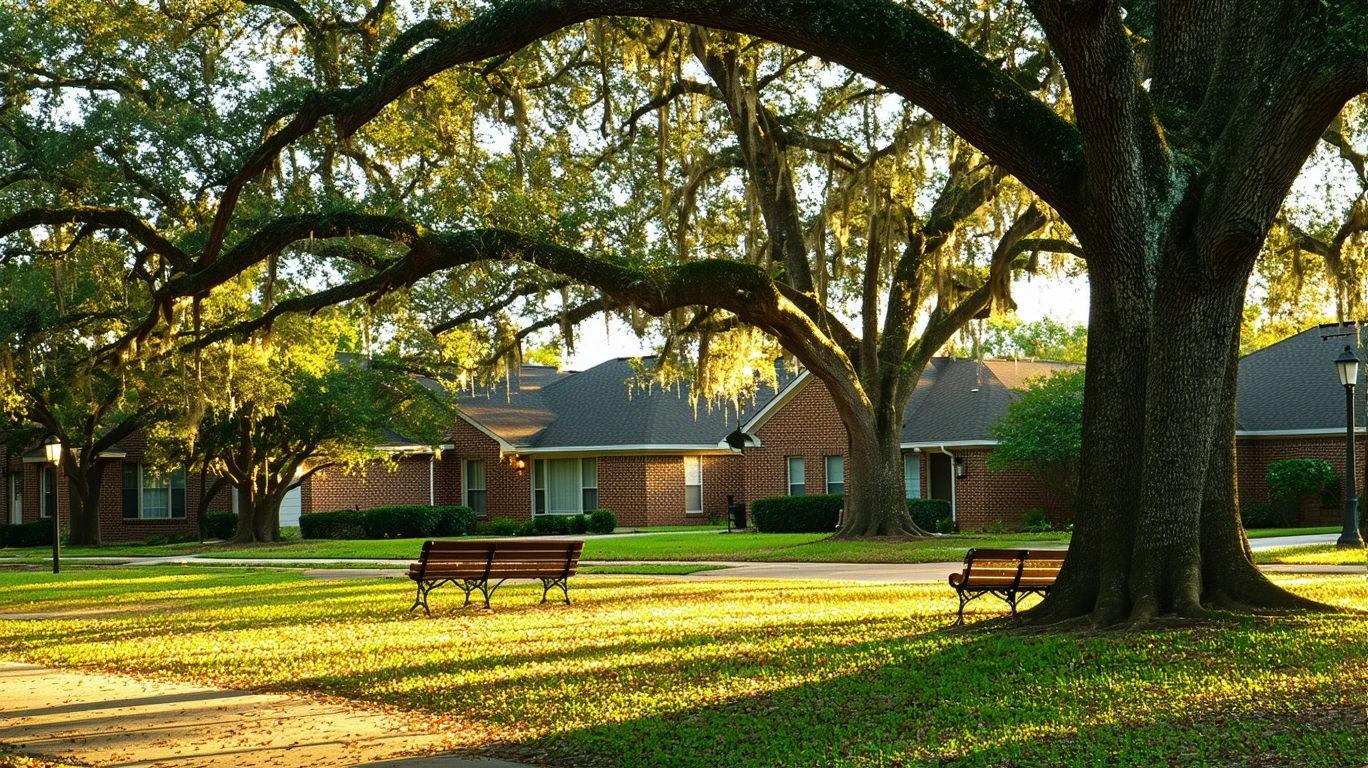
Comfort in Mustang looks like this: your housing payment doesn’t dictate every other decision. Utility bills in July and January don’t require you to adjust thermostats into discomfort. You drive without obsessing over fuel prices at $2.96 per gallon. You can pick up groceries, take your kid to an activity, or grab dinner out without treating it as a budget event.
It also means accepting what Mustang is. This is a low-rise, car-oriented suburb where errands require planning and driving. Food and grocery density falls below typical thresholds, so “running out for milk” often means a deliberate trip. Pedestrian infrastructure exists in moderate pockets, but daily life assumes you own a vehicle and use it frequently. Comfort here includes the time cost of that structure, not just the dollar cost.
Households that feel comfortable in Mustang tend to value space, privacy, and a stable community over walkable convenience or transit access. They’re willing to drive for most needs and can absorb the seasonal intensity of Oklahoma’s climate—extended cooling seasons with summer heat and occasional winter cold snaps—without financial stress.
Where Income Pressure Shows Up First
Housing dominates the pressure landscape. The median home value is $212,200, and median rent is $1,147 per month. Neither figure is extreme, but both require tradeoffs. Renters face limited inventory and few alternatives within walking distance of daily needs. Buyers encounter a market where affordability comes with compromises—older homes, less desirable locations, or deferred maintenance.
Ownership brings property taxes, insurance (which can be volatile in Oklahoma), and maintenance costs that don’t pause. Renting avoids those variables but offers less control and no equity accumulation. The choice isn’t obvious, and the wrong fit creates ongoing strain.
Utilities add seasonal volatility. Electricity rates sit at 12.25¢ per kWh, and natural gas costs $11.08 per thousand cubic feet. In isolation, those rates are manageable. In practice, extended cooling seasons and occasional heating demands mean bills fluctuate significantly. Households without margin treat summer and winter as financial events, adjusting behavior to avoid bill shock. Comfortable households absorb the swings without changing how they live.
Transportation costs are less about price than structure. Sparse errands accessibility and a car-oriented layout mean most households drive daily—for work, groceries, school drop-offs, and errands. Fuel at $2.96 per gallon is reasonable, but the volume of driving adds up. Time becomes the hidden cost: trips that could take five minutes on foot elsewhere require 15 minutes of driving, parking, and navigating here.
For families, limited infrastructure density (schools and playgrounds fall below typical thresholds) can mean additional travel for activities, education alternatives, or childcare. That’s not a deal-breaker, but it’s a recurring time and fuel cost that tighter budgets feel more acutely.
How the Same Income Feels Different by Household
A single adult earning the median income experiences Mustang differently than a family of four at the same level. The dollars are identical; the pressure is not.
Single adults face lower absolute housing costs but fewer options. A one-bedroom rental near $900–$1,000 per month is feasible, but location choices narrow quickly. Sparse errands accessibility means frequent driving even for basics, and living alone removes the ability to split transportation or utility costs. Comfort arrives when income allows choice—better location, newer construction, or enough discretionary budget to offset the time cost of car dependency with convenience purchases.
Couples without children gain flexibility. Splitting fixed costs (rent, utilities, internet) creates immediate breathing room. Dual incomes, even at modest levels, provide a buffer against seasonal utility swings and transportation expenses. The car-oriented layout becomes less burdensome when errands can be divided or combined. Comfort here means being able to prioritize time over cost—choosing closer locations, dining out occasionally, or saving without constant tradeoff analysis.
Families with children encounter compounding pressure. Housing space needs increase, pushing costs toward the higher end of the rental market or into ownership with its attendant variability. Limited family infrastructure means more driving—school runs, activities, playdates. Sparse grocery and food density turns routine errands into logistical puzzles. Utility costs rise with larger homes and more occupants. Comfort for families requires enough income to absorb all of this without treating every decision as a financial negotiation—and enough margin to handle the surprises that come with kids.
The Comfort Threshold (Qualitative)
The transition to comfort isn’t marked by a number. It’s the point where:
- Housing stops forcing compromise. You’re not choosing between space, location, and condition—you can get two out of three, maybe all three.
- Utility bills become predictable annoyances, not budget disruptors. You cool and heat your home to comfort, not to a target bill.
- Transportation shifts from cost management to time optimization. You drive where you need to go without calculating fuel expense per trip.
- Errands and groceries happen when convenient, not when consolidated into a single weekly expedition to minimize driving.
- Discretionary spending becomes possible. Dining out, activities, small purchases, and savings all fit without rebalancing the budget.
- Seasonal or unexpected expenses (car repair, medical bills, higher winter heating) don’t cascade into other categories.
Households below this threshold make Mustang work, but they feel every tradeoff. Households above it experience the city as it’s designed to be experienced—spacious, stable, and manageable, as long as you accept the car-dependent rhythm.
Why Online Cost Calculators Get Mustang Wrong
Most cost-of-living calculators treat Mustang as a data point: median rent, average utilities, typical transportation. They’ll spit out a total and call it done. What they miss is how those costs interact with the city’s structure.
A calculator might show grocery costs as average or below average. What it won’t tell you is that what a budget has to handle in Mustang includes the time and fuel cost of driving to access those groceries, because food establishment density falls below thresholds that support walkable errands. It won’t capture the reality that “saving money” on rent often means accepting a location that increases transportation time and cost.
Calculators also assume static costs. They don’t account for utility volatility driven by extended cooling seasons and occasional winter heating demands. They don’t reflect the reality that car dependency isn’t optional here—it’s structural. And they certainly don’t differentiate between a single adult, a couple, and a family of four experiencing the same income level in completely different ways.
People feel surprised after moving because the total looked manageable on paper, but the lived experience—driving everywhere, planning around sparse errands accessibility, absorbing seasonal utility swings—wasn’t part of the equation.
How to Judge Whether Your Income Fits Mustang
Instead of asking “Is my income enough?” ask yourself these questions:
- How sensitive are you to housing tradeoffs? Can you accept an older home, a less convenient location, or a smaller space in exchange for affordability? Or do you need specific conditions that will push you toward the higher end of the market?
- Can you absorb seasonal utility swings? Will a $50–$100 fluctuation between summer and winter bills require you to adjust behavior, or can you pay it and move on?
- Is time or money your limiting factor? Mustang’s car-oriented layout and sparse errands accessibility mean you’ll spend time driving. Can you afford that time, or will it compound stress?
- How much flexibility do you expect month to month? Does your budget tolerate variability (maintenance, fuel costs, unexpected trips), or does it require every category to stay within a narrow range?
- What does your household structure demand? Single adults and couples have different cost floors and flexibility than families. Does your income cover your household’s non-negotiable needs with margin left over?
If your answers suggest tight margins, constant tradeoffs, or sensitivity to variability, Mustang will work—but it won’t feel comfortable. If your answers suggest flexibility, tolerance for driving, and enough income to absorb swings without stress, Mustang can feel spacious and manageable.
FAQs About Living Comfortably in Mustang
Is Mustang affordable compared to other Oklahoma City suburbs?
Mustang’s cost structure sits roughly 9% below the national baseline, and housing costs are moderate relative to the metro. But affordability is relative to your income and expectations. Sparse errands accessibility and car dependency mean transportation and time costs can offset housing savings. It’s affordable if your income supports the full structure of life here, not just the rent or mortgage payment.
Can a single income support a family in Mustang?
It depends on the income level and the family’s needs. A single earner at or above the median ($84,162 per year) can make it work, but there’s limited margin for variability. Families with one income face compounded pressure from housing space needs, transportation costs, and limited family infrastructure that requires more driving. Comfort on a single income requires either a high earner or a household willing to make ongoing tradeoffs.
How do utility costs affect comfort in Mustang?
Utility costs aren’t extreme, but they’re variable. Extended cooling seasons and occasional winter heating demands mean bills swing seasonally. Comfortable households absorb those swings without adjusting thermostats or behavior. Households near their income limit treat summer and winter as financial events. If you’re budgeting to the dollar, utility volatility will create stress.
Does Mustang require two cars per household?
Not strictly, but the car-oriented layout and sparse errands accessibility make one car per adult the practical norm for most households. Sharing a vehicle is possible but requires significant coordination and time tradeoffs. Comfortable households typically don’t stress about this; tighter budgets feel the insurance, maintenance, and fuel costs of a second vehicle more acutely.
What income level makes Mustang feel easy instead of manageable?
There’s no single number, but the transition happens when housing, utilities, transportation, and groceries no longer require active management. You’re not optimizing driving routes to save fuel. You’re not timing errands to minimize trips. You’re not choosing between saving and spending on small discretionary purchases. That threshold varies by household size and expectations, but it’s consistently above the point where every category is budgeted to the limit.
How this article was built: In addition to public economic data, this article incorporates location-based experiential signals derived from anonymized geographic patterns—such as access density, walkability, and land-use mix—to reflect how day-to-day living actually feels in Mustang, OK.
Mustang can work well for some households—but only if expectations match reality. Comfort here isn’t about earning past every expense. It’s about having enough margin to live the way the city is structured: car-dependent, seasonally variable, and spacious. If your income supports that rhythm without constant recalculation, where your money goes in Mustang will feel predictable. If it doesn’t, you’ll make it work—but you’ll feel every tradeoff along the way.