
Can you live in Mustang without a car? For most households, the answer is no — and understanding why reveals a lot about how daily life actually works here. Mustang’s development pattern, infrastructure layout, and the way essential services are distributed create a mobility environment where driving isn’t just convenient; it’s structural. This article explains transportation options in Mustang, what public transit realistically offers, and how commuting and errands shape everyday routines for families, professionals, and newcomers alike.
How People Get Around Mustang
Mustang operates primarily as a car-oriented community. The pedestrian-to-road ratio sits in a moderate range, meaning there are sidewalks and pathways in parts of the city, but they don’t form a continuous, citywide network that supports car-free living. You’ll find walkable pockets — neighborhoods with sidewalks connecting homes to nearby parks or schools — but these are exceptions, not the rule.
The city’s low-rise building character and spread-out layout reinforce this pattern. Homes, schools, and commercial areas are separated by distances that make walking or biking impractical for most daily tasks. Food and grocery establishments fall below density thresholds, meaning even routine errands typically require a car. This isn’t a failure of planning; it’s the result of suburban growth patterns common across the Oklahoma City metro area.
Newcomers often underestimate how much driving shapes daily life here. In denser cities, you might walk to a corner store or hop on a bus for a quick trip. In Mustang, you plan around the car: bundling errands, coordinating pickups, and building routines that assume reliable vehicle access. That shift affects time, flexibility, and household logistics in ways that aren’t immediately obvious until you’re living it.
Public Transit Availability in Mustang
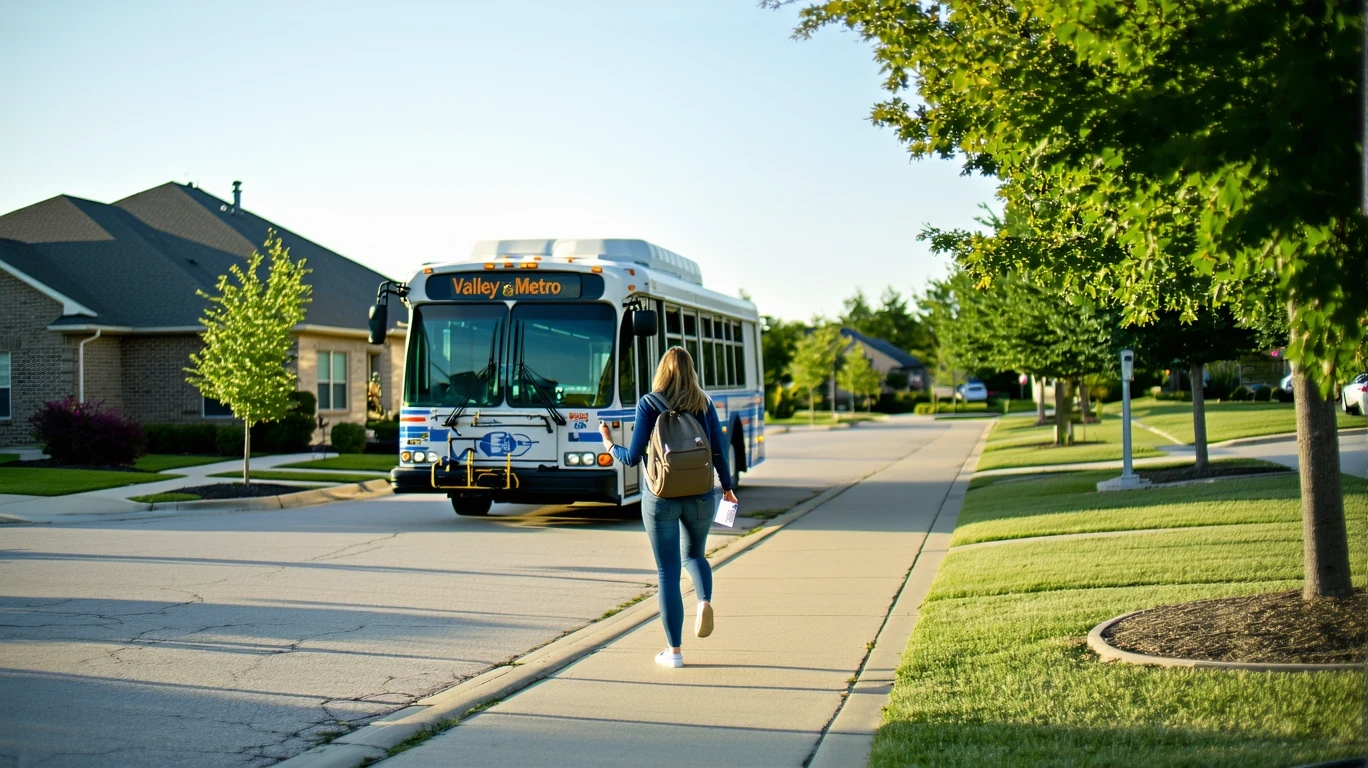
Public transit plays a minimal role in Mustang’s transportation landscape. No bus stops or rail stations were detected within the city’s infrastructure, and transit service — if available at all — is limited to regional connections that don’t serve daily mobility needs for most residents. This isn’t unusual for suburban communities in the Oklahoma City metro, but it does mean that households relying on public transportation face significant barriers.
Transit systems in the broader metro area, such as regional bus services, may offer limited routes connecting Mustang to Oklahoma City or nearby employment centers, but coverage is sparse, schedules are infrequent, and service hours rarely extend into evenings or weekends. For someone commuting to a fixed-schedule job in the urban core, transit might be technically possible but practically exhausting. For families managing school pickups, grocery runs, and after-school activities, it’s functionally unavailable.
Transit works best in places with dense corridors, mixed-use development, and clustered destinations. Mustang’s layout — low-rise, spread-out, with commercial and residential areas separated — doesn’t support that model. Even if service were expanded, the distances between stops and destinations would still require supplemental transportation, whether that’s a car, a bike, or a long walk.
Driving & Car Dependence Reality
Driving isn’t optional in Mustang; it’s the foundation of daily mobility. Grocery stores, medical facilities, schools, and workplaces are distributed across the city and surrounding metro in ways that assume car access. Parking is abundant and free in most areas, which removes one of the friction points that makes driving costly or inconvenient in denser cities.
This car dependence creates tradeoffs. On one hand, it offers flexibility: you control your schedule, your route, and your timing. You’re not waiting for a bus that may or may not arrive, and you’re not limited by service hours. On the other hand, it means every household needs at least one reliable vehicle, and multi-adult households often need two. That introduces costs — fuel, insurance, maintenance, registration — that aren’t discretionary. They’re the price of participation.
The city’s layout also affects how much you drive. Because errands and services are spread out, trips tend to be longer and less walkable. You might drive five miles for groceries, another few miles for a pharmacy, and then backtrack for a school pickup. Over time, that adds up — not just in fuel costs, but in time spent behind the wheel and the mental load of coordinating logistics.
Commuting Patterns & Daily Mobility
Commuting in Mustang typically means driving, either to jobs within the city or to employment centers in Oklahoma City and the surrounding metro. The city functions as part of a regional commuter network, where people live in Mustang for the housing, schools, and suburban character, but work elsewhere. That pattern is common and well-supported by the road network, but it does mean that commute length and traffic exposure vary widely depending on where you work.
For residents working locally — in Mustang’s schools, retail centers, or service businesses — commutes are short and predictable. For those commuting to Oklahoma City or other metro employers, the drive can range from manageable to time-consuming, depending on distance, route, and traffic patterns. Without public transit as a fallback, flexibility comes from controlling your departure time and route, not from switching modes.
Daily mobility isn’t just about commuting to work. It’s also about getting kids to school, running errands, attending appointments, and managing the dozens of small trips that make up household life. In Mustang, nearly all of those trips happen by car. That’s not a critique — it’s a description of how the city’s infrastructure and layout shape behavior. Households that thrive here are those that can absorb the time, cost, and coordination that car-dependent living requires.
Who Transit Works For — and Who It Doesn’t
Public transit, in any meaningful sense, doesn’t work for most people in Mustang. The absence of local bus or rail service, combined with sparse regional connections, means that transit-dependent households face serious challenges. If you don’t have a car and can’t rely on others for rides, accessing jobs, groceries, healthcare, and schools becomes a daily struggle.
This reality has the biggest impact on lower-income households, individuals with disabilities, and anyone who can’t drive due to age, health, or legal restrictions. In cities with robust transit, those populations have options. In Mustang, they don’t — at least not without significant workarounds, whether that’s rideshare services, informal carpooling, or limiting where they can live and work.
For car-owning households, Mustang works well. The infrastructure supports driving, parking is easy, and the road network connects efficiently to the broader metro. Families with two adults and two vehicles can manage the logistics smoothly. Single-car households can make it work if schedules align, but it requires more coordination. Single adults without a car, or families relying on one vehicle for multiple competing needs, will find Mustang’s transportation structure limiting.
Transportation Tradeoffs in Mustang
Choosing to live in Mustang means accepting car dependence as the baseline. The tradeoff is straightforward: you gain control, flexibility, and the ability to live in a suburban environment with more space and often lower housing costs than urban cores. You lose the option to rely on transit, the ability to walk to most destinations, and the freedom to avoid vehicle ownership.
For some households, that’s a clear win. Families who value yards, schools, and quieter streets often prefer the suburban model and are willing to drive more in exchange. For others — especially younger renters, transit-dependent individuals, or those trying to minimize transportation exposure — Mustang’s structure creates friction that’s hard to work around.
The key is understanding what you’re signing up for. Mustang doesn’t pretend to be a walkable, transit-rich city. It’s a car-first community, and that’s reflected in everything from what a budget has to handle in Mustang to how you structure your daily routine. If that fits your lifestyle and household capacity, the city works well. If it doesn’t, the mismatch will show up quickly.
FAQs About Transportation in Mustang (2026)
Is public transit usable for daily commuting in Mustang?
No. Public transit infrastructure is minimal to nonexistent within Mustang itself, and regional connections are too limited in coverage and frequency to support daily commuting for most residents. Driving is the primary and often only practical option.
Do most people in Mustang rely on a car?
Yes. The city’s layout, low density, and sparse distribution of services make car ownership essential for nearly all households. Walking and biking are possible in limited areas, but they don’t replace the need for a vehicle.
Which areas of Mustang are easiest to live in without a car?
No area of Mustang is designed to support car-free living. Some neighborhoods have moderate pedestrian infrastructure that allows for short walks to parks or nearby streets, but accessing groceries, jobs, and services still requires a car.
How does commuting in Mustang compare to nearby cities?
Mustang’s commuting experience is similar to other suburban communities in the Oklahoma City metro: car-dependent, with commute length determined by where you work. It lacks the transit options available in the urban core but also avoids some of the congestion and parking challenges.
Can you get by with one car in Mustang if you have a family?
It’s possible, but it requires careful coordination. If both adults work, have different schedules, or need to manage school pickups and errands simultaneously, a single vehicle creates logistical pressure. Two-car households have much more flexibility.
How Transportation Fits Into the Cost of Living in Mustang
Transportation in Mustang isn’t just a line item — it’s a structural factor that shapes where you can live, how you spend your time, and what flexibility you have in daily life. Because driving is essential, vehicle costs (fuel, insurance, maintenance, registration) become non-negotiable for most households. That’s different from cities where you can choose to own a car or rely on transit depending on your budget and priorities.
The city’s car-dependent layout also affects housing decisions. Living closer to work or key destinations can reduce drive time and fuel use, but it may come with higher rent or home prices. Living farther out might save on housing but increase transportation time and costs. These tradeoffs are part of the broader cost structure, and understanding them helps you make decisions that fit your household’s capacity and priorities.
If you’re planning a move to Mustang or trying to understand how transportation costs fit into your overall budget, the monthly budget guide offers a fuller picture of how different expense categories interact. Transportation isn’t isolated — it’s woven into housing choice, time allocation, and the daily rhythms that define life here.
Mustang works well for households that can absorb car dependence without strain. It’s less forgiving for those who need transit options, walkable access, or the ability to avoid vehicle ownership. Knowing that upfront — before you commit to a lease, a mortgage, or a job — gives you the clarity to make a choice that actually fits.
How this article was built: In addition to public economic data, this article incorporates location-based experiential signals derived from anonymized geographic patterns—such as access density, walkability, and land-use mix—to reflect how day-to-day living actually feels in Mustang, OK.