
Is Mustang expensive to live in? Mustang is considered moderately priced in 2026, with a median home value of $212,200 and median rent of $1,147 per month. The value proposition depends on housing entry cost versus car dependence—daily errands and household logistics require advance planning and vehicle access rather than walkable convenience.
You’re staring at a spreadsheet, trying to figure out whether Mustang makes sense for your next move. The rent looks reasonable. The home prices aren’t outrageous. But you’ve heard enough stories about “hidden costs” to know that sticker prices don’t tell the whole story. What actually drives the budget here? Where do the surprises come from? And how do you know if this place fits your financial reality before you commit?
This article maps the cost structure of Mustang—not what you’ll spend in a given month, but which categories create pressure, which ones stay predictable, and where your household type determines whether this city works or doesn’t.
Overall Cost of Living Snapshot
Mustang operates below the national price baseline, with a regional price parity index of 91, meaning the overall cost of goods and services runs about 9% lower than the U.S. average. That discount shows up unevenly: housing and groceries reflect it clearly, while transportation costs depend entirely on how far you drive and how often.
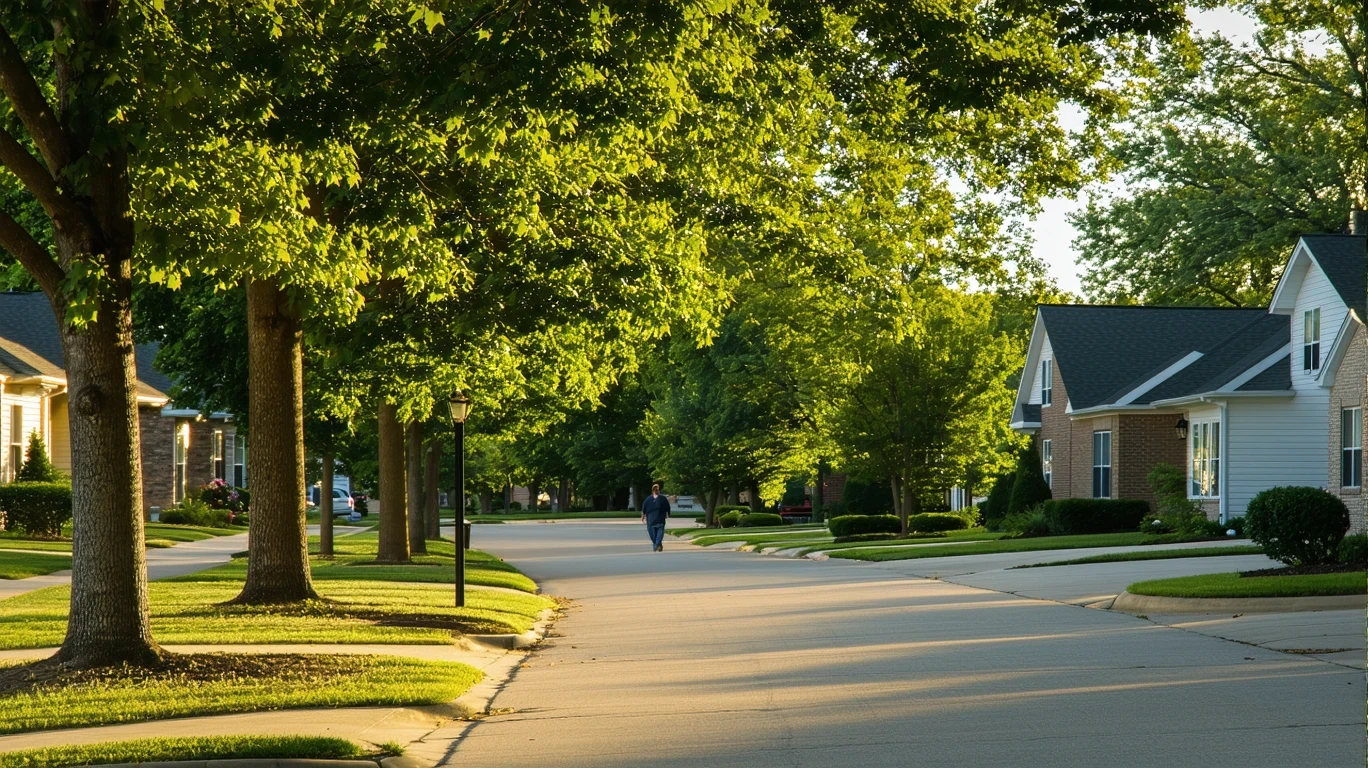
The primary cost driver here is housing entry—whether you’re buying or renting, securing a place to live represents the largest single financial commitment. The secondary driver is transportation, not because gas is expensive (it’s $2.96 per gallon), but because the physical layout of Mustang requires a vehicle for nearly all errands and daily tasks. Pedestrian infrastructure exists in moderate amounts relative to the road network, but food and grocery establishments fall below density thresholds, meaning most households plan trips around driving rather than walking to nearby stores.
Utility costs sit in the middle: predictable in structure, but exposed to seasonal swings driven by Oklahoma’s long cooling season and occasional winter heating demand. Unemployment stands at 2.8%, reflecting a tight labor market, and median household income is $84,162 per year—a figure that matters less for this article than understanding where money actually goes once you’re here.
Driver verdict: Housing dominates upfront commitment, transportation creates ongoing exposure through car dependency, and utilities add moderate seasonal variability. Surprises come from underestimating how much driving replaces convenience, and how that shifts time and fuel into the cost equation.
Housing Costs (Primary Driver)
The median home value in Mustang is $212,200, positioning the city as an ownership-oriented suburb where buying is the more common path than long-term renting. For renters, the median gross rent is $1,147 per month, a figure that includes rent plus utilities in many cases, though lease structures vary.
Ownership here means entering at a price point that’s accessible relative to metro benchmarks, but it also means taking on property taxes, insurance, and maintenance—all of which compound over time as the home ages and coverage adjusts. Renting offers short-term flexibility and eliminates those ownership layers, but it also means less control over annual rent adjustments and fewer pathways to long-term equity.
This is not a city where renting indefinitely is the norm. The housing stock, the suburban form, and the low-rise building character all point toward ownership as the expected long-term outcome. If you’re here temporarily or testing the market, renting works. If you’re planning to stay, the pressure to buy builds quickly.
| Housing Type | Cost Anchor | What That Buys You |
|---|---|---|
| Median Home Value | $212,200 | Entry into ownership with equity potential, property tax and maintenance exposure |
| Median Gross Rent | $1,147/month | Flexibility and lower upfront cost, but no equity and exposure to rent increases |
Conclusion: Mustang is a buying city. Renting is a transitional option, not a long-term strategy.
Utilities & Energy Risk
Electricity in Mustang costs 12.25¢ per kWh, and natural gas is priced at $11.08 per MCF (roughly equivalent to 100 therms). These are the baseline rates—what you actually pay depends on how much you use, and usage is driven by Oklahoma’s climate: extended periods of heat that demand air conditioning, and occasional cold snaps that require heating.
For illustrative context, a household using around 1,000 kWh per month would see an electricity charge near $123 before fees and taxes. Natural gas usage spikes in winter months when heating is needed; a household using roughly 1 MCF per month during heating season would face a gas charge near $11 before distribution fees and taxes. These are not predictions—they’re reference points to understand how rates translate into exposure.
The risk here is moderate. Electricity is the dominant utility expense due to cooling demand during long, hot summers. Natural gas adds variability in winter, but it’s not the primary driver for most of the year. Households that manage cooling efficiently—through programmable thermostats, insulation, or behavioral adjustments—reduce their largest area of exposure. Those that don’t will see bills climb steadily as outdoor temperatures rise.
Risk classification: Moderate. Cooling dominates, heating adds winter variability, and efficiency choices directly control the size of the exposure.
Groceries & Daily Costs
Grocery costs in Mustang reflect the regional price discount, running below national averages in most categories. Derived estimates based on national baselines adjusted by regional price parity suggest bread around $1.68 per pound, chicken near $1.86 per pound, and ground beef close to $6.14 per pound. Milk runs approximately $3.73 per half-gallon, and eggs near $2.35 per dozen. These are not observed local prices—they’re modeled indicators of relative cost pressure.
What matters more than individual item prices is how grocery shopping fits into the broader household routine. Food and grocery establishments in Mustang fall below density thresholds, meaning most trips require a car and advance planning rather than quick stops on foot. This doesn’t make groceries more expensive per item, but it does mean shopping becomes a deliberate errand rather than a spontaneous convenience. Households that batch trips and plan around larger shopping runs face less friction. Those accustomed to grabbing items on the way home from work or walking to a corner store will find that pattern doesn’t translate here.
The cost pressure from groceries is low to moderate—not because prices are high, but because the structure of access requires time, fuel, and logistical planning that wouldn’t be necessary in a denser environment.
Transportation Reality
Mustang is a car-dependent city. Pedestrian infrastructure exists in moderate amounts relative to the road network, but the spatial distribution of daily destinations—grocery stores, pharmacies, schools—means walking or biking to errands is not a viable primary strategy for most households. There is no rail transit, and bus service, if present, does not replace the need for a personal vehicle.
Gas costs $2.96 per gallon, which is not the issue. The issue is how often you drive, how far, and whether your household requires one vehicle or two. For illustrative context, a commuter driving 25 miles round trip in a vehicle averaging 25 MPG would use about one gallon per day, translating to roughly $15 per week in fuel before considering maintenance, insurance, or depreciation. That’s not a budget—it’s a reference point to understand how commute distance and vehicle count create recurring exposure.
Households with two working adults often need two cars. Households with school-age children and activities scattered across town add even more miles. The transportation cost here isn’t volatile like utilities—it’s structural. You either absorb it, or you don’t live here.
Transportation as recurring exposure: Fuel is cheap, but car dependency is total. The cost comes from ownership, insurance, and the miles you can’t avoid, not from the price at the pump.
Cost Exposure Profiles
Different household situations face different cost exposures in Mustang, shaped by how the city’s structure interacts with daily routines. These profiles describe which cost categories dominate depending on your situation—not whether you can afford to live here, but where financial pressure concentrates.
Low-exposure situation: You own your home outright or have a stable, low mortgage payment. You work from home or have a short commute. Your household uses one vehicle. You manage cooling costs actively during summer months. In this scenario, your largest recurring costs are property taxes, insurance, and utilities—all predictable and manageable with planning.
High-exposure situation: You’re entering the housing market at current prices with a mortgage. You commute to Oklahoma City or another metro area daily. Your household requires two vehicles. You have school-age children whose activities require frequent driving. In this scenario, housing entry cost, transportation (fuel, insurance, maintenance), and utilities during peak cooling season all layer on top of each other. The city doesn’t become unaffordable, but the cost structure becomes less forgiving.
The difference isn’t income—it’s how many of the city’s structural cost drivers apply to your household at once. Mustang rewards ownership stability and short commutes. It penalizes high mobility needs and long-distance work travel. The physical layout of the city—low-rise, car-oriented, with sparse errands accessibility—means convenience costs time and fuel rather than rent premiums or walkable access.
Frequently Asked Questions
Is Mustang more affordable than Oklahoma City in 2026? Mustang tends to offer lower housing entry costs than many Oklahoma City neighborhoods, but transportation costs can offset that advantage if your commute requires daily metro-area driving. The tradeoff is cheaper housing versus higher vehicle dependence.
What does a typical cost profile look like in Mustang? Housing dominates upfront and ongoing costs, transportation creates recurring exposure through car dependency, and utilities add moderate seasonal variability driven by cooling demand. Grocery costs run below national averages, but access requires planning and driving.
Do utilities cost more in Mustang than in nearby areas? Utility rates in Mustang are comparable to other parts of the Oklahoma City metro area. The bigger variable is usage—homes with older HVAC systems or poor insulation face higher bills during extended heat, regardless of the rate per kWh.
What costs tend to surprise newcomers in Mustang? Transportation is the most common surprise. Gas is cheap, but the need to drive for every errand—groceries, pharmacies, school pickups—adds up in time and fuel. Households used to walkable neighborhoods underestimate how much car dependency reshapes the weekly routine.
Are property taxes higher in Mustang than in Edmond? Property tax rates vary by jurisdiction and are subject to change, but both cities fall within the Oklahoma County area with similar assessment structures. The bigger difference is usually home value—higher-priced homes in Edmond can result in higher absolute tax bills even if rates are comparable.
Is Mustang a good fit for renters long-term? Mustang’s housing stock and suburban form are oriented toward ownership. Renting works as a transitional option, but the rental market is smaller and less competitive than in denser metro areas. Most long-term residents own.
How does healthcare access affect cost exposure in Mustang? Mustang has a hospital present, which reduces the need to travel for urgent or inpatient care. Routine healthcare is accessible locally, meaning medical trips don’t add significant transportation burden compared to more rural areas.
Does Mustang’s layout make it harder to save on transportation? Yes. The sparse distribution of grocery stores and daily destinations means most errands require a car, and there’s limited ability to substitute walking, biking, or transit. Households that consolidate trips and plan efficiently can control fuel costs, but the baseline need for a vehicle—and often two—is unavoidable.
How this article was built: In addition to public economic data, this article incorporates location-based experiential signals derived from anonymized geographic patterns—such as access density, walkability, and land-use mix—to reflect how day-to-day living actually feels in Mustang, OK.
—