
Is Mustang the kind of place you grow roots—or just pass through? For many, the answer depends less on what the city offers and more on what you’re willing to trade. Mustang sits comfortably in the Oklahoma City metro, offering affordable homeownership, quiet streets, and a family-friendly reputation—but it asks something in return: patience with distance, comfort with car dependency, and acceptance that convenience often means a drive, not a walk.
The city’s emotional tone reflects a classic suburban bargain. People who feel at home here tend to value space, predictability, and cost control over spontaneity and walkable variety. Those who feel restless often describe a friction between the promise of “small-town charm” and the reality of sparse local amenities, planning-heavy errands, and a landscape built around the car. Mustang doesn’t try to be everything—it succeeds by being affordable, quiet, and low-key. Whether that feels like a fit depends on what you need from daily life.
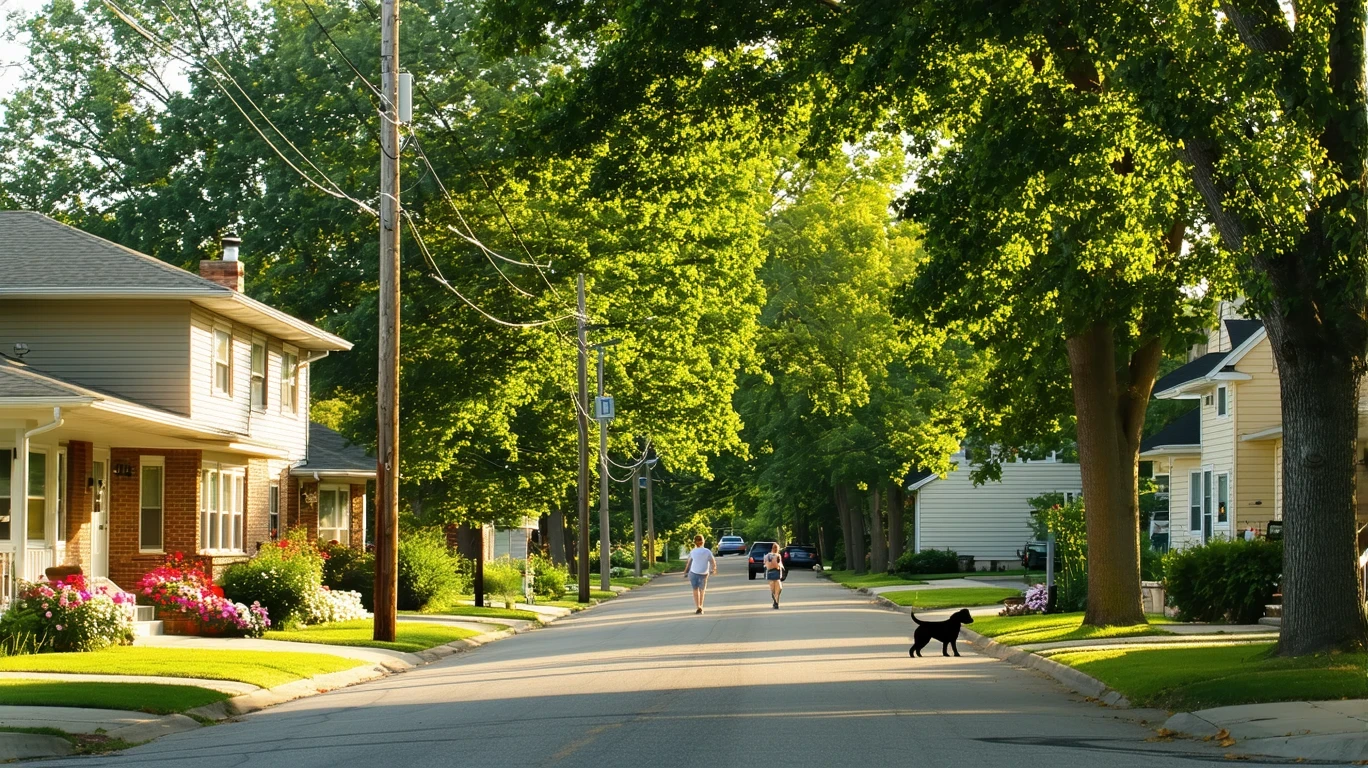
What the Vibe Actually Feels Like
Mustang’s emotional profile is shaped by its physical structure. The city is low-rise and spread out, with pedestrian infrastructure that exists but doesn’t dominate. You’ll find sidewalks in some areas, but the pedestrian-to-road ratio suggests that walking is possible in pockets, not pervasive. For households used to running errands on foot or making quick stops between tasks, Mustang introduces friction. Food and grocery density falls below thresholds that support spontaneous, walkable errands—most trips require a car, and most households plan their shopping and dining around driving routes, not proximity.
This creates a lived experience that rewards routine and punishes improvisation. If you forget an ingredient, you’re not walking to the corner store—you’re getting back in the car. If you want variety in dining or retail, you’re often heading toward the broader Oklahoma City metro. The city does offer park access and some green space, with water features adding to the outdoor environment, but the overall texture is one of residential calm rather than bustling mixed-use energy.
For families, Mustang presents a paradox. The city markets itself as family-friendly, and many households move here for exactly that reason—affordable homes, safe streets, and a quieter pace. Yet school density signals fall below expected thresholds, and playground infrastructure is limited. That doesn’t mean families don’t thrive here; it means the city’s family appeal rests more on housing affordability and suburban predictability than on abundant visible infrastructure. Parents often supplement with activities in neighboring areas or accept longer drives to access programs and amenities.
Social Media Buzz in Mustang
Online discussion about Mustang tends to circle around a few recurring themes: affordability, growth, and the tradeoffs of suburban life. On platforms like Facebook neighborhood groups and regional Reddit threads, the tone is often protective but pragmatic. Residents defend the city’s value proposition while acknowledging its limitations.
“We moved here because we could actually afford a house with a yard. It’s quiet, the neighbors are friendly, and we’re close enough to OKC when we need it. But yeah, you’re driving everywhere—that’s just how it is.”
“Mustang feels like it’s caught between small-town identity and suburban growth. People want the charm, but they also want more restaurants and things to do locally. You can’t have both without changing what the place is.”
“If you’re looking for walkable coffee shops and weekend farmers markets, this isn’t it. If you want space, low cost, and a place to raise kids without the chaos, it works.”
The emotional undercurrent is one of realistic contentment rather than enthusiastic boosterism. People who feel aligned with Mustang tend to frame it as a practical choice that delivers on its core promises. Those who feel misaligned often describe a mismatch between expectation and reality—hoping for more local texture, more walkability, or more variety than the city’s structure supports.
Local News Tone
Coverage of Mustang in regional outlets and community news sources tends to focus on growth, infrastructure, and identity. The framing is rarely crisis-oriented; instead, it reflects ongoing negotiation over what kind of place Mustang is becoming. Common topic buckets include:
- “New Development Brings Homes and Debate Over Character”
- “Residents Weigh Convenience Against Quiet Suburban Appeal”
- “School Capacity and Growth Pressures Shape Community Conversation”
- “Local Businesses Arrive as City Expands Retail Footprint”
- “Commuters Balance Mustang Affordability with OKC Proximity”
The tone is measured, not alarmist. Mustang is not portrayed as a city in turmoil, but as one managing the tension between growth and preservation. For readers trying to gauge the city’s emotional climate, the news suggests a place where change is visible but not disruptive, and where community identity remains rooted in suburban stability rather than urban transformation.
Review-Based Public Perception
Public reviews of Mustang—whether on Google, Yelp, or neighborhood platforms—tend to reflect expectation alignment more than absolute quality. People who wanted suburban affordability and space tend to leave positive reviews. People who wanted walkable variety or urban amenities tend to express disappointment.
Praise often centers on housing value, safety, and a slower pace. Residents appreciate the ability to buy a home without stretching financially, the low-rise character that keeps the skyline open, and the sense that the city feels manageable and predictable. Newer planned areas receive mentions for modern layouts and family-friendly design, though some long-time residents note that older pockets retain more character and established trees.
Criticism tends to focus on what drives expenses and logistics. The sparse food and grocery density means fewer options within a short radius, and households without reliable transportation face real barriers. Dining variety is limited locally, and entertainment options often require a drive into the broader metro. For renters, the city’s appeal is less clear—most of the housing stock is owner-occupied, and rental options are fewer and less centrally located.
Healthcare access is a bright spot: Mustang has a hospital, which provides a level of local medical infrastructure that many suburbs lack. This matters for families with young children, older adults, and anyone managing chronic conditions. It reduces the need to travel for urgent or routine care, even if specialized services still require trips into Oklahoma City.
Comparison to Nearby Cities
| Dimension | Mustang | Yukon | Moore |
|---|---|---|---|
| Overall Vibe | Quiet, car-dependent, affordable suburban calm | Similar suburban feel, slightly more retail variety | Denser, more commercial activity, closer to OKC core |
| Walkability | Limited; mixed pedestrian infrastructure in pockets | Comparable; mostly car-oriented | Slightly better near commercial corridors |
| Errands & Dining | Sparse; requires planning and driving | Moderate; more chain options locally | Broader selection; more dining and retail density |
| Family Appeal | Strong reputation; limited visible school density | Similar family focus; comparable infrastructure | More schools and playgrounds; higher density |
| Housing Costs | Affordable; strong homeownership market | Comparable; similar price range | Slightly higher; closer to urban core |
Choosing between Mustang, Yukon, and Moore often comes down to how much convenience you’re willing to trade for cost and quiet. Mustang offers the lowest friction for buyers seeking affordability and space, but it asks the most in terms of driving and planning. Yukon sits in the middle—similar suburban character with slightly more local retail. Moore offers more density, more commercial activity, and shorter distances to amenities, but at a modest cost premium and with more traffic and bustle.
If you prioritize low cost and don’t mind driving for most needs, Mustang delivers. If you want a bit more variety without leaving the suburbs, Yukon might feel more balanced. If proximity to OKC and denser amenities matter more than absolute quiet, Moore could be the better fit. None of these cities will satisfy someone seeking walkable urban texture—but among suburban options in the metro, each offers a slightly different tradeoff.
What Locals Are Saying
“We bought here five years ago and haven’t regretted it. The mortgage is manageable, the neighborhood is safe, and we’ve got space for the kids to play. Yes, we drive everywhere, but that’s just suburban life. It’s not a surprise.”
“I work remotely and thought Mustang would be perfect—affordable, quiet, easy. But I underestimated how much I’d miss being able to walk to a coffee shop or grab dinner without planning it. It’s isolating if you’re not plugged into a routine.”
“The hospital here is a huge plus. When our daughter had an emergency, we were there in minutes. A lot of suburbs don’t have that, and it makes a real difference for peace of mind.”
“Mustang is great if you’re okay with the fact that it’s not trying to be trendy. You’re not getting boutique shops or a vibrant downtown. You’re getting affordability, space, and a place that doesn’t change much year to year.”
“I moved here from a denser area and the adjustment was harder than I expected. Everything feels far apart, and if you don’t have a car, you’re stuck. It’s not walkable in any meaningful way.”
“We love it for the schools and the family vibe, but I do wish there were more local options for dining and activities. We end up driving into OKC most weekends, which kind of defeats the purpose of living out here.”
“It’s a good place to save money and build equity. If that’s your priority, Mustang works. If you want excitement or culture, you’re going to be disappointed.”
Does Mustang Feel Like a Good Fit?
Mustang’s emotional profile is consistent: it rewards people who value affordability, space, and predictability, and it frustrates people who need spontaneity, walkability, or dense local amenities. The city doesn’t pretend to be something it’s not. It’s a low-rise, car-dependent suburb with strong homeownership appeal, a hospital, and green space—but sparse errands infrastructure and limited pedestrian texture.
This tends to work for families willing to drive for most needs, remote workers who don’t mind planning errands in batches, and households prioritizing renting vs owning cost control over convenience. It tends to frustrate renters, people without cars, and anyone hoping for walkable variety or urban energy. The city’s growth is visible but not disruptive, and its identity remains rooted in suburban stability rather than transformation.
If you’re deciding whether Mustang aligns with your needs, the question isn’t whether it’s “happy”—it’s whether its tradeoffs match your priorities. If you’re comfortable with driving, value space and affordability, and don’t need a lot of local texture, Mustang delivers on its promises. If you need walkability, variety, or urban amenities, the friction will be constant. The city’s vibe is honest about what it offers—and what it doesn’t.
For a clearer picture of day-to-day costs or how lifestyle needs shape decisions here, exploring those dimensions can help sharpen your sense of fit.
How this article was built: In addition to public economic data, this article incorporates location-based experiential signals derived from anonymized geographic patterns—such as access density, walkability, and land-use mix—to reflect how day-to-day living actually feels in Mustang, OK.
The perspectives shown reflect commonly expressed local sentiment and recurring themes in public discussion, rather than individual accounts.