
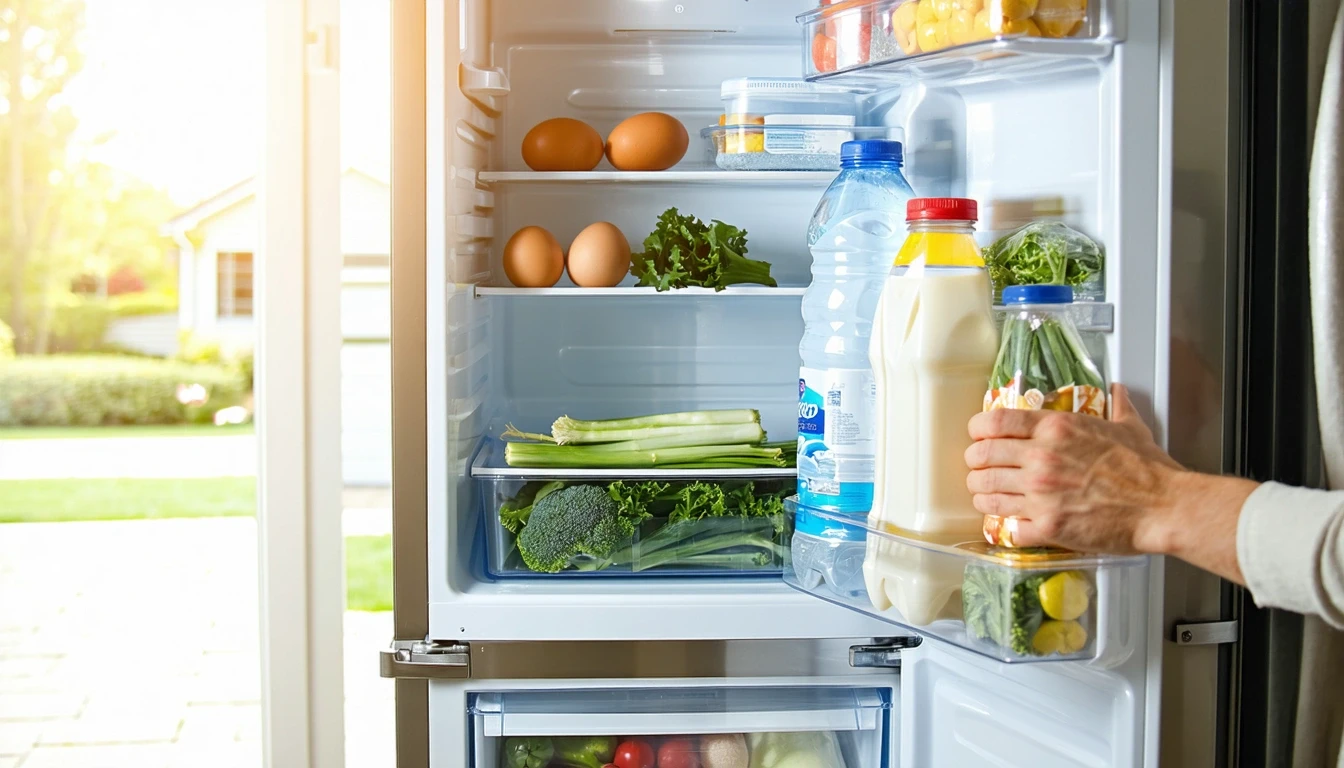
How Grocery Costs Feel in Media
Grocery prices in Media run noticeably above the national baseline—about 13% higher when adjusted for regional price parity—but the experience of shopping here isn’t defined by a single number. What matters more is how that pressure distributes across household types, store tiers, and weekly routines. For families buying in volume, the difference between discount and premium grocers can reshape the monthly budget. For singles and younger professionals, smaller basket sizes mean less absolute exposure, but also fewer opportunities to absorb fixed costs across bulk purchases. Retirees on fixed incomes tend to feel grocery price shifts most acutely, particularly when staple categories like dairy, protein, and produce move even slightly above baseline.
Media’s grocery landscape offers meaningful flexibility. The city’s high density of food and grocery establishments—well above typical thresholds—means households have access to multiple store formats within a short distance. That structural advantage doesn’t eliminate price pressure, but it does create room to manage it. A household that splits shopping between a discount grocer for staples and a mid-tier store for fresh items can soften the impact of regional pricing without sacrificing quality or convenience. The ability to compare and choose, rather than defaulting to the nearest option, becomes a practical cost lever in a market where baseline prices already run higher than much of the country.
Income context matters here. Media’s median household income of $85,951 per year provides cushion for many families, but grocery costs don’t scale linearly with income. A household earning at the median might absorb a 13% regional premium without restructuring their routine, but a household earning below that threshold—or managing multiple dependents—will feel the same premium as a binding constraint. Grocery pressure in Media isn’t universal; it’s selective, and it hits hardest where volume needs meet tighter budgets.
Grocery Price Signals (Illustrative)
These prices illustrate how staple items tend to compare locally—not a full shopping list. They reflect regional price parity adjustments applied to national baselines and are derived estimates, not observed checkout totals. Use them as anchors for relative positioning, not as guarantees of what you’ll pay at any specific store on any given week.
| Item | Illustrative Price |
|---|---|
| Bread (per pound) | $2.04/lb |
| Milk (half-gallon) | $4.60/half-gallon |
| Eggs (dozen) | $2.65/dozen |
| Chicken (per pound) | $2.30/lb |
| Ground beef (per pound) | $7.57/lb |
| Cheese (per pound) | $5.40/lb |
| Rice (per pound) | $1.20/lb |
Derived estimate based on national baseline adjusted by regional price parity; not an observed local price.
Ground beef stands out as a category where regional pricing creates noticeable household impact. At over $7.50 per pound, families buying protein in volume will see that line item climb quickly. Chicken, by contrast, remains relatively accessible, and rice offers a low-cost base for stretching meals. Dairy—milk, cheese, eggs—runs moderately above national averages but stays within reach for most households. The variation across categories means that shopping strategy matters: households that shift protein mix, buy seasonal produce, or prioritize shelf-stable staples can reduce weekly totals without eliminating variety.
Store Choice & Price Sensitivity
Grocery price pressure in Media varies significantly by store tier, and understanding that variation is more useful than fixating on a single “average” price. Discount grocers—chains that emphasize private label, limited selection, and no-frills formats—typically run 15–25% below mid-tier stores on comparable items. Mid-tier grocers offer broader selection, name-brand options, and prepared foods, with pricing that reflects regional baselines more directly. Premium grocers—focused on organic, specialty, and curated inventory—can run 20–35% above mid-tier on overlapping categories, though the gap narrows when comparing truly equivalent products.
For households managing tight budgets, discount tier access is a structural advantage. Media’s high grocery density means most residents live within a short drive or transit trip of multiple store formats. A family that anchors weekly shopping at a discount grocer and supplements selectively at mid-tier can reduce monthly grocery costs meaningfully without eliminating fresh or preferred items. Singles and smaller households, by contrast, may find mid-tier stores more practical: smaller package sizes, better per-trip variety, and less pressure to buy in bulk. Premium grocers serve a different function—they’re less about baseline affordability and more about specific dietary preferences, convenience, or quality thresholds that justify higher per-item costs.
Store choice also interacts with mobility. Media’s walkable pockets and rail transit mean some households can reach grocers without a car, which reduces the indirect cost of shopping but may also limit how much volume they can carry in a single trip. That constraint tends to favor smaller, more frequent shopping runs, which in turn makes mid-tier stores with better per-unit pricing on smaller packages more practical than discount bulk formats. Households with cars, by contrast, can optimize for price and volume simultaneously, making discount tier access a more powerful cost lever.
What Drives Grocery Pressure Here
Regional price parity is the foundational driver. Media’s RPP index of 113 reflects a cost structure that runs consistently above the national baseline across most categories, including food. That premium isn’t arbitrary—it reflects higher regional wages, distribution costs, and real estate expenses that grocers pass through to consumers. The result is that even discount grocers in Media may price staples slightly above what discount grocers charge in lower-cost regions. The floor is higher, even if the range between tiers remains wide.
Income distribution shapes who feels that pressure most. Media’s median household income provides meaningful cushion, but income variation within the city means not all households experience grocery costs the same way. A household earning below the median—particularly one with children or managing fixed expenses like rent and utilities—will feel grocery price increases more sharply than a household earning well above it. Grocery costs are also less elastic than housing: you can defer a home purchase or delay a car repair, but you can’t skip meals. That rigidity makes grocery pressure a reliable indicator of broader affordability stress.
Household size amplifies sensitivity. A single adult buying for one can absorb a 13% regional premium with minimal budget restructuring. A family of four buying the same items in quadruple volume will see that premium compound into a weekly difference that’s harder to ignore. Larger households also face more pressure to buy in bulk, which can reduce per-unit costs but requires upfront cash and storage space—resources that aren’t equally available across income levels. The structural advantage of Media’s grocery density helps here: families can split shopping across stores, buying bulk staples at discount grocers and filling gaps at mid-tier without adding significant travel time.
Seasonal variability plays a quieter role. Produce prices fluctuate with growing seasons and supply chain conditions, and households that shop seasonally—buying what’s abundant rather than what’s preferred—can smooth some of that volatility. Media’s access to regional distribution networks means seasonal produce tends to arrive quickly, but it doesn’t eliminate the price swings that come with weather disruptions or fuel cost changes. Households with tighter budgets often notice these shifts first, particularly in categories like fresh fruit and leafy greens where prices can double during off-peak months.
Practical Ways People Manage Grocery Costs
Store splitting is one of the most effective behavioral levers. Households that anchor staple purchases—rice, pasta, canned goods, frozen vegetables—at discount grocers and supplement with fresh items at mid-tier stores can reduce weekly totals without sacrificing meal quality. The strategy requires slightly more planning and an extra stop, but Media’s grocery density makes it logistically feasible for most residents. Families with cars can batch trips; households relying on transit or walking can stagger smaller runs across the week.
Buying seasonal produce reduces exposure to price volatility. Berries in summer, root vegetables in fall, citrus in winter—shopping what’s abundant rather than what’s imported or out-of-season keeps per-pound costs lower and quality higher. This approach works best for households with flexible meal planning, but even small shifts—choosing apples over berries in winter, or squash over asparagus in fall—can soften the impact of seasonal price swings without eliminating variety.
Private label and store-brand products offer consistent savings across categories. Discount grocers build entire inventories around private label, but mid-tier stores increasingly offer competitive store brands that match or exceed name-brand quality at lower price points. Households that default to store brands for pantry staples, dairy, and frozen goods can reduce weekly totals meaningfully, particularly in categories like cereal, snacks, and condiments where brand premiums are highest. The savings aren’t dramatic per item, but they compound across a full cart.
Meal planning and batch cooking reduce both food waste and per-meal costs. Households that plan weekly menus around overlapping ingredients—using the same base vegetables, proteins, and grains across multiple meals—buy more efficiently and throw away less. Batch cooking also allows households to take advantage of bulk pricing on proteins and starches without letting food spoil. This strategy requires time and kitchen space, which means it’s more accessible to some households than others, but even partial adoption—planning three dinners instead of seven—can reduce weekly grocery spending and decision fatigue.
Groceries vs Eating Out (Directional)
The tradeoff between grocery shopping and dining out isn’t purely financial—it’s also about time, convenience, and household capacity. Cooking at home almost always costs less per meal than restaurant or takeout equivalents, but the gap varies by meal type and household size. A family of four cooking dinner at home might spend $12–$18 on ingredients for a meal that would cost $50–$80 at a casual restaurant. A single adult cooking for one, by contrast, faces smaller absolute savings and higher per-serving costs unless they’re comfortable eating leftovers or batch cooking.
Media’s walkable pockets and high food establishment density mean dining out is structurally convenient for many residents. That convenience creates pressure to substitute restaurant meals for home cooking, particularly on weeknights or when schedules are tight. Households managing grocery costs often find that the biggest savings come not from optimizing grocery store choice, but from reducing the frequency of restaurant meals—even by one or two dinners per week. The cumulative impact of those substitutions tends to exceed the savings from switching store tiers or buying private label.
Takeout and delivery add another layer. Delivery fees, service charges, and tips can push a $15 meal to $25 or more, and those costs compound quickly for households that rely on delivery multiple times per week. Grocery shopping, by contrast, involves no per-transaction fees beyond the cost of the food itself. Households that treat dining out as occasional rather than default tend to feel less grocery price pressure, because they’re not constantly comparing the cost of cooking to the convenience of ordering in.
FAQs About Grocery Costs in Media (2026)
Is it cheaper to shop in bulk in Media? Bulk buying reduces per-unit costs, but only if you have the upfront cash, storage space, and ability to use items before they spoil. Discount grocers and warehouse clubs offer the best bulk pricing, but families with tight weekly budgets may find it harder to absorb the larger upfront expense even when the per-pound savings are clear.
Which stores in Media are best for low prices? Discount-tier grocers consistently offer the lowest baseline pricing, particularly on private-label staples, dairy, and frozen goods. Mid-tier stores provide better variety and smaller package sizes, which can be more practical for singles and smaller households. Store choice depends on household size, budget flexibility, and whether you’re optimizing for per-unit cost or per-trip convenience.
How much more do organic items cost in Media? Organic premiums vary by category, but they typically run 20–50% above conventional equivalents for produce, dairy, and packaged goods. Premium grocers carry the widest organic selection but also charge the highest premiums; mid-tier stores increasingly offer organic options at more moderate price points. Households managing tight budgets often prioritize organic purchases for specific categories—like leafy greens or dairy—rather than converting their entire cart.
How do grocery costs for two adults in Media tend to compare to nearby cities? Media’s regional price parity runs about 13% above the national baseline, which places it in the moderate-to-higher range for the Philadelphia metro area. Nearby cities with lower RPP indices may offer slightly lower grocery prices, but the difference is often smaller than the variation between store tiers within Media itself. Households considering a move should compare not just baseline prices, but also grocery density and store format access.
How do households in Media think about grocery spending when cooking at home? Most households treat grocery costs as a controllable expense—one where store choice, meal planning, and seasonal shopping create meaningful room to adjust. Families with children tend to focus on volume efficiency and bulk buying; singles and younger professionals often prioritize convenience and per-trip variety. Fixed-income households, particularly retirees, tend to be most price-sensitive and benefit most from discount-tier access and private-label defaults.
Does Media’s walkability reduce grocery costs? Indirectly, yes. Walkable pockets and rail transit mean some households can reach grocers without a car, which eliminates fuel and parking costs. However, car-free shopping also limits how much volume you can carry per trip, which can push households toward smaller, more frequent runs at mid-tier stores rather than bulk purchases at discount grocers. The net effect depends on household size and whether you’re optimizing for per-unit cost or per-trip convenience.
Are grocery prices in Media rising faster than income? Grocery prices fluctuate with national supply chain conditions, fuel costs, and seasonal availability, but long-term trends tend to track regional price parity rather than spiking independently. Media’s median household income provides cushion for many families, but households earning below the median or managing fixed incomes will feel price increases more sharply. The key variable isn’t whether prices are rising, but whether your household budget has room to absorb those increases without cutting other categories.
How Groceries Fit Into the Cost of Living in Media
Grocery costs in Media are a noticeable line item, but they’re not the primary driver of affordability pressure. Housing—whether rent or mortgage—claims the largest share of most household budgets, and utilities add seasonal volatility that groceries rarely match. What makes grocery costs meaningful isn’t their absolute size, but their rigidity: you can defer a home purchase, delay a car repair, or reduce discretionary spending, but you can’t skip meals. That inflexibility makes grocery price sensitivity a reliable early indicator of broader budget stress.
For households trying to understand their full cost structure, groceries interact with other categories in ways that aren’t always obvious. A household that saves money by cooking at home will see lower restaurant spending but higher grocery totals. A household that lives in a walkable pocket and shops car-free will save on fuel but may pay slightly more per grocery trip due to smaller basket sizes and less access to bulk pricing. These tradeoffs don’t resolve into a single “right” answer—they depend on household size, income, schedule, and priorities.
Media’s high grocery density and store format variety create structural flexibility that many cities lack. That flexibility doesn’t eliminate regional price pressure, but it does give households meaningful room to manage it. A family that splits shopping across discount and mid-tier stores, buys seasonal produce, and defaults to private label can reduce weekly grocery costs by 15–25% without eliminating quality or variety. Those savings compound over months and years, and they free up budget space for other categories—whether that’s building an emergency fund, covering childcare, or managing transportation costs. The key is recognizing that grocery costs in Media are controllable, not fixed, and that the tools for managing them are accessible to most households willing to plan and compare.
How this article was built: In addition to public economic data, this article incorporates location-based experiential signals derived from anonymized geographic patterns—such as access density, walkability, and land-use mix—to reflect how day-to-day living actually feels in Media, PA.