
Imagine a household earning what feels like a solid income—enough to rent or buy in Media, enough to cover the bills—but still making constant tradeoffs. Not because of reckless spending, but because housing takes such a large share that everything else compresses. One surprise utility bill, one car repair, and the month tightens. That’s not poverty. But it’s not comfort, either.
Media sits in Delaware County with a median household income around $85,951 per year and a cost structure roughly 13% above the national baseline. It’s a place where infrastructure gives you options—walkable pockets, rail access, accessible groceries and parks—but where what drives expenses is less about whether you can walk to the store and more about whether you can afford the rent or mortgage that puts you close enough to do so.
This article won’t tell you a number. It will explain how income pressure works in Media, who feels it most, and how to judge whether your earnings and expectations actually fit the place.
What “Living Comfortably” Means in Media
Comfort here doesn’t mean luxury. It means your housing payment doesn’t crowd out everything else. It means a hot summer doesn’t force you to choose between cooling your home and buying groceries. It means you can absorb a surprise expense without unraveling your month.
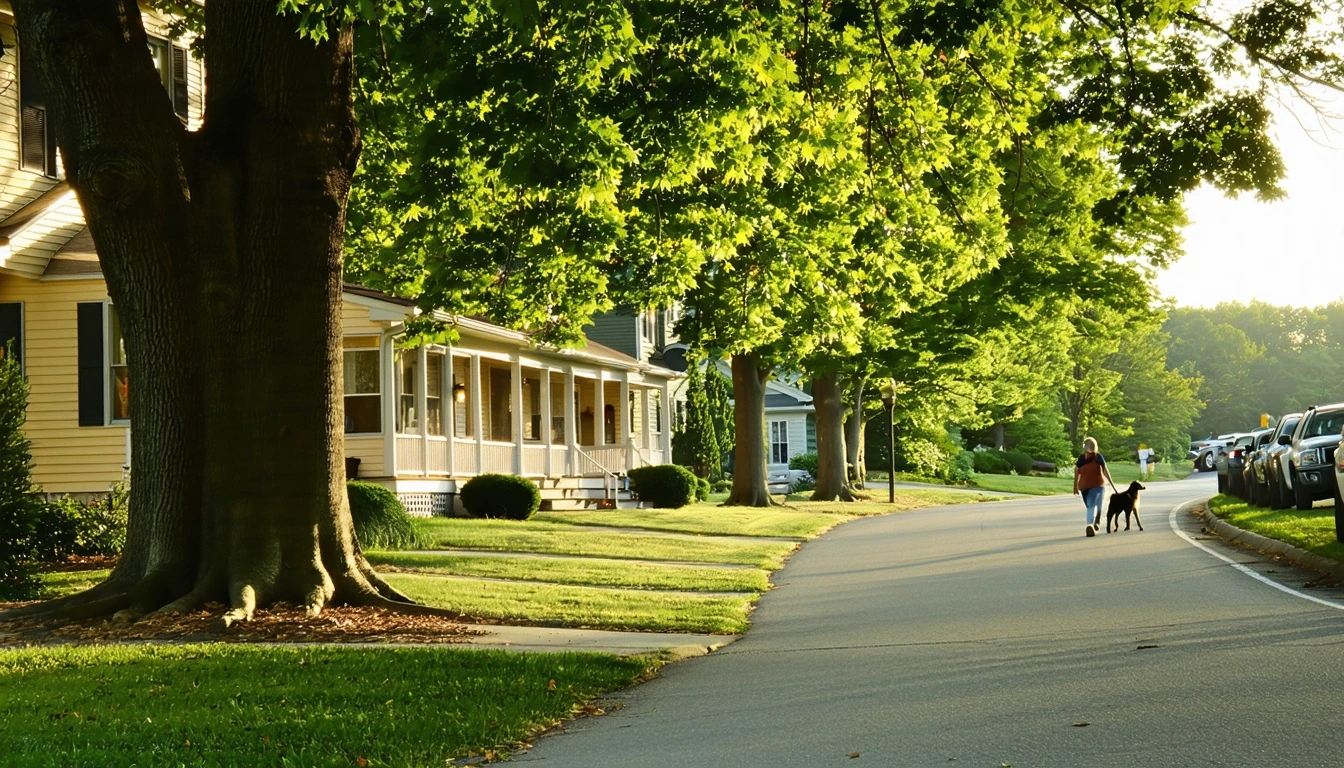
In Media, comfort also means having control over your time. The borough’s pedestrian-to-road ratio exceeds high thresholds, and rail service connects residents to Philadelphia and the broader region. That creates real optionality: households can reduce car dependency if proximity matters more than square footage. But proximity costs money. The median home value sits at $397,800, and median rent runs $1,389 per month. Comfort, then, is partly about whether you can afford the housing that unlocks the infrastructure.
Expectations around space matter, too. Media’s building stock runs mixed height—not uniformly low-rise, not high-density. Families expecting large yards and separation may find their options limited or expensive. Those willing to trade space for walkability encounter different tradeoffs, but the cost floor remains high regardless.
Where Income Pressure Shows Up First
Housing dominates. Whether renting or owning, the share of income consumed by shelter determines how much flexibility remains for everything else. At $1,389 per month, rent alone approaches the traditional 30% affordability threshold for a household earning the median income—but that’s before utilities, transportation, food, or any discretionary spending.
Ownership brings different exposure. A $397,800 home requires a substantial down payment and monthly carrying costs that include not just the mortgage but property taxes, insurance, and maintenance. Delaware County’s property tax structure and Pennsylvania’s approach to local funding mean these aren’t trivial. Ownership also locks you into long-term cost exposure: taxes adjust, insurance premiums shift, systems fail.
Utilities add seasonal volatility. Electricity rates run 20.19¢ per kWh, and natural gas costs $14.21 per MCF. Media experiences both heating and cooling seasons—cold enough in winter to drive gas heating bills, warm enough in summer to make air conditioning necessary rather than optional. A household stretched thin on housing has little cushion when July or January bills spike.
Transportation costs depend heavily on choices enabled—or constrained—by housing location. Media’s infrastructure supports rail commuting and local errands on foot, but only if you live in the parts of town where that infrastructure is dense. Families with multiple destinations, irregular schedules, or housing in less-connected areas often find car ownership unavoidable. At $4.16 per gallon, fuel costs add up quickly, and vehicle ownership brings insurance, maintenance, and registration on top of that.
For families, pressure intensifies around logistics. Media’s school density and playground availability exceed high thresholds, which supports family life—but coordinating multiple drop-offs, pickups, activities, and errands often requires a car even when transit exists. Families also face larger housing needs, and every additional bedroom raises the cost floor significantly.
How the Same Income Feels Different by Household
A single adult earning the median income experiences Media differently than a family of four at the same figure. The difference isn’t just about splitting resources—it’s about how daily logistics, space needs, and cost exposure interact.
Single adults can often make proximity work. A smaller apartment near the walkable core keeps rent manageable, reduces transportation costs, and allows access to the borough’s high food and grocery density without a car. Utility costs stay lower in smaller spaces. The tradeoff is space and privacy, but for someone prioritizing flexibility and lower fixed costs, that tradeoff makes sense. Income pressure exists but remains controllable.
Couples without children experience similar dynamics but with more income elasticity if both partners work. They can afford slightly more space or a better location, and they have more ability to absorb seasonal utility swings or unexpected expenses. The same infrastructure benefits apply, but they’re less constrained by school access or playground proximity. Comfort arrives sooner for this group, assuming stable dual income.
Families face compounding pressure. Bedroom count drives housing costs sharply upward. School quality and playground access matter, and Media delivers on both—but that doesn’t reduce the cost of the housing itself. Families also face higher utility usage, more transportation complexity, and less ability to substitute time for money. A family earning the median income often finds that monthly expenses leave little room for saving or discretionary spending, even with careful management. Comfort requires meaningfully higher income for this household type.
The Comfort Threshold (Qualitative)
The threshold isn’t a number. It’s the point where choices expand.
Below the threshold, housing dictates everything. You choose your neighborhood based on what you can afford, and that choice determines your transportation costs, your time costs, and your access to the infrastructure that makes daily life easier. Utility bills aren’t just expenses—they’re sources of stress. Saving is aspirational, not automatic.
Above the threshold, tradeoffs ease. You can choose proximity or space based on preference, not constraint. Seasonal utility swings are annoying but manageable. Transportation becomes a matter of convenience rather than necessity. You can absorb a surprise expense without restructuring your month. Discretionary spending becomes possible—not extravagant, but present.
In Media, that threshold sits higher than in many places because the cost floor is high. The infrastructure offers real value, but accessing it requires income sufficient to afford housing in the parts of town where the infrastructure is dense. For families, the threshold sits higher still, because space needs and logistics complexity both increase costs and reduce flexibility.
Why Online Cost Calculators Get Media Wrong
Most cost-of-living calculators produce a single number: the income required to maintain a baseline standard of living. That number misleads in several ways.
First, it assumes a universal household. A single adult and a family of four have completely different cost structures and completely different experiences of the same income level. Calculators that produce one figure ignore this.
Second, calculators miss the proximity-versus-space tradeoff. Media’s walkability and transit access create real opportunities to reduce transportation costs—but only if you can afford housing near the infrastructure. Calculators often assume car ownership as universal, which overstates costs for some households and understates the housing premium required to avoid that cost.
Third, they treat costs as static. Utility exposure varies seasonally. Housing pressure shifts depending on whether you rent or own, and ownership brings long-term cost volatility that renting avoids. Calculators provide averages, but averages don’t capture the months when everything hits at once.
Finally, calculators ignore lifestyle fit. Media works well for households that value walkability, green space, and access to Philadelphia. It works less well for those expecting large lots, low density, or minimal seasonal weather exposure. Income adequacy isn’t just about covering costs—it’s about whether the costs buy you a life that matches your expectations.
How to Judge Whether Your Income Fits Media
Instead of asking “Is my income high enough?” ask these questions:
How sensitive are you to housing tradeoffs? If you need significant space and aren’t willing to compromise on square footage or yard size, your housing costs in Media will sit at the higher end. If you value proximity and can accept smaller spaces, you gain flexibility.
Can you absorb seasonal utility swings? Media’s mixed climate means both heating and cooling costs. If a $100–$150 swing in your utility bill during peak summer or winter months would destabilize your budget, your income may not provide enough cushion.
Is time or money your limiting factor? Media’s infrastructure allows you to trade money for time (live closer, walk more, drive less) or time for money (live farther out, commute longer, pay less in rent). Which tradeoff you can afford—and tolerate—shapes whether your income works here.
How much logistics complexity does your household face? Single adults and couples can often make transit and walkability work. Families with multiple kids, activity schedules, and irregular needs often find car ownership necessary despite available alternatives. If your household falls into the latter category, your transportation costs will be higher, and your income needs adjust accordingly.
How much flexibility do you expect month to month? If you want discretionary income, the ability to save, and a buffer against surprises, your income needs to exceed the amount that just covers fixed costs. Media’s cost structure leaves less room for that buffer than lower-cost places, so the income required for comfort—not just survival—sits higher.
FAQs About Living Comfortably in Media
Is the median household income enough to live comfortably in Media?
For some households, yes. For others, no. A single adult or couple without children earning the median can often manage, especially if they prioritize proximity over space. A family of four at the median income will face significant pressure, with little room for discretionary spending or saving.
Does living in a walkable area actually save money?
It can, but only if you can afford the housing that puts you in the walkable area. Rent and home prices tend to be higher in Media’s denser, more connected neighborhoods. The transportation savings are real, but they don’t always offset the housing premium.
How much do utilities really vary by season?
Significantly. Media’s climate requires both heating in winter and cooling in summer. A household using typical amounts of electricity and natural gas will see meaningfully higher bills in January and July compared to spring and fall. If your budget has no margin, those swings create stress.
Can you live in Media without a car?
Some households can, particularly single adults or couples living near the rail line and within the walkable core. Families usually find car ownership necessary due to the complexity of managing multiple schedules and destinations, even though transit and walkability are present.
What’s the biggest mistake people make when evaluating whether they can afford Media?
Focusing only on whether they can cover the rent or mortgage payment. Housing is the largest cost, but it’s not the only one. Utility volatility, transportation mode constraints, and the lack of buffer for surprises all matter. Comfort requires income beyond what just covers the fixed costs.
How Day-to-Day Living Actually Works in Media
Media’s infrastructure creates real choices, but those choices depend on where you live within the borough. The pedestrian-to-road ratio exceeds high thresholds, meaning substantial sidewalk and path networks exist relative to car infrastructure. Food and grocery density also runs high, with accessible options distributed throughout the area rather than concentrated in a single corridor. Park density exceeds high thresholds, integrating green space into the fabric of daily life rather than isolating it.
For a household living in the denser parts of town, this means errands often don’t require a car. You can walk to the grocery store, the park, the pharmacy. Rail service connects you to Philadelphia and regional employment centers, making car-free commuting viable for some workers. Families benefit from high school and playground density, which means kids have nearby options for education and recreation.
But this experience isn’t universal across Media. Households living farther from the core or in less-connected pockets face different realities. The same rail line that makes commuting easy for some is inaccessible to others. The walkable errands that reduce costs for some require a car for others. The infrastructure creates optionality, but accessing that optionality costs money in the form of higher housing costs in better-connected areas.
Healthcare represents a limitation. Media shows limited local healthcare access, with no hospital detected in the immediate area and pharmacy presence but minimal clinical facilities. Routine care and urgent needs often require travel to nearby towns or into the broader metro area. For households with chronic conditions, young children, or elderly family members, this adds both time costs and transportation costs that aren’t optional.
How this article was built: In addition to public economic data, this article incorporates location-based experiential signals derived from anonymized geographic patterns—such as access density, walkability, and land-use mix—to reflect how day-to-day living actually feels in Media, PA.
The Bottom Line
Media can work well for some households—but only if expectations match reality. The borough offers genuine infrastructure advantages: walkability, transit access, park integration, strong family amenities. But those advantages don’t reduce the cost of housing, and housing dominates the budget. Comfort depends not just on income level but on household composition, lifestyle priorities, and willingness to make tradeoffs between space and proximity.
If your income just covers the rent or mortgage, you’re not comfortable—you’re stretched. Comfort requires enough margin to absorb seasonal utility swings, handle surprises, and make choices based on preference rather than constraint. For many households, that margin requires income meaningfully above the median. For families, it requires even more.
Media rewards those who value what it offers and can afford to access it. For everyone else, the income pressure is real, persistent, and unlikely to ease without either higher earnings or different expectations.