
Transit Coverage & Ride Context in Media, PA
| Transit Type | Availability | Typical Use Case |
|---|---|---|
| Rail (Regional) | Present | Commutes to Philadelphia, core access |
| Pedestrian Infrastructure | Strong in pockets | Errands, local trips in walkable zones |
| Car Dependence | High in peripheral areas | Suburban errands, healthcare, flexibility |
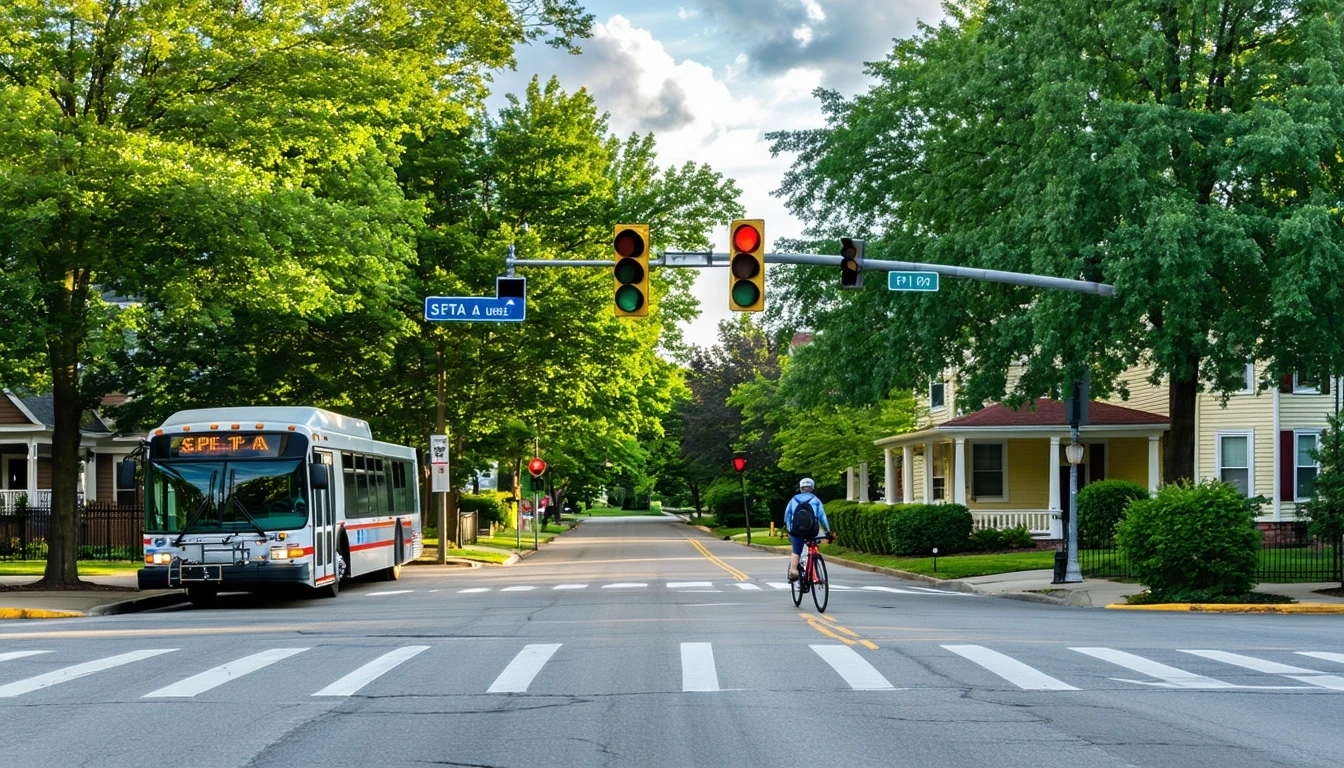
How People Get Around Media
Transportation options in Media reflect a hybrid reality: parts of the city support rail commuting and pedestrian errands, while other areas require a car for nearly everything. Media sits close enough to Philadelphia to make regional rail viable for some residents, but far enough that daily mobility still hinges on infrastructure, neighborhood, and household routine. Newcomers often assume that proximity to a transit line means car-free living is practical everywhere in Media. In reality, transit works well for specific trips and specific neighborhoods, but most households still rely on a car for flexibility, errands, and access beyond the walkable core.
The city’s layout creates distinct mobility zones. In areas with strong pedestrian infrastructure and access to rail stations, residents can structure their lives around walking and transit. In peripheral neighborhoods, where sidewalks thin out and grocery stores sit farther apart, driving becomes the default. This isn’t a matter of preference—it’s a reflection of how the city is built. Media rewards proximity to the core and punishes distance from it, and that tradeoff shapes daily life more than any single transportation choice.
Public Transit Availability in Media
Public transit in Media often centers around systems such as SEPTA, which provides regional rail service connecting the city to Philadelphia and surrounding areas. Rail access is the backbone of transit viability here, particularly for commuters who work in the city and prefer to avoid highway congestion and parking costs. For those living near a station, the train offers a predictable, structured option that removes some of the friction of car ownership. But transit coverage is not uniform, and the farther you live from a rail line, the less practical it becomes for daily use.
Bus service exists in parts of Media, but it tends to serve local corridors rather than providing comprehensive coverage. Residents who rely on buses often find that routes align with specific errands or connections, not with every possible trip. Late-night service is limited, and weekend schedules can be sparse. This means that transit works best for people whose routines align with existing routes and who live close enough to stops that waiting and walking don’t add significant friction. For everyone else, transit becomes a supplementary option rather than a primary mode.
The role of transit in Media is less about replacing a car and more about reducing how often you need one. Commuters who take the train to Philadelphia still drive to the grocery store. Retirees who walk to local shops still drive to medical appointments. Transit provides structure and cost relief for specific trips, but it doesn’t eliminate the need for a vehicle in most households.
Driving & Car Dependence Reality
Driving remains the dominant form of mobility in Media, particularly in neighborhoods beyond the walkable core. Even in areas with good pedestrian infrastructure, most households own at least one car. The reasons are practical: grocery stores, healthcare facilities, and many workplaces sit outside comfortable walking or transit range. Parking is generally available and less expensive than in denser cities, which removes one of the traditional deterrents to car ownership. For families, multiple jobs, or anyone managing complex schedules, a car provides the flexibility that transit simply cannot match.
Car dependence in Media is tied to geography and infrastructure, not personal preference. Suburban development patterns mean that errands often require multiple stops across dispersed locations. A trip to the pharmacy, the bank, and the hardware store might involve three different parking lots and several miles of driving. Transit can’t replicate that efficiency, and walking isn’t realistic for most of those distances. The result is that even households committed to reducing car use find themselves driving more than they expected.
Gas prices in Media currently sit at $4.16 per gallon, which adds a layer of cost exposure for households that drive frequently. Commuters, parents managing school and activity schedules, and anyone living in peripheral neighborhoods feel that exposure most acutely. The car isn’t optional for most people here—it’s the infrastructure that makes daily life possible.
Commuting Patterns & Daily Mobility
Commuting in Media varies widely depending on where you work and where you live. Residents who commute to Philadelphia often rely on regional rail, which offers a predictable alternative to highway traffic and downtown parking costs. The train works well for single-destination commutes with fixed schedules, and it removes some of the stress and variability of driving. But for residents who work locally, or who need to make multiple stops during the day, the car remains the more practical option.
Daily mobility in Media is shaped by the tension between proximity and access. Living near the core means shorter trips, more walkable errands, and better transit connections. Living farther out means longer drives, fewer pedestrian options, and greater reliance on the car for everything from groceries to healthcare. The city’s infrastructure supports both patterns, but it doesn’t make them equally convenient. Households that prioritize walkability and transit access pay for it in housing location and sometimes in rent or purchase price. Households that prioritize space and affordability often absorb the cost in time, fuel, and driving friction.
Who Transit Works For — and Who It Doesn’t
Transit in Media works best for residents who live near rail stations, work in Philadelphia, and have relatively simple daily routines. Commuters who travel to a single workplace on a predictable schedule benefit most from the train. Retirees and remote workers who make occasional trips into the city also find transit useful, particularly when it eliminates parking hassles and highway stress. For these households, transit provides structure, predictability, and cost relief without requiring a car-free lifestyle.
Transit works less well for families managing multiple schedules, residents who work locally, and anyone living in peripheral neighborhoods. Parents coordinating school drop-offs, activity pickups, and grocery runs find that transit adds time and complexity rather than removing it. Workers whose jobs require flexibility, irregular hours, or travel to multiple sites need the control and range that only a car provides. And residents in areas with limited pedestrian infrastructure or sparse transit coverage find that even short trips become logistically difficult without driving.
The distinction isn’t about whether transit exists—it’s about whether it aligns with your life. Media offers enough transit infrastructure to support certain routines, but not enough to replace the car for most households. The result is a mixed mobility environment where transit plays a supporting role rather than a primary one.
Transportation Tradeoffs in Media
Choosing between transit and driving in Media means weighing predictability against flexibility. Transit offers fixed costs, structured schedules, and freedom from parking and fuel volatility. Driving offers control, range, and the ability to manage complex errands and schedules without waiting or transferring. Neither option is strictly better—each fits different household structures and priorities.
For commuters to Philadelphia, the train removes highway stress and parking costs, but it also locks you into a schedule and limits your ability to make stops on the way home. For parents managing multiple responsibilities, the car provides the flexibility to handle last-minute changes and multi-stop trips, but it also exposes you to fuel costs, maintenance, and the time cost of driving. The tradeoff isn’t about saving money—it’s about choosing which friction you’re willing to absorb.
Media’s transportation landscape rewards proximity and punishes distance. Living near a rail station and within walking distance of groceries and errands reduces your dependence on the car and gives you more options. Living farther out increases your reliance on driving and makes transit less practical. The choice isn’t just about transportation—it’s about where you live and how you structure your day.
FAQs About Transportation in Media (2026)
Is public transit usable for daily commuting in Media?
Yes, for residents who live near rail stations and commute to Philadelphia or other regional destinations. Rail service provides a predictable alternative to driving, particularly for single-destination commutes with fixed schedules. For local commutes or multi-stop trips, transit becomes less practical, and most residents rely on a car.
Do most people in Media rely on a car?
Yes. Even in areas with good pedestrian infrastructure and transit access, most households own at least one car. Driving remains the dominant mode for errands, healthcare, and local trips, particularly in peripheral neighborhoods where transit coverage is limited.
Which areas of Media are easiest to live in without a car?
Neighborhoods near rail stations and within walking distance of grocery stores, pharmacies, and other daily errands offer the most car-free viability. These areas tend to have stronger pedestrian infrastructure and better access to transit, which reduces the need for a car for routine trips. Peripheral neighborhoods require driving for most errands and offer fewer walkable options.
How does commuting in Media compare to nearby cities?
Media offers better rail access than many suburban areas, particularly for commuters to Philadelphia. However, it still requires more driving than denser urban centers with comprehensive transit networks. The city sits in a middle zone: more transit-friendly than car-dependent suburbs, but less walkable and transit-rich than Philadelphia itself.
Can you get by without a car in Media?
It depends on where you live and how you structure your life. Residents near the core with access to rail and walkable errands can reduce car dependence significantly, though most still own a vehicle for flexibility. Residents in peripheral areas will find car-free living impractical for daily needs, particularly for healthcare, groceries, and non-commute trips.
How Transportation Fits Into the Cost of Living in Media
Transportation in Media isn’t just about getting from one place to another—it’s a structural factor that shapes housing decisions, time allocation, and household flexibility. Where you live determines how much you drive, how often you can use transit, and how much friction you absorb in daily errands. Proximity to rail and walkable infrastructure reduces car dependence and offers more control over transportation costs, but it often comes with higher housing costs or fewer space options. Living farther out reduces housing pressure but increases reliance on driving, which exposes you to fuel volatility and time costs.
The city’s infrastructure creates distinct tradeoffs. Households that prioritize walkability and transit access pay for it in location and sometimes in rent or purchase price. Households that prioritize space and affordability absorb the cost in driving time, fuel, and the complexity of managing errands across dispersed locations. Neither choice is wrong, but each carries a different cost structure and a different set of frictions.
For a fuller picture of how transportation fits into the broader cost structure of living in Media, including monthly expenses and household budget planning, the Monthly Budget article provides detailed context. Transportation in Media is less about choosing the cheapest option and more about choosing the option that aligns with your household structure, work location, and daily routine. The city offers enough infrastructure to support multiple strategies, but it doesn’t make any of them friction-free.
How this article was built: In addition to public economic data, this article incorporates location-based experiential signals derived from anonymized geographic patterns—such as access density, walkability, and land-use mix—to reflect how day-to-day living actually feels in Media, PA.