
The 7:42 a.m. SunRail pulls into the Maitland station, and Keisha steps on with her monthly pass, joining a small but steady stream of commuters heading south toward downtown Orlando. She’s one of a growing number of Maitland residents who’ve discovered that rail transit actually works here—not for everyone, not for every trip, but for specific commutes and lifestyles in ways that surprise newcomers who assume this is just another car-dependent suburb.
Maitland sits in a mobility middle ground that defies easy categorization. It has rail service, notable cycling infrastructure, and pockets of genuine walkability—yet it remains a place where most households own at least one vehicle and use it daily. Understanding transportation options in Maitland means recognizing that access isn’t uniform: where you live within the city, where you work, and how you structure daily errands determine whether transit becomes a real alternative or remains a backup plan.
How People Get Around Maitland
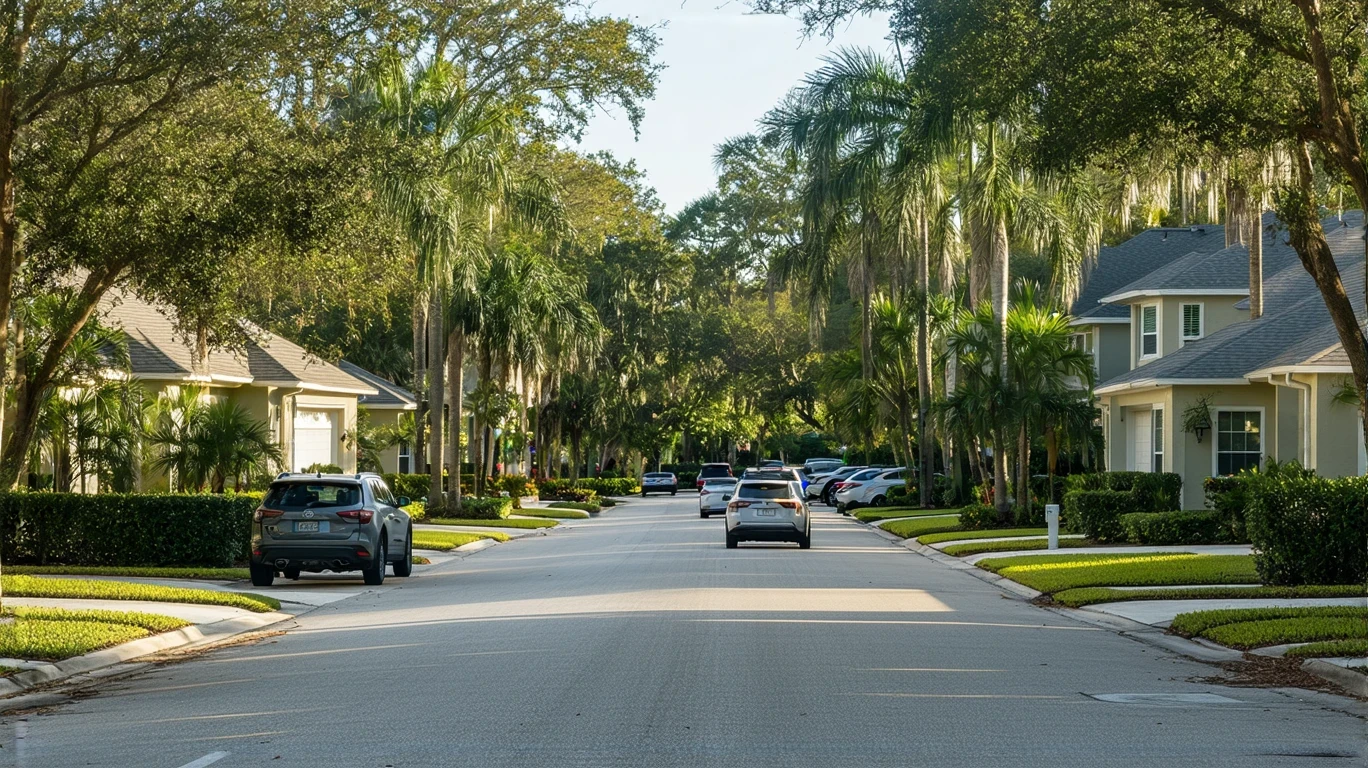
The dominant pattern in Maitland is car-first with transit-supported corridors. Most residents drive for daily errands, school runs, and multi-stop trips. But unlike purely suburban environments, Maitland offers functional alternatives for specific routes and household types, particularly those living near the city’s commercial corridors or within walking distance of the SunRail station.
The city’s layout creates this duality. Residential neighborhoods extend outward in typical suburban fashion—quiet streets, single-family homes, cul-de-sacs—but the central spine along U.S. 17-92 and near the rail line concentrates commercial activity, denser development, and transit access. This means that two households living a mile apart can experience radically different transportation realities: one walks to the station and rides to work; the other drives everywhere because nothing is reachable on foot.
Newcomers often misunderstand this structure. They see “suburb” and assume total car dependence, or they see “rail station” and assume comprehensive transit coverage. Neither is accurate. Maitland’s pedestrian-to-road ratio exceeds thresholds typical of car-only suburbs, and its cycling infrastructure is more developed than many assume. But these assets are concentrated, not evenly distributed, which makes location choice within the city critical.
The average commute in Maitland runs 22 minutes, and about 6.8% of workers operate from home. Roughly 27.1% face longer commutes, often because they’re traveling to job centers outside the immediate Orlando core or navigating multi-stop routes that don’t align with transit lines. For these households, driving isn’t a preference—it’s a structural requirement.
Public Transit Availability in Maitland
Public transit in Maitland often centers around systems such as SunRail, the regional commuter rail line that connects the city to downtown Orlando, Winter Park, and points north and south. The presence of rail service distinguishes Maitland from many comparable suburbs and creates genuine commute alternatives for residents whose work locations align with station stops.
Rail works best for single-destination commutes during peak hours. If you’re traveling from Maitland to downtown Orlando for a 9-to-5 job, the train is a practical, reliable option that eliminates parking costs and highway stress. If you’re making multiple stops, working non-standard hours, or commuting to locations far from stations, rail becomes less useful quickly.
Bus service exists but plays a secondary role. Coverage tends to follow major corridors, and frequency varies enough that most households treat buses as supplemental rather than primary. For errands, medical appointments, or evening activities, the car remains the default for the majority of residents.
Transit falls short in the residential pockets away from commercial corridors. If you’re living in a quiet neighborhood a mile from the nearest bus stop and two miles from the rail station, you’re effectively car-dependent for all practical purposes. Late-night and weekend service is limited, which narrows the pool of people who can rely on transit for more than commuting.
The key insight: transit in Maitland is corridor-based, not citywide. It works where density and activity concentrate, and it fades quickly as you move into purely residential zones.
Driving & Car Dependence Reality
For most Maitland households, driving remains essential. Groceries, schools, medical appointments, and social activities are dispersed across a geography that doesn’t lend itself to walking or transit for the majority of trips. Even households that use rail for commuting typically own a car for everything else.
Parking is abundant and free in most contexts, which removes one of the friction points that makes car ownership costly in denser urban cores. Driveways, garages, and surface lots are the norm, and street parking conflicts are rare. This ease of parking reinforces car use: if you can park anywhere without cost or hassle, there’s little incentive to leave the car at home.
Sprawl and distance shape daily logistics. Errands that might be a single walk in a compact city become a series of car trips here. The grocery store, the pharmacy, the bank, and the gym are rarely clustered tightly enough to visit on foot, even in the more walkable pockets. Families with children face even more complexity—school drop-offs, activities, playdates—all of which assume car access.
Car dependence isn’t about preference; it’s about infrastructure. Maitland’s development pattern prioritizes vehicle access, and the gaps in transit coverage mean that day-to-day costs for most households include fuel, insurance, maintenance, and the time spent behind the wheel.
Commuting Patterns & Daily Mobility
Commuting in Maitland splits into two broad categories: those with single-destination, predictable schedules, and those managing multi-stop, variable routes. The first group benefits from rail and can structure life around transit. The second group drives, because no other option accommodates the complexity.
Single-job commuters—especially those working in downtown Orlando or along the SunRail corridor—gain the most from transit. The train removes the variability of highway traffic, eliminates parking costs, and allows for predictable arrival times. For these households, proximity to the station becomes a valuable asset, sometimes worth paying higher rent or accepting a smaller home to secure.
Multi-stop commuters face a different reality. If your workday involves client visits, job sites, or errands between shifts, transit doesn’t work. The car becomes the only tool flexible enough to handle the routing. Families managing school drop-offs before work, or picking up children mid-afternoon, face similar constraints.
Remote work, at 6.8%, remains a minority arrangement but one that reshapes transportation needs when present. Households with one or more remote workers reduce commute frequency, which can make a single shared vehicle viable or allow a family to absorb the inconvenience of transit for the remaining commutes.
The 27.1% facing longer commutes often work in job centers outside the SunRail corridor—east toward the University of Central Florida area, west toward attractions and hospitality zones, or north and south to industrial and office parks not served by rail. For these workers, Maitland’s location offers reasonable highway access, but the commute remains car-dependent and time-intensive.
Who Transit Works For — and Who It Doesn’t
Transit in Maitland works best for renters and younger professionals living near the station or along commercial corridors, with jobs in downtown Orlando or other rail-served locations. These households can structure routines around train schedules, walk or bike to the station, and treat the car as optional for commuting.
It works less well for families with children, especially those in residential neighborhoods away from the rail line. School schedules, activity logistics, and the need for flexible errands make car ownership nearly mandatory. Even families living near the station often find that one adult can use transit for work while the household still needs a vehicle for everything else.
Homeowners in the quieter residential pockets—where property values reflect space and privacy rather than transit access—are almost universally car-dependent. The distance to the station, the lack of sidewalks in some areas, and the dispersed nature of errands mean that transit remains theoretical rather than practical.
Retirees and older adults face mixed outcomes. Those who’ve aged in place in car-oriented neighborhoods often find themselves dependent on driving longer than they’d prefer, because transit doesn’t serve their daily needs. Those who relocate to denser, more walkable areas near services gain more independence, though the car often remains necessary for medical appointments and social visits.
The dividing line isn’t income or preference—it’s location within Maitland and the structure of daily obligations. Transit fits specific lives; it doesn’t serve all lives equally.
Transportation Tradeoffs in Maitland
Choosing transit over driving in Maitland means accepting tradeoffs in flexibility, convenience, and time. The train runs on a fixed schedule; the car leaves when you do. The train eliminates parking hassles and highway stress; the car handles multi-stop errands and last-minute changes without penalty.
For households that can make transit work, the primary gain is predictability. Commute times become stable, and the cognitive load of navigating traffic disappears. The tradeoff is rigidity: miss the train, and you’re waiting for the next one. Need to leave work early or stay late, and you’re adjusting around the schedule rather than your own needs.
Driving offers control and flexibility but exposes households to fuel price volatility, maintenance costs, and the time spent behind the wheel. Gas in Maitland currently runs $3.45 per gallon, and while that’s just a snapshot, it reflects the ongoing exposure that car-dependent households carry. The car also requires insurance, registration, repairs, and parking—costs that don’t appear in a single transaction but accumulate steadily.
Proximity to transit commands a premium in housing markets, though it’s often subtle. Apartments and rentals near the SunRail station or along walkable corridors may cost more per square foot than comparable units in purely residential areas. For some households, that premium is worth paying to reduce car dependence; for others, the space and quiet of a car-oriented neighborhood outweigh the convenience of transit access.
The decision isn’t binary. Many Maitland households operate in a hybrid mode: one adult commutes by rail, the household owns one car for errands and backup, and weekends revert to driving. This middle path captures some of the benefits of transit without requiring full commitment.
FAQs About Transportation in Maitland (2026)
Is public transit usable for daily commuting in Maitland?
Yes, if your job is located along the SunRail corridor and your schedule aligns with train service hours. Commuters working in downtown Orlando or nearby rail-served areas use transit successfully. For jobs outside the corridor or requiring non-standard hours, driving remains necessary.
Do most people in Maitland rely on a car?
Yes. The majority of households own and use a car daily for errands, school, and commuting. Even those who use transit for work often keep a vehicle for other trips. Car dependence is the norm, though transit provides a real alternative for specific commutes.
Which areas of Maitland are easiest to live in without a car?
Areas near the SunRail station and along commercial corridors offer the best chance of reducing car dependence. Walkability and transit access concentrate in these zones. Residential neighborhoods farther from the station require a car for nearly all activities.
How does commuting in Maitland compare to nearby cities?
Maitland’s rail access gives it an advantage over purely car-dependent suburbs, but it doesn’t match the transit density of downtown Orlando or Winter Park’s walkable core. Commute times are moderate, and the presence of cycling infrastructure adds options that many comparable suburbs lack.
Can families manage without a car in Maitland?
It’s difficult. School logistics, activity schedules, and dispersed errands make car ownership nearly essential for families with children. Single adults or couples without school-age kids have better odds, especially if living near transit and willing to plan carefully.
How Transportation Fits Into the Cost of Living in Maitland
Transportation isn’t just a line item—it’s a structural factor that shapes where you can live, how you spend time, and what tradeoffs you accept. In Maitland, the presence of rail transit creates real options for some households, but the city’s layout and development pattern ensure that most people still depend on cars for the majority of trips.
Households that can align their lives with transit access gain predictability and reduce exposure to fuel and maintenance costs. Those who can’t—because of job location, family logistics, or neighborhood choice—absorb the full cost and time burden of car dependence. The difference isn’t small: it affects housing decisions, daily routines, and long-term financial flexibility.
For a fuller picture of how transportation costs interact with housing, utilities, and other expenses, see A Month of Expenses in Maitland: What It Feels Like, which breaks down the monthly cost structure and explains where money actually goes.
Maitland offers more transportation choice than many suburbs, but that choice is conditional—on where you live, where you work, and how you structure daily life. Understanding those conditions before committing to a neighborhood or a lease makes the difference between a transportation system that works for you and one that quietly drains time and money every week.
How this article was built: In addition to public economic data, this article incorporates location-based experiential signals derived from anonymized geographic patterns—such as access density, walkability, and land-use mix—to reflect how day-to-day living actually feels in Maitland, FL.