

Maitland and Kissimmee sit within the same Orlando metro area, share the same regional price environment, and attract households looking for suburban alternatives to downtown Orlando. Yet the cost experience in each city feels fundamentally different—not because one is universally cheaper, but because cost pressure concentrates in different categories and affects different household types in distinct ways. Maitland offers shorter commutes, walkable pockets, and proximity to employment centers, but that convenience comes with higher housing entry costs. Kissimmee provides more accessible single-family housing and a retirement-friendly infrastructure, but many residents face longer commutes and higher transportation time costs. In 2026, choosing between these two cities isn’t about finding the lower total—it’s about understanding which cost structure aligns with your household’s income sources, daily rhythms, and tolerance for trade-offs between time, space, and predictability.
This comparison explains where costs show up differently, how the same income feels in each city, and which households are better positioned to absorb the distinct pressures each place creates. We’ll walk through housing, utilities, groceries, transportation, taxes, and lifestyle fit—not to declare a winner, but to clarify the decision logic that makes one city a better match than the other depending on what you’re optimizing for.
Housing Costs in Maitland vs Kissimmee
Housing is where the cost structure diverges most sharply between Maitland and Kissimmee. Maitland’s median home value sits at $484,700, while Kissimmee’s median home value is $253,000—a difference that reflects proximity, commute access, and the concentration of employment centers near Maitland. For renters, the gap persists: Maitland’s median gross rent is $1,754 per month, compared to Kissimmee’s $1,419 per month. These aren’t small variations—they represent fundamentally different entry barriers and ongoing obligations that shape which households can comfortably settle in each city.
The housing stock in each city also behaves differently. Maitland features mixed building heights and a blend of residential and commercial land use, creating pockets where apartments, townhomes, and single-family homes coexist. This mixed urban form supports renters and smaller households who prioritize walkability and shorter commutes over square footage. Kissimmee, by contrast, leans more heavily toward single-family homes and offers more space per dollar, making it a natural fit for families seeking yards, multiple bedrooms, and room to grow. The trade-off isn’t just about price—it’s about what kind of housing pressure dominates your monthly obligations. In Maitland, the challenge is clearing the entry threshold; in Kissimmee, it’s managing the time cost and transportation exposure that come with living further from job centers.
For first-time buyers, Kissimmee’s lower home values reduce the down payment hurdle and make homeownership more accessible on moderate incomes. Maitland’s higher home values demand stronger income or dual-income households to qualify for financing and sustain monthly mortgage obligations. Renters face a similar dynamic: Kissimmee’s lower rent creates more breathing room for single adults or young couples, while Maitland’s rent levels require higher income stability or a willingness to accept smaller units in exchange for location convenience. The housing cost difference doesn’t make one city universally better—it makes each city a better fit for households at different income levels and life stages.
Housing takeaway: Maitland’s housing costs create a higher entry barrier but reward proximity and time savings; Kissimmee’s housing costs are more accessible upfront but require households to absorb longer commutes and higher transportation exposure. Families prioritizing space and affordability will find Kissimmee easier to enter; dual-income professionals prioritizing commute reduction and walkable access will find Maitland’s housing premium easier to justify.
Utilities and Energy Costs
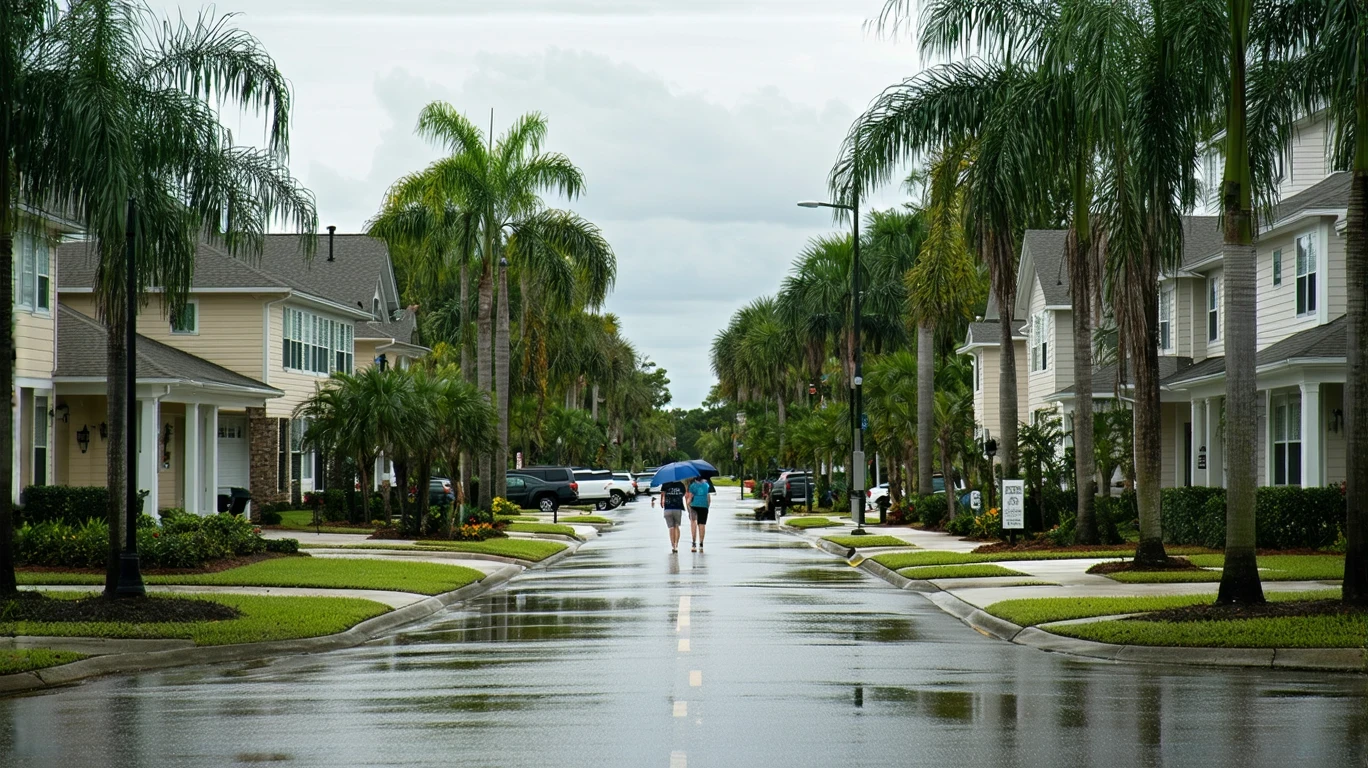
Both Maitland and Kissimmee share the same electricity rate—15.02¢/kWh—and operate within Florida’s hot, humid climate where air conditioning dominates summer utility bills. Natural gas pricing differs slightly (Maitland at $23.62/MCF, Kissimmee at $25.39/MCF), but natural gas plays a minimal role in Florida’s residential energy mix, so this difference rarely translates into meaningful monthly cost variation. The real utility cost difference between these cities comes from housing type, home age, and square footage—not from rate structures or climate distinctions.
Maitland’s mixed building stock includes newer apartments and townhomes with modern insulation and energy-efficient HVAC systems, which help moderate cooling costs even during extended summer heat. Single-family homes in Maitland, particularly older constructions, may experience higher baseline usage due to larger conditioned spaces and less efficient building envelopes. Kissimmee’s housing stock skews more heavily toward single-family homes, many of which are larger and older, creating higher cooling exposure during Florida’s long summer season. Households moving from apartments to single-family homes in Kissimmee should expect utility bills to rise—not because rates are higher, but because the conditioned space and system efficiency differ.
Utility predictability also varies by housing form. Apartment renters in both cities often benefit from smaller square footage and shared wall insulation, which dampens seasonal swings. Single-family homeowners face more volatile bills, with summer cooling costs spiking during prolonged heat and humidity. In Kissimmee, where single-family homes dominate, more households experience this seasonal volatility. In Maitland, the mix of apartments and townhomes creates more variation—some households enjoy stable, moderate bills, while others managing larger homes face similar exposure to Kissimmee residents.
Utility takeaway: Rate structures are nearly identical, so utility cost differences come from housing type and size rather than location. Apartment renters in both cities experience moderate, predictable bills; single-family homeowners in Kissimmee face higher baseline usage and more seasonal volatility due to larger homes and older construction. Households sensitive to utility swings should prioritize newer, smaller housing stock regardless of city.
Groceries and Daily Expenses
Grocery costs in Maitland and Kissimmee reflect the same regional price environment—both cities fall within the Orlando metro and share a regional price parity index of 101, meaning prices track closely to national baselines. Staple items like bread, eggs, chicken, and milk carry similar price tags in both cities, so the grocery cost difference isn’t about per-item pricing—it’s about access, shopping habits, and the friction involved in running daily errands.
Kissimmee shows higher grocery establishment density, meaning more supermarkets and discount grocers are distributed throughout residential areas. This density reduces the need to drive long distances for weekly shopping and creates more opportunities to compare prices across stores. Maitland’s grocery access is more corridor-clustered, with food and grocery options concentrated along commercial strips rather than evenly distributed. For households without cars or those prioritizing walkability, Maitland’s mixed land use and pedestrian infrastructure make it easier to reach nearby stores on foot in certain pockets. Kissimmee’s car-oriented layout means most grocery trips require driving, even if the destination is relatively close.
Daily convenience spending—coffee shops, takeout, quick meals—also behaves differently. Maitland’s mixed-use pockets and higher median income create more demand for prepared foods and dining options, which can inflate daily spending for households that lean into convenience. Kissimmee’s lower median income and more dispersed commercial zones mean fewer walkable dining clusters, which can reduce impulse spending but also require more planning and cooking at home. Single adults and couples in Maitland may find themselves spending more on convenience without realizing it; families in Kissimmee may save on dining out but invest more time in meal preparation and grocery planning.
Grocery takeaway: Prices are similar, but access and habits differ. Kissimmee offers denser grocery access and more discount options, reducing friction for car-dependent shoppers. Maitland’s corridor-clustered layout and walkable pockets support convenience but can encourage higher spending on prepared foods. Families managing larger volumes will find Kissimmee’s big-box access easier; single adults prioritizing walkability may prefer Maitland’s mixed-use zones despite higher convenience temptation.
Taxes and Fees
Florida’s tax structure relies heavily on sales taxes and property taxes, with no state income tax—a feature that benefits higher earners in both Maitland and Kissimmee. Property taxes in both cities are assessed at the county level (Orange County for Maitland, Osceola County for Kissimmee), and while exact millage rates vary slightly by jurisdiction and taxing district, the structural difference isn’t dramatic enough to create a clear winner. What matters more is how property taxes interact with home values: Maitland’s higher median home value means higher absolute property tax bills for homeowners, even if the effective rate is similar. Kissimmee’s lower home values translate to lower annual property tax obligations, which reduces the ongoing cost burden for homeowners on moderate incomes.
HOA fees and special assessments also play a role, particularly in newer subdivisions and planned communities. Kissimmee has a higher concentration of HOA-governed neighborhoods, where monthly fees may bundle services like landscaping, trash collection, and community amenities. These fees add predictability but also create a fixed monthly obligation that doesn’t fluctuate with usage. Maitland’s older, more mixed housing stock includes fewer HOA-heavy developments, meaning more homeowners manage their own maintenance and services—offering more control but also more variability in upkeep costs.
Renters in both cities are indirectly exposed to property taxes through rent levels, but they avoid the direct volatility of annual assessments and special levies. For renters, the tax difference is already baked into the rent gap discussed earlier. For homeowners, the tax and fee structure in Kissimmee favors those seeking predictable, bundled obligations, while Maitland’s structure favors those willing to manage variability in exchange for fewer mandatory fees.
Tax and fee takeaway: Property tax obligations are higher in Maitland due to higher home values, not higher rates. Kissimmee’s prevalence of HOA fees adds predictability but also fixed monthly costs. Long-term homeowners in Maitland face higher absolute tax bills; Kissimmee homeowners face lower taxes but more frequent HOA obligations. Renters in both cities are shielded from direct tax volatility but absorb it indirectly through rent levels.
Transportation & Commute Reality
Transportation costs in Maitland and Kissimmee are shaped more by commute patterns and car dependence than by fuel prices. Gas prices differ slightly—Maitland at $3.45/gal, Kissimmee at $2.93/gal—but this gap is overshadowed by the structural differences in commute time and distance. Maitland’s average commute time is 22 minutes, with 27.1% of workers facing long commutes. Kissimmee’s average commute is 33 minutes, and 56.4% of workers experience long commutes—a difference that reflects Kissimmee’s position further from Orlando’s employment centers and the reality that many residents drive significant distances daily.
Both cities have rail transit present, but the practical role of transit differs. Maitland’s proximity to SunRail stations and its walkable pockets make transit a viable option for some commuters, particularly those working in downtown Orlando or along the rail corridor. Kissimmee’s rail access exists but serves fewer daily commuters due to the city’s more dispersed layout and the prevalence of car-oriented development. For most Kissimmee residents, the car remains the primary—and often only—practical commute option, which increases fuel consumption, vehicle wear, and time spent in transit.
The commute gap also affects work-from-home patterns. Maitland shows 6.8% of workers working from home, while Kissimmee shows 14.3%—a difference that may reflect the types of jobs available to each city’s residents and the willingness to trade commute time for remote flexibility. For households where remote work isn’t an option, Kissimmee’s longer commutes translate into more hours per week spent driving, higher fuel costs despite lower per-gallon prices, and greater exposure to vehicle maintenance and replacement cycles.
Transportation takeaway: Maitland’s shorter commutes and walkable pockets reduce car dependence and time costs; Kissimmee’s longer commutes and car-oriented layout increase both. Households with flexible work arrangements or remote options will feel less pressure in Kissimmee; those commuting daily to Orlando will find Maitland’s proximity worth the housing premium. The commute difference isn’t just about fuel—it’s about time, predictability, and the cumulative wear of long-distance driving.
Cost Structure Comparison
Housing dominates the cost experience in both cities, but the nature of that dominance differs. In Maitland, housing creates a high entry barrier—whether you’re renting or buying, clearing the initial threshold requires stronger income or dual-income stability. Once that threshold is cleared, the ongoing cost structure becomes more predictable: shorter commutes reduce transportation time and fuel exposure, walkable pockets reduce car dependence for daily errands, and mixed-use development concentrates services within reach. In Kissimmee, housing is more accessible upfront, but the ongoing cost structure shifts pressure to transportation and time. Longer commutes mean more fuel consumption, more vehicle wear, and more hours per week spent in transit—costs that don’t appear on a rent statement but compound over months and years.
Utilities introduce similar exposure in both cities due to shared climate and rate structures, but the housing stock difference matters. Kissimmee’s prevalence of larger, older single-family homes creates more seasonal volatility and higher baseline usage. Maitland’s mix of apartments and newer townhomes offers more opportunities to moderate utility costs through smaller square footage and better insulation. Households sensitive to utility swings will find more predictable options in Maitland’s apartment stock; those prioritizing space over efficiency will accept higher utility exposure in Kissimmee.
Daily living costs—groceries, dining, convenience spending—track closely in both cities due to shared regional pricing, but access patterns differ. Kissimmee’s higher grocery density and big-box concentration make it easier to shop efficiently by car, while Maitland’s corridor-clustered layout and walkable pockets encourage more frequent, smaller trips that can inflate convenience spending. For families managing larger grocery volumes, Kissimmee’s car-friendly access is an advantage. For single adults or couples prioritizing walkability and mixed-use convenience, Maitland’s layout reduces friction despite higher temptation to spend on prepared foods.
Transportation patterns matter more in Kissimmee, where the majority of workers face long commutes and car dependence is nearly universal. Maitland’s shorter commutes and rail access create more flexibility—some households can reduce car reliance, others can shorten daily drives, and nearly everyone spends less time in transit. The time cost difference is real: Kissimmee residents trade housing affordability for hours per week spent commuting, while Maitland residents trade higher housing costs for proximity and time savings.
The better choice depends on which costs dominate your household. For households sensitive to housing entry barriers, Kissimmee’s lower rent and home values create more breathing room. For households sensitive to time costs and commute friction, Maitland’s proximity and walkable infrastructure justify the housing premium. For households managing tight budgets with limited income flexibility, Kissimmee’s lower fixed costs (rent, mortgage) may outweigh the higher variable costs (fuel, time). For dual-income households with strong earnings, Maitland’s higher fixed costs become easier to absorb, and the time savings compound into better work-life balance.
How the Same Income Feels in Maitland vs Kissimmee
Single Adult
For a single adult, housing becomes the first non-negotiable cost, and the difference between Maitland and Kissimmee is immediate. In Maitland, median rent consumes a larger share of take-home income, leaving less flexibility for discretionary spending, savings, or unexpected expenses. In Kissimmee, lower rent creates more breathing room, but the longer commute and car dependence shift pressure to transportation—fuel, maintenance, and time spent driving become the dominant friction points. Flexibility exists in Kissimmee if the single adult works remotely or has a flexible schedule; it disappears if the job requires daily commuting to Orlando. In Maitland, flexibility comes from proximity and the ability to walk or bike for errands in certain pockets, reducing reliance on a car for every trip.
Dual-Income Couple
For a dual-income couple, the cost structure shifts depending on whether both partners commute. In Maitland, higher housing costs are easier to absorb with two incomes, and the shorter commutes mean both partners spend less time in transit and more time managing household logistics or pursuing personal priorities. In Kissimmee, lower housing costs create more financial cushion, but if both partners commute to Orlando, the cumulative time cost becomes a hidden burden—more hours per week spent driving, more coordination required for errands, and less schedule flexibility. The role of commute friction becomes central: couples who can work remotely or stagger schedules will find Kissimmee’s lower fixed costs appealing; couples who both commute daily will find Maitland’s time savings worth the housing premium.
Family with Kids
For a family with kids, housing space and school access become non-negotiable, and Kissimmee’s lower home values make single-family ownership more accessible. The trade-off is commute time: if one or both parents work in Orlando, the longer drive reduces time available for family logistics, school pickups, and evening routines. In Maitland, higher housing costs create a steeper entry barrier, but the shorter commutes and mixed-use pockets reduce the friction of managing daily errands—groceries, school runs, and after-school activities become easier to coordinate without long drives. Families with flexible work arrangements or one stay-at-home parent will find Kissimmee’s space and affordability easier to manage; families where both parents commute will find Maitland’s proximity and time savings more valuable despite the higher housing cost.
Decision Matrix: Which City Fits Which Household?
| Decision factor | If you’re sensitive to this… | Maitland tends to fit when… | Kissimmee tends to fit when… |
|---|---|---|---|
| Housing entry + space needs | You need to clear the initial threshold or maximize square footage per dollar | You have dual income or prioritize proximity over space | You need more bedrooms, yard space, or lower down payment requirements |
| Transportation dependence + commute friction | You commute daily to Orlando or want to reduce car reliance | You work in or near Orlando and value time savings over housing size | You work remotely, have flexible hours, or don’t commute to Orlando |
| Utility variability + home size exposure | You want predictable bills or are moving from an apartment to a house | You prefer smaller, newer housing stock with moderate cooling costs | You accept higher seasonal swings in exchange for more living space |
| Grocery strategy + convenience spending creep | You want dense grocery access or are prone to impulse convenience spending | You value walkable errands and mixed-use convenience despite temptation | You prefer big-box access and are disciplined about meal planning |
| Fees + friction costs (HOA, services, upkeep) | You want predictable bundled services or prefer to manage your own maintenance | You prefer fewer mandatory fees and more control over upkeep decisions | You value predictable HOA-bundled services and community amenities |
| Time budget (schedule flexibility, errands, logistics) | You have limited schedule flexibility or manage complex household logistics | You need shorter commutes and walkable access to reduce daily friction | You have flexible hours or can absorb longer drives without schedule strain |
How People Actually Move Through Maitland and Kissimmee
The way people navigate daily life in Maitland and Kissimmee reflects structural differences that don’t show up in rent statements or tax bills but shape how much time, effort, and planning each city demands. Both cities feature walkable pockets with pedestrian infrastructure that exceeds typical suburban ratios, but the practical role of that infrastructure differs. In Maitland, the combination of rail transit access, notable cycling infrastructure, and mixed residential-commercial land use means some households can genuinely reduce car dependence for daily errands—grabbing groceries, reaching a pharmacy, or accessing clinics without driving. The corridor-clustered grocery and food access concentrates options along commercial strips, which works well for households living near those corridors but creates friction for those further out.
In Kissimmee, the walkable pockets exist, but the city’s layout and longer average commute mean most residents still rely on cars for the majority of trips. Rail transit is present, but fewer daily commuters use it due to Kissimmee’s more dispersed development and the prevalence of jobs outside the rail corridor. The higher grocery density—particularly for supermarkets—makes car-based shopping easier and more efficient, but it also reinforces car dependence as the default mode. Cycling infrastructure is present in pockets but less extensive than Maitland’s, meaning fewer households can comfortably bike for errands or recreation. The result is a city where walkability exists in theory but car reliance dominates in practice, particularly for families managing school runs, grocery trips, and commutes simultaneously.
Healthcare access also shapes daily logistics differently. Maitland lacks hospitals and clinics within city limits, meaning residents must travel to nearby areas for routine medical care—a friction point for families with young children or older adults managing regular appointments. Kissimmee has clinics present locally, which reduces the need to drive long distances for routine care and adds convenience for households managing ongoing health needs. These structural differences don’t change the cost of a doctor’s visit, but they do change how much time and planning it takes to access care, which compounds with other logistical demands like commuting, errands, and school schedules.
How this article was built: In addition to public economic data, this article incorporates location-based experiential signals derived from anonymized geographic patterns—such as access density, walkability, and land-use mix—to reflect how day-to-day living actually feels in Maitland and Kissimmee.
Lifestyle Fit
Maitland and Kissimmee offer different lifestyle textures despite sharing the same metro area. Maitland’s shorter average commute time and proximity to Orlando’s employment centers make it a natural fit for professionals who prioritize time over space. The presence of rail transit, walkable pockets, and mixed-use development creates opportunities for households to reduce car dependence in certain neighborhoods, though the city isn’t uniformly walkable. Parks and water features are present, offering moderate outdoor access for recreation and family activities. The mixed building heights and blend of apartments, townhomes, and single-family homes create a more varied streetscape, appealing to households who value urban texture and convenience over uniformity.
Kissimmee’s lifestyle centers more on family space, affordability, and a retirement-friendly infrastructure. The city’s higher concentration of single-family homes and lower housing costs make it easier for families to secure yards, multiple bedrooms, and room to grow. School density is moderate, and playgrounds are present, supporting family-oriented routines. The presence of clinics and pharmacies adds convenience for retirees and families managing routine healthcare needs. Parks and water features are present at similar levels to Maitland, but the car-oriented layout means most outdoor recreation requires driving rather than walking. The longer commutes and higher percentage of workers facing long drives mean Kissimmee demands more tolerance for time spent in transit, but it rewards that tolerance with more accessible homeownership and lower monthly fixed costs.
Cultural and recreational differences are subtle but real. Maitland’s proximity to Orlando and its mixed-use pockets create more walkable access to dining, coffee shops, and local businesses, which can inflate convenience spending but also reduce the friction of running errands. Kissimmee’s more dispersed layout and lower median income create fewer walkable dining clusters, which can reduce impulse spending but also require more planning and driving for entertainment or dining out. Both cities offer access to Orlando’s broader cultural amenities, but Maitland residents spend less time driving to reach them.
Quick fact: Maitland’s average commute is 22 minutes, compared to Kissimmee’s 33 minutes—a difference that compounds into hours per week for daily commuters.
Quick fact: Kissimmee is designated as a retirement city, with infrastructure and services that support older adults managing fixed incomes and routine healthcare needs.
Frequently Asked Questions
Is Maitland or Kissimmee cheaper for renters in 2026?
Kissimmee offers lower median rent, making it more accessible for single adults and couples managing tight budgets. Maitland’s higher rent reflects proximity to employment centers and shorter commutes, which can offset the cost difference for households that value time savings and reduced car dependence. The cheaper option depends on whether you’re optimizing for lower fixed costs or reduced transportation and time exposure.
Which city has lower commute costs, Maitland or Kissimmee?
Maitland has lower commute costs due to shorter average commute times and better transit access, even though gas prices are slightly higher. Kissimmee’s longer commutes and higher percentage of workers facing long drives increase fuel consumption, vehicle wear, and time costs despite lower per-gallon gas prices. Households commuting daily to Orlando will find Maitland’s proximity more cost-effective; those working remotely or locally in Kissimmee will feel less commute pressure.
Are groceries more expensive in Maitland or Kissimmee in 2026?
Grocery prices are similar in both cities due to shared regional pricing, but access and shopping habits differ. Kissimmee offers higher grocery density and more big-box options, making it easier to shop efficiently by car. Maitland’s corridor-clustered layout and walkable pockets support convenience but can encourage higher spending on prepared foods and dining out. The cost difference comes from habits and access friction, not per-item pricing.
Which city is better for families, Maitland or Kissimmee?
Kissimmee is better for families prioritizing space, affordability, and accessible single-family homeownership. Maitland is better for families where both parents commute to Orlando and value shorter drives, walkable errands, and mixed-use convenience. Both cities offer moderate school density and park access, but Kissimmee’s lower housing costs make it easier to secure yards and multiple bedrooms, while Maitland’s shorter commutes reduce the friction of managing daily logistics.
Do Maitland and Kissimmee have similar utility costs in 2026?
Yes, both cities share the same electricity rate and operate in Florida’s hot climate, so utility rate structures are nearly identical. The cost difference comes from housing type and size: Kissimmee’s prevalence of larger, older single-family homes creates higher baseline usage and more seasonal volatility, while Maitland’s mix of apartments and newer townhomes offers more opportunities for moderate, predictable bills. Households sensitive to utility swings should prioritize smaller, newer housing stock regardless of city.
Conclusion
Maitland and Kissimmee don’t compete on total cost—they compete on cost structure. Maitland creates higher housing entry barriers but rewards proximity, shorter commutes, and walkable access in certain pockets. Kissimmee offers more accessible housing and lower fixed costs but requires households to absorb longer commutes