
“We moved to Maitland for the schools, but stayed for the neighbors.”
That sentiment captures much of what defines life in Maitland, FL—a small city just north of Orlando that blends suburban predictability with surprising pockets of texture. It’s a place where tree canopy matters as much as proximity to the theme parks, and where the presence of a SunRail station feels like a quiet rebellion against Central Florida’s car-centric default. For prospective movers trying to predict whether Maitland will feel like home, the answer depends less on whether you want “Florida living” and more on which version of it you’re after.
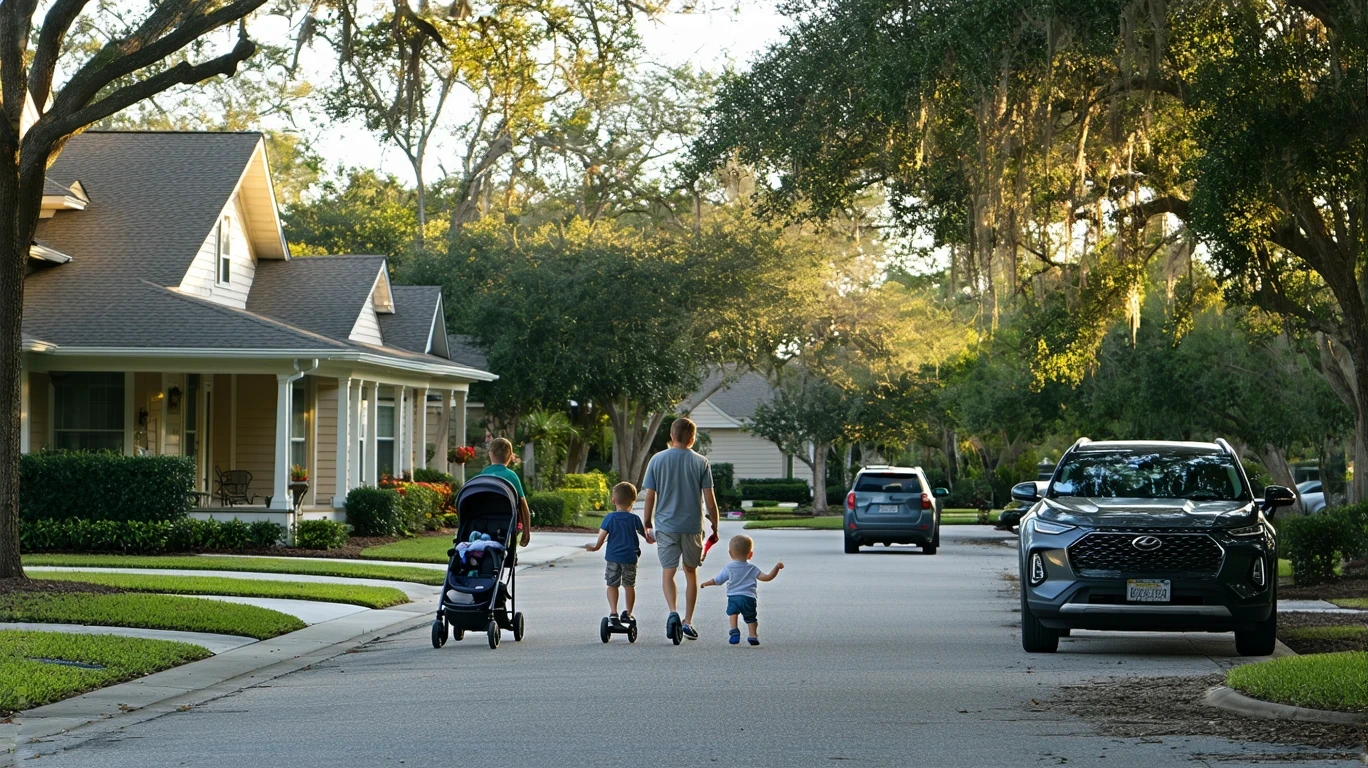
Maitland doesn’t announce itself loudly. It’s neither a master-planned community nor a gritty urban core. Instead, it occupies a middle ground that tends to reward people who value stability, greenery, and the ability to bike to a coffee shop—at least in some neighborhoods—while staying within reach of Orlando’s job market and amenities. The tradeoff? You’re not getting the walkable density of a true urban neighborhood, nor the seclusion of a rural enclave. You’re getting a suburb with rail transit, a suburb with bike lanes, a suburb where the building heights vary and the land use mixes just enough to keep things from feeling monotonous.
For families, retirees who want proximity without chaos, and remote workers seeking a quieter base near a major metro, Maitland tends to feel like it fits. For renters on tight budgets, young professionals craving nightlife, or households needing a local hospital, the friction shows up quickly.
What the Conversation Sounds Like Online
Maitland’s presence on social media and local forums tends to center on a few recurring themes: the parks, the SunRail station, the tension between growth and preservation, and the question of what kind of suburb Maitland wants to be. Discussions on platforms like Facebook neighborhood groups and regional subreddits often reflect pride in the city’s tree-lined streets and Lake Lily, mixed with concern about rising housing costs and the pressure that comes from being sandwiched between Winter Park and Orlando.
“It’s one of the few places around here where you can actually walk to things without feeling like you’re risking your life,” one commenter noted, highlighting the pedestrian infrastructure that exists in certain corridors. Another voice offered a counterpoint: “If you’re not near the downtown area or the trail, you’re still driving everywhere—it’s not as walkable as people make it sound.”
The SunRail station draws frequent mention, often framed as both a convenience and a symbol. For commuters heading into Orlando, it’s a practical alternative to I-4 traffic. For locals, it represents a kind of infrastructure investment that sets Maitland apart from other suburbs in the region. Yet the sentiment isn’t universally celebratory—some residents note that the station doesn’t run evenings or weekends, limiting its utility for non-commuters.
Growth is another flashpoint. Conversations about new apartment complexes, retail development, and changing neighborhood character tend to split between those who welcome the amenities and those who worry about losing the small-town feel. “We’re turning into everywhere else,” one longtime resident observed, while a newer arrival countered, “I moved here because it’s not stuck in the past—it’s evolving.”
How Local Coverage Frames the City
Local news and community outlets tend to frame Maitland through the lens of identity negotiation—a city figuring out how to grow without erasing what made it appealing in the first place. Coverage often touches on themes like:
- “Community Debates What Growth Should Look Like”
- “New Amenities Arrive as Town Identity Evolves”
- “Residents Weigh Convenience vs Quiet”
- “Parks and Green Spaces Remain Central to City Character”
- “SunRail Access Shapes Commuter Appeal”
These aren’t headlines tied to specific incidents—they’re the recurring categories of discussion that define how Maitland talks about itself. The tone is rarely alarmist, but it’s not purely promotional either. There’s a sense of negotiation: between old and new, between preservation and progress, between serving families and attracting young professionals.
What Reviews and Public Perception Reveal
On platforms like Google Reviews, Yelp, and Nextdoor-style community boards, Maitland’s public perception tends to hinge on expectation matching. People who wanted a quiet, green suburb with decent schools and parks tend to feel satisfied. People who expected urban walkability, diverse dining, or a robust nightlife scene tend to feel let down.
Positive sentiment often centers on:
- The parks—especially Lake Lily and the trail system
- The tree canopy and overall aesthetic upkeep
- Family-friendly infrastructure like playgrounds and schools
- Proximity to Orlando without the density or noise
- Pockets of walkability, particularly near the downtown area
Critical sentiment tends to focus on:
- Limited dining and entertainment options compared to Winter Park or Orlando
- Grocery and errands accessibility concentrated in certain corridors, requiring a car for most residents
- Higher housing costs (median home value $484,700, median rent $1,754) relative to perceived amenities
- Lack of a local hospital, requiring travel for emergency or specialized care
- Traffic congestion on major corridors during commute hours
Neighborhood variation matters here. Residents in newer planned areas often describe a more car-dependent experience, while those in older pockets near the downtown core or along the bike-friendly corridors report a different daily rhythm. The city’s mixed building heights and land use create micro-climates of experience—what’s true in one part of Maitland doesn’t necessarily hold across the city.
How Maitland Compares to Nearby Cities
| Aspect | Maitland | Winter Park | Altamonte Springs |
|---|---|---|---|
| Overall Vibe | Suburban with walkable pockets, rail access, family-oriented | Upscale, walkable downtown, arts and dining focus | Commuter suburb, retail-heavy, more car-dependent |
| Walkability | Corridor-clustered, notable bike infrastructure | Strong downtown core, less so outside it | Limited, primarily auto-oriented |
| Transit Access | SunRail station, bus service | SunRail station, more frequent bus routes | SunRail station, limited local transit |
| Housing Cost Pressure | High, rising with proximity to Orlando | Very high, premium for walkability and reputation | Moderate to high, more rental options |
| Dining & Nightlife | Limited, requires travel to Orlando or Winter Park | Robust, central to city identity | Chain-heavy, functional rather than distinctive |
The comparison isn’t about declaring a winner—it’s about understanding tradeoffs. If you prioritize a walkable downtown with independent restaurants and boutiques, Winter Park delivers that at a premium price. If you want suburban affordability with retail convenience and don’t mind driving, Altamonte Springs offers a different calculus. Maitland sits between them: more affordable than Winter Park, more textured than Altamonte, but not the best at either extreme.
For households who value rail access, bike infrastructure, and parks—and who can afford the housing pressure—Maitland offers a combination that’s hard to find elsewhere in the Orlando metro. For those who need walkability citywide or want a true urban experience, the city’s corridor-clustered errands accessibility and mixed character may feel incomplete.
What Locals Are Saying
“I love that I can bike to the farmer’s market and the library without getting on a major road. That’s rare around here, and it makes a difference when you have kids.”
— Parent of two, near downtown Maitland
“The SunRail is great when it’s running, but if you work evenings or weekends, it’s useless. You’re back to driving and dealing with I-4 like everyone else.”
— Young professional, commuting to Orlando
“We moved from a bigger city and expected more walkability. Outside of a few streets, you’re still in your car for everything. It’s not as urban as we thought.”
— Newcomer, renting near Maitland Boulevard
“The parks are beautiful, the neighbors are friendly, and it’s quiet without being isolated. We’re close enough to Orlando for work and entertainment, but we come home to trees and space.”
— Retiree, longtime resident
“Rent here is almost as high as Winter Park, but you don’t get the same walkability or dining options. It feels like you’re paying for proximity without getting the full benefit.”
— Remote worker, comparing monthly expenses
“I appreciate that there’s a mix of old and new here—it’s not all cookie-cutter. But that also means some areas feel more connected than others. Your experience really depends on where you land.”
— Homeowner, west Maitland
“If you need a hospital nearby, you’re out of luck. We had to drive to Winter Park for urgent care more than once. It’s not a dealbreaker, but it’s something to know upfront.”
— Parent, evaluating family needs
Does Maitland Feel Like a Good Fit?
Maitland’s emotional profile is one of quiet competence with selective texture. It’s a city that works well for households who value suburban stability, family infrastructure, and green space, but who also appreciate the option to bike, walk, or take the train in certain contexts. It’s not trying to be Winter Park, and it’s not trying to be Orlando—it’s carving out a middle path that appeals to a specific kind of resident.
This tends to work for families seeking good schools and parks without urban density, commuters who value rail access and want to avoid I-4 when possible, cyclists and walkers who appreciate infrastructure even if it’s not citywide, and households willing to trade some convenience for a quieter, greener setting.
It tends to frustrate renters facing high costs without corresponding urban amenities, young professionals seeking nightlife and walkable entertainment, households needing a local hospital or extensive healthcare access, and anyone expecting the walkability or dining scene of a true urban core.
The city’s mixed building heights, land use diversity, and corridor-clustered errands accessibility create a lived experience that varies by neighborhood. Some residents enjoy a genuinely walkable, bike-friendly daily rhythm. Others find themselves driving as much as they would anywhere else in Central Florida, just with nicer trees along the way.
If you’re trying to decide whether Maitland feels like home, the question isn’t whether it’s a “happy” city—it’s whether the tradeoffs align with your priorities. If you value parks over nightlife, rail access over walkability everywhere, and suburban calm over urban energy, the fit is likely strong. If you need density, variety, or lifestyle needs that require constant access to urban amenities, the friction will show up in your daily routine.
Maitland doesn’t try to be everything. It succeeds by being a specific kind of place—and for the right household, that specificity is exactly the point.
How this article was built: In addition to public economic data, this article incorporates location-based experiential signals derived from anonymized geographic patterns—such as access density, walkability, and land-use mix—to reflect how day-to-day living actually feels in Maitland, FL.
The perspectives shown reflect commonly expressed local sentiment and recurring themes in public discussion, rather than individual accounts.