
“Lynnwood is basically the place you move when you want to be near Seattle but not pay Seattle prices. You get space, you get groceries everywhere, you get light rail now… but you’re not getting charm. It’s functional. That’s the whole vibe.”
That quote captures the emotional core of Lynnwood better than any ranking could. This is a city that works—efficiently, accessibly, pragmatically—but it doesn’t ask you to fall in love with it. It asks you to appreciate what it offers: proximity to Seattle’s job market and energy, strong infrastructure for families and daily life, and enough green space to soften the suburban density. What it doesn’t offer is a distinct sense of place, cultural texture, or the kind of neighborhood character that makes you want to wander just to see what’s around the corner.
For some households, that tradeoff feels exactly right. For others, it’s the reason they keep looking.
What It Feels Like to Live Here
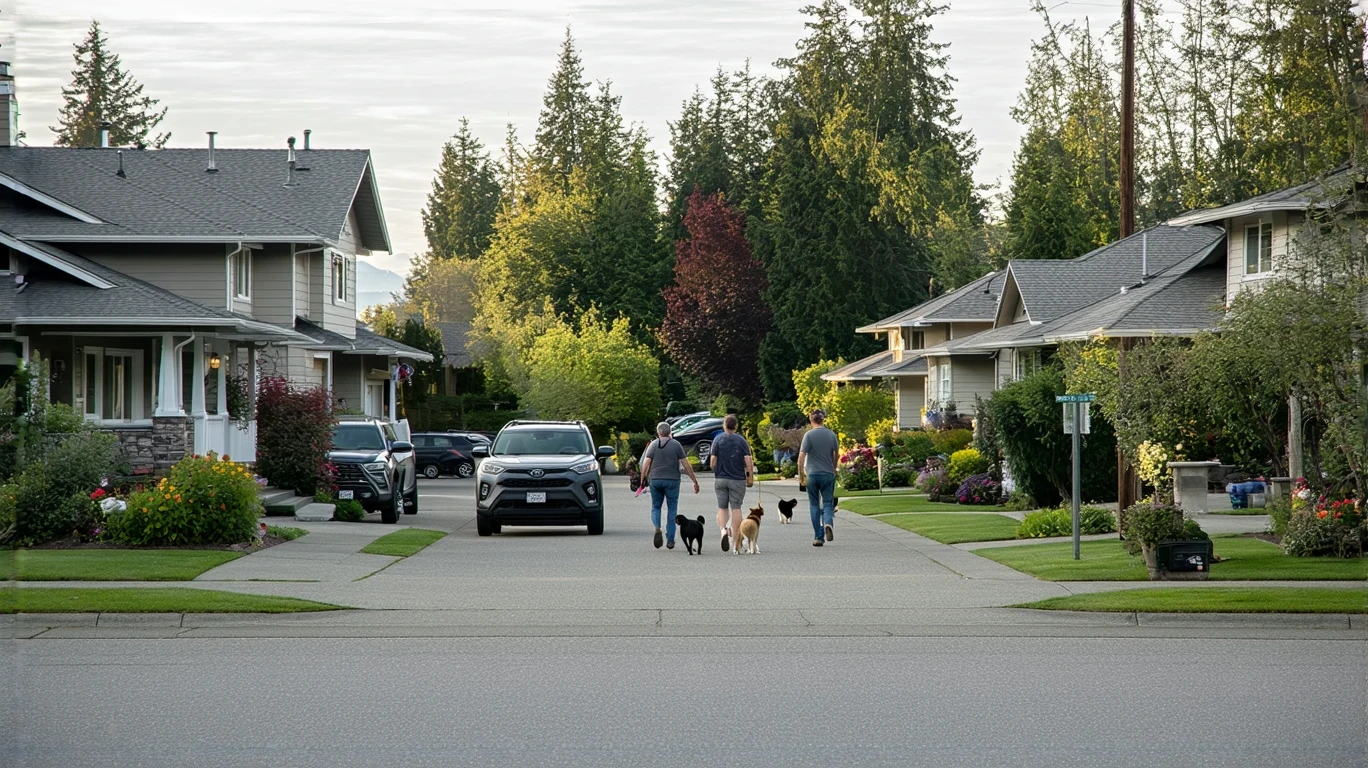
Lynnwood sits in a sweet spot for people who need urban access without urban intensity. The light rail connection to Seattle means you can commute without the full weight of city housing costs, and the infrastructure here—schools, parks, grocery stores, bike lanes in pockets—supports the logistics of daily life remarkably well. Errands don’t require planning. You’re never far from a supermarket, a pharmacy, or a place to grab takeout. Parks are woven throughout the city, and playgrounds are plentiful enough that families don’t have to drive across town for outdoor time.
But that convenience comes with a certain sameness. The retail landscape leans heavily on chains and big-box stores. Walkable pockets exist, especially near transit nodes, but most residents still default to driving for most trips. The city feels like it’s in transition—growing, adding density, evolving its identity—but it hasn’t yet landed on what it wants to be beyond “accessible” and “practical.”
People who thrive here tend to value function over form. They want their day-to-day costs predictable, their commute manageable, and their weekends free from logistical friction. They’re okay with driving to Seattle or Edmonds when they want something more textured. People who struggle here are usually the ones who wanted a neighborhood they could fall into on foot, or a town center that felt like a gathering place rather than a shopping hub.
The Conversation Online
Lynnwood’s online presence—across local Facebook groups, neighborhood forums, and regional subreddits—tends to revolve around a few recurring themes: growth, traffic, convenience, and the tension between suburban comfort and urban encroachment.
The tone is rarely angry, but it’s often weary. Long-time residents talk about how quickly things have changed, how the quiet streets they remember now feel busier, how new apartment buildings keep going up. Newcomers, especially those relocating from Seattle or the Eastside, tend to express relief—more space, lower rent, easier parking—but also mild disappointment that the city doesn’t have more “there” there.
“It’s fine. That’s the best way I can describe it. Everything you need is here, but nothing makes you want to stay home on a Saturday night.”
“I moved here for the schools and the parks, and on that front, it delivers. But I miss having a downtown that felt like a community, not just a place to run errands.”
“Honestly, the light rail changed everything. I can live here affordably and still get to work in Seattle without losing my mind in traffic. That’s worth the tradeoff.”
The conversation isn’t about whether Lynnwood is “good” or “bad”—it’s about whether it fits what you need right now. And for a lot of people, especially families and commuters, it does.
How Local Coverage Frames the City
Local news and community coverage in Lynnwood tends to focus on growth, infrastructure, and the ongoing negotiation between development and livability. The tone is generally pragmatic, reflecting a city that’s actively managing change rather than resisting or celebrating it outright.
Common headline themes include:
- “New Transit Connections Reshape Commuter Options”
- “Residents Weigh Density Against Neighborhood Character”
- “Retail Corridors Expand as Population Grows”
- “Parks and Green Space Remain Priority Amid Development”
- “Community Voices Debate What Growth Should Look Like”
The framing is rarely celebratory or alarmist. Instead, it reflects a city caught between identities: no longer a quiet bedroom community, not yet a urban center, but somewhere in between—functional, accessible, and still figuring out its personality.
What Reviews and Public Perception Reveal
Public reviews—whether on Google, Yelp, Nextdoor-style platforms, or regional forums—paint Lynnwood as a city that meets expectations for convenience but rarely exceeds them for character.
People praise the grocery density, the park access, the school options, and the relative ease of getting around by car. Families, in particular, tend to express satisfaction: playgrounds are plentiful, errands are straightforward, and the infrastructure supports the rhythm of raising kids without constant logistical friction.
But the complaints are telling. People mention the lack of a cohesive downtown, the dominance of chain retail, the feeling that the city is “just okay” rather than distinctive. Walkability gets mixed reviews—some pockets near transit feel genuinely pedestrian-friendly, but most of the city still requires a car for daily life. The absence of a local hospital comes up occasionally, especially among older residents or those with chronic health needs who’d prefer not to drive to Everett or Seattle for anything beyond routine care.
Newer planned areas tend to get higher marks for design and amenities, while older pockets feel more worn and less cohesive. But even in the newer sections, the feedback often circles back to the same theme: it works, but it doesn’t inspire.
How Lynnwood Compares to Nearby Cities
| Dimension | Lynnwood | Edmonds | Bothell |
|---|---|---|---|
| Overall Vibe | Functional, accessible, in transition | Coastal charm, walkable downtown, quieter pace | Tech-adjacent, family-oriented, planned feel |
| Walkability | Pockets near transit; mostly car-dependent | Strong downtown core, waterfront paths | Mixed; newer areas more pedestrian-friendly |
| Character | Suburban, chain-heavy, lacks distinct identity | Historic, coastal, community-centered | Planned, corporate, family-focused |
| Commute Access | Light rail to Seattle; strong transit connectivity | Ferry or drive; slower but scenic | Eastside job access; tech corridor proximity |
| Family Appeal | Strong schools, parks, errands infrastructure | Smaller, quieter, but fewer amenities | Excellent schools, parks, planned communities |
Lynnwood sits between Edmonds’ charm and Bothell’s planned suburban polish. If you want waterfront character and a real downtown, Edmonds wins—but you’ll pay more and sacrifice some convenience. If you want a newer, more corporate-feeling suburb with strong schools and Eastside job access, Bothell might feel more cohesive. Lynnwood offers the best transit access to Seattle and the most straightforward errands infrastructure, but it’s the least distinctive of the three.
The choice comes down to what you’re optimizing for: commute, character, or logistics.
What Locals Are Saying
“We moved here from Capitol Hill when we had our second kid. The rent difference alone made it worth it, and honestly, the parks here are better than anything we had access to in the city. Do I miss the walkability? Yeah. But I don’t miss the noise or the housing pressure.”
— Parent of two, relocated from Seattle
“Lynnwood is fine if you’re just passing through your own life—work, errands, home, repeat. But if you want to actually experience where you live, it’s pretty flat. There’s no ‘there’ here.”
— Remote worker, early 30s
“I’ve been here since the ’90s, and it’s unrecognizable now. Not in a bad way, necessarily, but it’s definitely not the quiet suburb it used to be. The light rail brought a lot of change.”
— Long-time resident
“For what I need—affordable rent, easy commute to Seattle, groceries I can walk to—it’s perfect. I’m not trying to build a social life in Lynnwood. I’m trying to live affordably near the city.”
— Commuter, renting near transit
“The schools are solid, the parks are great, and we’re close enough to Seattle that we don’t feel isolated. But I do wish there was more local culture. It’s very… functional.”
— Parent, homeowner
“I like that I can bike to the store and the library. A lot of suburbs don’t even have that. But yeah, you’re still driving most places.”
— Cyclist, renting in a walkable pocket
“It’s a good place to save money and raise kids. It’s not a good place to feel inspired or connected to your neighbors.”
— Family, planning to move closer to Seattle eventually
How this article was built: In addition to public economic data, this article incorporates location-based experiential signals derived from anonymized geographic patterns—such as access density, walkability, and land-use mix—to reflect how day-to-day living actually feels in Lynnwood, WA.
Does Lynnwood Feel Like a Good Fit?
Lynnwood doesn’t ask you to love it. It asks you to use it—and for the right household, that’s exactly what makes it work.
This is a city that fits people who need proximity to Seattle without Seattle costs, who want errands to be easy and parks to be plentiful, who value transit access but still plan to drive most places. It fits families who prioritize schools and playgrounds over nightlife and cultural institutions. It fits commuters who want space to breathe at the end of the day without sacrificing job access.
It tends to frustrate people who wanted a neighborhood with texture, a downtown with gathering places, or a community that feels cohesive rather than transitional. It’s not the right fit for anyone who hoped to ditch the car, or anyone looking for a place that feels like a destination rather than a base of operations.
Lynnwood is functional, accessible, and well-equipped. It’s not charming, and it’s not trying to be. Whether that tradeoff feels right depends entirely on what you need your city to do—and what you’re willing to go elsewhere to find.
If you’re still weighing whether Lynnwood aligns with your priorities, consider exploring what quality of life actually requires here, or take a closer look at where money goes each month to see if the financial rhythm matches your expectations.
The perspectives shown reflect commonly expressed local sentiment and recurring themes in public discussion, rather than individual accounts.