
Lynnwood is considered expensive in 2026, with a median home value of $596,200 and median rent of $1,611 per month. The value proposition depends on housing entry cost versus transit access and walkable infrastructure—commute and vehicle burdens are lower here than in many comparable suburbs.
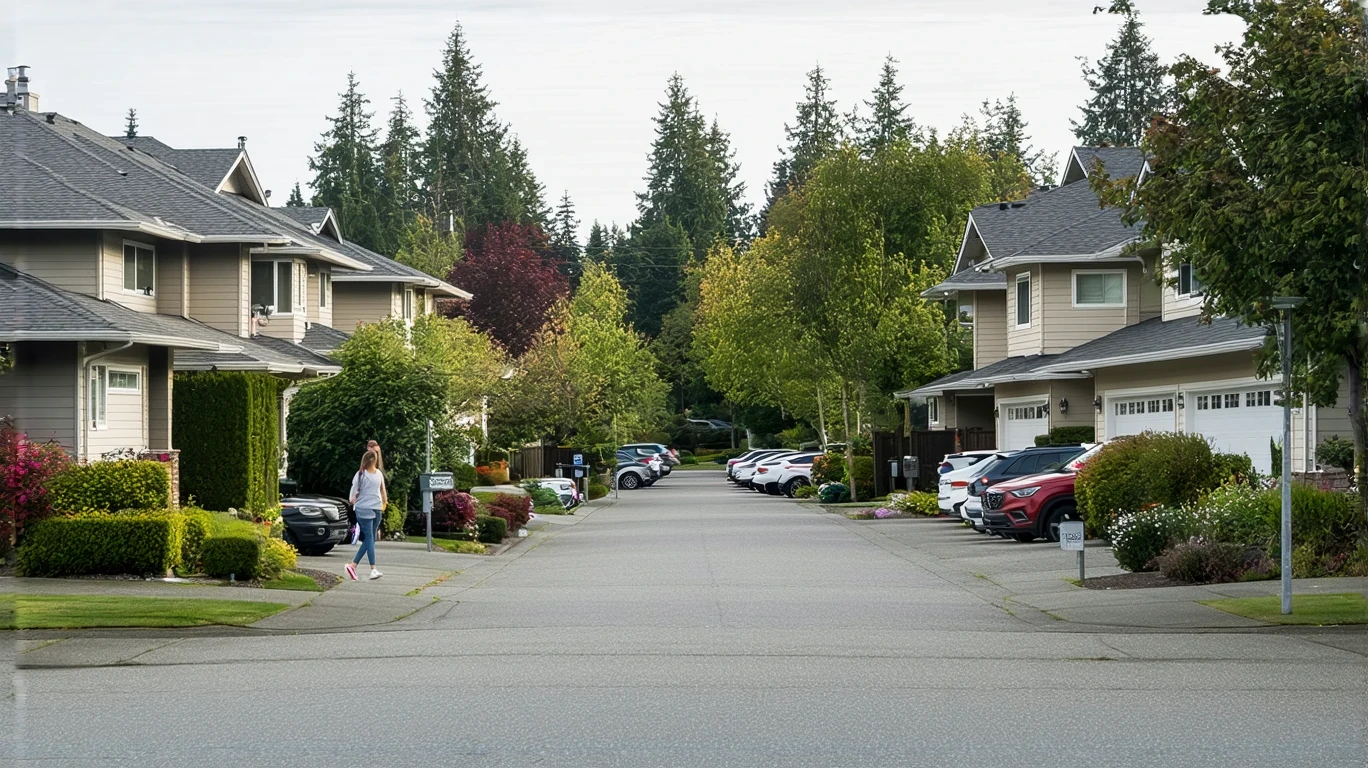
Overall Cost of Living Snapshot
Lynnwood operates at a regional price parity index of 151, meaning the overall cost structure runs approximately 51% above the national baseline. Housing dominates that pressure, but the city’s cost profile is shaped as much by what you avoid as by what you pay. Rail transit is present, pedestrian infrastructure exceeds typical suburban thresholds, and food and grocery density is high—all of which reduce the hidden costs of car dependency and logistical friction that define many outer-ring communities.
The primary cost driver is housing, whether renting or buying. The secondary driver is transportation, though that exposure varies significantly depending on whether you work locally, commute into Seattle, or rely on transit. Utilities present moderate seasonal risk, and groceries reflect elevated regional pricing but benefit from broad accessibility.
Driver verdict: Housing entry cost dominates, but day-to-day expenses are moderated by transit viability and walkable pockets. Surprises come from gas prices, the strength of non-car infrastructure, and grocery costs that feel higher than the density of options might suggest.
Housing Costs (Primary Driver)
At $596,200, the median home value in Lynnwood reflects the broader Seattle metro housing market—elevated, competitive, and driven by regional demand rather than purely local factors. For renters, $1,611 per month represents the median gross rent, a figure that includes some utilities in many cases but rarely all of them. The gap between these two figures is wide enough that the rent-versus-buy decision hinges on timeline, down payment access, and tolerance for ownership volatility.
Renting offers flexibility and avoids property tax exposure, insurance complexity, and maintenance unpredictability. Buying locks in a base housing cost but introduces long-term obligations and assumes you’ll stay long enough to absorb transaction costs and benefit from equity accumulation. Lynnwood functions as both a transitional city for Seattle commuters and a stable residential base for families who value access without urban density.
Conclusion: Lynnwood is a buying market for households planning to stay five-plus years and a renting market for those testing the region or prioritizing mobility.
| Housing Type | Cost Anchor | What That Buys You |
|---|---|---|
| Median Home | $596,200 | Ownership equity, fixed base cost, property tax and maintenance exposure |
| Median Rental | $1,611/month | Flexibility, no maintenance risk, no equity accumulation |
Utilities & Energy Risk
Electricity in Lynnwood is billed at 13.81¢ per kilowatt-hour. For a household using around 1,000 kWh per month—typical for a moderately sized home with standard appliances and seasonal heating or cooling—that translates to roughly $138 per month in illustrative context, before fees or taxes. The Pacific Northwest climate is temperate, meaning cooling demands are limited to occasional summer heat and heating needs are moderate rather than extreme.
Natural gas is priced at $17.38 per thousand cubic feet (MCF), or about 17.4¢ per therm. In winter months, a household using around 1 MCF per month might see bills in the range of $17–$20 for gas alone, before distribution charges and fees. Gas costs are more stable than electricity but still subject to regional supply dynamics and seasonal demand shifts.
Risk classification: moderate. Utility costs are predictable in structure but sensitive to seasonal intensity and usage behavior. Efficiency upgrades and programmable thermostats help stabilize exposure, particularly for households in older or less-insulated housing stock.
Groceries & Daily Costs
Grocery costs in Lynnwood reflect the regional price parity index, running notably above national averages. Ground beef is estimated at $10.12 per pound, milk at $6.14 per half-gallon, and eggs at $3.55 per dozen. These are derived estimates based on national baseline adjusted by regional price parity; not observed local prices. The figures illustrate cost pressure rather than guarantees of what any single store charges on any given week.
What matters more than individual item prices is the cumulative effect: a household that might spend $600 per month on groceries in a lower-cost region could easily approach $750–$800 here, depending on dietary preferences, household size, and reliance on prepared or specialty foods. The city benefits from high food and grocery establishment density, meaning competitive options exist and errands are less car-intensive than in many comparable suburbs. That accessibility doesn’t lower prices, but it does reduce the friction and time cost of shopping around.
For cost-conscious households, buying in bulk where storage allows, choosing store brands, and planning meals around sales all reduce exposure without requiring dramatic lifestyle changes.
Transportation Reality
Lynnwood’s transportation tradeoffs differ from the typical suburban script. Rail transit is present, bike infrastructure is notable, and the pedestrian-to-road ratio exceeds high thresholds in parts of the city. That means some households can reduce or eliminate daily car dependence, particularly if work, errands, and services align with transit corridors or walkable pockets.
For those who do drive, gas is priced at $5.39 per gallon—a figure that reflects Washington’s fuel taxes, environmental fees, and regional supply costs. A 25-mile round-trip commute in a vehicle averaging 25 miles per gallon would consume one gallon per day, or roughly $135 per month in illustrative fuel cost alone (before insurance, maintenance, or parking). Double that exposure for two-car households or longer commutes.
The unemployment rate sits at 4.2%, indicating a stable local economy with moderate job availability. Many residents commute into Seattle or Bellevue, where wages are higher but commute time and cost become recurring exposures. The presence of transit infrastructure makes that commute viable without a car for some, though schedule constraints and trip chaining (errands, childcare, etc.) often push households back toward vehicle ownership.
Transportation is a recurring exposure shaped more by work location, household logistics, and transit alignment than by any single cost factor. Households that can structure life around rail and walkable errands gain significant cost and time advantages.
Cost Exposure Profiles
In Lynnwood, cost exposure is driven by three structural factors: housing entry method, transportation dependence, and household composition.
Low-exposure situations: Renters using transit or biking for commutes, shopping within walking distance, and living in energy-efficient units face primarily rent and grocery costs. Their month-to-month volatility is low, and they avoid the compounding costs of car ownership, parking, insurance, and fuel.
High-exposure situations: Homeowners with long car commutes into Seattle, multiple vehicles, older homes with higher utility usage, and school-age children face layered costs across housing (mortgage, tax, insurance, maintenance), transportation (fuel, insurance, depreciation), utilities, and groceries. These households benefit from Lynnwood’s family infrastructure and green space access but carry significantly higher fixed and variable costs.
The difference between these profiles isn’t income sufficiency—it’s structural alignment. A household earning $75,000 annually might thrive here if they rent, work locally, and use transit. A household earning $95,000 might struggle if they’re stretched on a mortgage, commuting 60 minutes each way, and running two cars. The city rewards those who can take advantage of its transit, walkability, and accessibility; it penalizes those who can’t.
Frequently Asked Questions
Is Lynnwood more affordable than Seattle in 2026? Yes, housing costs in Lynnwood are generally lower than in Seattle proper, but the gap narrows when factoring in commute costs for those working in the city. Lynnwood offers more space and family-oriented infrastructure at a lower entry price, but transportation expenses can offset some of that savings.
What does a typical cost profile look like in Lynnwood? Housing dominates, whether renting or owning, followed by transportation and groceries. Utility costs are moderate and stable, while transportation costs vary widely depending on commute length, vehicle count, and transit use.
Do utilities cost more in Lynnwood than in nearby areas? Utility rates in Lynnwood are comparable to other Seattle metro suburbs. Electricity at 13.81¢/kWh and natural gas at $17.38/MCF are neither the highest nor the lowest in the region, and the temperate climate keeps seasonal swings moderate.
What costs tend to surprise newcomers in Lynnwood? Gas prices at $5.39/gal are often higher than expected, especially for those relocating from lower-tax states. Grocery costs also run above national averages, and the strength of transit and bike infrastructure surprises those expecting typical car-dependent suburbia.
Are property taxes higher in Lynnwood than in nearby cities? Property tax rates vary by jurisdiction and are influenced by school levies, local measures, and assessed home values. Lynnwood’s rates are in line with other Snohomish County communities, though effective tax bills depend on individual home valuations.
Is Lynnwood a good value for families? Lynnwood offers strong family infrastructure, including schools, playgrounds, and parks, along with integrated green space access. Families who can use transit or work locally benefit from lower transportation costs and walkable errands, improving the overall value proposition.
Can you live in Lynnwood without a car? Yes, particularly if your work, errands, and services align with rail transit and the city’s walkable pockets. Grocery density is high, bike infrastructure is notable, and pedestrian access exceeds typical suburban standards. However, households with complex logistics (multiple jobs, childcare, activities) may still find a car necessary.
How does Lynnwood compare to Everett or Edmonds for cost of living? Lynnwood generally sits between Everett (slightly lower housing costs, more industrial character) and Edmonds (higher housing costs, waterfront premium). All three share similar utility and grocery cost structures, with transportation and housing driving the differences.
How this article was built: In addition to public economic data, this article incorporates location-based experiential signals derived from anonymized geographic patterns—such as access density, walkability, and land-use mix—to reflect how day-to-day living actually feels in Lynnwood, WA.
—