
Homeownership in Lynnwood doesn’t end at the purchase price. Beyond the mortgage, buyers face a layered set of recurring costs—property taxes tied to assessed values that shift with the broader Seattle metro market, homeowners insurance shaped by regional risk profiles, and maintenance demands that vary widely depending on housing age and type. Utilities add another dimension: while Lynnwood’s moderate climate keeps heating and cooling needs from dominating year-round, electricity at 13.81¢/kWh and natural gas at $17.38/MCF still create seasonal swings that renters often don’t manage directly. For families weighing rent against ownership, these hidden costs determine whether a home becomes a stable anchor or a source of unpredictable financial pressure.
What makes Lynnwood distinct isn’t just the price tag—it’s the infrastructure that comes with it. The city offers rail transit access, walkable pockets with high pedestrian-to-road ratios, and broadly accessible grocery and food options that exceed density thresholds. Parks are integrated throughout, and both schools and playgrounds meet the benchmarks that matter to families. This isn’t a place where you’re forced into a car for every errand or isolated from daily services. But that accessibility doesn’t erase the cost structure of ownership; it changes the tradeoff. Buyers here aren’t just purchasing shelter—they’re locking into a specific relationship between housing expense, mobility freedom, and household logistics that renters experience very differently.
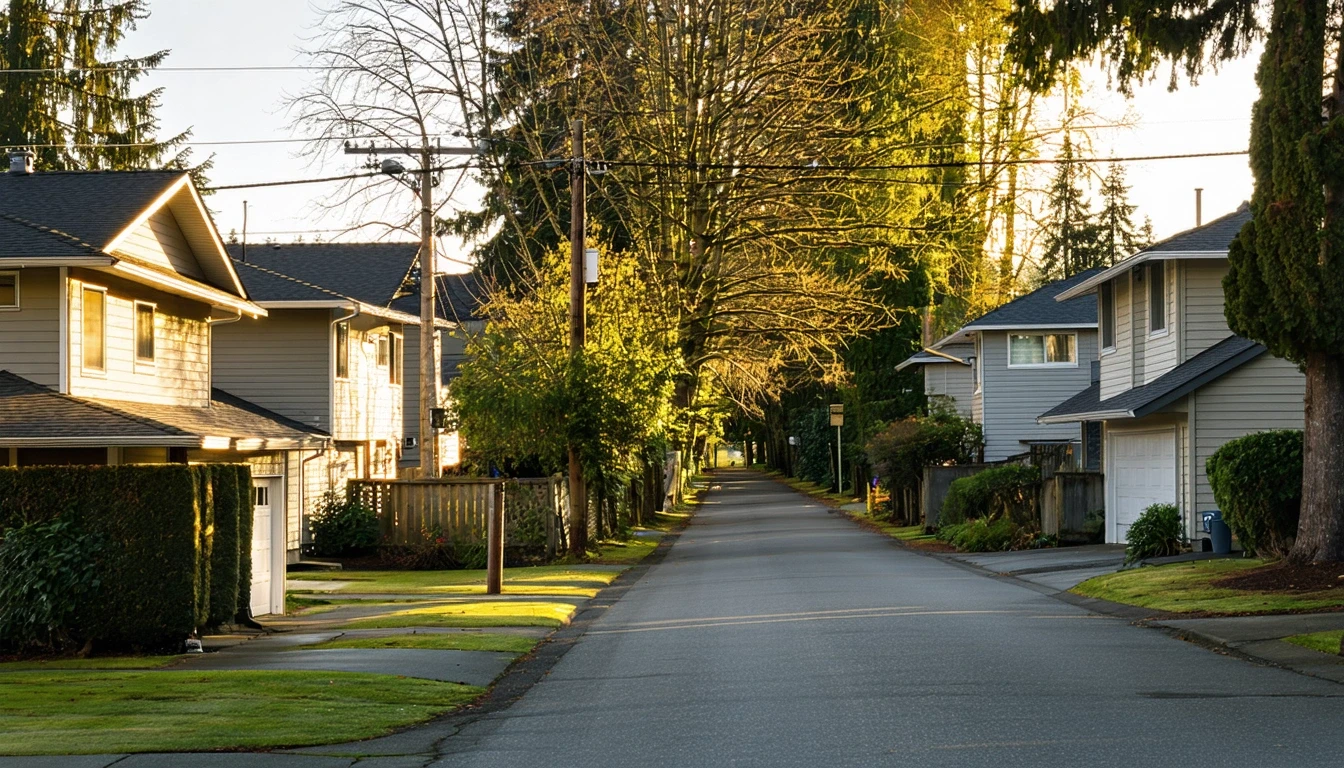
The Housing Market in Lynnwood Today
Lynnwood sits in the Seattle metropolitan orbit, and that proximity shapes everything about its housing market. The median home value of $596,200 reflects the gravitational pull of a major regional economy, where demand for housing extends well beyond the urban core into suburbs that offer both space and infrastructure. Unlike bedroom communities that exist purely as commuter outposts, Lynnwood has built out its own daily-life framework: rail service connects residents to Seattle without requiring car dependency, and the local street network supports pedestrian movement in concentrated areas. This isn’t a city where you’re paying purely for proximity—you’re also paying for a level of self-sufficiency that reduces friction in day-to-day routines.
What newcomers often misunderstand is that Lynnwood’s housing costs aren’t driven by scarcity alone. The city’s mixed building height profile and land-use patterns create variation within the market: some neighborhoods lean toward low-rise, single-family layouts, while others incorporate denser, multi-family structures. That variation means the ownership experience isn’t uniform. Buyers entering this market need to assess not just the purchase price, but how location within Lynnwood affects access to transit, walkability, and the amenities that reduce reliance on driving. A home near rail stops or within walkable pockets behaves differently—in both cost and convenience—than one in car-oriented edges of the city.
The broader Seattle metro context also introduces volatility. Home values here don’t move in isolation; they respond to regional employment trends, interest rate shifts, and migration patterns that extend across King and Snohomish counties. Buyers should expect that assessed values—and the property taxes tied to them—will fluctuate with the metro market, not just Lynnwood’s local conditions. That’s not a reason to avoid ownership, but it is a reason to understand that long-term exposure here is tied to forces beyond city limits.
Renting in Lynnwood
At $1,611 per month for median gross rent, Lynnwood’s rental market reflects the same metro pressures that drive home values. Renters here aren’t escaping the Seattle-area cost structure—they’re choosing a different relationship with it. The advantage is flexibility: no property tax exposure, no maintenance surprises, and the ability to relocate if household needs or income conditions change. The disadvantage is less control over annual increases and limited ability to lock in long-term housing costs.
Rental availability in Lynnwood varies by housing type and location. Multi-family buildings near transit corridors and commercial zones tend to offer more turnover and competitive pricing, while single-family rentals are less common and often carry premiums for yard space and parking. Renters who prioritize walkability and transit access will find that certain neighborhoods deliver on those features without requiring a car for every trip. The city’s high food and grocery density, combined with rail service, means that renters in well-positioned areas can reduce transportation costs even as they absorb higher rent.
What renters should anticipate is that Lynnwood’s rental market doesn’t operate in a vacuum. Lease renewals will reflect broader metro trends, and landlords here are responsive to regional demand signals. Renters who value stability may find that locking into a longer lease or choosing buildings with established management reduces year-to-year uncertainty. Those who need short-term flexibility, however, will pay for it—not necessarily in higher base rent, but in exposure to more frequent adjustments.
Owning a Home in Lynnwood
Ownership in Lynnwood begins with a $596,200 median home value, but the cost structure extends well beyond the purchase. Property taxes in Washington are assessed locally, and while specific rates aren’t detailed here, buyers should expect that assessed values will track with the broader metro market. When home values rise across the region, tax bills follow—even if your household income doesn’t. That’s a structural feature of ownership that renters avoid entirely.
Homeowners insurance adds another layer, shaped by regional risk factors including seismic activity, winter storms, and proximity to Puget Sound. Premiums vary by coverage level, home age, and construction type, but the key point is that insurance isn’t optional—it’s a recurring cost that fluctuates with both local and national insurance market conditions. Buyers should budget for this as a variable expense, not a fixed one.
Maintenance and upkeep depend heavily on housing age and type. Lynnwood’s housing stock includes both older single-family homes and newer multi-family developments, and the cost behavior differs sharply. Older homes may require roof replacements, HVAC updates, or plumbing repairs that arrive unpredictably. Newer construction reduces those risks in the short term but often comes with homeowners association (HOA) fees that cover shared infrastructure and landscaping. HOAs introduce their own governance layer: rules about exterior modifications, parking, and noise, plus the risk of special assessments if major repairs are needed.
The ownership experience in Lynnwood also varies by location within the city. Homes in walkable pockets near rail stations reduce the need for second vehicles and frequent driving, which lowers transportation costs over time. Homes in car-oriented areas may offer more space and lower purchase prices, but they shift more of the household budget toward fuel, insurance, and vehicle maintenance. Buyers should weigh these tradeoffs carefully—ownership isn’t just about the house itself, but about the cost structure that comes with its location.
Apartment vs House in Lynnwood — Cost Behavior Comparison
| Expense Category | Apartment | House |
|---|---|---|
| Utilities (Heating/Cooling) | Lower exposure; smaller square footage and shared walls reduce heating and cooling demand in Lynnwood’s moderate climate | Higher exposure; standalone structures lose heat faster in winter and require more energy to cool during warm months |
| Maintenance Responsibility | Managed by landlord or HOA; renters avoid direct repair costs but may face rent increases to cover building upkeep | Full owner responsibility; roofs, HVAC, plumbing, and exterior work arrive unpredictably and vary by home age |
| Transportation Exposure | Often located near transit and walkable corridors; reduces need for frequent driving and associated fuel costs at $5.39/gal | More common in car-oriented areas; increases reliance on personal vehicles and exposure to gas price volatility |
| Governance and Fees | HOA fees common in multi-family buildings; cover shared amenities, landscaping, and exterior maintenance | HOA fees less common in single-family zones; when present, often lower but may include special assessments for major repairs |
Methodology note: The differences shown reflect Lynnwood’s mixed urban form, moderate climate, and transit infrastructure. Categories like property taxes and insurance were excluded because their variation depends more on assessed value and coverage choices than on housing type alone. The table focuses on cost behaviors that diverge meaningfully based on structure and location within the city.
Utilities & Upkeep Differences
Utility exposure in Lynnwood is shaped by the city’s moderate climate, which avoids the extremes that dominate costs in other regions. Winters bring cold stretches that require heating, and summers warm enough to justify air conditioning in some homes, but neither season imposes the relentless, months-long demand seen in harsher climates. That moderation keeps year-round utility costs from becoming the primary budget driver, but it doesn’t eliminate seasonal swings. Electricity at 13.81¢/kWh and natural gas at $17.38/MCF still create noticeable variation between winter heating months and milder periods.
For apartment dwellers, smaller square footage and shared walls reduce heating and cooling loads. Many multi-family buildings also bundle water, sewer, and garbage into rent, which simplifies budgeting even if it doesn’t always lower total costs. Renters in these situations avoid direct exposure to rate changes, though landlords may adjust rent to reflect rising utility expenses over time.
Homeowners face a different structure. Standalone houses lose heat faster in winter and require more energy to cool in summer, and owners pay for every kilowatt-hour and therm directly. Older homes in Lynnwood—common in certain neighborhoods—often lack modern insulation and efficient HVAC systems, which amplifies seasonal swings. Newer construction reduces that exposure, but buyers should verify insulation quality, window efficiency, and heating system type before assuming lower bills.
Maintenance costs also vary by housing age and type. Older single-family homes may need roof replacements, water heater upgrades, or exterior painting—expenses that arrive irregularly but can reach thousands of dollars. Apartment residents avoid these costs entirely, though HOA fees in condos may rise to cover building-wide repairs. The key distinction is predictability: renters and condo owners face more stable monthly costs, while single-family homeowners must budget for lumpy, high-cost events that don’t follow a regular schedule.
Rent vs Buy: Long-Term Exposure in Lynnwood
The rent-versus-buy decision in Lynnwood isn’t about which option costs less in year one—it’s about which cost structure aligns with your household’s tolerance for volatility, control, and long-term exposure. Renters face annual lease renewals that reflect metro-wide demand, but they avoid property tax increases, insurance premium swings, and major repair costs. Owners lock in a mortgage payment (if financed at a fixed rate), but they absorb every other cost that fluctuates: taxes tied to assessed values, insurance shaped by regional risk, and maintenance that arrives unpredictably.
Over time, ownership shifts more financial risk onto the household. When the Seattle metro housing market strengthens, assessed values rise, and property tax bills follow. When insurance markets tighten nationally or regionally, premiums increase regardless of whether you’ve filed a claim. When a roof fails or a furnace breaks, the repair happens on your timeline and your budget. Renters avoid all of this, but they trade that insulation for less control: landlords decide when to raise rent, whether to renew leases, and how to manage building upkeep.
The long-term value of ownership in Lynnwood depends heavily on location within the city. Homes near rail stations and within walkable pockets reduce transportation costs, which compounds over years of ownership. Families who can eliminate a second car—or reduce driving frequency—offset some of the higher costs of ownership through lower fuel, insurance, and maintenance expenses. Homes in car-oriented areas may offer more space or lower purchase prices, but they lock households into higher transportation exposure for as long as they own the property.
Renters, meanwhile, retain the flexibility to relocate as household needs or income conditions change. If a job moves, a lease ends, or a neighborhood no longer fits, renters can adjust without selling a home or absorbing transaction costs. That flexibility has value, especially in a metro market where employment and housing demand shift frequently. Ownership trades that flexibility for stability and control, but only if the household can sustain the cost structure through market cycles.
How Day-to-Day Living Shapes Housing Costs in Lynnwood
Lynnwood’s infrastructure doesn’t just affect quality of life—it directly changes the cost equation for both renters and owners. Because the city has rail transit access and walkable pockets where pedestrian infrastructure exceeds typical suburban ratios, households positioned near these features can reduce their reliance on personal vehicles. That’s not an abstract lifestyle benefit; it’s a measurable shift in monthly expenses. Families who can walk to grocery stores, access transit for commutes, and reach schools or parks without driving avoid the recurring costs of fuel at $5.39/gal, parking fees, and the wear-and-tear that accelerates vehicle replacement cycles.
For renters, this infrastructure access often comes bundled into apartments located near commercial corridors and transit stops. The rent may be higher in these areas, but the household avoids the fixed costs of car ownership—insurance, registration, maintenance—that add up regardless of how much you drive. For owners, the tradeoff is different: buying a home in a walkable pocket or near rail service typically means paying more upfront, but it reduces long-term transportation exposure and increases the home’s appeal to future buyers who value the same access.
The city’s high density of food and grocery options also reduces the friction of daily errands. When essentials are broadly accessible rather than concentrated in distant big-box zones, households spend less time driving and less money on fuel for routine trips. This isn’t about convenience alone—it’s about how place structure shifts where money goes. Families in car-dependent areas may have lower housing costs, but they offset that savings with higher transportation budgets. Families in accessible areas pay more for housing but reduce the hidden costs of distance and car dependency.
How this article was built: In addition to public economic data, this article incorporates location-based experiential signals derived from anonymized geographic patterns—such as access density, walkability, and land-use mix—to reflect how day-to-day living actually feels in Lynnwood, WA.
FAQs About Housing Costs in Lynnwood
What drives the $596,200 median home value in Lynnwood?
Lynnwood’s home values reflect its position in the Seattle metro market, where demand extends beyond the urban core into suburbs that offer both infrastructure and access. The city’s rail transit, walkable pockets, and integrated parks create a cost structure that isn’t purely about proximity—it’s about the self-sufficiency and mobility options that come with the location. Buyers here are paying for a combination of regional connectivity and local amenities that reduce reliance on driving.
How does renting in Lynnwood compare to owning in terms of long-term costs?
Renting avoids property tax exposure, insurance volatility, and maintenance surprises, but it leaves households vulnerable to annual rent increases tied to metro-wide demand. Ownership locks in a mortgage payment (if financed at a fixed rate) but shifts all other cost risk onto the household: taxes that rise with assessed values, insurance premiums that fluctuate with regional risk, and repairs that arrive unpredictably. The better choice depends on your tolerance for volatility and your need for flexibility versus control.
Are utilities a major cost factor for homeowners in Lynnwood?
Utilities in Lynnwood create noticeable seasonal variation but don’t dominate year-round budgets the way they do in extreme climates. Electricity at 13.81¢/kWh and natural gas at $17.38/MCF drive higher bills during winter heating months and warm summer periods, but the city’s moderate climate keeps those swings from becoming the primary cost driver. Older homes with poor insulation or inefficient HVAC systems will see larger bills; newer construction reduces that exposure.
Does location within Lynnwood affect the total cost of homeownership?
Absolutely. Homes near rail stations and within walkable pockets reduce transportation costs by lowering the need for frequent driving and second vehicles. Homes in car-oriented areas may have lower purchase prices, but they increase long-term exposure to fuel costs, vehicle maintenance, and insurance. Buyers should evaluate not just the home price, but the cost structure that comes with its location—proximity to transit, grocery density, and pedestrian infrastructure all affect how much you’ll spend beyond the mortgage.
What should renters in Lynnwood expect during lease renewals?
Renters in Lynnwood should anticipate that lease renewals will reflect broader Seattle metro demand trends, not just local conditions. Landlords here are responsive to regional market signals, and rent increases often track with metro-wide vacancy rates and employment growth. Renters who value stability may benefit from longer lease terms or buildings with established management; those who need short-term flexibility will face more frequent adjustments and less predictability in year-to-year costs.
Making Housing Choices in Lynnwood
Housing costs in Lynnwood don’t follow a single pattern—they vary by ownership type, location within the city, and how much infrastructure access a household can leverage. The $596,200 median home value and $1,611 median rent both reflect the city’s position in the Seattle metro market, but they also reflect the tradeoffs that come with different housing structures. Renters gain flexibility and avoid ownership-specific risks, but they absorb metro-wide rent pressure and have less control over long-term costs. Owners lock in mortgage payments but take on property tax exposure, insurance volatility, and maintenance unpredictability.
What makes Lynnwood distinct is the infrastructure that shapes those tradeoffs. Rail transit, walkable pockets, and broadly accessible grocery and food options reduce the hidden costs of car dependency for households positioned to use them. Families who prioritize access to transit and pedestrian-friendly streets will find that Lynnwood offers more than typical suburban layouts—but they’ll pay for that access in higher home values or rents in well-connected areas. Families who choose car-oriented neighborhoods may save on housing costs upfront, but they’ll shift more of their budget toward transportation over time.
The cost structure here rewards households who understand how place and housing type interact. Buyers near rail and within walkable zones reduce long-term transportation exposure. Renters in multi-family buildings near transit avoid the fixed costs of car ownership while retaining flexibility. Owners in single-family homes gain space and control but absorb more volatility in taxes, insurance, and upkeep. There’s no universal “better” choice—only the choice that aligns with your household’s priorities, risk tolerance, and ability to sustain costs through market cycles.