
You’re standing in your kitchen on Sunday afternoon, meal planning for the week ahead. You’ve got a family of four to feed, and you’re trying to figure out whether the grocery run will feel manageable or whether you’ll be watching the register total climb with that familiar tightness in your chest. In Lynnwood, that feeling depends less on a single “average” grocery experience and more on where you shop, what you buy, and how your household size interacts with the region’s elevated cost structure. Grocery prices here reflect the broader Seattle metro price environment—higher than much of the country, but not as extreme as the urban core. For families, the pressure compounds quickly. For singles and couples, staple prices feel noticeable but controllable with deliberate choices. Understanding how food costs behave in Lynnwood means recognizing that the same cart can cost dramatically different amounts depending on store tier, and that the city’s structure—broadly accessible grocery options, walkable pockets, and integrated green space—gives households real flexibility in how they manage that pressure.
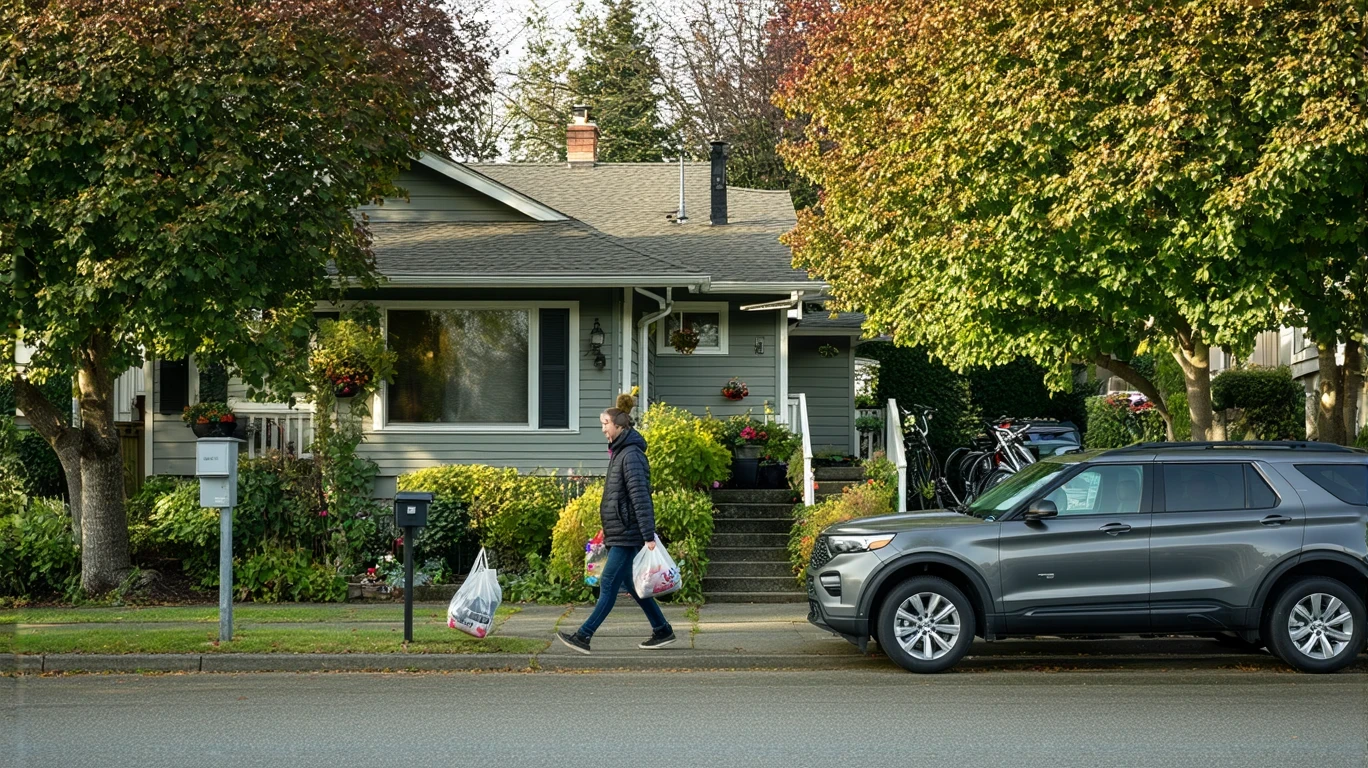
How Grocery Costs Feel in Lynnwood
Lynnwood sits in a regional price environment shaped by the Seattle metro’s cost structure. The city’s regional price parity index of 151 means that the baseline cost of goods and services—including groceries—runs about 51% above the national average. That doesn’t mean every apple or gallon of milk costs exactly 51% more, but it does mean the floor is elevated. When you walk into any grocery store in Lynnwood, whether discount, mid-tier, or premium, you’re starting from a higher baseline than you would in much of the country. The effect is most visible in staples: bread, eggs, milk, cheese, and proteins. These are the items that show up in every cart, every week, and their prices set the tone for how grocery shopping feels.
Who notices this most? Families with children feel it first and hardest. A household of four buying chicken, ground beef, milk, eggs, and fresh produce multiple times a week sees costs accumulate rapidly. A single professional or couple without kids has more room to absorb price variation—they’re buying smaller quantities, and they can shift toward lower-cost proteins or skip certain categories entirely without disrupting meal routines. Retirees on fixed incomes, especially those shopping for two, occupy a middle ground: they’re price-sensitive, but their volume is lower than a family’s, so careful store selection and planning can keep pressure manageable. The key insight is that grocery costs in Lynnwood aren’t uniform—they’re a function of household size, store choice, and how much flexibility you have in what you buy.
The city’s layout also shapes the grocery experience in ways that don’t show up on a price tag. Lynnwood offers broadly accessible food and grocery options, with high density of both food establishments and grocery stores distributed throughout the area. Walkable pockets and rail transit mean that for many households, getting to a grocery store doesn’t require a long drive or a dedicated car trip. That lowers the friction cost of comparison shopping or making multiple smaller trips instead of one large weekly haul. It also means that if you’re willing to visit a discount-tier store that’s a bit farther from home, the logistics are less punishing than they would be in a car-dependent suburb.
Grocery Price Signals (Illustrative)
These prices illustrate how staple items tend to compare locally—not a full shopping list, and not a guarantee of what you’ll see on any given week. They’re derived estimates based on national baselines adjusted for regional price parity, and they’re useful for understanding relative positioning, not for predicting your checkout total.
| Item | Price |
|---|---|
| Bread | $2.73/lb |
| Cheese | $7.22/lb |
| Chicken | $3.07/lb |
| Eggs | $3.55/dozen |
| Ground Beef | $10.12/lb |
| Milk | $6.14/half-gallon |
| Rice | $1.60/lb |
Derived estimate based on national baseline adjusted by regional price parity; not an observed local price.
Look at ground beef at over $10 per pound, or cheese at more than $7. These aren’t luxury items—they’re weeknight staples. For a family buying two pounds of ground beef and a pound of cheese in a single trip, that’s nearly $30 before adding vegetables, grains, or anything else. Eggs at $3.55 per dozen and milk at over $6 per half-gallon reinforce the pattern: the basics cost more here, and that baseline is consistent across the city. Chicken at just over $3 per pound is one of the more accessible proteins, but even that adds up when you’re feeding multiple people multiple times a week. Rice, at $1.60 per pound, remains one of the most cost-effective staples, and it’s a category where volume buying and simple preparation can stretch a budget significantly.
These numbers don’t tell you what to expect at checkout—they tell you where the pressure points are. If your household relies heavily on dairy, eggs, and ground beef, you’re going to feel Lynnwood’s cost structure more acutely than someone who eats mostly rice, beans, and chicken. The prices also don’t account for store tier, which is where the real variation lives.
Store Choice & Price Sensitivity
Grocery costs in Lynnwood vary significantly by store tier, and understanding that variation is one of the most effective ways to manage food spending. Discount-tier stores focus on private-label products, limited selection, and high-volume turnover. They strip out amenities—no fancy displays, no extensive prepared food sections, no premium organics—and pass the savings on to customers. For households that are price-sensitive and willing to plan around what’s available, discount stores can reduce grocery pressure substantially. The tradeoff is less convenience: fewer locations, less variety, and a shopping experience that prioritizes efficiency over comfort.
Mid-tier stores occupy the middle ground. They carry both national brands and private-label options, offer broader selection, and provide a more comfortable shopping environment. Prices are higher than discount stores but lower than premium retailers. For many Lynnwood households, mid-tier stores represent the default choice—they’re widely accessible, they stock most of what people need, and they don’t require the same level of planning or flexibility that discount shopping demands. The cost difference between mid-tier and discount isn’t trivial, but it’s not prohibitive either, and for families with time constraints or specific dietary needs, the convenience often justifies the premium.
Premium-tier stores emphasize quality, variety, and experience. They stock organic produce, specialty items, prepared foods, and high-end proteins. Prices are noticeably higher across the board, and the gap widens in categories like cheese, meat, and packaged goods. For households with higher incomes or specific preferences—organic-only, locally sourced, specialty diets—premium stores deliver value in the form of selection and quality. But for households focused purely on cost control, premium stores amplify the region’s already-elevated baseline. The same cart that costs one amount at a discount store might cost 40–60% more at a premium retailer, and that gap compounds over time.
Lynnwood’s broadly accessible grocery infrastructure means you’re not locked into one tier. If you live in a walkable pocket or near transit, you can mix and match: buy staples at a discount store and fill in gaps at a mid-tier location. If you’re car-dependent, the calculus shifts—driving across town to save on groceries has a real cost in time and fuel, and that cost can erode the savings. The key is recognizing that store choice isn’t just about preference; it’s a structural lever that directly affects how much pressure you feel at the register.
What Drives Grocery Pressure Here
The regional price parity index of 151 is the foundation of grocery costs in Lynnwood. It’s not a grocery-specific metric, but it captures the broader cost environment that shapes food prices. When the regional baseline is 51% above the national average, that pressure flows through every supply chain, every distributor, and every store. It affects labor costs, rent for retail space, transportation, and wholesale pricing. The result is that even discount stores in Lynnwood are starting from a higher floor than discount stores in lower-cost regions.
Household size is the second major driver. A single person buying for one can absorb higher per-unit costs more easily than a family of four or five. When you’re buying two gallons of milk a week instead of a half-gallon, or three pounds of chicken instead of one, the price-per-unit becomes the dominant factor. Families also face less flexibility—they can’t skip meals, they can’t easily substitute cheaper ingredients without disrupting routines, and they’re buying across more categories (snacks, school lunches, breakfast staples) than smaller households. The compounding effect is real: a family’s grocery pressure isn’t just double or triple that of a single person; it’s often exponentially higher because volume and variety both increase.
Income provides the buffer. Lynnwood’s median household income of $72,241 per year is above the national median, and that helps absorb the region’s elevated costs. But it doesn’t eliminate sensitivity. A household earning $72,000 and spending $1,000 a month on groceries is dedicating a meaningful share of post-tax income to food, and that share grows if income is below the median or if the household is larger than average. For retirees on fixed incomes, even moderate grocery costs can feel tight, especially if housing and healthcare are already consuming a large portion of the budget.
Seasonal variability also plays a role, though it’s less dramatic than in other cost categories. Produce prices fluctuate with growing seasons, and certain proteins see price swings based on supply and demand. In Lynnwood, the effect is muted by the fact that most groceries are sourced regionally or nationally, so local weather patterns don’t directly drive prices. But holiday periods—Thanksgiving, Christmas, summer grilling season—do create temporary spikes in demand for specific items, and those spikes show up at the register.
Practical Ways People Manage Grocery Costs
Store tier selection is the most direct lever. Shifting staple purchases—milk, eggs, bread, rice, chicken—to a discount-tier store while buying specialty or perishable items elsewhere can reduce overall spending without requiring major lifestyle changes. The key is identifying which categories matter most to your household and where you’re willing to trade convenience for cost control.
Meal planning reduces waste and impulse purchases. When you walk into a store with a list based on planned meals, you’re less likely to overbuy perishables that spoil before you use them, and you’re less likely to grab expensive convenience items. Planning also lets you build meals around what’s on sale or in season, which can lower costs without sacrificing variety. For families, meal planning also reduces the temptation to eat out on nights when the fridge feels empty—a dynamic that can quietly inflate food spending beyond the grocery bill itself.
Buying in bulk works for non-perishables and freezer-friendly items, but it requires upfront cash and storage space. Rice, beans, pasta, canned goods, and frozen proteins all benefit from volume purchasing, especially if you’re shopping at a warehouse club or discount store. The per-unit savings are real, but the strategy only works if you have the space to store bulk items and the cash flow to handle larger purchases without straining other budget categories.
Private-label products offer lower prices than national brands in most categories, and the quality gap has narrowed significantly over the past decade. For staples like milk, eggs, butter, canned vegetables, and grains, private-label options are often indistinguishable from name brands. The savings aren’t dramatic on a per-item basis, but they accumulate across a full cart, especially for households buying high volumes.
Avoiding prepared and convenience foods is one of the most effective ways to control grocery costs, but it requires time and cooking skills. Pre-cut vegetables, pre-marinated proteins, and ready-to-eat meals carry significant markups over raw ingredients. For households with time constraints—working parents, caregivers, people with long commutes—the convenience is often worth the cost. But for those with more flexibility, cooking from scratch can reduce spending substantially while also offering more control over ingredients and nutrition.
Groceries vs Eating Out (Directional)
The tradeoff between cooking at home and eating out is one of the most common pressure points in household budgets, and it’s especially relevant in a high-cost region like Lynnwood. Cooking at home is almost always cheaper on a per-meal basis, but it requires time, planning, and energy. Eating out—whether that’s fast food, casual dining, or takeout—offers convenience and variety, but the cost-per-meal is significantly higher, and it compounds quickly if it becomes a regular habit.
For families, the math is stark. A home-cooked dinner for four using chicken, rice, and vegetables might cost $15–20 in groceries. The same meal at a casual restaurant could easily run $60–80 before tip. Fast food is cheaper than sit-down dining, but it’s still more expensive than cooking, and it often lacks the nutritional value that makes home cooking worthwhile. The real challenge is that eating out isn’t just about cost—it’s about time and mental load. On a night when both parents are exhausted and the fridge feels overwhelming, the extra $40 for takeout can feel like a reasonable trade. The key is recognizing when that trade is intentional versus when it’s a default that’s quietly inflating monthly spending.
For singles and couples, the calculus is different. Cooking for one or two often means dealing with leftovers, smaller portion sizes, and the inefficiency of buying perishables that spoil before they’re used. Eating out or ordering in can feel more efficient, especially in a city with broadly accessible food options. But the cost difference is still real, and it accumulates over time. A household that eats out five times a week instead of two is redirecting hundreds of dollars a month away from groceries and toward restaurant spending, and that shift can create pressure in other budget categories.
FAQs About Grocery Costs in Lynnwood (2026)
Is it cheaper to shop in bulk in Lynnwood? Bulk purchasing reduces per-unit costs for non-perishables and freezer-friendly items like rice, beans, pasta, and frozen proteins. The savings are real, but the strategy requires upfront cash and storage space, and it works best for households that can use high volumes before items expire.
Which stores in Lynnwood are best for low prices? Discount-tier stores offer the lowest baseline prices by focusing on private-label products and limited selection. Mid-tier stores provide broader variety at moderate prices, while premium stores emphasize quality and specialty items at higher cost. Store choice is one of the most effective levers for managing grocery spending.
How much more do organic items cost in Lynnwood? Organic products typically carry a noticeable premium over conventional options, and that gap is consistent with the region’s elevated baseline. The premium varies by category—produce, dairy, and proteins see the largest differences—but the cost increase compounds quickly for households buying organic across multiple categories.
How do grocery costs for two adults in Lynnwood tend to compare to nearby cities? Lynnwood’s grocery costs reflect the broader Seattle metro price environment, which runs higher than most of the country but lower than the urban core. Nearby cities with similar regional price parity will show comparable grocery costs, while cities farther from the metro or in lower-cost regions will feel noticeably cheaper.
How do households in Lynnwood think about grocery spending when cooking at home? Most households treat grocery spending as a controllable category where store choice, meal planning, and ingredient selection directly affect monthly expenses. The focus is on managing volume, reducing waste, and balancing convenience against cost, especially for families where grocery pressure compounds quickly.
Do grocery prices in Lynnwood fluctuate seasonally? Produce prices shift with growing seasons, and certain proteins see demand-driven spikes during holidays. The effect is less dramatic than in other cost categories because most groceries are sourced regionally or nationally, but planning around seasonal availability can help manage costs.
How does household size affect grocery pressure in Lynnwood? Larger households face compounding pressure because they’re buying higher volumes across more categories, and they have less flexibility to skip or substitute items. Singles and couples can absorb higher per-unit costs more easily because their total volume is lower, making store choice and planning less critical but still valuable.
How Groceries Fit Into the Cost of Living in Lynnwood
Groceries are one piece of a larger cost structure, and understanding how they fit relative to housing, utilities, and transportation helps clarify where the real pressure lives. In Lynnwood, housing is the dominant cost category—whether you’re renting at a median of $1,611 per month or carrying a mortgage on a home valued at $596,200. Groceries matter, but they’re not the primary driver of affordability or financial stress. For most households, grocery spending is flexible in ways that housing isn’t. You can shift store tiers, adjust meal plans, or buy different proteins. You can’t easily renegotiate rent or move to a cheaper home without significant disruption.
That said, groceries are where many households feel cost-of-living pressure most acutely on a week-to-week basis. Housing costs are fixed and predictable; grocery costs fluctuate and require constant decision-making. The cumulative effect of those decisions—store choice, meal planning, impulse purchases—shapes how tight or loose the budget feels in practice. For families, grocery costs can rival or exceed utilities, and for retirees on fixed incomes, they can represent one of the few categories where active management makes a meaningful difference.
If you’re trying to understand the full picture of what it costs to live in Lynnwood—how much you’ll spend each month, where the pressure points are, and how different household types experience the city’s cost structure—the monthly budget breakdown provides the framework. Groceries are a critical component, but they’re most useful when understood in context: how they interact with income, how they compare to other recurring costs, and how much control you actually have over them. The goal isn’t to optimize every dollar at the register; it’s to make informed choices that align with your household’s priorities and constraints, and to recognize when grocery pressure is a symptom of broader affordability challenges versus a category you can manage through deliberate strategy.
How this article was built: In addition to public economic data, this article incorporates location-based experiential signals derived from anonymized geographic patterns—such as access density, walkability, and land-use mix—to reflect how day-to-day living actually feels in Lynnwood, WA.